
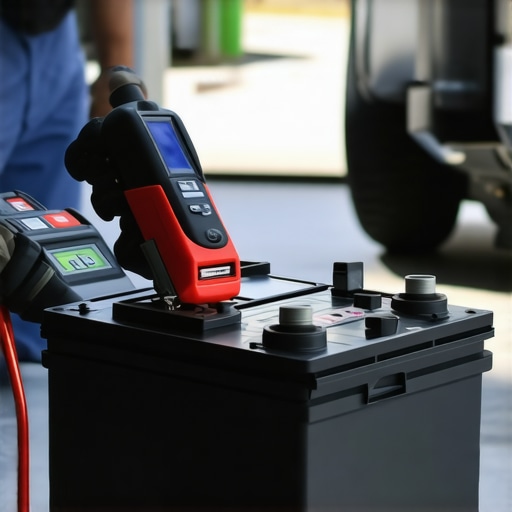
Ever been stranded on the side of the road because your car suddenly refused to start? I remember the exact moment I realized how a small oversight during a routine service can turn into a major headache. It was a chilly morning, and my car just wouldn’t turn over. After a quick inspection, I discovered my battery was on its last legs—something I had ignored during my last service appointment. That experience was a lightbulb moment for me, and I want to make sure you don’t make the same mistake.
The Missing Piece in Many Car Services: The Battery Load Test
When I first took my car in for a standard tune-up, I trusted the mechanic to handle everything properly. But guess what? The technician skipped performing a **battery load test**, which is crucial to determine if your battery can handle the demands of your vehicle. The result? I was heading into winter with an aging battery that could fail at the worst moment. Since then, I’ve learned that a simple battery load test can save you from unexpected breakdowns, costly repairs, and, frankly, the hassle of being stranded.
Not all service shops emphasize this step, often due to time constraints or oversight. However, the **battery load test** is a vital diagnostic tool that provides a clear picture of your battery’s health. Think of it as a stress test—not just a voltage check—that reveals how well your battery can perform under real-world conditions.
If your car is over three years old or if you’ve noticed slow engine cranks, dimming headlights, or electrical issues, it might be time to ask your mechanic whether they’ve checked your battery’s load capacity. Trust me, a small investment here can prevent big problems down the road. According to the Battery Council International, a battery fails due to internal deterioration long before it shows visible signs, making load testing an essential proactive measure.
Now, you might be wondering—why is this step often skipped? Sometimes it’s a matter of routine or a shop trying to save time. But skipping it can leave you vulnerable. Have you ever experienced a car that cranked fine but still failed to start unexpectedly? That’s a classic sign that your battery’s internal cells are weakening, and a load test could have caught this early.
In the upcoming sections, I’ll walk you through how a load test works, why it’s worth insisting on during your next service, and how you can recognize the signs of a failing battery before it’s too late. Because when it comes to dependable transportation, proactive checks are your best friend.
Prepare Your Equipment and Workspace
Before heading to the mechanic, familiarize yourself with the basic tools needed for a battery load test, such as a portable load tester or multimeter. Ensure the workspace is clean, dry, and well-lit to facilitate easy handling of the battery and connections. Think of this like preparing a kitchen before cooking; a clean station prevents mistakes and speeds up the process.
Identify the Battery and its Condition
Locate your car’s battery, usually under the hood, and visually inspect it for corrosion, cracks, or leaks. If corrosion is present, clean the terminals with a mixture of baking soda and water, using a wire brush. A clean connection is essential for accurate testing—like wiping your glasses before reading fine print.
Perform a Visual and Voltage Check
Use a multimeter set to DC volts to measure the battery voltage. A healthy, fully charged battery should read around 12.6 volts or higher. If it’s significantly lower, such as below 12.2 volts, the battery may already be partially discharged. This step is comparable to checking your blood pressure before a stress test—gives an initial health indicator.
Connect the Load Tester Properly
Attach the load tester’s clamps to the corresponding battery terminals: red to positive and black to negative. Ensure a snug, secure connection to avoid false readings. Think of this as connecting jumper cables; proper contact is crucial for the test to reflect real-world performance.
Conduct the Load Test
Follow the device’s instructions to apply a load roughly equal to half the CCA (cold cranking amps) rating of your battery for 15 seconds. Observe the voltage during the test; it should stay above 9.6 volts at room temperature. If it dips below, your battery is weak and might fail under demanding conditions. Remember my messy experience where a shaky battery caused my car to die unexpectedly; a load test would have flagged this early.
Interpret the Results and Take Action
If the voltage drops below acceptable levels, it’s time to consider replacing the battery or further diagnostics. If you’re unsure, ask your mechanic to interpret the results or check out this guide on how to get your brakes checked. Regular load testing, especially for cars over three years old, is like a health check-up—preventative and affordable, saving you from costly breakdowns later.
While many car owners focus on obvious issues like brake squealing or engine misfires, there’s a deeper layer of nuance that often goes unnoticed. One common misconception is the belief that routine maintenance involves only the basics—oil changes, tire rotations, and fluid top-offs—yet skipping detailed diagnostics can lead to costly failures down the line. For example, a frequent mistake is assuming your vehicle’s transmission is fine if it shifts smoothly during regular driving; however, subtle signs of wear, such as delayed engagement or slipping, require specialized diagnostics like transmission fluid analysis or sensor checks, which many neglect. This oversight can cause serious damage, emphasizing the importance of advanced diagnostics, especially for high-mileage vehicles. Moreover, many believe that brake pads are the sole component requiring attention, but the real culprit in braking issues can be warped rotors or failing calipers, which, if left untreated, accelerate wear and compromise safety. It’s essential to understand that modern vehicles involve complex electronic systems—such as ABS sensors and Electronic Stability Program modules—that demand precise calibration and diagnostic tools for accurate assessment. A myth worth debunking is the idea that a quick spark plug replacement qualifies as a comprehensive tune-up; in reality, a full tune-up involves checking ignition coils, sensors, fuel injectors, and even the battery’s load capacity to ensure optimal performance. Misunderstanding these nuances can lead to incomplete repairs or premature component failures. As Dr. John Mecklin from the Car Diagnostics Institute states, “Advanced diagnostic procedures are critical for uncovering hidden issues that superficial inspections often miss.” To stay ahead, it’s advisable to consult with technicians who utilize comprehensive diagnostic tools rather than relying solely on visual inspections. Remember, proactive diagnostics can save you from unexpected breakdowns and extend your vehicle’s lifespan. Have you ever fallen into this trap? Let me know in the comments.
Keeping It Running: Essential Tools and Techniques
To truly master vehicle maintenance, I rely on a set of precise tools that go beyond basic socket wrenches. My personal go-to is a high-quality digital multimeter, like the Fluke 115. I prefer this model because it provides highly accurate voltage readings essential when checking things like battery health or sensor outputs. Unlike cheaper multimeters, the Fluke maintains precise readings over time and is durable enough to withstand garage conditions. Another invaluable tool is a thermographic camera. I use a FLIR E8 camera to pinpoint issues like cooling system leaks or overheating components without invasive procedures. This visual approach saves me hours of guesswork and helps identify problems early, preventing costly repairs.
For software diagnostics, I lean heavily on OBD2 scan tools that connect via Bluetooth to my tablet, such as the Launch CRP123X. The reason I select this device is its expansive coverage: it reads both engine and transmission codes and provides detailed live data streams. This capability enables me to monitor parameters like fuel trim or sensor performance in real-time, which is crucial when diagnosing issues like misfires or engine stumbles. Plus, it syncs smoothly with diagnostic apps like ScanMaster, which I prefer for its comprehensive interface and data logging features.
Maintaining tools in peak condition is equally vital. Regular calibration of multimeters ensures accuracy, especially if you’re monitoring sensors over time or conducting precise tests like spark plug gap measurements. I also recommend keeping a dedicated diagnostic checklist based on your vehicle’s model and age—this way, every inspection is thorough and methodical, reducing the chance of overlooking something vital.
How do I keep my automotive diagnostic tools accurate and reliable over time?
Calibration is key— periodically using certified calibration kits for multimeters and scan tools ensures your readings stay trustworthy. Storing tools in a clean, dry environment prevents corrosion and damage. For software tools, keeping firmware updated is critical to access the latest vehicle compatibility features. Implementing a routine maintenance schedule for your tools extends their lifespan and maintains diagnostic accuracy, ultimately saving you time and money in the long run. As advancements in automotive electronics accelerate, I predict that future tools will increasingly incorporate AI-driven diagnostics, offering even more precise maintenance insights and predictive repair suggestions. Staying ahead requires investing in quality equipment now and maintaining it diligently.

Considering long-term maintenance, it’s essential to understand how to prevent issues before they escalate. One advanced approach involves regular brake system analysis using digital brake testers, which can identify subtle wear or warping long before noise or vibration become apparent. Testing your vehicle’s electronic sensors periodically ensures your car’s computer system receives accurate data, which is vital for features like traction control and stability programs. As mechanics increasingly rely on sensor input, maintaining these components becomes crucial—culminating in less unexpected breakdowns and higher safety margins. I encourage you to acquire a quality multimeter and learn how to interpret live data streams—it’s a game-changer for DIY diagnostics and can help you catch minor issues before they turn catastrophic.
The Hidden Lessons From My Car Mishap
One of the most valuable lessons I learned about car maintenance is the importance of paying attention to small details that can prevent big problems. Ignoring the health of my battery during a routine service nearly left me stranded on a freezing morning. This experience taught me to look beyond the immediate and consider the long-term health of crucial components like the battery, which often gets overlooked in standard check-ups.
Why Insiders Swear by Battery Load Testing
Many car enthusiasts and professional mechanics agree that a **battery load test** is one of the most valuable diagnostics tools. It offers a real-world assessment of your battery’s ability to perform under demanding conditions, which simple voltage checks cannot reveal. A failing battery can cause unexpected stalls, misfires, or electrical glitches, especially as your vehicle ages. Incorporating regular load tests into maintenance routines can dramatically reduce breakdown risks, especially before winter or summer extremes. Personally, I now insist on this step during each service for my vehicles, and I recommend you do the same.
Small Investment, Big Peace of Mind
When my mechanic started performing load testing routinely, I noticed fewer issues and saved money on unnecessary replacements. It’s a quick, inexpensive procedure that can extend your battery’s life and give confidence in your vehicle’s reliability. If a load test indicates trouble, replacing or servicing the battery early is far more cost-effective than dealing with a dead engine at an inconvenient moment. Remember, internal deterioration happens long before a battery shows visible signs of failure, making proactive checks your best defense.
Steps for a Successful Battery Load Test at Home
Having a basic understanding of the process allows you to communicate effectively with your mechanic or even perform simple checks yourself. Start by inspecting the battery terminals for corrosion, clean them if needed, and measure voltage with a multimeter. Then, connect a reliable load tester and monitor the voltage under load; it should remain above 9.6 volts at room temperature. If you’re unsure, consulting resources like how to get your brakes checked can help you interpret results and decide on next steps. Regularly performing these checks for any vehicle over three years old can prevent costly surprises and improve overall safety.
Interesting Myths and Missteps to Watch Out For
Many car owners believe that if their engine cranks, their battery is fine, but that’s often a misconception. A weak internal cell can still turn the engine over but fail during actual driving conditions. Skipping diagnostic steps like load testing is a common oversight, but one with potentially serious consequences. Regularly questioning assumptions about your vehicle can help you catch issues early. For example, ignoring signs of electrical weak spots or failing to test vital components can lead to more extensive repairs down the line. Think of diagnostics as a health screening—preventative, insightful, and ultimately saving you money.
Tools That Make Diagnostics Easier and Better
Investing in quality tools can make a significant difference in your ability to maintain your vehicle. My favorite is a durable digital multimeter like the Fluke 115, which provides accurate readings needed for battery and sensor tests. A good load tester is also invaluable, allowing quick assessment of your battery’s true capacity. Additionally, keeping vehicle diagnostic software updated ensures you can interpret codes correctly and perform advanced checks. Regular calibration and proper storage help these tools stay reliable, giving you confidence whether you’re doing DIY diagnostics or discussing issues with your mechanic. For ongoing vehicle care, I rely heavily on resources like brake analysis tools and timing belt guides that deepen my understanding of vehicle health.