

It was 95 degrees in the shade, my shirt was already sticking to the seat, and I was trapped at the busiest intersection in the county. The moment I felt that sweet, cool air start to blast from the vents, the engine didn’t just stumble—it completely checked out. There I was, franticly turning the key while a chorus of angry horns serenaded my failure. It’s a gut-wrenching feeling when your reliable daily driver decides it can either keep you cool or keep you moving, but never both. If you are sitting there right now, staring at your temperature gauge and wondering why your car dies every time you hit the Max AC button, take a deep breath. I’ve been in those greasy shoes, and I promise we can get this sorted out without you having to sell a kidney for repairs. Today, I am going to walk you through why this happens and help you narrow down the culprit so you can get back to driving in refrigerated comfort. [image placeholder]
Your Engine Is Struggling to Multi-Task
Think of your car’s engine like a runner. Usually, it’s jogging along just fine, but turning on the air conditioner is like suddenly handing that runner a 40-pound backpack. In a healthy car, the computer (the ECU) sees that load coming and tells the engine to work a little harder to keep the idle steady. When things go south and the engine stalls, it’s usually because the communication between the AC system and the engine’s idle control has broken down. I remember early in my DIY days, I was convinced my battery was dying and spent a small fortune on a high-end alternator I didn’t actually need. Talk about a blow to the ego and the wallet! Before you start throwing expensive parts at the problem, you should focus on troubleshooting common auto repair issues before visiting the shop to save yourself the headache I had. Most of the time, the fix is much simpler than a total system overhaul. Have you ever felt that terrifying dip in RPMs the second you engage the climate control?
Will I need to replace the entire AC compressor?
This is the big fear, isn’t it? Everyone assumes a stall means the compressor is seizing up and dragging the engine to its death. While a failing compressor can definitely put up a fight, it is rarely the reason for a stall at a stoplight. Often, the issue is just a bit of carbon buildup. For instance, I’ve found that learning how to clean your throttle body to restore throttle response is frequently the ‘magic bullet’ for these stalling issues. When that intake is gunked up, the engine can’t get enough air to stay alive under the extra load of the AC. According to data from the Car Care Council, neglected maintenance on the air induction system is a primary cause of poor idle quality and stalling. It is a much cheaper fix than a compressor! If you’ve been putting off your regular maintenance, now is the time to look into tune-up your car for peak performance so you aren’t left sweating at a green light. We are going to dig into the Idle Air Control valve next, because that little guy is usually the real snitch in this scenario. You might even find a way to silence a noisy compressor without replacing it if you catch the warning signs early enough. Stick with me; we’re going to get your idle back to being rock-solid.
Hunt for the Idle Air Control Valve
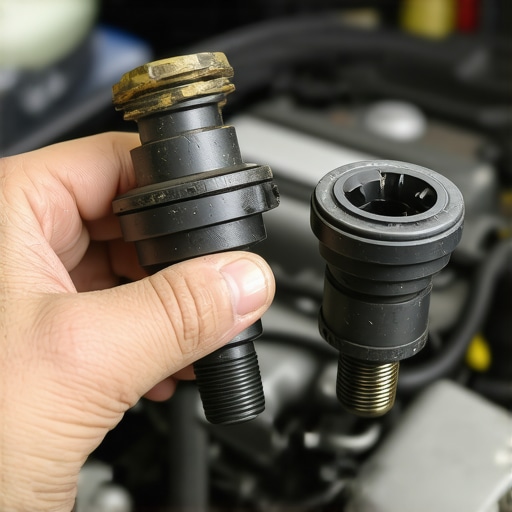
The Idle Air Control (IAC) valve is the gatekeeper of your engine’s heartbeat when you aren’t touching the gas pedal. Think of it like a butler holding a heavy door open; when the AC compressor kicks on, that door gets much heavier, and if the butler is weak or tired, the door slams shut and the engine dies. In most cars, this little component sits right on the throttle body, managing the airflow to keep your RPMs steady. I remember working on an old sedan where the owner was certain the transmission was failing because the car would lurch and die at every stoplight with the AC on. After ten minutes of poking around, I pulled the IAC valve and found it caked in black soot. A five-minute cleaning saved them a thousand-dollar repair bill. If you find your v6 engine shudders at idle, this is the very first place you should look. It is often the difference between a smooth ride and a stressful commute.
Check for Carbon Clogs
To see if this is your culprit, you need to remove the valve and look for carbon buildup. If it looks like the inside of a chimney, that’s your problem. While you are there, it is a great time to go through a car service checklist to see if any other sensors are looking grimey. Use a dedicated throttle body cleaner and a soft brush to gently remove the gunk. Don’t force the pintle (the little moving part) inside the valve, or you might break the internal motor. Once it is shiny and moves freely, bolt it back on and see if that idle smooths out. If the cleaning doesn’t work, the internal solenoid might be fried, which means a replacement is in your future.
Find Air Leaks Without Expensive Tools
A vacuum leak is the silent killer of engine performance. Your engine relies on a very specific balance of air and fuel; when extra air leaks in through a cracked hose, the computer gets confused and fails to compensate for the AC load. This is why troubleshooting common auto repair issues before visiting the shop is so vital—mechanics often charge a premium just to find a fifty-cent hose that’s leaking. I once spent an entire Saturday afternoon chasing a stall on a friend’s truck, only to find a tiny vacuum line hidden behind the intake manifold had popped off. The second I plugged it back in, the AC worked perfectly without the engine even flinching.
The Smoke Trick for Hidden Cracks
You don’t need a professional smoke machine to find these leaks. One of my favorite old-school methods is how to identify a vacuum leak using a simple cigar. By blowing smoke into a vacuum line while the engine is off, you can literally watch where it wisps out of the system. It’s a low-tech way to find high-stakes problems. If you see smoke drifting from a rubber elbow or a plastic T-fitting, you’ve found your leak. Replacing these hoses is a standard part of any ultimate car service guide, and it keeps your engine from gasping for air when the compressor demands more power.
Check the Belt That Drives the System
Sometimes the problem isn’t electrical or air-related; it’s purely mechanical. Your AC compressor is turned by the serpentine belt. If that belt is slipping or the tensioner is weak, the sudden drag of the compressor engaging can cause a momentary spike in resistance that stalls a weak engine. If you hear a squeal when you hit the AC button, your belt is screaming for help. Learning how to replace your own serpentine belt in under 20 minutes is a skill that will save you from being stranded on the side of the highway. A fresh belt and a strong tensioner ensure that the energy transfer from the crank to the compressor is seamless, preventing those heart-stopping dips in RPM. Also, keep an eye on your electrical health; a failing alternator can’t handle the extra load of the AC fans, which is just another hidden drain that kills your battery over time. Make sure your charging system is putting out at least 13.5 volts when the AC is running to rule out an electrical collapse.
While we’ve covered the obvious mechanical gremlins, there is a nuance to engine management that many DIYers and even some shops miss. Everyone assumes that if the Check Engine Light isn’t on, the electronic sensors are doing their job perfectly. That is a dangerous assumption. In reality, sensors can become ‘lazy’—they still report data, but they do it too slowly for the computer to compensate for the sudden torque demand of the AC compressor. I’ve seen countless owners spend a fortune on a brand-new compressor when all they really needed was to understand the hidden benefit of cleaning your mass air flow sensor. This tiny, delicate wire measures every ounce of air entering your engine, and even a speck of dust can throw off the fuel trim enough to cause a stall when the engine is under load. #IMAGE_PLACE_HOLDER_C#
Is a ‘Lazy’ Sensor Killing Your Idle Without Triggering a Light?
This is where things get technical. The National Institute for Automotive Service Excellence (ASE) notes that modern engine management systems have specific ‘tolerance bands.’ A sensor can be performing at 70% efficiency—enough to stay within the band and keep the warning light off—but not enough to handle the 5-10 horsepower draw a compressor demands at idle. If you are chasing a ghost, you have to learn how to tell if your computer is giving you a false error code or, more accurately, failing to provide a code at all. Don’t just trust the dashboard; trust the physical behavior of the engine. Often, the computer is simply trying to compensate for a failing sensor and ends up over-correcting, which leads to that heart-stopping stall.
Here is the ‘Oops’ factor that bites most people in the wallet: the budget parts trap. I’ve seen folks try to save twenty bucks by getting generic spark plugs from a clearance bin, only to find their idle gets even worse. The truth about budget spark plugs and engine performance is that they often lack the correct heat range or internal resistance required by your specific ignition coils. This creates a weak spark that can’t effectively ignite the richer fuel mixture the computer dumps in when the AC kicks on. To truly maximize your cars lifespan with expert tune-up strategies, you have to treat the engine as a single, synchronized unit, not a collection of cheap parts. Even maintenance habits like the truth about 10000-mile oil change intervals play a role here; dirty oil can lead to variable valve timing solenoids sticking, which further destabilizes your idle when the AC clutch engages. Have you ever fallen into the trap of replacing a major part only to find out a $10 sensor cleaning was the real fix? Let me know in the comments below!
The Diagnostic Gear I Actually Carry in My Trunk
Maintaining that rock-solid idle isn’t a one-time event; it is about the tools you use to see what the human eye can’t. I don’t just rely on a generic code reader that tells me ‘P0300’ and leaves me guessing. I personally use a high-quality Bluetooth OBD-II adapter paired with software that allows for live data graphing. Why? Because you need to see the ‘short-term fuel trim’ the exact millisecond that AC clutch engages. If you see that number skyrocket into the positives, your engine is starving for fuel. This level of troubleshooting common auto repair issues before visiting the shop is what separates a frustrated owner from a confident DIYer. According to the SAE International (Society of Automotive Engineers) standard J1979, utilizing ‘Mode $06’ data allows you to monitor the performance of components like the oxygen sensor before they actually fail and leave you stranded. It’s like having an EKG for your car’s heart.
How Can I Keep My Engine This Reliable for the Next Decade?
Long-term success is built on a foundation of consistency. You can’t expect a car to handle the brutal load of a compressor if you are neglecting the small stuff. I make it a point to perform a seasonal ‘airflow audit.’ This includes checking the air filter, wiping down the throttle plate, and making sure I how to clean clogged ac drain lines in minutes to prevent moisture from backing up and causing electrical gremlins. If you truly want to know the secret to getting 200000 miles out of your original engine, you have to stop treating maintenance as an emergency and start treating it as a ritual. This means looking at auto repair trends to watch in 2025, where predictive maintenance is becoming the norm. Modern cars are increasingly using telematics to warn you of a failing sensor weeks before it causes a stall at a stoplight. Paying attention to these subtle shifts in performance is how you avoid the big-ticket repair bills.

What the Future of DIY Repair Looks Like
We are moving into an era where your smartphone will be as important as your 10mm socket. I predict that within the next few years, AI-driven diagnostics will be able to ‘listen’ to your engine through your phone’s microphone and tell you exactly which vacuum line is whistling. However, technology is no replacement for a solid mechanical baseline. You should still prioritize a car service checklist every six months to catch physical wear that a sensor might miss. Whether it is checking for cracked belts or ensuring your coolant isn’t acidic, these manual checks are your best defense against the summer heat. If you really want to level up your garage game today, I challenge you to plug in a scanner and look at your ‘Idle Air Control’ duty cycle while toggling the AC. If it is sitting above 50% at idle, your engine is working too hard, and it is time to clean that intake! Stay proactive, and your car will reward you with cold air and a smooth ride for years to come.
Hard Lessons Learned Under the Hood
After years of turning wrenches, I have realized that most stalling issues aren’t caused by catastrophic failure but by small, neglected details. One of the biggest shifts in my perspective came when I realized that a clean engine is a happy engine; if you take the time to troubleshooting common auto repair issues before visiting the shop, you often find that a can of cleaner is worth more than a new compressor. I also learned the hard way that ignoring auto repair trends to watch in 2025 means missing out on how smarter onboard computers can actually help us diagnose these quirks faster. Finally, always remember that your car is a system of systems—if your electrical is weak, your mechanical will eventually suffer too.
My Go-To Diagnostic Gear
To keep my vehicles from gasping at stoplights, I rely on a few specific tools and methods. First, I never guess when I can measure; using a high-quality scanner allows me how to tell if your computer is giving you a false error code before I start pulling parts. Second, I swear by the ‘cigar trick’—knowing how to identify a vacuum leak using a simple cigar has saved me more money on diagnostic fees than any other hack. Lastly, I keep a physical car service checklist in my glovebox to track exactly when I last serviced the throttle body or replaced the air filter. These small habits are the difference between a reliable daily driver and a summer nightmare.
#IMAGE_PLACEHOLDER_E#
Take Back Control of Your Drive
You don’t have to be a master mechanic to solve a stall. By checking your IAC valve, hunting for vacuum leaks, and ensuring your air sensors are clean, you are already ahead of 90% of drivers on the road. The goal is to tune-up your car for peak performance so that the AC becomes a luxury you can actually enjoy, rather than a button you are afraid to press. Take it one step at a time, trust your tools, and keep that idle steady. Have you ever had a car stall on you in the middle of a busy intersection? Let me know what the culprit was in the comments below!