
I remember the moment vividly—standing in my driveway, screwdriver in hand, trying to jump-start my car only to realize the battery terminals were coated in a stubborn, white, crusty substance. Frustration bubbled up. That familiar corrosion had built up again, making my car’s performance sluggish and worrisome. It was a lightbulb moment for me: I needed to find a better way to handle this pervasive issue.
Why That White Crust on Your Battery Terminals Is More Than Just an Eyesore
That white, powdery buildup isn’t just unsightly; it can seriously impair your car’s electrical system. Over time, corrosion can cause poor connections, resulting in difficulty starting your vehicle, dimming headlights, or even fried electronics. The stubborn crust forms from the reaction between the battery acid and moisture in the environment—kind of like a natural, corrosive armor protecting the metal beneath. And, according to automotive experts, neglecting this buildup can lead to more costly repairs down the line.
Early on, I made the classic mistake of simply wiping off the corrosion with a rag and then ignoring it until it returned. That quick fix provided only temporary relief and often masked the root problem. It wasn’t until I learned about proper cleaning and preventive measures that I truly started protecting my battery and saving money. Curious if you’ve faced similar trouble? Keep reading—I’ll walk you through effective methods to keep your terminals crisp and clean, ensuring reliable starts and longer-lasting connections.
Will Cleaning Your Battery Terminals Really Make a Difference?
Many car owners dismiss this routine as optional, but the truth is, proper maintenance can extend the life of your battery and prevent annoying breakdowns. Trust me, neglecting this simple step has cost me more than once. I first learned the hard way when a corroded terminal caused my car to sputter on a cold morning. Once I started cleaning and applying protective measures, my starting issues vanished, and I faced fewer electric gremlins.
Regular inspections and cleaning are crucial, especially if you notice dimming headlights or slow cranks. It’s a small step that pays off big time—saving you trips to the mechanic and unexpected expenses. Want to learn exactly how to keep those terminals pristine and corrosion-free? I’m here to share the tricks that have worked wonders for me—and will surely help you too.
Disconnect the Battery Carefully
Start by turning off your vehicle and removing the keys. Open the hood and locate the battery. Use a wrench to loosen the negative (black) terminal clamp, then the positive (red) clamp. Always disconnect the negative first to prevent any electrical shorts. Remember to set the cables aside where they won’t accidentally touch the terminals again.
Prepare Your Cleaning Solution
Mix baking soda with water to create a paste—about one tablespoon of baking soda to a cup of water. This solution neutralizes the corrosion, which is often a mix of sulfate salts, similar to a natural alkaline agent. I once had a stubborn crust that took gritty scrubbing, but the baking soda paste made the job much easier.
Scrub Away the Corrosion
Dip a wire brush or an old toothbrush into the baking soda paste and scrub the terminals and cable clamps thoroughly. Be gentle but firm—think of it like polishing jewelry. The crust will begin to dissolve and loosen. A quick trick I used was to wear gloves and goggles to keep debris out of my eyes and hands. For particularly stubborn crusts, let the paste sit for a few minutes before scrubbing again.
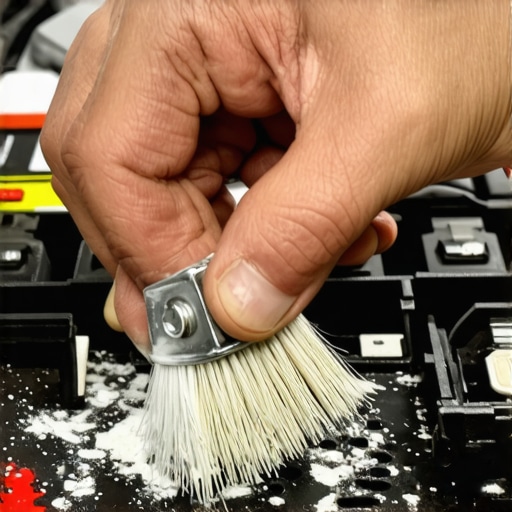
Insert an image here of a person scrubbing car battery terminals with a wire brush and baking soda paste, demonstrating proper technique.
Rinse and Dry the Components
Use a clean damp cloth to wipe away the baking soda residue. It’s essential to remove all traces to prevent further corrosion. Dry everything thoroughly with a clean towel to avoid moisture buildup, which can cause the corrosion to return quickly.
Apply Protective Measures to Prevent Future Corrosion
Once the terminals are clean and dry, apply a thin layer of petroleum jelly or a commercial terminal protector spray. This barrier inhibits moisture and acid from causing new crust formations, extending the time between cleanings. I’ve found that regular application every few months keeps my battery terminals shining and corrosion-free.
Reconnect with Proper Torque
Reconnect the positive (red) cable first, tightening the clamp snugly, then do the same with the negative (black) cable. Ensure both connections are firm—loose clamps can cause starting issues. Double-check the tightness to avoid any voltage drops, especially during cold mornings or long drives.
For ongoing maintenance and to stay ahead of potential issues, consider scheduling periodic inspections. Learning how to keep your vehicle in top shape can boost performance and longevity. Interested in more tips about effective vehicle care? Check out this comprehensive car service checklist.
Many car owners operate under assumptions that can lead to costly mistakes. Contrary to popular belief, not all auto repair advice is created equal, and some widely accepted practices may do more harm than good. For instance, the idea that routine oil changes alone are enough to keep an engine in top shape overlooks the importance of diagnosing underlying issues early. Advanced diagnostics can reveal hidden problems, like sensor malfunctions or coolant leaks, which otherwise silently undermine vehicle health. Experts emphasize that periodic comprehensive inspections are vital; neglecting these can result in component failures that are more expensive to repair. Additionally, a common myth is that brake pads are the primary wear item needing frequent replacement, but actually, brake fluid often deteriorates faster and is neglected. Turning to studies on brake system longevity, replacement of brake fluid every two years can prevent corrosion and maintain braking performance. Sometimes, the misconception that ‘more frequent service’ is unnecessary leads owners to overlook subtle warning signs—like vibrations or unusual noises—that signal deeper issues. Recognizing these signals early can save hundreds in future repairs. Have you ever fallen into this trap? Let me know in the comments. If you’re unsure about your vehicle’s maintenance needs, consult a trusted professional. Consider visiting our site for expert advice on maximizing your car’s lifespan with tailored tune-up strategies. Remember, understanding the nuances of auto care can be the difference between a smooth ride and unexpected breakdowns.Maintaining your vehicle’s health over the long term requires more than just basic knowledge—it demands the right tools and a disciplined approach. Personally, I swear by a high-quality multimeter, like the Fluke 117, because it provides precise voltage readings and is durable enough for regular use. I also rely on an electric impact wrench for fast, consistent bolt removal during routine repairs, which saves me hours over time. Investing in a good quality creeper allows me to work comfortably beneath the car, especially when inspecting or replacing components like brakes or CV joints. These tools have become staples in my garage, and their reliability ensures I catch issues early, preventing costly repairs down the line.
For diagnostic checks and troubleshooting, I use specialized software like AutoEnginuity, which interfaces with my vehicle’s ECU. This platform provides real-time data and helps me identify hidden problems that might not be apparent through visual inspections alone. As automotive technology advances—especially with the rise of electric vehicles—integrating OBD-II scanners with advanced reporting features will become even more essential.
When it comes to routine maintenance like oil changes or brake inspections, proper planning and record-keeping are crucial. I developed a custom maintenance schedule using digital tools like Google Calendar combined with checklists from trusted sites to ensure no task slips through the cracks. Long-term results—such as improved fuel efficiency, fewer breakdowns, and extended vehicle lifespan—are directly tied to consistent care and using the right equipment.
Looking ahead, the trend is heading toward smarter, connected maintenance systems. Vehicles will increasingly communicate with garage tools and apps to warn owners about impending service needs. Embracing these technological innovations now can keep you ahead of potential issues and save money.
To get started, I recommend trying out a comprehensive diagnostic scan on your vehicle. Use your scanner to check for any hidden error codes; sometimes, early detection allows you to address problems before they escalate. Want to learn how to maximize your car’s lifespan with expert-maintenance strategies? Visit https://glassfixauto.com/maximize-your-cars-lifespan-with-expert-tune-up-strategies for detailed guidance. If you have questions about your tools or need personalized advice, don’t hesitate to reach out through our contact page at https://glassfixauto.com/contact-us. Investing in quality tools and maintaining disciplined routines will keep your car in top shape for miles to come.
The Hidden Pitfalls That Cost Me More Than Just Time
One of the hardest lessons I learned was that neglecting little details like battery terminal maintenance can lead to unexpected breakdowns and costly repairs. I used to dismiss the importance of regular cleaning, thinking a quick wipe was enough. But every time I ignored this, I faced the frustration of a dead battery in a busy parking lot or a sluggish start on cold mornings. That experience taught me that consistency is key and that preventative measures save money and stress in the long run.
Tools and Tactics That Truly Make a Difference
Over time, I realized that investing in quality tools like a sturdy wire brush and a reliable multimeter transformed my approach to vehicle maintenance. These tools give me confidence during inspections and allow me to catch issues early. Learning to apply a thin layer of petroleum jelly post-cleaning as a protectant is a game-changer—simple, affordable, and highly effective. Trust me, integrating these practices into your routine can extend your battery’s lifespan and ensure peace of mind during every drive.
Empower Yourself with Knowledge and Discipline
Understanding the science behind corrosion—like how moisture and acids cause that white crust—helps me appreciate why early intervention is crucial. Regular inspections and using protective sprays become second nature when I see the difference it makes, especially in harsh weather. Remember, doing small, consistent maintenance tasks not only boosts your car’s performance but also enhances your confidence as a vehicle owner. Want to delve deeper into smart maintenance strategies? Check out this guide to extending your car’s lifespan.