
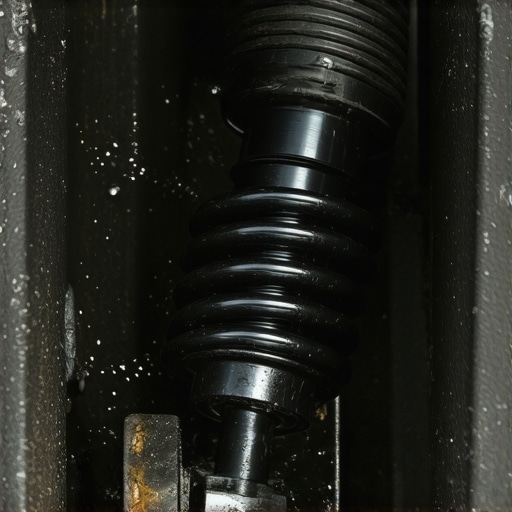
The first time I realized my shocks were toast, I was bouncing down I-77 like I was on a pogo stick. Every time I hit a bridge expansion joint, the car kept oscillating for three or four beats too many. I’d convinced myself it was just the “road feel” of an older car, but deep down, I knew something was wrong. It’s a classic mistake: ignoring the subtle, floaty feeling until you’re literally losing grip on the pavement. If you’ve been wondering why your commute feels more like a boat ride than a drive, you’re in the right place. Today, I’m breaking down the dead giveaways of worn suspension, so you don’t have to learn the hard way like I did when I skipped my standard car service checklist. [image_placeholder]
Stop the Bounce Before Your Tires Pay the Price
Believe me, I’ve made every mistake in the book. Years ago, I spent a fortune on high-end rubber only to realize why my new tires were wearing fast on the inside edge just a few months later. I thought it was an alignment issue. Nope. My shocks were so tired they weren’t keeping the tires firmly on the ground, causing them to “cup” and wear unevenly. It’s a painful lesson for the wallet. Worn shocks aren’t just about comfort; they are a critical safety component. Think about it: your brakes stop the wheels, but your shocks stop the car from shifting all its weight onto the front nose during a panic stop. If your shocks are shot, your entire brake system has to work twice as hard to keep you in a straight line.
Is it really worth replacing them before they break?
You might think you can just live with it for another season, but the physics say otherwise. According to the safety experts at the Car Care Council, even one worn shock absorber can increase your stopping distance by up to 10 feet at 60 mph because the tire isn’t making consistent contact with the road. That is the length of a small car! Have you ever felt that terrifying nose dive when you hit the brakes at a red light? That’s not normal, and it’s definitely not safe. Dealing with it now is way cheaper than replacing a set of premium tires or, heaven forbid, dealing with a collision. Have you noticed your car swaying a bit too much in a crosswind lately? Let me know in the comments if you’ve felt that scary, loose sensation on the highway.
Check the Visual Clues Without Crawling Under the Car
You don’t need a degree in mechanical engineering to spot the red flags. Sometimes, the most obvious sign is sitting right in front of you. You can often identify a blown shock absorber by looking at your tires or checking for that tell-tale mist of oil on the shock body itself. I used to think a little oil was fine—just sweating, I’d tell myself. But shocks are precision-filled hydraulic tubes; if fluid is out, air is in, and the dampening is gone. If you want to get ahead of the game, I highly recommend checking out how to spot a leaking shock without using a lift to see if your suspension is crying for help.
Put Your Weight Into the Bumper Test
I’ll never forget my old ’04 sedan; I thought it was just well-broken in until a friend dared me to do the bumper test. I put my weight on the front corner, pushed down, and let go. Instead of rising and stopping, the car did a slow-motion hula dance. It was embarrassing. That simple push is your first line of defense. Go to each corner of your car and give it a firm, downward shove. A healthy suspension should bounce up once and settle immediately. If it keeps oscillating like a bowl of Jell-O, you’ve found your culprit. While you are at it, pay attention to 4 suspension sounds you should never ignore like metallic clunking or persistent squeaking. 
Watch for the secondary rebound
If the car comes up and then goes back down again, even slightly, the valving inside your shock is gone. Think of it like a screen door with a bad hydraulic closer—it’ll just slam or swing wildly. This is often the precursor to the signs your struts are finally bottoming out, which usually feels like a bone-jarring thud when you hit a pothole. If you’re feeling that, your suspension isn’t just worn; it’s failing to protect your chassis and internal components.
Get Hands-On with the Front End Components
Shocks are the stars of the show, but they have a supporting cast that fails just as often. When I finally got under my car after that failed bounce test, I realized it wasn’t just the shocks. My tie rods were loose enough to wiggle by hand. You should learn how to check your tie rod ends with minimal tools because a loose rod can cause the same steering wander as a bad shock. Use a flashlight and look at the rubber boots around the joints. If you see grease leaking out or the rubber looks like a dried-out raisin, dirt has already gotten inside and started grinding down the metal.
Hunt for Fluid Where It Does Not Belong
While you’re looking at those joints, peek at the steering gear. You need to know how to tell if your rack and pinion is leaking fluid versus a standard shock leak. Steering fluid is usually reddish or clear and has a distinct burnt-sugar smell, whereas shock oil is thicker and darker. Also, don’t forget to inspect your own cv boots for small cracks. If those boots tear, you’ll be replacing an entire axle instead of just a cheap rubber cover. Catching these small things is how you maximize your car’s lifespan with expert tune-up strategies.
Why Alignment is Your Final Move
If you decide to swap out those shocks yourself or have a pro do it, you aren’t done until the wheels are pointed straight. Many people skip this to save fifty bucks, but why your mechanic insists on an alignment after new tires or suspension work isn’t a scam. Changing shocks alters the ride height slightly, which shifts the geometry of your steering. If you ignore the alignment, you’ll be back to square one with shredded tires in a few months. It’s all part of the ultimate car service guide for anyone serious about keeping their ride smooth and safe.
Don’t Fall for the ‘Maintenance-Free’ Marketing Myth
Let’s dig deeper into what we usually get wrong when we think we’re ‘taking care’ of our vehicles. The most dangerous phrase in the automotive world is ‘lifetime fluid.’ I’ve seen dozens of transmissions fail because owners believed the manual when it said the fluid never needed changing. In reality, heat and friction break down everything eventually. If you want to maximize your car’s lifespan with expert tune-up strategies, you have to look past the marketing brochures. Many drivers assume that if the check engine light isn’t on, the car is running at peak efficiency. That is a massive ‘oops’ factor. Modern sensors only trigger when a part is already failing or significantly out of spec; they don’t tell you when a belt is slightly fraying or when your brake fluid looks like coffee. Dealing with these nuances is the difference between a car that barely survives its warranty and one that hits 300,000 miles. Everyone says modern synthetic oil can last forever, but in my experience, the detergent additives break down long before the base oil does. You need to understand the truth about synthetic vs conventional oil to see why a 5,000-mile interval is still the ‘gold standard’ for anyone who plans to keep their car for a decade. It’s not just about lubrication; it’s about the suspended contaminants that the oil filter eventually stops catching.
Could Your Rough Idle Actually Be an Unseen Vacuum Leak?
For the more advanced DIYers, a common headache is a car that runs ‘okay’ but feels slightly off at stoplights. You’ve changed the plugs, the wires, and the air filter, yet the shimmy remains. Before you throw more money at expensive electronic sensors, check for the subtle stuff. I often recommend learning how to detect a small vacuum leak using a simple cigar or a smoke machine. A tiny crack in a rubber hose—invisible to the naked eye—can throw off your air-fuel ratio just enough to kill your gas mileage without even throwing a trouble code. This is exactly where professional diagnostics found my ghost electrical leak in the past, saving me from replacing an entire alternator for no reason. Identifying these small ‘air leaks’ before they damage your catalytic converter is a pro-level move. 
The Critical Brake Trap You’re Probably Ignoring
When it comes to brakes, most people focus entirely on the thickness of the pads. They buy the cheapest set available and wonder why they hear a squeal two weeks later. You should really dig into brake service myths: what you need to know before your next stop. One of the biggest mistakes I see is neglecting the hardware and the torque specs. Did you know that the correct way to torque lug nuts to prevent rotor warping is actually using a manual torque wrench, not a high-powered impact gun? If a shop zips your wheels on too tight, it can actually distort the brake rotor over time, leading to that annoying pedal pulsation. According to a study by AAA (American Automobile Association), car owners who stay on top of these small technicalities save an average of $1,200 a year compared to those who wait for a ‘break-fix’ scenario. It’s about being proactive, not reactive. Have you ever fallen into this trap of buying the cheapest parts only to have them fail within a month? Let me know in the comments. To stay truly ahead of the curve, make sure you tune up your car for peak performance with essential maintenance tips that go beyond just changing the oil and checking the tires.If you’re serious about your own repairs, you need to stop using that $20 code reader you bought at the grocery store. I finally upgraded to a bidirectional scan tool, and it changed everything. It allows me to command the car to do things—like turning on a fuel pump or cycling an ABS solenoid—without tearing the dash apart. This is the only way to perform troubleshooting common auto repair issues before visiting the shop with actual confidence. I once spent three hours chasing a dead fan only to realize I could have just tested for a blown fuse the right way in thirty seconds with a proper multimeter. 
Get Yourself a Tool That Actually Talks Back
Modern cars are essentially rolling computers with wheels, and you can’t fix a computer with just a set of wrenches. When I started doing my own advanced work, I realized that the truth about why my car finally hit 200,000 miles wasn’t just luck; it was because I stopped guessing and started measuring. For example, if your transmission is acting up, you need to check transmission fluid levels without a dipstick using a scan tool that reads the internal thermistor. If the fluid isn’t at the exact temperature specified by the manufacturer, your reading will be off, and you’ll end up underfilling or overfilling. This level of precision is exactly how to avoid major transmission repairs later.
How do I maintain my vehicle’s complex systems over time?
Consistency is the short answer, but the real secret is monitoring the chemistry of your car. Most people wait for a leak to happen, but I use chemical test strips to check the pH of my coolant and the moisture content of my brake fluid every six months. According to technical documentation from SAE International (Society of Automotive Engineers), brake fluid is hygroscopic, meaning it absorbs water from the air over time. Once that water content hits 3%, your boiling point drops significantly and your internal components start to rust from the inside out. This is a huge part of the truth about high-mileage oil transitions and fluid maintenance—it’s not about the color; it’s about the chemical integrity.
Don’t Let Hidden Corrosion Eat Your Wallet
I’ve seen many great engines sent to the scrap heap because of a $5 plastic connector that became brittle and snapped. As we look at auto repair trends to watch in 2025, we are seeing a massive shift toward thermal management systems that are more sensitive than ever. My prediction is that within the next few years, DIYers will need to focus more on ‘thermal health’ than traditional mechanical wear. This means keeping your radiators clean of debris and ensuring your engine fans stay at high speed only when they are supposed to. To truly stay ahead, go grab a set of brake fluid test strips this afternoon. It is the single easiest way to see if you’re actually safe or just driving on borrowed time. By being your own ‘lab technician,’ you can ensure your car stays on the road long after the factory warranty expires.
Looking back at my years of garage-floor grease and highway heartbreaks, I’ve realized that maintaining a vehicle is less about fixing what breaks and more about preventing the fracture in the first place. It is a mindset shift from being a ‘driver’ to being a ‘caretaker.’ If you take one thing away from my experiences, let it be that your car is constantly whispering its needs before it starts screaming them.
What I Wish I Knew Before My First Major Component Failure
- Trusting the dashboard is a beginner move. I used to think as long as no lights were on, I was golden. But I learned the hard way that the dangers of leaving that check engine light on are often preceded by months of silent wear that no sensor catches until it is too late.
- Chemical health beats visual looks every time. My brake fluid once looked perfectly clear, but a test strip showed it was 4% water. That discovery alone likely saved my master cylinder.
- The ‘Good Enough’ trap is expensive. Using cheap parts or skipping a 5-minute check is how a simple maximize your car’s lifespan with expert tune-up strategies session turns into a flatbed tow and a three-day shop visit.
Tools That Stopped My Guessing Games
If you are tired of wondering why your car feels ‘off,’ you need to upgrade your diagnostic game. I never go under the hood without my bidirectional scan tool; it is the difference between guessing which sensor is bad and actually commanding the car to test itself. I also highly recommend keeping brake fluid test strips and a refractometer for coolant in your glovebox. These tools allow you to check the chemical integrity of your fluids in seconds. Finally, never underestimate a high-quality manual torque wrench. Knowing exactly how much pressure is on your lug nuts is the only way to ensure your rotors don’t warp over time.
Take Charge of Your Driver’s Seat
Maintaining a high-mileage vehicle doesn’t have to be a source of anxiety. When you understand how regular tune-ups improve fuel efficiency and safety, you start to see every mile as an investment rather than a countdown to failure. Whether you are switching to the truth about synthetic oil in high-mileage engines or finally deciding why I’ll never skip a transmission fluid change again, you are building a safer future for yourself and your passengers. Keep your eyes on the auto repair trends to watch in 2025, and remember that a well-maintained car is the cheapest car you will ever own. Have you ever had a simple $10 part turn into a massive headache because you ignored it for too long? Let me know your story in the comments below!