

I remember standing on the shoulder of Highway 64, the sun dipping behind the pines, and that distinctive hiss sounding like a snake mocking my lack of preparation. I had no cell service, a trunk full of groceries, and a tire that was going flat faster than my enthusiasm for that weekend camping trip. It’s a helpless feeling, isn’t it? You’re miles from the nearest town, and your only connection to the road is slowly exhaling its life force. At that moment, I realized that all the car service maintenance in the world doesn’t matter if you can’t handle a simple puncture when the chips are down.
Why You Need to Master the Roadside Plug Right Now
Most people think a flat tire is a death sentence for their afternoon plans. They call a tow truck and wait three hours. But honestly, if you can open a jar of pickles, you can probably patch a tire well enough to get home safely. I learned this the hard way after I ruined a perfectly good rim by trying to limp to a gas station. Talk about an expensive lesson in troubleshooting common auto repair issues before visiting the shop. Today, I’m going to show you how to take control of that situation so you’re never stranded again. It’s about being prepared for the unexpected, much like knowing how to spot a coolant leak before it ruins your engine.
Is a ten dollar plug kit actually safe to use?
I get the skepticism. We’ve all heard the brake service myths and horror stories about DIY fixes. But when you’re in the middle of nowhere, a high-quality rope plug is your best friend. According to the National Highway Traffic Safety Administration, tire-related crashes are a significant concern, often linked to poor maintenance or improper pressure. While a plug is often considered a temporary fix, doing it right ensures you aren’t part of those statistics while you drive to a professional for a permanent interior patch.
Stop Ignoring That Puncture and Take Action
Back when I started working on my own rigs, I once tried to use a cheap sealant spray and forgot about it. Three weeks later, my steering wheel felt heavy and the vibration was unbearable because the liquid had pooled and hardened. Don’t be like younger me. A real plug kit is a game-changer. It’s about more than just a quick fix; it’s about the peace of mind that comes with keeping a car service checklist in your glove box. Have you ever been stuck in a no-bars cell zone with a flat? It’s a rite of passage I’d prefer you skip by learning these steps now. Before we dive into the tools, remember that your safety is worth more than any tire; always make sure you are far enough off the road to avoid traffic.Once you’ve safely pulled over and secured your vehicle, the first order of business is finding the exact spot where the air is escaping. You can’t fix what you can’t see, and while some punctures are obvious—like a 3-inch deck screw sticking out of the tread—others are subtle.
Locate the Puncture Without Second Guessing
If the object is gone, I usually grab a water bottle and pour a little over the tread. Watching for those tiny, growing bubbles is the most reliable way to find a slow leak. I learned this the hard way on a rainy Tuesday outside of Charlotte; I spent twenty minutes looking for a nail only to realize the leak was coming from the valve stem itself. If you notice why your tires are wearing out on the edges but not the middle while you are down there, take a mental note, as you might have a pressure or alignment issue that needs addressing later. Identifying the source is the first step in troubleshooting common auto repair issues before visiting the shop.
Clean the Wound with the Reamer
Once you find the hole, you have to make it worse before you make it better. Your kit comes with a T-handle tool that looks like a round, aggressive file. This is the reamer. You need to shove this into the hole and scrub it up and down. This clears out the steel belts and roughens the rubber so the plug can actually bond. If you skip this, the plug is just sitting there loosely, and it will eventually fail. It takes some muscle, almost like you’re performing a mini car service maintenance task right on the asphalt. 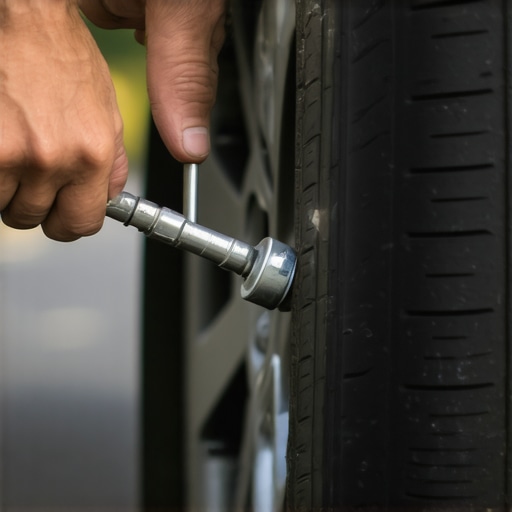
Seal the Leak with Proper Plug Technique
Now comes the sticky part. Peel one of those thick, brown ‘bacon strips’ out of your kit and thread it through the eye of the insertion tool. I like to dab a little rubber cement on the plug if the kit provides it, as it acts as a lubricant and a sealant. Push that tool straight into the hole until about half an inch of the plug is still visible. Here is the secret: do not twist the tool. Pull it straight out with a quick, snapping motion. I once tried to twist the tool out of habit, and it just pulled the plug right back out with it, leaving me with a bigger hole and a lot of frustration. This process is a vital addition to any car service checklist for road trippers.
Finish Strong with a Pressure Check
After the plug is seated, use a pair of pliers or a pocketknife to trim the excess rubber flush with the tire tread. If you leave it sticking out, the road will grab it and eventually pull it loose. Once it’s trimmed, you need to inflate the tire to its proper PSI immediately. Driving on a low tire even after a patch can ruin the sidewall, turning a ten-dollar fix into a three-hundred-dollar replacement. Understanding how to tell if your car needs a simple tune up or a major repair often boils down to how well you handle these small, intermediate fixes. Be aware that the reason your brake pedal feels different after a tire change could be related to the temporary spare or the change in tire diameter, so drive cautiously until you reach a service center.While we are talking about being hands-on with your car, there is a dangerous myth I need to dismantle. Most DIYers think they can judge the health of their vehicle’s systems by a simple visual check. They look at the reservoir and think, ‘It’s still golden, I’m good.’ But here is the reality: moisture is the silent killer of brake systems. Even if your fluid looks pristine, it can be saturated with water, which lowers the boiling point and leads to brake fade during an emergency stop. I learned this while understanding brake system repairs after my own pedal felt ‘spongy’ on a mountain pass despite the fluid looking brand new. You should be checking for chemical breakdown and moisture content with a dedicated tester, not just checking the color. The ‘oops’ factor here is mixing DOT 3 and DOT 5 fluid—a mistake that can turn your brake lines into a gelatinous mess because they aren’t chemically compatible. This is why why your brake fluid is green or dark is only half the story. Don’t fall for common brake service myths that suggest color is the only indicator of safety. 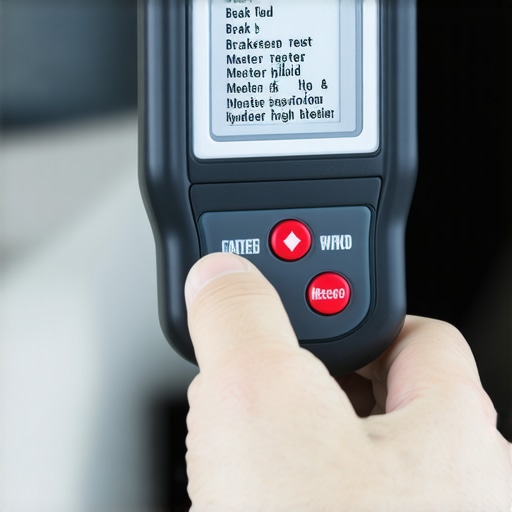
Can a Simple Tire Patch Throw Off Your Computer?
Here is a nuance most people miss: modern cars are basically rolling supercomputers. If your vehicle was manufactured in the last few years, it likely has Advanced Driver Assistance Systems (ADAS). Something as simple as a tire plug or a change in tire diameter can actually mess with the calibration of your lane-keep assist or emergency braking sensors. Most people ignore the reason your brake pedal feels different after a tire change, assuming it’s just the new rubber. In fact, if your mechanic doesn’t know how to tell if your local mechanic actually has the tools for a proper ADAS calibration, you might be driving with safety features that are slightly ‘off’ because the camera’s perspective has shifted relative to the road. According to the Car Care Council, neglected maintenance is a leading cause of vehicle failure, but in the digital age, ‘mis-calibrated’ maintenance is becoming a new, hidden risk for the modern driver. This isn’t just about the mechanics anymore; it’s about the software integration. Expertise now requires a scan tool as much as a wrench.
Stop Falling for the ‘Magic’ Tune-up Trap
The term ‘tune-up’ is a relic of the 1970s, yet people still walk into shops asking for one whenever their engine stumbles. They think a fresh set of plugs is a silver bullet for every performance issue. However, I’ve seen dozens of cases where a driver spends hundreds on a tune-up for peak performance only to find the problem was a $20 cracked vacuum hose or a dirty mass airflow sensor. Before you throw parts at a problem, you need to know how to tell if your car needs a simple tune up or a major repair. If you’ve already changed your plugs and noticed why your gas mileage dropped suddenly after a spark plug change, you likely have a deeper issue with the air-fuel ratio or an intake leak that a simple ‘tune-up’ won’t touch. Don’t let the ‘oops’ factor of a misdiagnosed sensor lead to the real cost of skipping your 100000 mile major service. Real expertise means looking beyond the obvious fix and diagnosing the root cause. Have you ever fallen into this trap of replacing parts without a diagnosis? Let me know in the comments.
If you really want to graduate from a ‘parts changer’ to a ‘diagnostic master’, you need to stop relying on the free scans at the local auto parts store. Those basic readers only tell you the ‘what,’ never the ‘why.’ I eventually invested in a bidirectional scan tool—specifically an Autel unit that allows me to command the car to perform tasks, like bleeding the ABS pump or cycling an EGR valve. This is how you truly handle understanding brake system repairs in a modern vehicle. Without the ability to talk back to the car’s computer, you are just throwing money at sensors and hoping one of them sticks. It’s the difference between a guess and a guarantee when you are trying to tune up your car for peak performance.
Stop Guessing and Start Reading the Data
One tool I recommend to everyone is a high-quality Bluetooth OBD-II adapter paired with an app like OBD Fusion or Torque Pro. I use this every single time I look at a used car or feel a slight stumble in my own engine. By watching your ‘Long Term Fuel Trim’ (LTFT), you can see if your engine is overcompensating for a vacuum leak or a failing pump long before a light ever hits the dash. According to the SAE International J1979 standard, which governs how diagnostic data is communicated, these PIDs (Parameter IDs) are the heartbeat of your vehicle’s health. If your LTFT is higher than 10%, you have a problem brewing. This kind of proactive monitoring is how you maximize your cars lifespan with expert tune-up strategies. It turns a potential breakdown into a Saturday morning project. 
How do I maintain complex vehicle electronics over time?
Maintaining advanced systems isn’t just about the hardware; it’s about the software and the connections. I make it a habit to check my ground wires once a year. A tiny bit of corrosion on a main ground can cause a cascade of ‘ghost’ codes that look like a failing transmission or a dead ECU. I also recommend using a dedicated contact cleaner on sensor plugs whenever you do a car service maintenance routine. This prevents the high-resistance issues that lead to those frustrating intermittent faults. If you want the secret to making your brake pads last twice as long, it’s not just about how you drive—it’s about ensuring the electronic brake distribution is functioning perfectly through clean, verified connections.
Prepare for the Shift Toward Remote Diagnostics
Looking ahead, I see a major shift in how we handle our rigs. We are moving toward a world of ‘software-defined vehicles’ where auto repair trends to watch in 2025 suggest that over-the-air updates and remote monitoring will become the norm. This means that knowing how to tell if your local mechanic actually has the tools for a proper ADAS calibration is going to be your most important skill as a consumer. The ‘greasy wrench’ era isn’t over, but it’s now paired with a laptop. To stay ahead, my best advanced tip for you is this: This weekend, plug in a scanner and look at your fuel trims while idling and then at 2,500 RPM. If the numbers drop significantly at higher RPMs, you’ve likely found a vacuum leak you didn’t even know existed. Taking that one small step today is the ultimate car service checklist move for anyone serious about their vehicle’s longevity.
Hard Truths from a Decade Under the Hood
I’ve spent more Saturdays than I can count covered in grease, and the biggest lesson I’ve learned is that your car is constantly talking to you—most of us just don’t speak the language yet. First, why I never trust the oil life monitor on my dashboard is a rule I live by; those sensors estimate health based on math, not the actual chemistry of your oil. Second, I’ve realized that understanding brake system repairs is 90% about patience and 10% about the right tools. If you rush a bleed or ignore a slight squeal, the road will remind you of your mistake at the worst possible time. Finally, remember that as we see more auto repair trends to watch in 2025, being ‘handy’ now requires a balance of mechanical grit and digital literacy.
The Gear I Carry to Sleep Better at Night
If you are building your first emergency kit or expanding your garage, start with a high-quality rope plug kit—not the flimsy plastic ones from the grocery store. I personally swear by the Safety Seal kits because the tools won’t bend when you are fighting a stiff truck tire. For diagnostics, grab a Veepeak Bluetooth OBD-II adapter; it’s cheap, fits in your pocket, and works with your phone to tell you exactly why that check engine light is on. I also recommend keeping a physical copy of a Haynes or Chilton manual for your specific model. Digital PDFs are great until your phone battery dies while you are trying to find a torque spec in the dark. These tools are the backbone of any car service checklist that actually works.
Claim Your Seat in the Driver’s Chair
Taking care of your own vehicle is about more than saving a few bucks at the shop; it’s about the confidence that comes from knowing you aren’t at the mercy of a tow truck. Whether you are learning to maximize your cars lifespan with expert tune-up strategies or just trying to get home on a plugged tire, every small fix builds your expertise. Don’t let the complexity of modern cars intimidate you. You have the tools, the data, and the capability to keep your rig on the road for years to come. Your next car service doesn’t have to be a source of anxiety—it can be your next big win. Have you ever successfully diagnosed a ‘ghost’ problem that stumped your local mechanic? Let me know in the comments below!