

I remember the freezing Tuesday morning when my trusty old sedan decided it was officially retired. The coffee was still steaming in my travel mug when I turned the key and heard that pathetic, rhythmic clicking. Not a crank. Not a roar. Just a metallic heartbeat of failure. I had just bought that battery six months ago! I was furious. I did what most folks do: I blamed the brand, swore off that specific auto parts store, and went out and bought another one. Two weeks later? Same thing. I felt like a total amateur standing in my driveway at 7:00 AM. It turns out, I wasn’t dealing with a bad battery; I was dealing with a parasitic draw, which is a fancy way of saying my car didn’t know how to go to sleep. Today, I am going to help you stop that cycle of frustration and keep your car ready to roll.
Why Your Car Is Secretly Working While You Sleep
Most of us think that when we pull the key out of the ignition, the car’s electrical system hits a hard off switch. I certainly did. But modern vehicles are more like computers on wheels than the purely mechanical beasts our grandfathers drove. Even when parked, your car is busy. It is waiting for your key fob signal, keeping the clock accurate, and maintaining the memory for your radio presets. However, when a component malfunctions—like a trunk light that stays on or a faulty control module—it starts feasting on your battery’s lifeblood while you sleep.
Does every modern car have this problem?
You might be skeptical. You might think a newer vehicle is immune to these leaks. The truth is, even a healthy vehicle has a small amount of standby current. According to the Battery Council International, a typical car battery can naturally lose its ability to start an engine in as little as four weeks if left completely idle due to these draws. But when that drain accelerates, you are in real trouble. I once spent three days chasing a stubborn electrical ghost in a truck only to find a faulty visor mirror light was the culprit. It is almost always something that small and annoying.
Stop Buying New Batteries and Start Hunting Ghosts
I made the expensive mistake of replacing hardware when the real problem was a simple stuck switch. Before you head to the shop for a major car service, you need to know if you are actually dealing with a dead cell or just a hidden drain that kills it over the weekend. If you notice that your dash clock resets every time you start the car, that is a massive red flag that your voltage is dipping too low overnight. Have you ever walked out to a dead car despite having a brand-new battery? It is enough to make you want to sell the thing for scrap! But hold on. Today, we are going to use some logic to stop the drain. We will look at how to test things with a simple multimeter to see exactly where those amps are escaping. Whether it is a blown fuse or a bad ground wire, we are going to find the leak before you spend another dime on a battery you don’t need.
Get Your Multimeter and Stop Guessing
To catch a thief, you need the right surveillance. In the world of auto repair, that is your digital multimeter. Think of it like a stethoscope for your car’s veins. You are looking for ‘milliamps’—the tiny units of electricity that should be a trickle but are currently acting like a garden hose. Before you start, ensure your battery is fully charged. If it is struggling, you might misinterpret the readings. I always suggest you test your alternator with a simple multimeter at home first to ensure the charging system isn’t the actual culprit. Once you know the battery can hold a charge, it is time to see who is stealing it.
Prepare Your Vehicle for Sleep Mode
Modern cars are sensitive. If you open a door, the computer wakes up. If you click the key fob, it wakes up. To get an accurate reading, you have to trick the car into thinking it is locked and asleep while you have the hood open. I once spent two hours chasing a massive draw on a client’s sedan before realizing that because the trunk was open, the interior lights were stayed on, skewing every single number. Now, I use a screwdriver to manually trip the latch on the hood or doors so the car ‘thinks’ they are closed. This allows the modules to enter sleep mode, which can take anywhere from 10 to 45 minutes depending on the vehicle. Patience here is the difference between a successful repair and wasting a Saturday. 
How to Hook Up Your Meter Without Blowing a Fuse
This is where most DIYers get nervous. You need to connect your multimeter in ‘series.’ This means the electricity has to flow *through* the meter. Disconnect the negative battery terminal and touch one probe to the battery post and the other to the cable end. If you see a reading higher than 50 milliamps (0.05 on the 10A setting) after the car has settled, you’ve officially found a leak. If you are worried about the electrical surge, remember that learning the correct way to jumpstart a car without frying the computer uses similar principles of respecting the flow of current.
Pull Fuses Until the Numbers Drop
Now the hunt begins. While watching the multimeter, have a friend start pulling fuses one by one from the fuse box. When you pull a fuse and the reading on the meter suddenly drops to near zero, you’ve found the circuit with the leak. This is much faster than guessing and helps you determine how to tell if your electrical problem is a blown fuse or a bad ground wire. I remember a specific time I was working on an old SUV; I pulled eighteen fuses with no change. On the nineteenth—the one for the radio—the draw vanished. It turned out an aftermarket satellite radio adapter was stuck in a reboot loop.
Check the Usual Suspects Beyond the Engine Bay
If the fuses in the engine bay don’t reveal the leak, don’t panic. Many cars have a second or even third fuse block under the dash or in the trunk. While you are there, look for ‘phantom’ draws like a glove box light that doesn’t turn off or a stuck brake light switch. If you’ve been hearing weird noises lately, you might want to investigate brake service myths to see if a mechanical failure is causing an electrical sensor to stay active. Identifying these leaks is part of how you maximize your car’s lifespan with expert tune-up strategies. If the draw is coming from the braking system, you should check out our guide on understanding brake system repairs to ensure a faulty sensor isn’t keeping your ECU awake all night.Most people assume that if a part is brand new, it is perfect. This is the first major trap in the world of DIY repair. I have seen ‘fresh-out-of-the-box’ alternators fail immediately, but the real nuance often lies in how you perform the installation. When you decide to maximize your car’s lifespan with expert tune-up strategies, you have to go beyond just swapping parts. For example, if you are not checking the specific torque specs or the electrode gap, you are essentially just guessing. I have had countless readers complain that their gas mileage dropped suddenly after a spark plug change. In almost every case, it was because they dropped a plug while installing it, closing the gap without realizing it, or they bought the wrong heat range for their specific engine. 
Why Your New Brake Pads Might Still Squeak
Everyone says that a squeak or a squeal means you need new pads. However, the most common myth is that pads are the only source of noise. In my experience, the noise usually comes from the vibration of the hardware or a lack of proper lubrication on the caliper slide pins. If you fall for common brake service myths, you will end up buying expensive pads every six months while the actual vibration remains unaddressed. A study by the Car Care Council once found that over 70% of vehicles on the road have at least one unperformed maintenance task that could lead to a major failure. This is often because owners are focused on the wrong ‘symptoms’ rather than the root cause.
Why does my car still run rough after I replaced the sensors?
This is a sophisticated headache that separates the amateurs from the pros. When you replace a faulty oxygen sensor or a mass airflow sensor, your vehicle’s Engine Control Unit (ECU) may still be using ‘learned values’ from the old, broken part. The car essentially remembers how it used to struggle and continues to compensate for a problem that no longer exists. To truly fix it, you often need to perform a ‘Keep Alive Memory’ (KAM) reset with a diagnostic tool. Without this step, the car continues to dump too much fuel, potentially fouling your brand-new components. Before you dive into a deep repair, always consult the ultimate car service guide to see if your vehicle requires a system reset or an ADAS calibration.
The Dangerous Temptation of a Clean Engine
Here is a specific warning that I cannot stress enough: never, under any circumstances, take a high-pressure hose to your engine bay. I know it looks satisfying to see the grease wash away, but you should never use a pressure washer on your car engine. Modern connectors are designed to be weather-resistant, not pressure-proof. High-pressure water can bypass seals and enter sensitive electronics, creating electrical ghosts that are nearly impossible to track down. It is much better to take the time to learn how to tell if your car needs a simple tune-up or a major repair through observation rather than causing new damage for the sake of aesthetics. Have you ever fallen into the trap of replacing a part that didn’t fix the problem? Let me know in the comments.I’ve spent thousands on tools over the years, and if I could go back, I’d tell my younger self to stop buying shiny wrenches and start buying information. In the modern garage, an OBD-II scanner that provides ‘Freeze Frame’ data is your most valuable asset. When a light pops on, the computer captures a snapshot of every sensor at that exact microsecond. Without this, you are just throwing parts at a problem. This is where you really begin to maximize your car’s lifespan with expert tune-up strategies. I personally use a bidirectional scanner because it lets me command the car to perform tests, like cycling the fuel pump or moving a brake caliper, which is essential for understanding brake system repairs without needing a second person to pump the pedals. 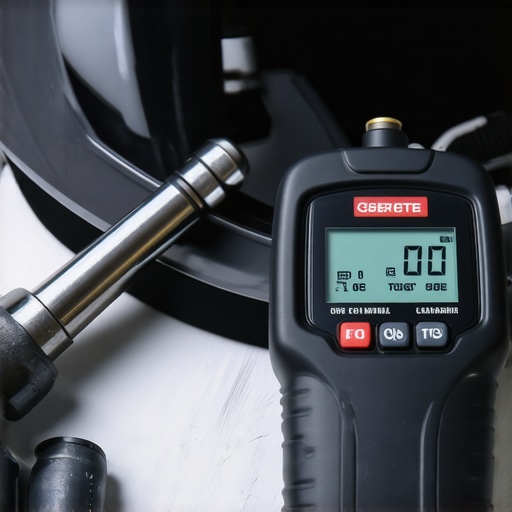
Ditch the Guesswork with Real-Time Diagnostics
Professional auto repair isn’t about having the strongest arms; it’s about having the best data. According to the SAE International J1979 standard, which defines the communication protocols for diagnostic data, your vehicle’s computer is constantly logging ‘Mode $06’ data—this contains the results of non-continuous monitor tests. If you learn to read these, you can see a misfire occurring or a catalyst aging before it ever triggers a check engine light. This level of precision is how you truly tune up your car for peak performance. Most people wait for the car to scream via a dashboard light; I prefer to listen while it is still whispering in the data logs.
How do I maintain my car’s complex electronics over time?
The secret isn’t a magic spray; it is clean power and the strategic use of dielectric grease. Every time you have an electrical connector open during a routine car service, check carefully for green crusty corrosion. Use a tiny amount of dielectric grease to seal out moisture, but never pack it into the pin holes. Beyond the physical connections, keep your battery at a healthy voltage. Low voltage causes ‘ghost’ codes in modules that have nothing to do with the battery itself. If you follow a solid car service checklist, you will catch these small voltage drops before they turn into a 100,000-mile major service nightmare.
The Future of Your Garage is Wireless
Looking ahead, I see the DIY world shifting rapidly toward predictive AI. We are already seeing auto repair trends to watch in 2025 where vehicles will use vibration analysis through existing ABS and knock sensors to tell you a wheel bearing is failing weeks before you can actually hear it. It is a wild time to be a gearhead. For now, stop using your ‘feel’ for tightening critical bolts and buy a high-quality digital torque wrench. If you want to avoid a snapped bolt in an aluminum block or a warped brake rotor, precision is your only friend. My advanced tip for you this weekend: don’t just check your oil; use a multimeter to test your battery’s resting voltage after the car has sat for four hours. Anything under 12.4V means it is time to hunt for that hidden drain.
The Hardest Lesson I Learned About Chasing Electrical Ghosts
For years, I believed that if I could physically see a part was broken, I could fix it. But electrical issues are invisible, and my biggest lightbulb moment was realizing that logic is your most powerful tool. Sometimes, the 5-dollar part that usually fixes a flickering check engine light is actually just a loose ground wire rather than a failed sensor. I also learned that you can’t rush a car into sleep mode; walking away for twenty minutes while the computer settles is non-negotiable. Finally, never underestimate the power of a reset. If you don’t clear the learned memory after a repair, the car might continue to act broken simply because it is stuck in its old habits.
The Tools That Saved My Sanity in the Garage
If you want to move beyond basic oil changes, you need a kit that provides actual data. First, a Digital Multimeter with a Min/Max function is essential for catching intermittent drains that happen in a split second. Second, I highly recommend investing in a bidirectional OBD-II scanner; it transforms your relationship with your car by letting you command components to turn on or off for testing. Third, always keep a high-quality digital torque wrench nearby to ensure you aren’t over-tightening bolts into aluminum blocks. Using these tools alongside a solid car service checklist will turn a stressful Saturday into a rewarding victory.
Taking the First Step Toward a More Reliable Ride
DIY repair isn’t just about saving money; it’s about the peace of mind that comes with knowing exactly how your machine works. Whether you are performing a simple tune-up or diving into a complex 100,000-mile major service, the principles remain the same: observe, test, and then act. Don’t be afraid to get your hands dirty and trust the numbers on your meter over your gut feeling. Every professional technician was once an amateur standing in a driveway with a dead battery and a sense of frustration. Have you ever spent hours on a repair only to find it was a simple fuse or a loose wire that solved everything? Let me know in the comments below!