
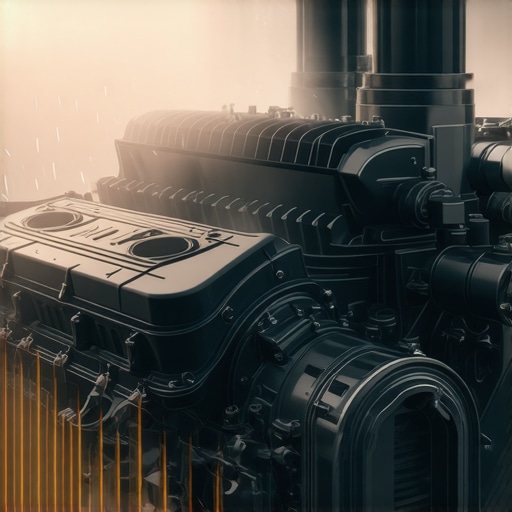
Why Your Diesel Engine Sounds Like a Bag of Hammers on Cold Starts
There is a specific sound that diesel owners know all too well on a frigid January morning. You turn the key, the wait-to-start light finally flickers off, and the engine roars – or rather, clatters – to life with a violent, rhythmic metallic banging. It sounds less like a precision-engineered machine and more like someone threw a bag of hammers into a clothes dryer. While diesel engines are inherently louder than their gasoline counterparts, a particularly harsh cold-start knock is often a cry for help from your powertrain.
My name is Michael Visconti, and with a Master’s degree in Diesel Engine and Electrical systems, I have spent decades diagnosing the intricacies of compression-ignition engines. Throughout my career as a Master Technician, I’ve learned that while some “diesel clatter” is a byproduct of physics, a violent “hammering” indicates that your engine is struggling to manage its combustion cycle under thermal stress. Understanding why this happens is the first step in preventing catastrophic engine failure. If you find yourself searching for auto repair near me because your truck sounds like it’s self-destructing every morning, this guide will explain exactly what is happening inside those cylinders.
Understanding “Diesel Clatter”: The Science of Cold Combustion
To understand the “bag of hammers,” we must first understand the fundamental difference between gasoline and diesel combustion. A gasoline engine uses a spark plug to initiate a controlled flame front at a precise moment. In contrast, a diesel engine relies on compression ignition. It squeezes air until it reaches temperatures exceeding 1,000°F, at which point the injected fuel spontaneously ignites.
The “clatter” we hear is the result of ignition delay. When the engine block, cylinder walls, and intake air are cold, the heat generated by compression is rapidly absorbed by the surrounding metal. This creates a lag between the moment the fuel is injected and the moment it actually ignites. During this delay, more fuel continues to be sprayed into the cylinder. When the temperature finally reaches the auto-ignition point, all that accumulated fuel ignites at once. This results in a massive, instantaneous pressure spike that sends a shockwave through the piston, connecting rod, and engine block. That shockwave is the “knock” you hear. In the world of professional diagnostics at a diesel repair shop, we refer to this as a high rate of pressure rise.
5 Reasons Your Diesel Rattles and Knocks When Cold
While the basic physics of cold air explains some noise, excessive hammering usually points to a specific component failure. Here are the five most common culprits I see in the bay.
1. Faulty Glow Plugs or Intake Heaters
Modern diesels use glow plugs (in-cylinder heating elements) or intake air heaters to bridge the gap during cold starts. These components are designed to pre-heat the combustion chamber or the incoming air to ensure that ignition happens as close to the injection event as possible. When one or more glow plugs fail, the cylinder remains too cold for efficient combustion. This leads to a massive ignition delay and a violent “fuel knock” as unburnt fuel finally finds enough heat to explode. If your truck emits white smoke along with the hammering sound, it’s a classic sign of unburnt fuel caused by a glow plug issue. Knowing How to tell if your car needs a simple tune up or a major repair can help you decide if you just need a new set of plugs or if the controller itself has failed.
2. Sticking or Worn Fuel Injectors
In many older diesel engines, particularly the Ford Powerstroke 6.0L and 7.3L, the injectors are fired by high-pressure engine oil. This leads to a phenomenon known as “stiction” – a portmanteau of static and friction. When the oil is cold and thick, the internal spool valves in the injectors move slowly or get stuck. This results in poor fuel atomization or “streaming,” where fuel is poured into the cylinder rather than misted. This causes erratic combustion, RPM fluctuations, and a heavy knock. If you suspect injector issues, visiting a Mechanic Shop Near Me for a specialized diagnostic is essential, as a streaming injector can eventually wash out a cylinder wall or melt a piston.
3. Oil Viscosity and Lubrication Lag
Diesel engines require heavy-duty oil to handle high compression ratios, but if the oil is too thick for the ambient temperature (such as using 15W-40 in sub-zero climates), it takes significantly longer to reach the top end of the engine. During those first few seconds of operation, the valve train and lifters may be operating without adequate lubrication, creating a sharp, metallic “clacking.” This is why searching for a truck repair near me is vital if the sound persists for more than a minute; it suggests that your oiling system isn’t recovering quickly enough. Cold weather doesn’t just affect your oil; it’s also Why your transmission slips when the weather gets cold, as hydraulic pressures struggle to stabilize.
4. Low Cetane Fuel & Winter Blends
The “Cetane” rating of diesel fuel is essentially the opposite of the “Octane” rating in gasoline. While octane measures a fuel’s resistance to ignition, cetane measures its readiness to ignite. Low-quality fuel with a low cetane number has a longer ignition delay, which naturally increases the “bag of hammers” sound. During winter, many stations switch to a “winter blend” which includes kerosene to prevent gelling. While this prevents the fuel from turning into wax, it also lowers the energy density and can increase engine noise. If your engine is struggling, you might benefit from Troubleshooting Common Auto Repair Issues Before Visiting the Shop by trying a cetane booster additive first.
5. Timing and Advanced Injection Issues
Modern Engine Control Units (ECUs) are programmed to advance injection timing when they detect cold coolant temperatures. By injecting the fuel earlier in the compression stroke, the engine has more time to build heat. However, advanced timing naturally increases the “rattle” of a diesel engine. If the sensors (like the Coolant Temperature Sensor or Intake Air Temp sensor) are sending incorrect data, the ECU might advance the timing too aggressively, leading to a knock that sounds like the pistons are trying to exit the hood. This is a common issue that we address at Car repair shops near me using advanced telemetry tools.
Ticking vs. Knocking: How to Diagnose the Sound
As a Master Technician, I always ask my customers to describe the rhythm and pitch of the noise. Not all sounds are created equal. A light, rapid “ticking” that follows engine RPM is often related to the valve train – perhaps a lifter that hasn’t pumped up with oil yet or an injector solenoid clicking. This is usually less concerning than a “knock.”
A heavy, rhythmic “hammering” or “thumping” is typically combustion-related (fuel knock) or mechanical (rod knock). If the “bag of hammers” sound is accompanied by a steering wheel that vibrates violently, you should check Why your steering wheel shakes specifically at 65 miles per hour, as engine mounts or severe misfires can transmit those forces through the frame. Furthermore, if you notice excessive pressure in the cooling system or white sweet-smelling smoke, you should learn How to tell if your car has a blown head gasket at home, as coolant entering the combustion chamber can also cause “hydro-lock” knocking.
When to Visit a Diesel Mechanic Near Me
If the hammering sound doesn’t dissipate within 30 to 60 seconds of driving, or if it returns when you accelerate, it is time to visit a diesel mechanic near me. Professional shops use diagnostic software to perform a “cylinder contribution test.” This test allows us to shut off individual injectors one by one while the engine is running. If we shut off injector number four and the knocking sound disappears, we have identified the “dead” or “knocking” cylinder.
We also look at “injector balance rates.” This measures how much fuel the ECU is adding or subtracting from each cylinder to keep the crankshaft rotating at a steady speed. If one cylinder is lagging due to low compression or a bad injector, the ECU overcompensates, which often results in that characteristic hammer sound. Ignoring these symptoms can lead to the “real cost” of neglect, much like The real cost of skipping your 100,000 mile major service – except in this case, a melted piston can cost upwards of $15,000 in engine replacement costs.
Preventing the “Bag of Hammers”: Maintenance Tips
The best way to handle a cold-start knock is to prevent the conditions that cause it. Here are my top recommendations for diesel longevity:
- Use a Block Heater: If the temperature drops below 30°F, plug it in. Keeping the coolant and block warm significantly reduces ignition delay.
- Switch to Synthetic Oil: A 5W-40 full synthetic oil flows much better at cold temperatures than a traditional 15W-40 conventional oil, reducing stiction and top-end wear.
- Fuel Additives: Use a high-quality fuel treatment that increases cetane and provides lubricity for the injectors.
- Monitor Warm-up Times: If your truck never reaches operating temperature, it could be Why your car takes forever to warm up in the morning, indicating a stuck-open thermostat which exacerbates cold-start issues.
For a complete breakdown of how to keep your vehicle in peak condition, refer to The Ultimate Car Service Guide: When and Why to Schedule Maintenance.
If your diesel engine continues to sound like a bag of hammers, don’t wait for a “Reduced Engine Power” light to appear on your dash. Whether you need a simple glow plug replacement or a complex injector rebuild, getting an expert opinion is the only way to ensure your truck stays on the road for the long haul. For residents in the Southwest, visiting a reputable shop for auto repair the valley is the best way to get a professional diagnostic from technicians who understand the unique demands of diesel performance.