
I was sitting at a stoplight in downtown Orlando last month, the heat already shimmering off the asphalt, when I finally decided to give my car a little gas to beat a yellow light. Instead of the usual low growl, I heard a rising, piercing whistle that sounded exactly like a jet engine spooling up for takeoff. I actually looked up, expecting to see a plane low in the sky, but no—the sound was coming from right under my hood. It’s incredibly unnerving. You start wondering if your transmission is about to drop onto the pavement or if your engine is literally about to melt down. That high-pitched whine isn’t just a nuisance; it’s a specific symptom that something spinning under your hood is struggling for its life.
That High-Pitched Scream Usually Means a Bearing is Crying for Help
I’ve spent years getting my hands greasy, but I’ll be the first to admit that I once ignored a whine like this for three weeks because I thought it was just a quirk of an aging car. I ended up stranded on the side of the road with a seized alternator and a very expensive tow bill. The truth is, that jet engine sound is a very specific plea from your car’s belt-driven accessories. Whether it’s a failing bearing in your alternator, a worn-out water pump, or a thirsty power steering pump, your car is telling you that something is no longer spinning freely. If you’ve been troubleshooting common auto repair issues on your own, you know that sound is often the first clue before a total breakdown. We are going to pin down exactly which part is screaming today so you don’t end up like I did—sweating on a highway shoulder.
Is This Whine Actually Going to Break the Bank?
One of the biggest fears we all have is that every new noise equals a four-figure repair bill. But here’s the kicker: sometimes it’s just a ten-dollar belt that has glazed over and is slipping. However, if the pitch changes specifically when you turn the steering wheel, you might need to look at why your steering wheel feels heavy. It is all about the context of when the sound happens. According to the National Institute for Automotive Service Excellence (ASE), sound is often the first indicator of mechanical stress long before a dashboard light ever flickers on. You don’t necessarily need a whole new engine; you might just need to know if your alternator is dying before it takes the battery down with it. Have you ever felt that sudden jolt of anxiety when a new noise pops up right after you’ve already paid for a different repair? It’s the worst feeling, isn’t it? Tell me in the comments if you’re hearing that whistle right now and whether it happens more when the engine is cold or after a long drive. Understanding these patterns is a huge part of the ultimate car service guide for any owner who wants to keep their vehicle on the road for the long haul.
Grab a Long Screwdriver and Become an Engine Whisperer
You don’t need a fancy diagnostic computer to find out which bearing is screaming; you just need to channel your inner doctor. One of the most effective tricks I ever learned was using a long, heavy-duty screwdriver as a makeshift stethoscope. You carefully place the tip of the screwdriver on the non-moving housing of the part you suspect—like the alternator or the air conditioning compressor—and press your ear against the handle. If that specific bearing is failing, the vibration will travel straight up the metal and hit your ear like a freight train. It’s a raw, mechanical grinding that you can actually feel in your jawbone. I used this exact method on a neighbor’s rattling SUV last summer when he was convinced he needed a new engine. Turns out, it was just a twenty-dollar idler pulley that was about to explode. If the noise is coming from the charging system, you might want to learn how to test your alternator with a simple multimeter at home to confirm if the internal electronics are also fried. 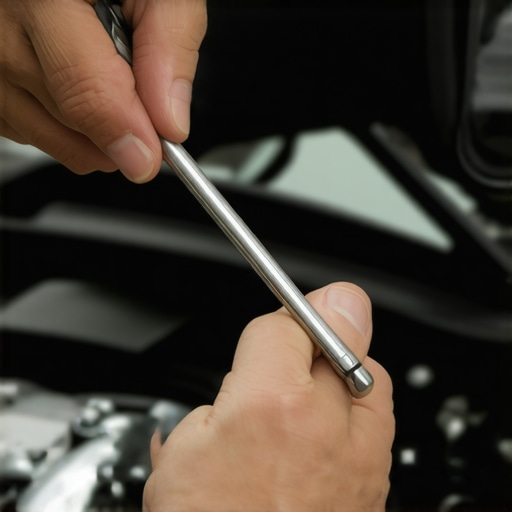
The Simple Spin Test You Can Do in Five Minutes
If the screwdriver method feels a bit too close for comfort near those spinning fans, the absolute ‘gold standard’ for diagnosis is the belt removal test. You simply loosen the tensioner, slip the serpentine belt off, and spin each pulley by hand. A healthy pulley should feel like it’s spinning in heavy cream—smooth, silent, and with a tiny bit of resistance. If you spin it and it sounds like a dry skateboard wheel or feels like there is sand inside, you’ve found your jet engine. This is a foundational step in any car service checklist because it eliminates the guesswork. I remember one time I skipped this step on a client’s car, assuming the water pump was the culprit because of where the sound seemed to be coming from. I spent four hours draining coolant and swapping the pump, only to start the car and hear that same whistle. It was actually the belt tensioner itself. Since then, I always spin every pulley manually before I buy a single part. It’s the difference between troubleshooting common auto repair issues efficiently and just throwing money at the hood.
Look for the Tell-Tale Signs of Heat and Dust
Sometimes you don’t even need to touch the car to see the problem. When a bearing starts to seize, it creates massive amounts of friction. This heat often causes the grease inside the bearing to liquefy and spray out, leaving a fine ‘ring of death’—a circle of black or rusty-looking dust—around the pulley. If you see that dust, the part is on borrowed time. This kind of preventative inspection is exactly what we mean when we talk about how to maximize your car’s lifespan with expert tune-up strategies. If the whistle is accompanied by a heavy feeling in the steering wheel, you’re likely looking at a failing power steering pump. In those cases, you should investigate the reason your steering wheel feels heavy when you are parking before the pump completely locks up and snaps your belt. Whether it’s a simple idler or a major component, catching it while it’s still just a whistle prevents the cascade of damage that happens when a pulley finally seizes and shreds the belt at highway speeds. Keeping an eye on these small mechanical cues is the best way to determine if your car needs a simple tune-up or a major repair.Most people think a tune-up is just swapping out spark plugs and calling it a day. But if you’re trying to tune up your car for peak performance, you have to look beyond the basic consumables. One major myth I see constantly is the belief that ‘if there is no Check Engine Light, there is no problem.’ In reality, your car’s computer is programmed with specific tolerances. It might not throw a code until a sensor is 20% out of spec, but you will feel the drop in power and see how regular tune-ups improve fuel efficiency and safety long before that light ever flickers. This is why I always tell my friends that the most expensive repair is the one you didn’t see coming because you were waiting for a computer to tell you to look.One of the biggest traps in modern car ownership is the dashboard Oil Life Monitor. I have seen engines completely sludged up at 80,000 miles because owners waited for the digital display to hit zero percent. Personally, I never trust the oil life monitor on my dashboard because these algorithms often fail to account for severe humidity or short-trip driving where the oil never reaches full operating temperature. According to data from AAA, nearly 1 in 3 drivers are behind on their vehicle maintenance, often because they rely too heavily on automated alerts rather than a physical car service checklist. Relying solely on the car’s ‘brain’ is a shortcut that eventually leads to the mechanic’s shop.
Can an Internal Vacuum Leak Actually Sound Like a Dying Bearing?
Here is the high-level nuance most people miss: sometimes that high-pitched whistle we discussed earlier isn’t a mechanical bearing at all. It can be a pinhole leak in a vacuum hose or a failing intake manifold gasket. As air is sucked through a tiny gap at high velocity, it creates a ‘reed effect,’ sounding exactly like a whistling pulley or a screaming alternator. If you have replaced the belt and the tensioner but that jet engine sound remains, you might need to identify a vacuum leak using a simple spray bottle. This is where most DIYers get stuck—they keep throwing money at rotating parts while the actual culprit is a two-dollar rubber hose. 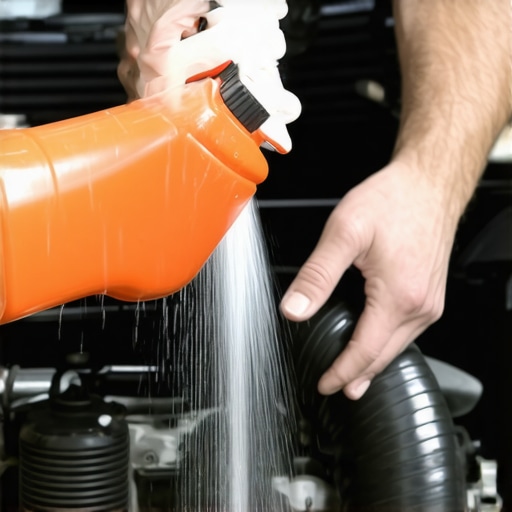 The same logic applies to your braking system. Many drivers panic at the first sign of a squeak, but it pays to learn how to tell if your brake squeak is serious or just morning moisture. There are plenty of brake service myths out there, such as the idea that you always need new rotors with every pad change. If you aren’t feeling a pulse in the pedal, your rotors might just need a light resurfacing or a simple cleaning. Have you ever fallen into this trap—replacing an expensive part only to find the noise was still there? Let me know in the comments. It is a frustrating rite of passage, but knowing if your car needs a simple tune-up or a major repair starts with looking past the dashboard. Keeping these nuances in mind is the only way to maximize your car’s lifespan with expert tune-up strategies. It isn’t just about following a manual; it is about understanding the ‘why’ behind the wear.I’ve realized that while the ‘screwdriver stethoscope’ is a classic, scaling your DIY game requires tools that speak the same language as your car’s computer. When I’m deep into troubleshooting common auto repair issues before visiting the shop, my go-to isn’t just a wrench; it’s a bidirectional scan tool. Unlike the cheap code readers that just spit out a generic error, a high-quality scanner allows you to perform ‘active tests’—like manually forcing the fuel pump to pulse or cycling the ABS valves during a bleed. Technical documentation from Robert Bosch GmbH emphasizes that monitoring live data streams is the only way to catch intermittent sensor lag before it causes a hard failure. If you are serious about your own car service, investing in a tool that can graph oxygen sensor voltage in real-time will save you hours of head-scratching and unnecessary part swapping.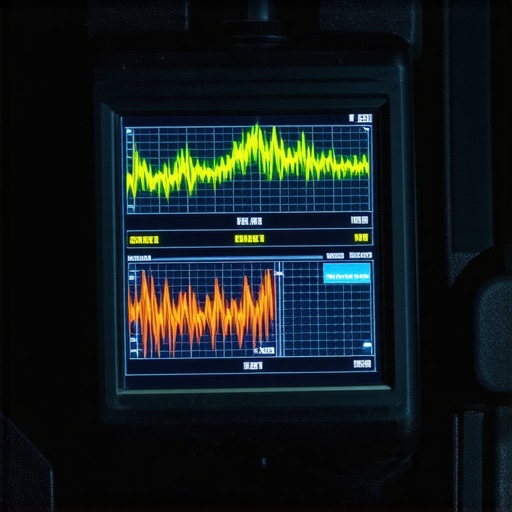
How do I keep my car running like new for 200,000 miles?
The secret isn’t just one big repair; it’s the cumulative effect of small, consistent actions. I follow a strict car service checklist that focuses heavily on fluid integrity rather than just checking levels. Most people ignore their brake system until the pedal feels soft, but I’ve found that flushing the system every two years is the only way to maximize your car’s lifespan with expert tune-up strategies. If you wait until you see that your brake fluid is green, you’re already dealing with internal corrosion that eats away at expensive ABS modules. It is these invisible chemical changes—not just mechanical wear—that determine how long your vehicle survives in the long run. When you stay ahead of the curve, you transition from reactive ‘fixing’ to proactive preservation. Speaking of staying ahead, we are seeing a major shift in auto repair trends to watch in 2025 where cars will use cloud-based AI to predict bearing failure weeks before the jet engine sound even starts. We are moving toward a world where your phone might alert you that your alternator’s internal resistance is spiking while you’re just driving to the grocery store. It sounds like sci-fi, but for those of us who love to tune up your car for peak performance, it’s an exciting new frontier. If you really want to level up your maintenance game today, grab a set of brake fluid test strips from the parts store. Check your copper content levels this weekend—it’s the single most overlooked metric in understanding brake system repairs and can save you a fortune in master cylinder replacements.
The Most Expensive Lesson I Learned by Ignoring a Simple Whine
If there is one thing I have learned after years of getting my hands greasy, it is that silence is rarely a sign of health, but a whistle is always a call to action. I once thought a faint, jet-like whine in my old SUV was just ‘character’ until the alternator bearing finally seized at 70 MPH, shredding the belt and leaving me without power steering or cooling in heavy traffic. That day taught me that understanding the real cost of skipping your 100000 mile major service isn’t just about the price of the parts; it is about the safety of your family and the reliability of your ride. My ‘lightbulb moment’ was realizing that your car doesn’t just break; it gives you a series of warnings in a language of vibrations and pitches. If you hear that whistle, treat it as a gift of time before the actual breakdown occurs. Trusting your intuition and a solid car service checklist will save you more money than any coupon ever could.
Tools That Saved Me from a Total Breakdown
You do not need a professional-grade shop to get professional-grade results when diagnosing these sounds. I always keep three specific items in my trunk that have paid for themselves ten times over. First is a simple infrared thermometer; if you suspect a pulley is failing, point it at the housing—a failing bearing will be significantly hotter than its neighbors. Second, I swear by brake fluid test strips, as they provide the most accurate data for understanding brake system repairs and preventing internal ABS failure. Finally, I never start a weekend diagnostic session without my bidirectional scan tool. It allows me to see the load on the alternator in real-time, helping me decide if your car needs a simple tune-up or a major repair. For the small, annoying stuff, I always keep a few stainless steel clamps handy, which is the secret for how to fix a rattling heat shield for under ten dollars without having to replace the entire exhaust component.
Stop Fearing the Whistle and Start Tuning Your Ears
It is easy to feel overwhelmed when your car starts making noises that sound like a Boeing 747, but remember that you are in control. By taking the time to investigate that high-pitched scream now, you are making a conscious choice to maximize your car’s lifespan with expert tune-up strategies. Maintenance is not a chore; it is an investment in your freedom to travel without anxiety. Whether it is a simple vacuum leak or a thirsty power steering pump, catching it early is the hallmark of a savvy owner. Don’t let the fear of a mechanic’s bill stop you from lifting the hood and listening—you might find that the fix is simpler than you ever imagined. Have you ever had a mystery noise that you managed to solve with just a screwdriver or a quick visual check? I would love to hear about your DIY wins in the comments below!