
I remember the first time I spent a Saturday morning waiting for an alignment. I’d just put new tires on my old truck, and I was convinced that thirty minutes on the rack would make it handle like it was on rails. I paid my bill, pulled out of the lot, and my heart sank. The steering wheel felt like it wasn’t even connected to the wheels for the first few inches of every turn. It was terrifying. You expect precision, but you get a steering column that feels like a wet noodle. It’s that ‘dead zone’ where you move the wheel and the car just keeps going straight. If you have ever experienced that floaty, disconnected sensation after leaving the shop, you are not alone, and you are certainly not imagining things.
That Heart-Sinking Moment When Your Fresh Alignment Feels Off
I am going to help you get to the bottom of this frustrating mystery today. We are going to solve the puzzle of why a machine-perfect alignment doesn’t always translate to a tight, responsive driving experience. Back when I was first learning my way around a wrench, I made the classic rookie move of assuming a computer-aided alignment would magically fix a worn-out steering gearbox. I wasted a good chunk of change on a service that was doomed to fail because I didn’t check the mechanical ‘slop’ in the components first. Before you run out and stop buying new tires or start blaming the technician, we need to talk about what an alignment actually does—and what it definitely doesn’t fix.
Does Every Car Have a Little Steering Dead Zone?
You might be wondering if a bit of ‘play’ is just part of the car’s personality as it ages. While every vehicle has a specific tolerance, a loose feeling usually points to a mechanical gap that the alignment rack can’t see. According to research from the National Highway Traffic Safety Administration, steering and suspension failures are a leading factor in vehicle-related crashes, which means that loose feeling is a safety signal you shouldn’t ignore. It’s often related to the same issues that cause people to seek brake system repairs or more frequent car service. If your car is drifting or the wheel is off-center, you can usually tell if your alignment is off by looking at your steering wheel, but ‘looseness’ is a different beast entirely. Have you ever felt that terrifying ‘float’ while trying to stay in your lane on the interstate? I want to hear about it, because knowing exactly when it happens is the first step to the fix. We are going to dive into the steering rack, the tie rods, and the intermediate shafts to find your missing precision.The first thing you have to accept is that a laser-guided alignment machine only cares about where the tires are pointing when the car is stationary. It doesn’t account for the ‘shuffling’ that happens inside a worn-out component when you are actually moving. If your tie rod ends are shot, you could have a perfect reading on the computer, but the moment you hit a pothole, those parts shift. I once spent four hours on a customer’s old SUV that had ‘perfect’ specs on paper. It drove like a boat because the steering gear box had a quarter-inch of internal play. We had to adjust the preload screw—a tiny tweak that no alignment rack in the world would have suggested. You should always start by troubleshooting common auto repair issues before visiting the shop to save yourself that second trip.
Find the Slop with a Dry Park Test
This is my favorite no-tool trick. You don’t even need a jack. Sit in the driver’s seat with the engine running and have a friend stand outside looking at the front tires. Move the steering wheel back and forth just within that ‘dead zone’ where you feel no resistance. If you are moving the wheel three inches and the tires aren’t budging, the problem is between your hands and the rack. This simple test is just as vital as knowing the simple way to tell if your shocks are actually worn out. While you’re at it, have your friend look at the steering linkage. If the rod moves but the wheel doesn’t, you’ve found your culprit.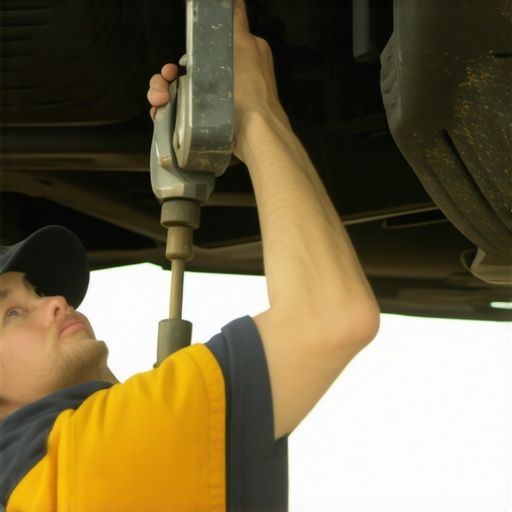
Hunt Down the Intermediate Shaft Ghost
Sometimes the looseness isn’t in the wheels at all; it’s in the steering column itself. Most modern cars have an intermediate shaft with small universal joints. These joints can dry out or develop ‘flat spots’ or play. When this happens, you get a weird combination of a heavy wheel and a loose wheel. It’s a common part of a real cost of skipping your 100,000-mile major service that people often overlook. If you feel a slight ‘click’ or ‘pop’ in your palms when you turn, that’s almost certainly a U-joint in the column giving up the ghost.
Check the Tie Rods Before You Pay for More Labor
Inner and outer tie rods are the hands that actually turn your wheels. If the ball-and-socket joints inside them are loose, your alignment is essentially ‘floating.’ You might be tempted to think you need a simple tune-up or a major repair, but if the steering is the only symptom, focus there first. Grab the tie rod and try to shake it. If it clanks or moves vertically, it’s toast. Replacing these before an alignment is the only way to make the service stick. I learned this the hard way after three alignments on the same truck—all because I was too lazy to check a twenty-dollar tie rod end.Most people think that if the alignment machine gives them a ‘green’ sheet, their car should handle like it is brand new. I am here to tell you that is a complete myth. In reality, a machine can be fooled by ‘static friction’ in your ball joints. I have seen cars that were technically within spec but were downright dangerous to drive because the internal components were binding. This is one of the biggest brake service myths and repair misconceptions—that the computer is always right. If your suspension bushings are dry-rotted, the machine might get a good reading while the car is sitting still, but the moment you hit a highway off-ramp, those parts deflect under the load. You have checked your car service checklist, but you haven’t accounted for dynamic movement.
Avoid the Dangerous Trap of Over-Tightening Your Steering Box
When DIYers or inexperienced techs feel that ‘dead zone,’ they often go straight for the preload adjustment screw on the steering gearbox. Here is the ‘oops’ factor you need to avoid: if you tighten that screw too much to get rid of the slop, you create internal friction that prevents the steering wheel from returning to center. Imagine coming out of a sharp left turn and the car just keeps turning left because the wheel is stuck. It is a nightmare scenario. Before you touch that screw, you need to understand why your steering wheel feels heavy even with full power steering fluid, because the problem might be hydraulic, not mechanical. 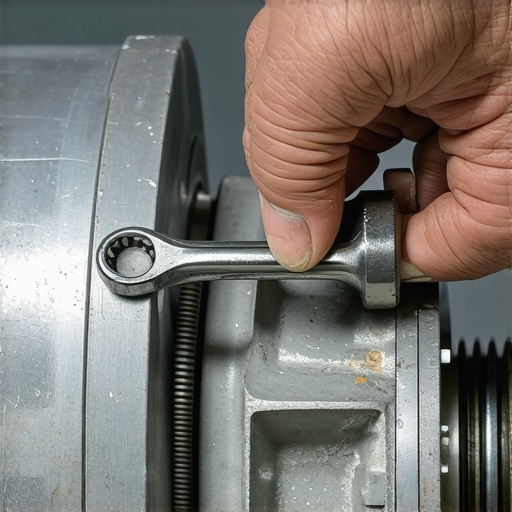
Can a Digital Tune-Up Fix a Mechanical Ghost?
We also need to talk about the ‘tune-up’ fallacy. People come into the shop asking for a tune-up to fix a vibration, thinking it is just spark plugs. While how regular tune-ups improve fuel efficiency is a real thing, modern performance is more about sensor data than just replacing metal bits. A ‘lazy’ oxygen sensor or a dirty mass airflow sensor won’t always trigger a dashboard light, but it will make your car feel sluggish and disconnected. If you really want to tune up your car for peak performance, you need to look at the fuel trims. According to research from SAE International, steering returnability and on-center feel are heavily influenced by the ‘kingpin inclination’ and internal gear friction, which wears out over time and cannot be ‘adjusted’ back to life—it has to be replaced. Another nuance people miss is ‘tramlining,’ where your tires follow grooves in the pavement, making the steering feel loose. It is often mistaken for a bad alignment, but it is actually just a characteristic of certain high-performance tread patterns or improper tire pressure. Have you ever fallen into the trap of paying for a fix that didn’t actually fix the feeling of the car? Let me know in the comments, because your ‘looseness’ might be a ghost in the machine that we can catch together.I don’t just rely on the shop’s massive alignment rack anymore; I’ve started carrying a digital dial indicator in my own toolbox. Why? Because checking for lateral runout on the wheel hub is the only way to know if your steering geometry is fighting a warped mounting surface. When you are troubleshooting common auto repair issues before visiting the shop, having a few precise measurements can save you hundreds in labor. If your hub is off by even a few thousandths of an inch, no amount of laser-guided alignment will make the car track straight at sixty miles per hour.
The Tool That Actually Spots Hidden Play
I personally swear by a high-end OBDII scanner with bidirectional control, like the Autel MaxiCOM. It allows me to perform a Steering Angle Sensor (SAS) reset from my driveway. In many modern cars, if you don’t reset that sensor after an alignment, the car’s computer thinks you’re still in a turn and will actively fight your steering input. This is a crucial step to maximize your cars lifespan with expert tune-up strategies. Without that digital handshake, your ‘hardware’ fix won’t talk to the ‘software’ brain. 
How do I keep my steering tight for the long haul?
Maintaining that ‘new car’ feel requires more than just reactive fixes. I make it a point to grease every zerk fitting during every oil change, even if the manual says they are ‘sealed for life.’ In my experience, those sealed joints are just a timer for when you’ll need a brake system repair or suspension overhaul. You should also check your fluid for metallic flakes, which is a telltale sign of internal rack wear. Following a strict car service checklist ensures you catch these tiny metal bits before they chew up your seals. According to a Moog Chassis Parts technical bulletin (Bulletin #211015), ‘memory steer’—where the car fails to return to center—is frequently caused by over-torqued components rather than alignment specs. If your tech didn’t use a torque wrench, they didn’t finish the job.
Don’t Get Left Behind by New Steering Tech
As we look toward the 2025 horizon, we are seeing a massive shift toward ‘Steer-by-Wire’ systems. These eliminate the physical steering column entirely, replacing it with sensors and actuators. This is one of the biggest auto repair trends to watch in 2025. While it removes mechanical slop, it introduces new complexities in calibration. You really need to know how to tell if your local mechanic actually has the tools for a proper ADAS calibration, because a misaligned camera can now cause your steering to pull just as badly as a bent tie rod. If you want to feel the difference tomorrow, I challenge you to perform the ‘dry park test’ I mentioned earlier; it’s the fastest way to stop guessing and start fixing.
The Hardest Lesson I Learned About Steering Slop
One thing I learned the hard way after years under the hood is that ‘within spec’ does not always mean ‘safe’ or ‘comfortable.’ I used to trust the alignment printout more than my own hands on the wheel, which was a huge mistake. First, remember that rubber bushings can look fine while the car is on the rack but compress like a marshmallow the moment you take a corner. Second, never underestimate the power of a ‘dry park test’ to find the gap between the steering column and the road. Finally, I realized that if I skipped the the ultimate car service guide protocols, I was just guessing. The biggest lightbulb moment for me was discovering that even a tiny amount of air in the power steering rack can mimic a loose tie rod. If you notice the reason your steering wheel feels heavy when you are parking, it might be a hydraulic issue masked as a mechanical one.
#IMAGE_PLACEHOLDER_E#
My Essential Toolkit for Precision Handling
If you want to move beyond basic troubleshooting, I highly recommend investing in a few key items. I never go into a job without a digital dial indicator to check for wheel hub runout—this is the secret to solving those cases where your car vibrates specifically when you reach 60 miles per hour despite a perfect balance. I also rely on an Autel bidirectional scanner for SAS resets; it is the only way to maximize your cars lifespan with expert tune-up strategies in the digital age. Lastly, a professional-grade torque wrench is non-negotiable. Tightening suspension bolts ‘by feel’ is a recipe for memory steer and premature wear.
Take Control of Your Drive Again
Don’t settle for a car that feels like it’s wandering on its own. You deserve a vehicle that responds to your every input with confidence and precision. Whether it is a simple adjustment or a more involved part replacement, getting your steering right is the ultimate way to enjoy your time on the road again. Every tune-up your car for peak performance should leave you feeling connected to the asphalt, not floating above it. Have you ever felt that terrifying ‘dead zone’ in your steering after leaving a shop? Let me know in the comments below!