
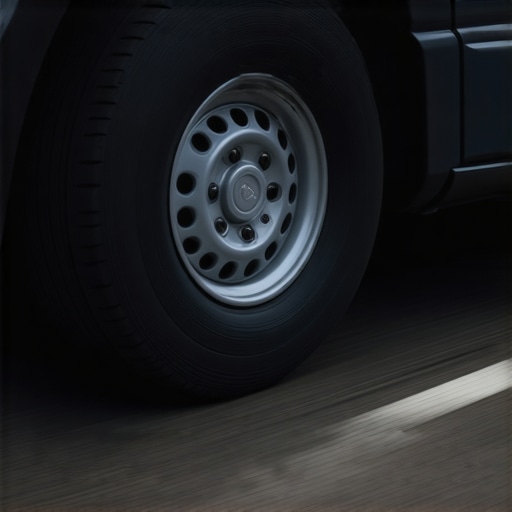
It started as a faint whisper. I was pulling into my favorite diner, cranked the wheel all the way to the left, and heard it—a rhythmic, abrasive scritch-scratch that felt like it was coming right through my floorboards. My first thought? ‘Oh great, there goes my weekend and my paycheck.’ I am not a master mechanic at some high-end dealership, but I am the guy in the neighborhood who always has his hood up, and I have learned the hard way that a scrubbing noise is not something you want to ignore. I once convinced myself that a similar noise was just a bit of road debris stuck in the tread of my front tires. Two weeks later, I was replacing a CV axle because I let a simple boot tear turn into a catastrophic failure. I want to make sure you do not make that same mistake. Today, we are going to peel back the layers of that mystery sound and figure out exactly what is rubbing the wrong way before it leaves you stranded. Have you ever felt that rhythmic vibration through the steering wheel while pulling into your driveway?
Spot the Culprit Under Your Wheel Well
If you are already troubleshooting common auto repair issues before visiting the shop, you are ahead of the game. Most folks just turn up the radio until something falls off. When your car makes a scrubbing noise during a sharp turn, it is usually a physical disagreement between two parts that should never touch. It could be as simple as a loose plastic inner fender liner that has lost a clip and is now sagging against your tire. Or, it could be something deeper, like a failing wheel bearing or a CV joint that has run out of grease. I have found that the simple trick to identifying a failing wheel bearing by ear can save you hours of staring at your suspension. Interestingly, a study by the Car Care Council suggests that nearly 80% of vehicles on the road need at least one service or repair, often involving steering components that owners have simply grown used to hearing. [IMAGE_PLACEHOLDER]
Will This DIY Fix Actually Save Me Money?
You might be skeptical. Is it really worth spending a Saturday morning crawling around on your driveway? Absolutely. Catching a rubbing liner now costs about five dollars in plastic clips, but waiting until that liner melts onto your brakes or wears through a wire harness can cost hundreds. Keeping a solid car service checklist handy helps you catch these things during routine oil changes. You might even find that the reason your brake warning light comes on during hard turns is tied to the same suspension shift causing your noise. Does your car only make this noise when you turn in one specific direction, or is it a universal protest? Understanding the ‘when’ and ‘where’ is the first step to a quiet ride. Let us look at the most common mechanical offenders that cause these metallic tantrums.Start by cranking your steering wheel to full lock while parked to see what is happening in the wheel well. Get out and look at the plastic liners for any spots that look suspiciously clean or polished compared to the rest of the dirty surface. If you see a shiny patch, that is exactly where your tire is making contact. I remember a humid Tuesday when I was convinced my steering rack was dying because of a horrific grinding sound. I spent three hours under the chassis, only to realize a plastic push-pin had snapped, letting the liner sag onto the tread. A handful of zip ties fixed a terrifying sound in five minutes. If your liners are secure, it is time to get the car off the ground to check for deeper mechanical play.
Jack Up the Car and Shake the Wheel
Safety is non-negotiable here; always use jack stands and never rely solely on a floor jack. Once the wheel is in the air, grab it firmly at the 12 and 6 o clock positions and try to rock it back and forth. If there is any movement, your wheel bearing is waving a white flag. A bad bearing does not just hum; it can cause enough misalignment that parts start to scrub during a sharp turn. While you are there, look for a grease explosion inside your rim or on the suspension. This is the classic sign of a torn CV boot. Think of the CV joint like a human knee; when the grease leaks out, it is bone-on-bone friction that creates that rhythmic clicking or scrubbing. If you find your suspension feels unusually bouncy during this check, you might want to learn the simple way to tell if your shocks are actually worn out, as worn shocks can allow the car to dip too low during turns, forcing the tire into the bodywork. 
Listen for the Thin Metal Brake Shield Scraping
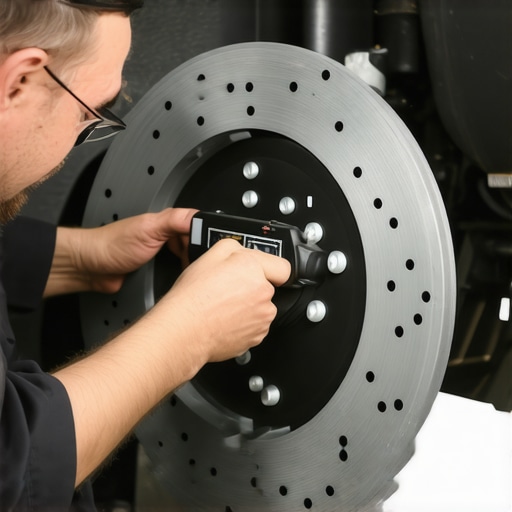
Sometimes the noise is not a massive mechanical failure but a thin piece of metal called the dust shield. These can get bent during a simple tire change or even by a stray rock caught on the road. If it is rubbing against the rotor, it sounds like a screeching banshee every time the wheel rotates. You can usually push these back into place with a long screwdriver without even taking the wheel off. This is a common part of understanding brake system repairs because it often mimics the sound of worn-out pads or warped rotors. If you also notice that your car makes a loud pop when you back out of your driveway, the issue is likely a shifting ball joint or a loose sway bar link that is letting the entire strut assembly move further than it should.
Follow the Trail of Fresh Metal Shavings
If you still have not found the source, check the heat shields around your exhaust and manifold. These thin aluminum sheets love to rust at the mounting points and sag over time. While they are not directly near your tires, the centrifugal force of a sharp turn can shift the engine and exhaust just enough to make them touch a rotating component. You can often fix a rattling heat shield for under ten dollars with a large hose clamp or a wide washer. Look for fresh metal-on-metal scars. If you find a shiny groove worn into any part of your suspension or frame, you have finally found your ghost.
We’ve looked at the physical hardware, but let’s talk about the philosophy of maintenance because this is where the real money is lost. Most drivers are conditioned to believe that modern cars are essentially set-it-and-forget-it machines until a warning light pops up. This is a dangerous half-truth that leads to massive repair bills. Let’s dig deeper into the nuances that most shops won’t explain during a standard oil change.
Stop Believing Your Suspension Is Maintenance-Free
Many drivers have been conditioned to believe that ‘sealed’ components like wheel bearings or ball joints are lifetime parts. They aren’t. They are simply ‘pre-greased until failure.’ The common myth is that if there isn’t a grease fitting, you don’t need to worry about it until it makes a horrific noise. In my experience, waiting for the noise means you’ve already doubled your repair bill. By the time you hear that scrubbing, the friction heat has likely compromised your hub assembly or warped your rotors. I’ve seen this happen most often when people ignore the real cost of skipping your 100000-mile major service. A report by AAA indicates that one in three U.S. motorists cannot pay for an unexpected vehicle repair, yet many of these failures are preventable with proactive inspections rather than reactive replacements.
Why Your Dash Monitor Is Giving You False Confidence
There is a growing trend of relying solely on the car’s computer to tell you when it’s time for service. It is a trap. Most people get this wrong: they think the ‘Oil Life’ percentage or the maintenance light accounts for the actual physical condition of the parts. It does not; it is a mathematical algorithm based on mileage, temperature, and idle time. This is exactly why I never trust the oil life monitor on my dashboard. If you are driving in ‘severe conditions’—which includes any city with stop-and-go traffic—that monitor is likely overestimating the health of your lubricants. Old, thin oil fails to dampen engine vibrations, which can travel through the frame and mimic the sound of a scrubbing suspension component.
Could Your Steering Geometry Be Fighting Your New Tires?
If you’ve recently had work done and a new noise started shortly after, you might be dealing with ‘memory steer’ or a botched alignment. Some shops will ‘set the toe and go,’ but they ignore the caster or camber angles that dictate how the tire sits in the wheel well during a full-lock turn. You should stop buying new tires until you check these three alignment signs to ensure your geometry isn’t the secret cause of the rub. Also, a huge ‘oops’ factor I see is using the wrong lubricant on brake slide pins. Using a petroleum-based grease instead of high-temp silicone will swell the rubber boots, seize the caliper, and cause a permanent scrubbing sensation that ruins your fuel economy. Before you commit to a major overhaul, check if you’ve fallen for any common brake service myths. Adopting maximize your cars lifespan with expert tune-up strategies is about being proactive, not reactive. Have you ever fallen into this trap where a simple maintenance task turned into a nightmare? Let me know in the comments.
While getting your hands dirty is part of the charm of DIY auto repair, the ‘old school’ method of diagnosing strictly by ear is quickly becoming a secondary skill. In my own garage, the most valuable tool I own isn’t my high-torque impact wrench or my polished chrome sockets; it is my bi-directional scan tool. I personally use this because it allows me to bypass the dashboard and talk directly to the car’s modules. I can command the ABS pump to bleed itself or force a recalibration of the steering angle sensor after a suspension job. If you want to maximize your cars lifespan with expert tune-up strategies, you need to see the data the car is seeing. This level of precision is exactly how to tell if your local mechanic actually has the tools for a proper ADAS calibration, which is becoming a mandatory step for any car made in the last decade.
Invest in a Scan Tool That Actually Talks Back
Most people buy a cheap code reader and think they are covered. They aren’t. A basic reader tells you the ‘what,’ but a bi-directional tool tells you the ‘why.’ For example, when you are trying to tune up your car for peak performance, you can use the tool to check real-time fuel trim data. If those numbers are off, you might have a vacuum leak that hasn’t even triggered a check engine light yet. This proactive approach is the core of the ultimate car service guide. According to the National Institute for Automotive Service Excellence (ASE), as vehicles become more software-dependent, the gap between ‘part swappers’ and true technicians will be defined by their ability to interpret live data streams rather than just reading error codes.

How can I keep my car running smoothly for another decade?
The secret isn’t just changing the oil; it’s about managing the chemistry of your fluids. I highly recommend investing in a brake fluid moisture tester and a refractometer for your coolant. Brake fluid is hygroscopic, meaning it absorbs water from the air. Once that water content hits 3%, your boiling point drops significantly, and you risk internal corrosion of your expensive ABS valves. This is a nuance often missed in understanding brake system repairs. By testing the moisture content yourself, you can decide when to flush the system based on actual science rather than a generic mileage interval. This is also a great way to debunk common brake service myths that suggest you only need to worry about brakes when they squeal.
The Invisible Shift Toward Software-Defined Repairs
Looking ahead, the auto repair trends to watch in 2025 suggest that even simple mechanical components will soon have digital ‘fingerprints’ that require software handshakes. We are already seeing this with electronic parking brakes and active aero shutters. If you are following a car service checklist, start including a ‘system health report’ via your scan tool every six months. This allows you to catch failing sensors before they leave you in limp mode. I challenge you to try one advanced tip this weekend: don’t just check your oil level; use a multimeter to how to test your alternator with a simple multimeter at home and check for AC ripple voltage. It’s a five-minute test that can save your entire electrical system from a slow, painful death. Stay ahead of the curve, or the curve will leave you on the side of the road.
What the Grease on My Knuckles Taught Me
Over the years, I’ve learned that the difference between a quick fix and a week in the shop often comes down to knowing how to tell if your car needs a simple tune-up or a major repair. Here are a few lightbulb moments from my own garage: First, trust your fingertips more than your eyes. Running your hand along the inner tire wall—when the car is cooled down and off, of course—can reveal subtle wear patterns or loose plastic edges long before they become visible. Second, context is everything. If that scrubbing only happens when the suspension is loaded, like hitting a dip during a turn, it’s almost certainly a clearance issue rather than a mechanical failure. Finally, never assume a ‘new’ part is a ‘perfect’ part. I once spent three hours chasing a ghost sound only to find a brand-new brake dust shield was slightly warped out of the box. Developing a habit of troubleshooting common auto repair issues before visiting the shop is the single best way to protect your wallet and your peace of mind.
My Go-To Gear for a Quiet Ride
If you want to move beyond basic guesswork, I personally recommend keeping a few specific tools in your trunk. An Electronic Stethoscope is a game-changer; it allows you to clip sensors to the chassis and hear exactly which wheel bearing is complaining while you drive. I also swear by a high-quality set of Nylon Trim Removal Tools. These allow you to pop those stubborn fender liner clips without snapping them, which is usually how these scrubbing noises start in the first place. Lastly, don’t overlook a simple Infrared Thermometer. After a long drive, point it at your wheel hubs; a significantly hotter hub is a smoking gun for a failing bearing or a dragging caliper. Keeping a copy of the ultimate car service guide nearby ensures you stay ahead of these small mechanical protests before they turn into road-side emergencies.
Take Control of Your Machine
You don’t need a professional certification to keep your vehicle safe, quiet, and reliable. By paying attention to the small vibrations and staying proactive with your car service, you are doing more for your car’s longevity than any ‘miracle’ fuel additive ever could. If you’ve just finished a suspension job and notice a weird sensation through the wheel, be sure to check the reason your steering wheel feels loose after an alignment to ensure your DIY work is seated correctly. Don’t be afraid to get under the hood and explore. Have you ever had a mystery noise that turned out to be something incredibly simple, like a loose zip tie or a stray pebble? Let me know your best ‘easy fix’ stories in the comments below!