
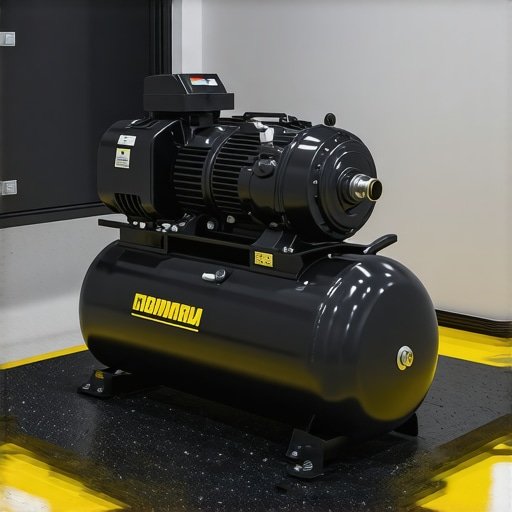
I remember the exact moment I realized my air compressor had become a neighborhood nuisance. I was trying to fill a tire for a quick car service at home, and the noise was so violent I could feel it in my teeth. My wife came out, shook her head, and pointed toward the neighbor’s house. I was convinced the internal valves were shot and I’d be out five hundred bucks for a new unit. But before you go hauling yours to the scrap heap, let me tell you: that racket is usually a cry for help, not a death rattle. I’ve been a garage hobbyist for decades, and the one thing I’ve learned is that a loud machine isn’t always a broken machine; it is often just a poorly isolated one. It is easy to get frustrated and assume the piston is about to fire through the side of the tank, but most of that roar is actually secondary vibration—sound waves bouncing off your concrete floor and turning your entire garage into a giant speaker cabinet.
Stop the Screaming Without Buying a New Machine
[image_placeholder_1] It’s a common panic. You hear that whining jet engine sound and assume the worst mechanical failure possible. I’ve been there, trust me. Early in my DIY days, I made the classic mistake of thinking I could just ‘insulate’ the noise away by throwing a heavy moving blanket over the motor while it was running. It worked for about five minutes until the thermal overload kicked in and the whole thing shut down with a puff of ozone-smelling smoke. That’s a great way to turn a loud compressor into a permanent, expensive paperweight. Today, we’re going to look at the real culprits—vibration, intake noise, and loose hardware—that make these machines sound like they’re self-destructing. We want to find that simple fix that keeps the peace without burning out the motor. Many owners jump straight to replacement because they don’t realize that a few rubber grommets and a cheap intake filter can drop the decibel level significantly. It’s the same principle as when you’re trying to figure out if your car needs a simple tune-up or a total engine overhaul; usually, it’s the small things that have the biggest impact. Have you ever felt like you had to wear airport-grade ear protection just to pump up a bicycle tire in your own driveway?
Does silencing it actually shorten the lifespan?
People often worry that if they quiet the compressor, they’ll somehow stifle it or cause it to overheat. That skepticism is healthy because heat is the number one killer of air pumps. However, reducing noise isn’t about suffocating the machine under a pile of foam; it’s about managing the energy it wastes through vibration and air turbulence. According to the National Institute for Occupational Safety and Health (NIOSH), noise levels consistently hitting 90 decibels—where most small compressors live—can lead to permanent hearing loss over time. By addressing the noise, you aren’t just saving your ears; you’re often extending the life of the machine by reducing the violent shaking that rattles bolts loose and stresses the copper lines. I’ve spent years looking for ways to maximize the lifespan of my gear, and I can tell you that a smooth-running machine is a long-lasting machine. We aren’t going to build a dangerous, unventilated box around it. Instead, we’re going to use physics to our advantage and reclaim your garage’s peace and quiet.
Stop the Garage Floor from Acting Like a Drum
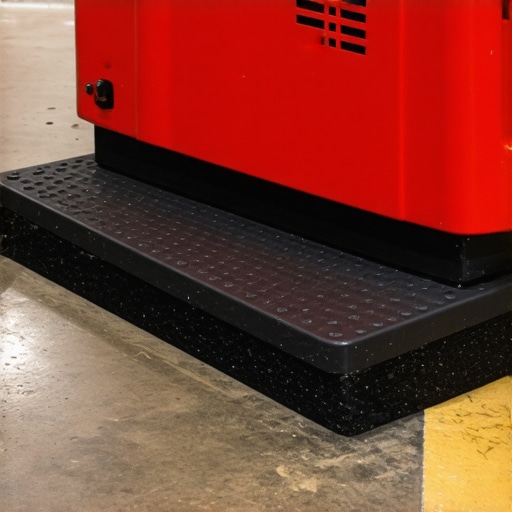
The first thing you have to realize is that your compressor is a vibration factory. When it sits directly on concrete, those vibrations transfer into the slab and travel through the studs of your house. It is the same sensation as when your car vibrates while you are sitting at a stoplight; you feel it in your seat more than you hear it in the air. I used to have my 30-gallon upright bolted directly to the floor. Big mistake. Every time it kicked on, my kitchen cabinets two rooms away would rattle. I finally swapped those rigid bolts for thick, heavy-duty rubber isolation pads. The difference was night and day. You want pads specifically rated for machinery, not just thin yoga mat scraps. By decoupling the metal feet from the hard floor, you’ve already won half the battle. Think of it like a car engine vibrating at a red light—if the motor mounts are shot, the whole experience is miserable. New pads are your new motor mounts.
Muffle the Gasping Intake Valve
Most of the ‘clacking’ or ‘thumping’ sound isn’t mechanical failure; it’s the sound of air rushing into the intake port at incredible speeds. It’s an engine, after all, and an engine without an air cleaner is loud. I once worked on a buddy’s unit that sounded like a jackhammer. He was ready to call a scrap yard, but we found his plastic intake housing had cracked. We replaced it with a metal-housed silencer filter—essentially a miniature muffler for the air intake. Suddenly, the whining jet engine sound was replaced by a dull, manageable hum. If you want to go a step further, you can even route a piece of high-pressure hose from the intake to a remote location outside or into a bucket of sound-absorbing foam. It’s a classic example of why you should perform troubleshooting common auto repair issues before visiting the shop or buying new equipment. Sometimes the loudest problems have the quietest solutions, much like how regular tune-ups improve fuel efficiency and safety by keeping components in harmony.
Tighten Every Bolt Before It Rattles Off
Vibration has a nasty habit of loosening fasteners. A loose belt guard or a rattling pressure switch cover can add ten decibels of high-pitched ‘tinny’ noise that makes the machine sound like it’s falling apart. I remember spending an hour chasing a metallic ‘ping’ only to realize the heat shield on the discharge pipe had a loose clamp. It’s exactly like fixing a rattling heat shield for under ten dollars on your car. Take a wrench and snug up every external bolt you can see. Check the tank feet, the motor mounts, and even the cooling fins. Just like how expert tune-up strategies keep your car running smooth, a quick ‘nut and bolt’ check on your compressor every few months prevents those phantom noises from driving you crazy. If you have a belt-drive unit, check the tension. A flapping belt is not only loud but also inefficient, much like how a car needs a simple tune-up to stop minor hesitations before they become major repairs. Keeping everything tight is the easiest way to keep your vehicle in top shape or, in this case, your garage equipment.
Let’s dig deeper into why we often misdiagnose the tools and machines we rely on. Much like that air compressor rattle, we tend to treat car symptoms rather than systems. Everyone says a tune-up is the first step when an engine stumbles, but in my experience, throwing new spark plugs at a rough idle is often a waste of money if you haven’t checked for a vacuum leak first. A real tune-up for peak performance isn’t a repair; it’s a calibration. If your engine is already gasping for air or struggling with fuel delivery, a set of high-end plugs won’t save it. This is the ‘parts cannon’ trap—firing new components at a problem without understanding the root cause. According to the Car Care Council, a staggering 80% of vehicles on the road are in need of at least one service or repair, yet many owners wait until a catastrophic failure occurs. They assume that if the ‘Check Engine’ light isn’t on, everything is perfect. But by the time that light glows, you’re usually looking at a reactive repair rather than proactive care. You have to learn if your car needs a simple tune-up or if you’re masking a deeper mechanical issue.
The Dangerous Myth of ‘Lifetime’ Brake Components
Many drivers fall for the marketing of ‘lifetime’ brake pads, believing they’ll never have to touch the system again. This is a massive ‘oops’ factor that leads to thousands in unnecessary costs. While the friction material might last longer, the rest of the system is aging rapidly. If you ignore the hardware and the fluid, those pads will eventually seize or wear unevenly because the caliper slide pins have dried out. I’ve seen people replace pads three times without ever checking the health of the fluid.  This is a critical oversight because brake fluid is hygroscopic—it literally sucks moisture out of the air. This moisture lowers the boiling point of the fluid and corrodes your internal lines from the inside out. You might be interested to know why your brake fluid is green, as it is a telltale sign of chemical breakdown and copper contamination. Simply swapping pads is a band-aid. True brake system repairs involve testing the fluid chemistry and ensuring the hydraulic integrity is intact.
Why Does Your Brake Pedal Still Feel Spongy After a Fluid Flush?
This is a question I get from advanced DIYers all the time. They’ve done the work, bled the lines, and yet the pedal lacks that firm ‘bite.’ The nuance here is often found in the ABS pump or a failing master cylinder seal that is bypassing internally without leaking externally. If you don’t address these complexities, you’re just driving a safety hazard. We need to move past brake service myths and realize that the pedal feel is the most direct communication your car gives you about its health. When you are troubleshooting common auto repair issues, you have to look for the ‘ghost’ in the machine—those subtle changes in pressure or sound that happen long before a component fails. I’ve spent decades refining my expert tune-up strategies, and it always comes back to the same principle: listen to the machine. Have you ever fallen into the trap of replacing a part only to find the noise or vibration was still there? Let me know in the comments.
The reason I’m so picky about my gear is that a bad tool gives you bad data. I’ve wasted entire Saturdays chasing electrical ghosts because a cheap, ten-dollar multimeter couldn’t read a steady voltage. Now, I never start a weekend project without my professional-grade digital multimeter and a dedicated OBD2 scanner. Being able to test your alternator with a simple multimeter at home isn’t just a party trick; it’s the only way to keep your sanity when the dashboard starts flickering like a haunted house. When you’re dealing with a screaming air compressor or a car that shudders at every stoplight, the goal is always the same: stop guessing and start measuring. I also swear by a high-quality, calibrated torque wrench. Most people think they can ‘hand-tighten’ until their knuckles turn white, but that’s exactly how you warp rotors and snap valve cover studs. Taking the time to tune up your car for peak performance means respecting the factory torque specs every single time, whether it’s a lug nut or a spark plug.
The Gear That Separates Mechanics from Parts-Changers
I once saw a guy try to diagnose a boost leak with a cigar and a prayer. He spent three days on it and got nowhere. I used a simple smoke machine and found the hairline crack in a plastic intake plenum in forty-five seconds. If you want to scale your DIY skills and actually save money, you have to invest in the diagnostic side of the house, not just the hammers and wrenches. This is the fundamental difference between blindly following a car service guide and actually understanding the physics of what your machine is telling you. A good scanner can show you fuel trims and oxygen sensor data in real-time, allowing you to catch a failing sensor before it ruins your catalytic converter.  This level of precision is how I’ve managed to keep my high-mileage daily drivers on the road without breaking the bank.
How can I keep this equipment running for another decade?
It ultimately comes down to managing the two things you can’t always see: heat and moisture. For the air compressor, it’s all about the water. The Compressed Air & Gas Institute (CAGI) emphasizes that moisture is the primary catalyst for internal tank decay and premature pneumatic tool failure. If you aren’t draining your tank after every single use, you’re basically bathing your precision impact wrenches and nailers in a corrosive mist. For your car, it’s about maintaining the chemical integrity of your fluids. You need to maximize your car’s lifespan with expert tune-up strategies by being proactive rather than reactive. I follow a strict car service checklist to keep your vehicle in top shape, focusing on ‘predictive’ maintenance. This means changing your transmission fluid before it smells burnt and swapping your air filters before they look like a dryer lint trap. These regular tune-ups improve fuel efficiency and safety by reducing internal friction and ensuring the engine doesn’t have to work harder than it was designed to. Looking forward, auto repair trends to watch in 2025 suggest we’ll see more integrated ‘health monitors’ even for basic consumer-grade shop tools, allowing for real-time vibration analysis via your smartphone. But until your compressor can text you its problems, you have to be its voice. My challenge for you this weekend: Go out to your garage and perform a ‘nut and bolt’ check on your most-used machine. You’ll be surprised at what has vibrated loose since the last time you looked.
Hard Truths from My Garage Floor
I used to think a louder engine meant it was working harder, but I was wrong. Noise is just wasted energy escaping as friction and heat. I’ve learned that if you ignore a small rattle today, you’ll be performing complex brake system repairs or swapping out entire motors tomorrow. The biggest lightbulb moment for me was realizing that most ‘broken’ tools are actually just poorly maintained. Before you give up on a piece of gear, check the simple stuff—the mounts, the filters, and the bolts. It’s often the difference between a quick fix and an expensive replacement. Maintaining your equipment is an investment in your sanity, not just your wallet. When you take the time to improve fuel efficiency and safety through small adjustments, you’re practicing the highest form of mechanical care.
The Only Tools I Would Save in a Fire
If you’re serious about your craft, you need gear that doesn’t lie to you. I personally rely on a high-quality digital multimeter for tracking down blown fuses or bad ground wires when the compressor or car electronics act up. I also swear by a professional-grade smoke machine; it is the only way to find those microscopic vacuum leaks that make a tune up for peak performance actually effective. For those looking to dive deeper into the science of air, I highly recommend the technical bulletins from the Compressed Air & Gas Institute (CAGI). Their data on moisture management changed how I store my air tools and saved my impact wrenches from a premature death. I also keep a copy of the car service checklist to keep your vehicle in top shape pinned to my tool chest as a constant reminder that consistency beats intensity every time.
Reclaim Your Weekend Projects
Maintenance isn’t a chore; it’s how you take control of your environment. Whether you are quieting a screaming compressor or performing a comprehensive car service, you are investing in the longevity of your lifestyle and the tools you love. Don’t wait for a catastrophic breakdown to start paying attention to the vibrations and hums of your machinery. Taking a proactive approach is the best way to stay ahead of the auto repair trends to watch in 2025 and beyond. Your garage should be a place of creation and peace, not a source of neighborhood tension or mechanical stress. Have you ever spent hours chasing a mystery noise only to find it was a single loose bolt or a cracked grommet? Let me know your most frustrating ‘simple fix’ story in the comments below.