

I was merging onto the highway last summer, coffee in hand and the radio up, when I felt it. The moment I pressed the pedal to pass a slow-moving trailer, my steering wheel started doing a nervous jitter and the floorboards felt like they were trying to detach from the frame. It was terrifying. It wasn’t a constant wobble—the car felt smooth as silk when I coasted—but the second I asked for more power, the shudder came back with a vengeance. If you’ve ever felt that rhythmic thudding while trying to gain speed, you know exactly how quickly your stomach drops. We are going to dive into exactly why this happens and how you can figure out the source without losing your mind or your entire savings account.
That Shaky Feeling When You Step on the Gas
I spent years thinking that any vibration meant I just needed a quick tire balance. I actually made the mistake of paying for three different alignments on my old sedan before realizing that troubleshooting common auto repair issues before visiting the shop could have saved me a few hundred bucks. The truth is, when a car shakes only under load, you are usually not looking at the tires at all. You are looking at the parts of your car that actually transfer power from the engine to the ground. If it was a tire balance issue, it would likely shake all the time once you hit a certain speed, regardless of whether your foot is on the gas or the brake.
Is this going to cost me a fortune to fix?
Most people fear that a shaking car means the transmission is toast. While that is a possibility, it is often something much more localized like a worn-out joint or a failing engine mount. According to the Car Care Council, neglected maintenance on driveline components is a leading cause of performance-related vibrations that eventually lead to more expensive repairs.
Stop Guessing and Start Checking These Parts
The most common culprit I have seen in my years of tinkering is a failing inner CV joint. When these wear out, they develop pits that the bearings get stuck in when you are accelerating, causing that violent back-and-forth motion that feels like the front end is falling off. You can usually spot a bad CV axle before it snaps by looking for torn rubber boots or grease splatters inside your wheel well. If your vibration only happens when you hit a very specific highway speed, you might want to look into why your car vibrates specifically when you reach 60 miles per hour to see if the symptoms match. Have you noticed the shaking getting worse when you have passengers in the car, or is it strictly a solo-drive mystery? Drop a comment below because that weight difference is actually a massive clue for the diagnosis steps we are about to take.
Get Under the Car and Check Your Axle Boots
To find the root of that shudder, you have to look at the parts that are under the most stress when you hit the gas. Think of your CV axles like the wrists of your car; they have to bend and rotate at the same time to send power to the wheels. When the internal grease leaks out or dirt gets in, those joints start to grind against themselves. You need to slide under there with a good flashlight and look for any tears in the rubber boots. If you see dark, thick grease flung all over the suspension components, you’ve found your smoking gun. It is much cheaper to address this early than to wait for a complete failure, which is why I always tell people to maximize your car’s lifespan with expert tune-up strategies that include a thorough visual inspection of the undercarriage. 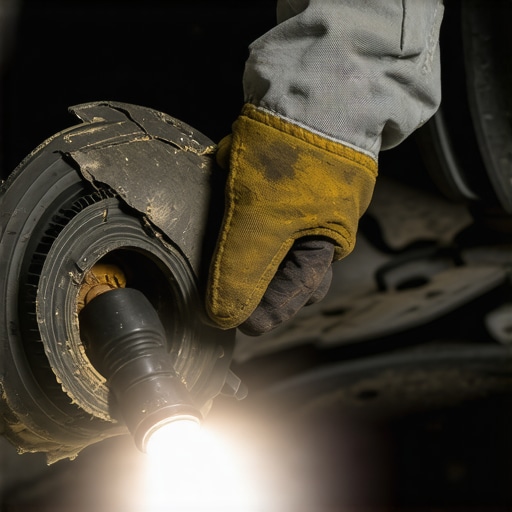
The Brake Torque Test for Engine Mounts
If your axles look clean, your next stop is the engine and transmission mounts. These are the rubber blocks that hold your heavy powertrain in place. Over time, the rubber cracks or the fluid inside them leaks out. To test this, you need a buddy and a clear space. Have your friend sit in the driver’s seat, hold the brake down firmly, and give the car a tiny bit of gas while in gear. If the engine lurches forward or backward like it is trying to escape the hood, your mounts are shot. I once spent an entire weekend chasing a ‘transmission vibration’ on a customer’s V6 only to realize the rear mount had completely snapped in half. Every time he accelerated, the engine was literally hitting the firewall. If you notice a similar sensation while sitting still, you might want to investigate why your engine rumbles only when stopped in gear to see if the symptoms overlap.
Don’t Overlook the Rear Driveline on AWD Vehicles
For those of you driving trucks or all-wheel-drive SUVs, the vibration might be coming from behind you. A common culprit is a seized U-joint on the driveshaft. When these joints lock up, they create a high-frequency buzz or a heavy thumping that gets more violent as your speed increases. You can test this by grabbing the driveshaft and trying to shake it; there should be zero play. Learning how to spot a failing u-joint before your driveshaft drops can prevent a catastrophic breakdown on the highway.
The Simple Process of Elimination
Before you start throwing expensive parts at the problem, go through a basic car service checklist to ensure nothing simple is being missed. Check your lug nuts to make sure the wheels are actually tight, and look for any mud or snow packed into the rim that could be throwing the balance off under load. I once saw a vibration so bad it felt like the engine was failing, but it turned out to be nothing more than a giant chunk of dried clay stuck to the inside of the front-left wheel. Cleaning it off cost zero dollars and fixed the problem instantly. If the shaking is still there after these checks, you are likely looking at a deeper internal issue that requires a professional scan.Most people assume that if a car shakes during acceleration, it is purely a mechanical failure in the transmission or axles. However, I have seen dozens of cases where a sticking brake caliper creates a vibration that only manifests when the engine is fighting against that resistance under load. It is one of those brake service myths what you need to know before your next stop—the idea that brakes only vibrate when you hit the pedal. In reality, a brake “drag” can cause a harmonic resonance that feels almost identical to a failing CV joint. If you feel extreme heat radiating from one specific wheel after a short drive, you have found a ghost in the system that most DIYers completely miss. Have you ever fallen into this trap of replacing a major part only to find it was a simple stuck brake? Let me know in the comments because these stories help the whole community avoid the same money pit mistakes.
Stop Assuming Your Brakes Only Matter When Stopping
There is also a massive “oops” factor when it comes to ignition and fuel delivery. I once helped a neighbor who was about to spend $1,200 on a rebuilt transmission because his SUV “shuddered” between 40 and 50 MPH under light throttle. It was not the transmission at all; it was a low-grade engine misfire caused by substandard parts. When you are performing your own maintenance, the truth about budget spark plugs and engine performance is that they often cannot handle the high-load demands of modern high-compression engines. That tiny, rhythmic “pop” in the cylinder under load feels exactly like a transmission slip or a mechanical wobble to the untrained foot.
The Trap of Chasing Cheap Replacement Parts
For those driving more modern vehicles, the issue might not even be mechanical in the traditional sense. Sometimes, the hidden benefit of cleaning your mass air flow sensor is that it restores the proper air-fuel signal, allowing the computer to manage the transmission line pressure correctly. A confused computer can cause a physical shake that feels like a metal-on-metal failure. This is why how to tell if your local mechanic actually has the tools for a proper ADAS calibration and advanced diagnostics is just as important as knowing how to turn a wrench.
Could a failing torque converter be the real ghost in your machine?
This is where we get into the most sophisticated “shudder” territory. According to technical data from the Automatic Transmission Rebuilders Association (ATRA), torque converter clutch (TCC) chatter is one of the most common misdiagnoses in modern vehicles. It often feels like you are driving over rumble strips for a split second when the car shifts into its highest gears. Research shows that nearly 80% of driveline vibrations are misdiagnosed initially due to technicians overlooking these subtle harmonic frequencies. Before you let a shop pull the whole transmission, ensure they have ruled out TCC shudder. If you’ve ever dealt with a “soft” feeling before the shake starts, you might be looking at a hydraulic issue described in the fix for a soft brake pedal that mechanics keep missing, which can sometimes point toward a broader system pressure problem. 
Stop Blindly Swapping Parts with a Real Scan Tool
I have spent enough money on ‘maybe’ fixes to buy a whole new car, and I finally learned that a $20 basic code reader isn’t enough. When you are dealing with a vibration that feels like it is coming from the transmission, you need a bidirectional scan tool. I personally use an Autel unit because it allows me to command the torque converter clutch to engage or disengage while I am actually driving. If the shudder stops the moment I command the clutch off, I know the issue is hydraulic or fluid-based, not a mechanical failure of the gears. This kind of diagnostic precision is a key part of troubleshooting common auto repair issues before visiting the shop. Most DIYers skip this step and end up replacing axles that were perfectly fine.
Why Precision Torquing Prevents Future Shudders
I used to think ‘tight enough’ was a valid measurement, but I was wrong. Uneven torque on your wheel bolts can actually distort the brake rotors and hubs over time, creating a harmonic vibration that feels like a failing CV joint. I now use a digital torque wrench for every single bolt I touch, especially when following the proper way to torque wheel bolts without a manual. This ensures that the clamping force is perfectly even across the entire rotating assembly. According to SAE International research paper 2011-01-0941 on driveline torsional vibration, even minor deviations in rotational balance can be amplified by modern lightweight suspension systems. By being obsessive about torque specs, you are doing more for your car than any generic ‘check-up’ ever could. 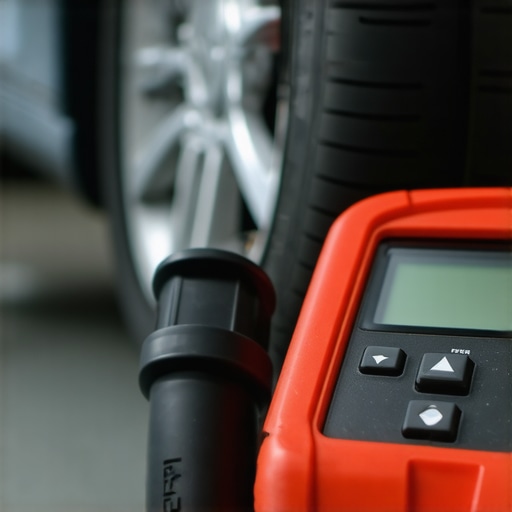
How do I keep my driveline smooth for the long haul?
Maintenance is not just about changing oil; it is about keeping the entire power delivery system in sync. You should perform a comprehensive car service checklist every six months that includes checking the play in your driveshaft and inspecting the differential fluid for metal shavings. If you have an AWD vehicle, changing the transfer case fluid is often overlooked in the ultimate car service guide, yet it is the primary way to prevent high-load shuddering as the car ages. I also make it a point to maximize your car’s lifespan with expert tune-up strategies by cleaning the fuel injectors every 30,000 miles. A slight imbalance in power across cylinders (a ‘lean’ condition) can create a rhythmic vibration that feels exactly like a mechanical wobble. Looking ahead, auto repair trends to watch in 2025 suggest we will soon have smartphone apps that use your phone’s internal gyroscope to diagnose specific vibration frequencies, but for now, nothing beats a good set of tools and a keen eye. Go out to your driveway right now with a high-lumen flashlight and check those inner CV boots for the smallest sign of a crack—catching it today will save you $500 next month.
What My Years in the Garage Taught Me About Persistent Shudders
I’ve spent more hours than I care to admit chasing ghost vibrations, and if there is one thing I have learned, it is that your car usually tells you exactly what is wrong if you listen closely enough. First, never assume the most expensive part is the culprit; I’ve seen more shakes fixed by a simple cleaning than by a full transmission swap. Second, your intuition is a tool—if the vibration feels rhythmic, it is likely rotational, whereas a staccato jitter often points toward the engine. Lastly, don’t let a shop rush you into a major repair without showing you the physical play in a joint or a diagnostic code. Taking the time to tune-up your car for peak performance essential maintenance tips is often the difference between a vehicle that struggles at 100k miles and one that glides past 300k.
Gear That Stopped My Diagnostic Guessing Games
If you want to move beyond maybe and get to fixed, you need more than just a basic set of screwdrivers. I personally swear by a bidirectional scan tool; it is the only way to talk to the car’s computer and rule out electronic sensor interference in real-time. I also never crawl under a car without a 1000-lumen LED work light, because you simply cannot fix what you cannot see. A high-quality digital torque wrench is my third non-negotiable, especially when you are learning how regular tune-ups improve fuel efficiency and safety by ensuring every bolt is seated to factory precision. Finally, a subscription to a professional repair database provides the exact tolerances you need to spot a failing part before it leaves you stranded on the shoulder.
#IMAGE_PLACEHOLDER_E#
Take Control of Your Drive Again
There is a specific kind of pride that comes from identifying a vibration, grabbing your tools, and restoring that factory-smooth feeling to your steering wheel. Automotive maintenance can feel overwhelming, but when you break it down into simple checks of axles, mounts, and brakes, it becomes a manageable puzzle rather than a financial crisis. By understanding brake system repairs a guide for vehicle owners and driveline basics, you are no longer at the mercy of mystery noises. Go out there, get your hands a little dirty, and stop that shudder before your next big road trip. What was the most confusing or frustrating vibration you ever had to track down? Let me know in the comments below!