
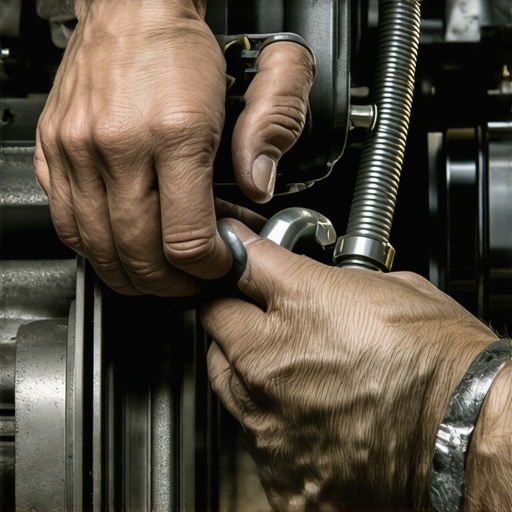
I remember pulling up to a busy red light in my old SUV, pressing the brake pedal, and feeling that sickening sink. The pedal didn’t stop where it usually did; it just kept going toward the floorboard like it was stepping into a bucket of wet sand. My heart did a quick somersault as I frantically pumped the pedal just to keep from creeping into the intersection. I had just paid for a full brake system repair the week before, yet there I was, white-knuckling the steering wheel. It was a terrifying realization that even though I’d spent the money, the safety I was promised wasn’t there.
Stop Pumping Your Brakes and Start Finding the Real Culprit
If you’ve spent hundreds of dollars on new pads, rotors, and even a master cylinder only to find the pedal still feels like it’s made of sponge, you’re not alone. Most of us head to the shop expecting a quick fix, but there is a specific mechanical oversight that happens more often than I’d like to admit. Usually, it involves the ABS modulator or a tiny bit of air trapped in a place no standard “two-man bleed” will ever reach. I’m going to show you exactly how to identify this phantom air pocket so you can stop wondering why your brake pedal goes all the way to the floor. We’ve all heard the usual brake service myths—that it’s always the lines or it’s just “new pad break-in.” But let me tell you, I once spent a whole Saturday morning replacing a perfectly good master cylinder because a “pro” told me that was definitely the problem. It wasn’t. The real issue was much deeper and cheaper to fix, if only I’d known where to look. According to the Car Care Council, neglecting to flush brake fluid can lead to internal corrosion in the ABS unit, which is often the secret reason for that mushy feeling that refuses to go away.
Is it really possible your mechanic missed something this simple?
I get the skepticism. You trust the guy with the lift and the air tools to know his stuff. But here’s the thing: many shops are in a rush. They perform a gravity bleed or a quick pump-and-hold, which works for 90% of cars. But if your car has an ABS unit with internal valves that only open during a specific computer-initiated sequence, they could bleed your lines for a month and never get that last bubble out. It’s not that they’re incompetent; it’s that they aren’t using the specific diagnostic tools to cycle those valves. Before you go out and buy another set of parts, have you ever felt that sinking sensation even after a fresh car service? Drop a comment or send me a message, because I’d bet money you’re dealing with the same hidden air pocket I was. Before you dive into the troubleshooting of common auto repair issues, you need to understand that the secondary circuit in your ABS is a fortress for air. Once you’ve confirmed that you followed the proper way to break in new brake pads and the pedal is still soft, it’s time to look at the one component everyone ignores. We are going to dive into the “secondary circuit” of your braking system—the place where air goes to hide when it wants to ruin your commute.
Force the Air Out of Its Hiding Spot
Think of your ABS unit like a complex maze of tiny hallways and locked doors. When you press the brake pedal during a normal drive, most of those doors stay closed. Air loves these dead ends because standard gravity bleeding just glides right past them. To get the air out, you have to force those doors open. This is where most DIYers and even some shops fail during brake system repairs. You need a bidirectional scan tool—not just a cheap code reader that tells you why your check engine light is on, but a tool that can actually talk back to the car’s computer. I once had a 2008 Silverado in my driveway that defied every rule in the book. I went through three bottles of DOT 3 fluid, and my neighbor’s leg was sore from pumping the pedal. We were following a standard car service checklist, but the air was stubbornly hiding inside the ABS solenoids. It wasn’t until I hooked up a professional-grade scanner that I heard the clack-clack-clack of the valves and saw a massive glob of air bubbles finally shoot out the bleeder screw. That was the moment the pedal finally firmed up.
Get Your Hands on a Bidirectional Scan Tool
If you are wondering how to tell if your car needs a simple tune-up or a major repair, the equipment required is often the deciding factor. You do not necessarily need to buy a two-thousand-dollar unit. Many mid-range tablets can now perform what is called an Automated Bleed or Service Bleed. When you trigger this function, the car’s ABS pump starts running, and it rapidly cycles the internal solenoids. It sounds like a small jackhammer under the hood, but that vibration is exactly what shakes those microscopic air bubbles loose from the secondary circuit.
Execute the Automated Bleed Sequence Step by Step
Once the tool is connected, you will follow the on-screen prompts. Usually, it will tell you to crack open a specific bleeder screw—say, the rear right—and then press Go. The pump will whir, and you will see fluid and hopefully the offending air surge out. This is a critical part of maintaining a high-performance car service routine that many people skip because they do not have the electronics to command the module. If you have been debunking brake service myths, you know that just changing the pads isn’t enough if the hydraulic integrity is compromised by air trapped in the ABS valves.
Watch for Contaminated or Cloudy Fluid
While the pump is running, pay close attention to the color of the fluid. If it looks cloudy or like brake fluid that looks like coffee creamer, you are dealing with significant moisture contamination. This moisture lowers the boiling point of the fluid and can cause internal corrosion. By forcing this old fluid out of the ABS unit, you are using expert tune-up strategies to prevent a total modulator failure down the line. It is messy, and you will need an extra quart of fluid on hand, but it is the only way to ensure that the reason your brake pedal goes all the way to the floor isn’t just a stubborn pocket of gas laughing at your traditional bleeding methods. Before you finish, make sure you check for any troubleshooting of common auto repair issues like leaking fittings that could let air back in.Most drivers believe that if they have plenty of friction material left on their pads, their braking system is in peak condition. This is a dangerous oversimplification that even experienced DIYers fall for. The common wisdom says hardware is king, but in my experience, the hydraulic chemistry is what actually determines your stopping distance. You can install the most expensive ceramic pads on the market, but if your fluid is saturated with moisture, those pads are essentially useless under hard braking. This is where brake service myths really start to hurt your wallet; people keep throwing parts at a ‘mushy’ feeling when the real culprit is the boiling point of the fluid itself. According to research by the Society of Automotive Engineers (SAE), brake fluid can absorb up to 2% of its volume in water in just one year, which significantly lowers the temperature at which your brakes will fail.
Does Your Shop Actually Use a Pressure Bleeder?
High-end performance shops rarely use the ‘pump the pedal’ method because they know the risks. If you are trying to maximize your cars lifespan with expert tune-up strategies, you need to ask your mechanic about their bleeding process. Many modern vehicles require a pressure bleeder to maintain a constant 15-20 PSI to ensure no micro-bubbles remain trapped in the bends of the hard lines. If you’ve noticed the reason your brake pedal feels different after a tire change or a routine rotation, it might be that a technician compressed a caliper piston too quickly, forcing debris backward into the ABS valving.
Avoid the Master Cylinder Death Trap
Here is the ‘oops’ factor that ruins more DIY jobs than anything else: the deep-stroke seal tear. When you manually bleed brakes on an older car by pumping the pedal to the floorboard, you are forcing the master cylinder piston into a territory it hasn’t visited in years. This ‘dark zone’ of the cylinder bore often has microscopic pits or sediment buildup. Shoving the seal over that rough surface can tear the rubber, leading to an internal leak that you won’t see on the ground, but you’ll certainly feel as the pedal slowly sinks at red lights. This is why a simple car service checklist should always include using a pedal stop during manual bleeding. Before you assume you need a brake system repair, check if your mechanic has the capability for proper ADAS calibration, as modern sensors now play a massive role in how the hydraulic pump pre-charges the lines. Have you ever spent money on new pads only to have the ‘squish’ return a week later? Let me know in the comments; I’d love to hear if you fell into the master cylinder trap like I did.It’s one thing to fix a problem, but it’s another to keep it from coming back like a bad penny. I’ve seen guys perform a seemingly perfect brake system repair, only to ignore the car for three years and wonder why the calipers are seized or the pedal is mushy again. The secret isn’t just buying the best parts; it’s about the chemistry inside the lines and the tools you use to manage it. I personally swear by the Motive Products Power Bleeder. It’s a pressurized tank that screws onto your master cylinder reservoir, allowing you to flush the entire system solo without ever touching the brake pedal. This avoids that ‘death trap’ seal tear I mentioned earlier and ensures that your car service checklist actually results in a rock-solid pedal every single time.
Stop Reacting and Start Preventing Failures
According to the official technical service guidelines from Bosch Mobility, the engineering standard for modern ABS/ESP systems, the internal valves are incredibly sensitive to microscopic debris that standard gravity bleeding often misses. They recommend a full fluid exchange every 24 months, regardless of mileage, to prevent ‘varnishing’ of the internal pintles. If you want to maximize your cars lifespan with expert tune-up strategies, you have to treat your brake fluid with the same reverence you show your engine oil.
How can I keep my braking system crisp year after year?
The answer is consistency and moisture control. I keep a pack of brake fluid test strips in my toolbox at all times. You dip them in the reservoir, and they change color based on the copper content or moisture percentage. It’s a thirty-second test that tells you if you’re about to have an expensive ABS failure before it actually happens. When you tune up your car for peak performance, don’t just look at filters and spark plugs. A high-performing engine is a liability if you can’t shed that speed safely. Plus, keeping your hydraulics clean is how how regular tune-ups improve fuel efficiency and safety across the board by reducing drag from sticking calipers.
The One Tool That Actually Changes Everything
For the DIYers who want to scale their skills, look into a dedicated brake fluid tester that measures the boiling point. It is more accurate than strips and is what the pros use to justify a flush. If you’re dealing with other gremlins, like why your car vibrates specifically when you reach 60 miles per hour, remember that everything in your chassis is connected. A bad alignment or a worn-out tire can put weird stresses on your ABS sensors, leading to ‘phantom’ activations that feel like a mechanical brake failure. It’s all part of the ultimate car service guide: you must look at the whole vehicle as a single organism. As I look at auto repair trends to watch in 2025, it’s clear that predictive maintenance through real-time fluid conductivity sensors is coming to consumer vehicles. Until that tech is standard, you are the sensor. Don’t be fooled by the truth about budget spark plugs or cheap fluid; quality always pays for itself in the long run. If you’ve been putting off a flush because it seems too complicated, go grab a pressure bleeder this weekend. It turns a frustrating chore into a ten-minute victory. Try it out and see if it doesn’t change your entire perspective on troubleshooting common auto repair issues.
The Hardest Lesson I Learned About Brake Service
If there is one thing I’ve realized after years of auto repair, it is that you cannot out-wrench a chemical problem. I used to think that as long as I followed the car service checklist to the letter, my brakes would be perfect. But I learned the hard way that fluid integrity is more important than pad thickness. If you are ignoring the age of your fluid, you are essentially gambling with your stopping distance. Another lightbulb moment was realizing that the ‘old school’ way of bleeding brakes is actually a liability on modern cars. Forcing the pedal to the floor can ruin a master cylinder that was working just fine ten minutes prior. I now treat every brake system repair as a delicate hydraulic operation, not just a mechanical parts swap.
Gear That Actually Earned a Permanent Spot in My Toolbox
To get professional results, you need to step away from the ‘two-person’ pump method. I personally rely on the Motive Products Power Bleeder; it’s the only way to ensure a constant, bubble-free flow. I also never start a job without Brake Fluid Test Strips to check for copper contamination, as this tells me if the internal lines are actually degrading. For those looking to maximize your cars lifespan with expert tune-up strategies, a decent bidirectional scan tool is worth its weight in gold for cycling those stubborn ABS solenoids. These aren’t just gadgets; they are the difference between a pedal that stops and a pedal that sinks.
#IMAGE_PLACEHOLDER_E#
Take Back Your Brake Pedal and Your Peace of Mind
Brakes are the most critical safety component of your vehicle, yet they are often the most misunderstood. Don’t let a ‘spongy’ feeling become your new normal. By tackling the air trapped in the secondary circuits and staying ahead of auto repair trends to watch in 2025, you can ensure your car stays responsive for years to come. Remember, a firm pedal is the result of clean fluid, tight seals, and the right electronics. It’s time to stop pumping and start fixing it the right way. Have you ever spent a fortune on new parts only to have the pedal stay soft? Let me know in the comments below!