
I remember it vividly. It was a Tuesday evening, and my old sedan started making this low, rhythmic humming sound. I cranked the radio. Then I cranked it louder. By the time I could hear the drone over Metallica, I knew I was in trouble. I convinced myself it was just road noise from my cheap tires. I even went out and bought a new set, thinking that would fix the vibration. It didn’t. I felt like an absolute idiot. I had ignored the obvious signs and wasted a whole weekend’s worth of pay on rubber I didn’t need. This mistake is more common than you’d think, often buried within the hidden reason your new tires are noisy. Today, I’m going to make sure you don’t repeat my expensive blunder. We are going to pinpoint that bad bearing in minutes without a single specialized tool. Have you ever felt that nagging dread when your car starts ‘singing’ to you on the highway?
I Thought My Tires Were Just Loud
The problem with a bad wheel bearing is how sneaky it is. It starts as a faint growl, almost like you’re driving on grooved pavement. Then, it graduates to a full-on roar that changes pitch when you turn the steering wheel. Early on, I used to check my car service checklist and assume it was a simple alignment issue. But if you’ve ever wondered the real reason your car vibrates at exactly 55 mph, you know that suspension and hub issues feel very specific. According to technical reports from the Car Care Council, neglecting hub assemblies is one of the most overlooked maintenance items that leads to catastrophic roadside failures. It’s not just about the noise; it’s about the heat and friction that can eventually seize the wheel entirely.
Is a bad wheel bearing actually dangerous to ignore?
In short: absolutely. A failed bearing can lead to your wheel literally wandering off the car or locking up at highway speeds. It’s not something to ‘fix next month.’ Before you go spending hundreds on a tune-up strategy or new brakes, you need to know exactly which wheel is the culprit.
The Hand-on-Spring Trick You Need to Know
Here is the ‘secret sauce’ I wish someone had told me years ago. You don’t need to be a master mechanic to do this. You just need a jack and your own two hands. [IMAGE_PLACEHOLDER] When you get the suspected wheel off the ground, you aren’t just looking for ‘play’ or wiggle. You’re looking for a vibration. If you’ve ever dealt with troubleshooting common auto repair issues before visiting the shop, you know that tactile feedback is king. Grab the coil spring of your suspension with one hand and spin the wheel with the other. If that bearing is shot, you will feel a distinct, gravelly tingle in that spring. It’s unmistakable once you feel it. This simple test is the difference between a quick Saturday fix and a $2,000 shop bill for parts you didn’t need.
Keep the Car Off Your Chest with Jack Stands
Before you even think about spinning a wheel, safety is your primary concern. I learned this the hard way years ago when I tried to do a quick auto repair on a gravel driveway. The jack shifted, and I spent the next ten minutes pinned under a bumper until a neighbor heard me yelling. Never trust a hydraulic jack alone. Once you have the vehicle off the ground, slide a jack stand under a solid point of the frame. This isn’t just a suggestion; it is the foundation of any car-service checklist worth its salt. If you do not have stands, a sturdy block of wood or even the spare tire tucked under the frame rail can act as a failsafe.
Shake the Wheel at 12 and 6
Once the wheel is safely in the air, grab the tire at the very top and the very bottom. This is known as the 12 and 6 o’clock test. Give it a firm, aggressive tug back and forth. You are feeling for any ‘play’ or clicking. A healthy bearing is tight, meaning the wheel should feel like it is part of the car’s bone structure. If you feel it wiggle independently of the suspension, the internal races of that bearing are likely pitted or worn down. This mechanical slop is often the real reason your car vibrates at exactly 55 mph. 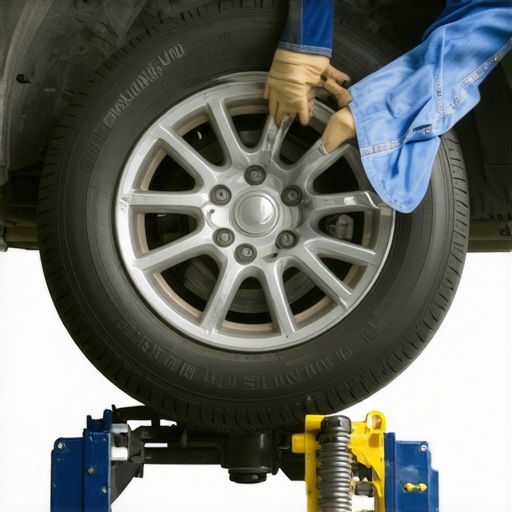
Don’t Confuse Loose Bearings with Steering Issues
It is easy to get a false positive here. When you check your tie rod ends with minimal tools, you usually shake the wheel at the 9 and 3 o’clock positions. If the wheel moves when you push it side-to-side, that is a steering link issue. But if it moves when you push it top-to-bottom, you are almost certainly looking at a wheel bearing or a ball joint. To differentiate, have a buddy look at the backside of the wheel while you shake it. If the whole steering knuckle is moving, it is the ball joint. If the hub is moving inside the knuckle, it is the bearing.
Listen for the Gritty Sandpaper Sound
After the shake test, put the car in neutral (if it’s a drive wheel, ensure the other wheels are safely chocked) and spin the tire as fast as you can by hand. Put your ear close to the wheel hub. A good bearing will be virtually silent, with maybe a slight ‘ssshhh’ sound from the brake pads lightly touching the rotor. A bad bearing, however, sounds like a handful of gravel in a coffee can. It is a low-frequency growl that stays consistent. This tactile feedback is a key part of how you can maximize your car’s lifespan with expert tune-up strategies.
Rule Out Your Brake Components
Sometimes a dragging brake caliper can mimic the sound of a bad bearing. If you hear a rhythmic scraping, you might actually be looking for a guide for brake system repairs. To be 100% sure, you can remove the brake caliper and the rotor entirely, then spin the hub by itself. If the noise persists without the brakes attached, you’ve found your culprit. It’s a bit more work, but it prevents you from buying expensive parts you don’t need, which is the ultimate goal of troubleshooting common auto repair issues before visiting the shop.I’ve spent years under hoods, and I’ve noticed a pattern: people treat car maintenance like a grocery list. Check the box, move on. But that’s how you end up with a ‘mystery’ vibration three months after a professional service. If you really want to maximize your car’s lifespan with expert tune-up strategies, you have to look past the generic manual and understand how your specific driving habits destroy parts faster than the factory predicted.
Stop Trusting the 10,000-Mile Oil Change Myth
Everyone says that modern synthetic oils can last forever, but in my experience, following those long intervals is a recipe for engine sludge. We’ve been conditioned to believe that ‘normal’ driving conditions apply to us. However, according to a study by AAA, nearly 62% of U.S. drivers actually fall into the ‘severe’ driving category. If you deal with stop-and-go traffic, short trips under five miles, or extreme temperatures, the truth about 10,000-mile oil change intervals is that they are often too long. By the time the oil light comes on, your additives are depleted and the friction is already doing its dirty work. I’ve seen countless engines with ‘perfect’ service histories start tapping because the owner didn’t realize their daily commute was a ‘severe’ environment.
Why ‘Warped’ Rotors are Usually Just Dirty Pads
Here is a nuance most shops won’t tell you: your brake rotors are rarely actually ‘warped.’ That pulsing feeling in your pedal is usually an uneven deposit of brake pad material on the rotor surface, often caused by high heat and then sitting at a red light with your foot clamped on the brake. This is one of the biggest brake service myths out there. To avoid this, you need to learn the simple way to bed in new brake pads properly. If you don’t perform this series of controlled stops to ‘season’ the metal, you’ll be wondering why your brake rotors keep warping every few months. It isn’t the metal failing; it’s the chemistry of the pad transfer failing. 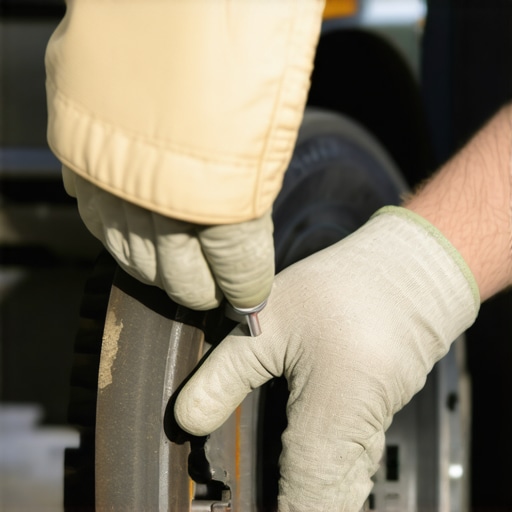
Is your car’s computer lying about that mechanical clunk?
Modern vehicles are incredibly smart, but they are also prone to ‘ghost’ errors. An advanced mistake many DIYers and even some pros make is taking an OBD-II code at face value. For instance, a lean condition code might lead you to buy a new mass air flow sensor, when the real culprit is a tiny vacuum leak or even a bad ground wire. It is vital to know how to tell if your computer is giving you a false error code before you start throwing expensive sensors at a mechanical problem. I once saw a guy replace his entire fuel system because of a code that turned out to be a loose gas cap—an ‘oops’ factor that cost him nearly $800. Always verify the physical symptom before trusting the digital diagnosis. Have you ever fallen into the trap of following the manual too closely only to have a part fail anyway? Let me know in the comments.
Stop Guessing with a Real Scan Tool
I spent way too many years relying on the free code scans at the local auto parts store. The problem is, those basic readers only give you the surface-level ‘P’ codes. If you want to dive deep into why your car behaves strangely, you need something that can read live data streams. I personally use a bi-directional scan tool because it allows me to actually trigger components—like firing a fuel pump or cycling an ABS solenoid—right from the tablet. This is how I avoid the headache of how to tell if your computer is giving you a false error code. According to the technical experts at Mitchell 1, having access to real-time PID data is the only way to accurately diagnose intermittent electrical ghosts. If you aren’t looking at your short-term fuel trims while the car is idling, you are just throwing parts at a problem.
My Favorite Way to Avoid Snapped Bolts
If there is one tool I tell everyone to buy, it is a high-quality split-beam torque wrench. Most people ‘hand-tighten’ everything, which is exactly why your brake rotors keep warping every few months. Over-torquing wheel lugs or caliper bolts creates uneven heat distribution and stress fractures. When I started actually torquing every bolt to the specific foot-pound rating in the service manual, my ‘mystery’ vibrations disappeared. This level of precision is the cornerstone of how I maximize your car’s lifespan with expert tune-up strategies. It turns a standard car service into a professional-grade restoration. 
How do I maintain my vehicle’s performance over the long haul?
Maintenance isn’t just about what you fix; it’s about what you prevent. To keep a car running past the 200,000-mile mark, you have to become obsessed with fluid chemistry. Don’t just check the levels; look at the color and smell. I perform the 5-minute check to prevent transmission failure every single month. If that fluid smells even slightly burnt, it is already losing its ability to lubricate. You should also be proactive about electrical health. I’ve found that many ‘mechanical’ failures are actually just poor connections. Learning how to spot a bad ground wire causing electrical issues can save you thousands in auto repair costs over the life of the vehicle.
The Future of the Garage is Digital
We are moving into an era where ‘wrenching’ involves as much software as it does steel. With the rise of over-the-air (OTA) updates and complex sensor arrays, the auto repair landscape is shifting. I predict that by 2030, we will see ‘Repair-as-a-Service’ models where your car predicts its own failures weeks before they happen. You can stay ahead of this by looking at auto repair trends to watch in 2025. Even if you love old-school mechanical work, understanding these digital systems is the only way to keep your modern daily driver on the road. I challenge you to go out this weekend and perform a ‘visual audit’ of your engine bay—look for one frayed wire or one weeping hose that you’ve been ignoring. Catching it now is the best gift you can give your wallet.
What Your Local Shop Might Not Mention About Wheel Maintenance
Over the years, I have realized that the hardest part of DIY work isn’t the physical labor; it is the mental battle against confirmation bias. When you hear a roar, your brain wants it to be a simple fix like tire pressure or a balance issue. However, the most successful mechanics I know are the ones who try to prove themselves wrong. One lightbulb moment for me was realizing that a bearing can be dead silent while spinning but fail the ‘shake test’ under the vehicle’s weight. Always trust your tactile feedback. If you feel that grit in the coil spring, do not talk yourself out of it. Precision also trumps brute force every single time. I have seen more hub assemblies ruined by someone ‘eyeballing’ the torque on an axle nut than by actual road wear. If you want to maximize your car’s lifespan with expert tune-up strategies, you must embrace the torque wrench as your best friend.
Build Your Diagnostic Fortress with These Resources
To truly move beyond guesswork, you need a small but mighty collection of resources. First, I never start a weekend project without a vehicle-specific service manual—Haynes or Chilton are great, but access to professional-grade data like Mitchell 1 is even better for wiring diagrams. Second, keep a physical copy of a car service checklist to ensure you aren’t neglecting the small things while chasing the big noises. I also swear by using a split-beam torque wrench for its reliability and ease of use. Lastly, if you are struggling with deeper issues, I recommend studying troubleshooting common auto repair issues before visiting the shop so you can speak the same language as the pros if a job gets too big for your driveway.
Ready to Stop the Roar?
There is a profound sense of satisfaction that comes from identifying a phantom noise and silencing it with your own two hands. Don’t let the complexity of modern vehicles intimidate you; at the end of the day, it is still metal, friction, and physics. By staying proactive and keeping an eye on auto repair trends to watch in 2025, you are setting yourself up for a lifetime of safe, reliable driving. You have the knowledge now—it is time to get those hands dirty and get your car back to that factory-quiet hum. Have you ever spent money on a set of tires only to realize the noise was actually a bad wheel bearing? Let me know your story in the comments below!