
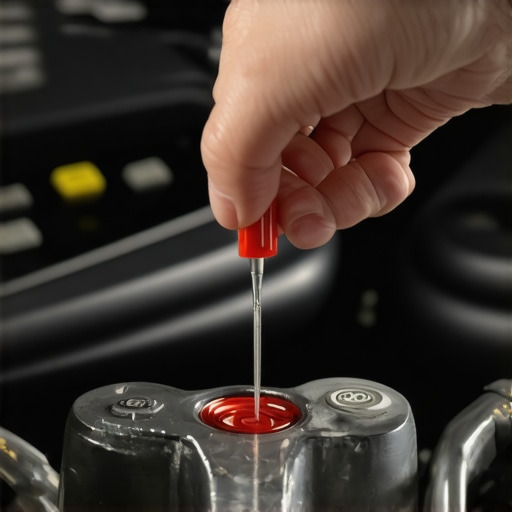
I stood there in the pouring rain, staring at a growing puddle of pinkish fluid under my car. My stomach did a somersault. I had ignored that slight hesitation between gears for weeks, thinking it was just the car “getting old.” That mistake cost me nearly three thousand dollars and a week of hitching rides. Looking back, I realized that if I’d just spent five minutes under the hood once a month, I could have caught the leak before it turned into a total mechanical meltdown. [IMAGE_PLACEHOLDER]
Why You Can’t Afford to Ignore Your Transmission
We often treat our cars like invincible machines until a dashboard light screams for attention. I used to be the guy who thought “lifetime fluid” actually meant it lasted forever. It doesn’t. Heat is the number one killer of gearboxes, and learning how to save your transmission from heat damage is the difference between a car that hits 200,000 miles and one that ends up in a scrap yard. Today, I’m going to show you exactly how to perform a quick diagnostic that identifies trouble before you’re stranded. This isn’t just about avoiding a bill; it is about keeping your daily driver reliable. If you have ever wondered why your transmission shudders on the highway, you already know that uneasy feeling of wondering if you’ll make it home.
Is a DIY check actually worth the hype?
You might be thinking you need a lift and a master’s degree in engineering to know what’s going on inside that metal casing. You don’t. While following a professional car service checklist is essential for major milestones, your own eyes and nose are your best defense. I once ignored a scent that I can only describe as “burnt toast,” only to find out later that transmission fluid smells like fish or burnt oil when it is failing. Catching that early is the key. According to data from the Car Care Council, roughly 70% of transmission failures are caused by heat and old fluid—problems that are almost entirely preventable with basic awareness. Have you ever felt your car hesitate for just a split second when shifting into drive? Drop a comment and tell me about it, because we are going to dive into the “sniff and squint” method next to see if you can find the DIY way to test a transmission solenoid and other components right in your driveway.I remember pulling the dipstick on my old sedan three years ago, expecting that healthy cherry-red glow. Instead, it looked like used espresso. That’s when I learned about the blotter test. Grab a clean white paper towel and let a few drops of fluid drip onto it. If it spreads out quickly and stays red or light brown, you’re likely just looking at a routine tune-up. But if it stays in a dark, concentrated blob or you see tiny metal flakes shimmering in the sun like glitter, you’ve got internal wear that no bottle of additive can fix. This simple check is as vital as understanding brake system repairs because it gives you a snapshot of the health inside the most complex part of your car.#IMAGE_PLACE_HOLDER_B#
Master the Hot Check Method
Most people check their engine oil when it is cold, but transmissions are divas—they usually need to be hot to give an accurate reading. I made the mistake once of topping off my fluid while the engine was stone cold. By the time I hit the highway, the fluid expanded, built up too much pressure, and started foaming out of the vent. Always check your manual, but typically you want the engine running and the fluid at operating temperature. If you find the level is actually rising over time, you might have a serious internal leak where coolant is mixing in, a phenomenon often seen when your engine oil level is increasing on the dipstick for similar reasons.
Listen for the Tell-Tale Whine
Your ears are often better than a digital scanner. A healthy transmission should be nearly silent. If you hear a high-pitched whine that sounds like a distant vacuum cleaner and changes with your RPMs, your fluid pump might be struggling to suck up old, thick fluid. It’s a similar sound to a failing power steering pump—which is why you should also know how to check your power steering fluid the right way to rule it out. If the sound disappears when you’re in park but screams in drive, the torque converter is likely the culprit. Catching this early is the secret to maximizing your car’s lifespan without spending five figures at a dealership.
Identify Shudders and Hesitation
When you’re cruising at 50 mph and the car feels like it’s driving over rumble strips for a second, that’s torque converter shudder. It’s one of the most common reasons why your transmission shudders on the highway. I once helped a neighbor who thought his tires were out of balance. We performed a simple “stall test”—holding the brake and giving it a tiny bit of gas while in gear—and felt the engine stumble. It wasn’t the tires; it was a clogged solenoid. You can actually perform the DIY way to test a transmission solenoid with a basic multimeter, saving yourself the $150 diagnostic fee most shops charge just to plug in a tool.
Stop the Heat Before it Kills Your Gearbox
If you’ve been towing or driving through stop-and-go traffic in mid-July, your transmission is under siege. Heat breaks down the chemical bonds in the fluid, turning it from a lubricant into a sludge that eats through rubber seals. If you notice a “toasty” or acrid smell after a long drive, pay attention immediately. It is the same red flag as why your car smells like something is burning after a highway run. Keeping an eye on your dashboard temp gauge is good, but adding an external cooler is a pro-level move that aligns with how to save your transmission from heat damage.The automotive industry has shifted toward marketing ‘low maintenance’ as a luxury feature, but this is a dangerous trap for your bank account. We are often told we can go 10,000 miles between services, yet a study by AAA found that even under moderate driving conditions, oil can lose its protective properties much faster than marketing suggests. When you look at the truth about 10,000 mile oil change intervals, you realize that ‘severe’ driving—short trips, idling, and extreme temperatures—is actually the norm for about 80% of us. Relying solely on the dashboard light is an expert-level mistake that leads to internal sludge buildup.
The 10,000-Mile Oil Myth That Kills Engines
Most people believe the manufacturer’s interval is a hard rule, but in reality, it is often a marketing tool to lower the ‘cost of ownership’ figures. If you want to maximize your cars lifespan with expert tune-up strategies, you need to ignore the long intervals and stick to a 5,000-mile cycle if you do any city driving at all. Furthermore, don’t assume that high-mileage lubricants are a cure-all. While the truth about high mileage oil additives is that they can help swell old seals, they cannot repair mechanical wear that has already occurred.
Why Your New Brakes Squeak Even After a Professional Swap
I’ve seen seasoned DIYers fall for the ‘plug and play’ myth when it comes to brake service. They spend hours in the driveway only to have the car vibrate or squeal two weeks later. This usually happens because they ignored brake service myths regarding rotor preparation. If you do not follow the proper way to break in new brake pads and rotors, the friction material won’t transfer evenly, leading to what many call ‘warped’ rotors. In most cases, the rotor isn’t actually warped; it just has uneven cementite deposits that cause that annoying pulse in your pedal. 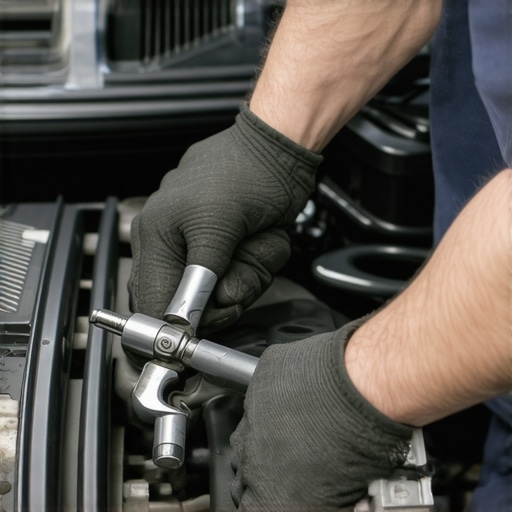
Can you trust your dashboard when a sensor goes rogue?
We often treat the Check Engine Light like a divine decree, but sensors are just electrical components that can fail or become ‘lazy’ over time. Sometimes you’re chasing a ghost when the real issue is simply a corroded ground wire or a vacuum leak. Knowing how to tell if your computer is giving you a false error code can save you from replacing a perfectly good catalytic converter. I once spent three days diagnosing a misfire that turned out to be a slightly loose spark plug. Speaking of which, always use the trick to replacing a spark plug without stripping threads—using a piece of rubber vacuum hose to hand-start the threads—otherwise, you might face a cylinder head repair that costs more than the car is worth. To keep your vehicle running like new, you have to look past the dashboard and listen to the mechanical soul of the machine. Have you ever fallen into this trap? Let me know in the comments.I used to think my toolbox was complete with just a set of wrenches and a prayer. I was wrong. If you really want to scale your DIY game and see long-term results, you need to invest in a semi-professional OBD2 scanner. I am not talking about those $20 cheapies that only clear codes. I use a bi-directional tool because it lets me command the car’s computer to test individual components. For instance, instead of guessing if a pump is dead, you can force it to run. This is exactly how I learned how to diagnose a bad fuel pump with a rubber mallet and a digital command. It turns a four-hour guessing game into a ten-minute confirmation. Another non-negotiable is a high-quality torque wrench. Most people grunt-tighten their lug nuts, but that leads to warped rotors and snapped studs. Learning the proper way to torque wheel bolts without a manual is great, but having a calibrated tool is better. According to the Bosch Automotive Handbook, even a 10% deviation in fastener tension can lead to catastrophic failure in high-stress components like suspension or cylinder heads. #IMAGE_PLACE_HOLDER_D#
How do I maintain my vehicle’s peak performance over time?
The secret isn’t one big repair; it is the aggregation of marginal gains. I follow a strict ultimate car service guide that treats every fluid like it has an expiration date. When you combine high-quality synthetic lubricants with regular inspections, you are essentially buying insurance against the dealership’s service department. This approach is the secret to getting 200,000 miles out of your original engine. I also keep a digital logbook of every single bolt I turn. It sounds obsessive, but when you go to sell the car or troubleshoot a recurring issue, that data is gold. Looking ahead, we are seeing a massive shift. As we move closer to 2025, auto repair trends to watch in 2025 suggest that cars will become even more locked down by software. We are moving toward Right to Repair battles where your mechanical skills will need to be matched by your ability to navigate proprietary software. My advice? Get comfortable with digital diagnostics now, before the mechanical parts are completely hidden behind encrypted modules. If you want to stay ahead, pick up a multimeter this weekend and start testing your battery’s resting voltage. It is the easiest way to begin mastering the electrical side of your machine.
Three Hard-Earned Lessons from the Garage Floor
Reflecting on my years of greasy knuckles, I’ve realized that the biggest mistakes don’t happen because we lack skill, but because we lack patience. One ‘lightbulb moment’ for me was discovering that why your engine pings when you use cheap gas isn’t just a minor annoyance—it is a symptom of internal stress that leads to massive repair bills later. I also learned that troubleshooting common auto repair issues before visiting the shop is more about pattern recognition than memorizing a manual. Finally, always trust your gut over a salesman; if they tell you a ‘lifetime’ fluid exists, they aren’t planning on you keeping the car past the warranty period.
The Gear I Never Tackle a Repair Without
If you are serious about your own tune-up routine, there are three things I recommend keeping nearby. First, a bi-directional OBD2 scanner—it is like having a direct line to your car’s brain. Second, the Bosch Automotive Handbook is the absolute gold standard for technical data, helping you see past brake service myths that flood the internet. Third, a digital multimeter is essential for testing the electrical gremlins that often mimic mechanical failures in modern vehicles.
Taking the Reins of Your Car’s Future
Building confidence in your own mechanical skills doesn’t happen overnight. It starts with one oil change, one set of pads, and that first moment where you realize you just saved five hundred dollars on a simple job. As we look at auto repair trends to watch in 2025, it is clear that being an informed owner is your best defense against rising labor costs. Don’t be afraid to get your hands dirty; it is the only way to truly own your vehicle. Following the ultimate car service guide consistently will keep you out of the breakdown lane and in the driver’s seat of your financial health.
Have you ever caught a major mechanical problem just by listening to a weird sound? Let me know in the comments below!