

I stood in my driveway, dipstick in hand, feeling like an absolute idiot. My ‘maintenance required’ light hadn’t even blinked yet, but the liquid dripping onto my paper towel looked less like amber honey and more like used coffee grounds. I’d followed the manufacturer’s recommendation for a 10,000-mile interval to the letter. ‘It’s synthetic,’ they said. ‘The technology has evolved,’ they claimed. But as I stared at that dark, gritty mess, I realized I’d made a classic mistake that thousands of drivers make every day: I trusted a marketing number over the reality of my daily commute. Today, I’m going to peel back the curtain on why those extended intervals might be the shortest path to a seized engine and how you can actually protect your investment.
Stop Trusting the Sticker on Your Windshield
It’s easy to get lulled into a sense of security when modern cars promise less time in the shop. We all want to save a few bucks and a Saturday morning. However, that 10,000-mile window is often based on ‘ideal’ driving conditions—which, let’s be honest, almost nobody actually experiences. If you’re idling in traffic, making short trips to the grocery store, or dealing with extreme heat, your car service checklist needs to be much more aggressive. I learned this the hard way when I pulled the valve cover off my old SUV and found enough sludge to pave a small driveway. It wasn’t just about the oil; it was about neglecting the expert tune-up strategies that keep an engine breathing.
Is waiting for the 10,000-mile mark actually worth the risk?
Many skeptics argue that synthetic oil doesn’t break down like the old stuff. They aren’t entirely wrong. Synthetic oil is a marvel of chemistry. But oil doesn’t just ‘wear out’; it gets contaminated. According to AAA, driving in ‘severe conditions’—which includes stop-and-go traffic—means you should be changing your oil much more frequently than the ‘normal’ schedule suggests. I once noticed why my engine oil level was increasing on the dipstick, and it turned out to be fuel dilution from too many short trips where the engine never reached operating temperature. If I had waited for the 10,000-mile mark, that thinned-out oil would have thrashed my bearings. Have you ever pulled your dipstick and felt a pit in your stomach because the oil looked way worse than the mileage suggested?
Your Engine Deserves Better Than the Bare Minimum
A proper tune-up for peak performance isn’t just about checking boxes; it’s about listening to what the metal is telling you. We are going to dive into the specific signs that your oil is failing long before the computer tells you to change it, ensuring you don’t end up with a costly repair bill for a problem that was entirely preventable.
Don’t Just Glance at the Dipstick
The first thing you need to do is stop treating the dipstick like a fuel gauge. It isn’t just about how much oil is in there; it’s about the chemical integrity of that fluid. When you pull that stick out, wipe it on a clean white paper towel. If you see a dark halo surrounding a darker center, or if the oil feels gritty when you rub it between your thumb and forefinger, your engine is already processing sandpaper. I remember my first real ‘oil disaster’ with an old sedan that rattled like a toolbox in a dryer. I figured as long as the level was high, I was golden, ignoring the fact that the oil smelled faintly of gasoline. One morning, the car simply refused to accelerate. That was my crash course in why you might find why your engine oil level is increasing on the dipstick due to fuel dilution. Gasoline is a solvent, not a lubricant; if it’s mixing with your oil because of short trips where the engine never gets hot enough to evaporate it, your bearings are being eaten alive. 
Identify Your Real Driving Conditions
Mechanics and manufacturers have a dirty little secret: ‘Normal’ driving conditions don’t exist for 90% of us. If you live in a city, your commute is ‘severe.’ If you tow a trailer, it’s ‘severe.’ If you live where it’s over 90 degrees or under 30 degrees, it’s ‘severe.’ Following a 10,000-mile interval in these conditions is like trying to run a marathon while breathing through a straw. You need a dedicated car service checklist that accounts for these stressors. Think of your oil like the blood in your body; once it’s full of toxins, every other organ—or in this case, the turbocharger and variable valve timing solenoids—starts to fail.
Master the Full System Inspection
A true oil service is the perfect time to audit the rest of the vehicle. While the oil is draining, you should be looking at your stoppers. I’ve seen people obsess over their oil brands while completely ignoring the fact that their brake system repairs are long overdue. Peek through the spokes of your wheels; if those pads look thinner than a nickel, you’re on borrowed time. Also, take a look at the reservoir. If you notice why your brake fluid looks like coffee creamer, you have moisture contamination that will eventually rot your lines from the inside out.
Stop Buying the Cheapest Filters on the Shelf
Your oil is only as good as the gatekeeper. There is a lot of debate regarding high-mileage oil filters and if they actually work, but the bottom line is the micron rating. A cheap filter has a bypass valve that opens far too easily, meaning when you stomp on the gas, unfiltered oil is bypassing the media and heading straight for your cylinder walls. This leads to internal scarring that no amount of ‘engine restorer’ in a can will ever fix. While you’re under the hood, verify your cooling system’s health. You should always know how to spot a coolant leak before your temperature gauge spikes, because an overheated engine will cook even the most expensive synthetic oil in minutes, turning it into a black, crusty varnish that clogs your oil pick-up tube. This proactive approach is exactly how regular tune-ups improve fuel efficiency and safety over the long haul.Most people think that throwing the most expensive ceramic brake pads or iridium spark plugs at a vehicle is a shortcut to reliability. It isn’t. In my years under the hood, I’ve seen three-hundred-dollar brake sets ruined in three days because the owner didn’t know about the proper way to break in new brake pads and rotors. They treat the car like a Lego set—snap a part in, and you’re done. But modern vehicles are complex ecosystems. If you replace the pads but leave a sticking caliper pin, those fancy pads will glaze over and squeal before your next grocery run. This is one of the biggest brake service myths that keeps people coming back to the shop twice for the same job.
The Most Expensive Part is Often a Waste of Money
I’ve had guys swear that their car needs a new fuel pump, only to find out that a dirty mass airflow sensor was tricking the ECU into cutting fuel. They were ready to drop hundreds of dollars on a repair when a ten-dollar can of cleaner would have solved it. This is the classic ‘Oops’ factor: misdiagnosing a symptom as the cause. Before you start swapping expensive components, you need to be troubleshooting common auto repair issues by looking at the sensor data, not just the check engine light. 
How do you distinguish between a genuine part failure and a system-wide communication error?
This is where things get technical for the advanced enthusiast. According to a study by the Society of Automotive Engineers (SAE), a significant percentage of modern drivability issues stem from ‘ghost’ electrical signals or poor grounds rather than mechanical failure. If your car is acting up, don’t just look at the metal. You need to ensure your technician knows how to tell if the shop actually has the tools for modern electronic calibrations. A ‘tune-up’ in 2025 isn’t just about spark plugs anymore; it’s about software and sensor harmony.
Don’t Fall for the New Part Trap
I once spent an entire weekend chasing a misfire only to realize I had over-torqued the new plugs, hairline-cracking the porcelain. I fell for the trap of assuming ‘new’ equals ‘perfect.’ Furthermore, if your steering wheel feels loose after an alignment, it usually isn’t the alignment itself but worn bushings that the tech missed while the car was on the rack. We have to stop looking at the ultimate car service guide as a shopping list for the parts store and start viewing it as a diagnostic strategy. Have you ever fallen into this trap where you replaced a part only to have the problem stay exactly the same? Let me know in the comments.
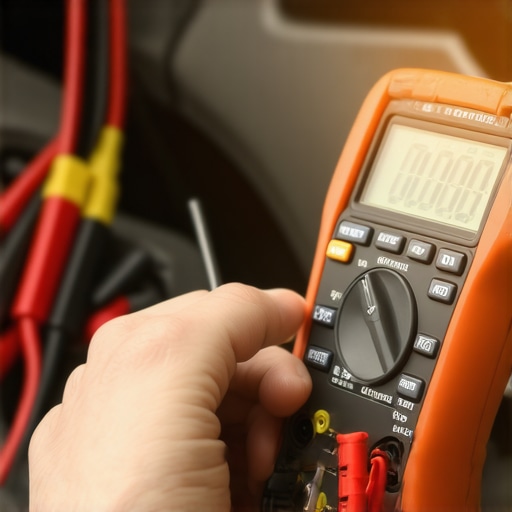
If you’re serious about moving beyond the ‘parts cannon’ approach, you need to invest in a decent digital multimeter. I’m not talking about a five-dollar bargain bin special that barely reads a AA battery. You need a unit with high input impedance so you don’t accidentally fry your car’s sensitive Engine Control Unit (ECU) while probing sensors. I personally swear by my Fluke 87V because it has survived being dropped on concrete and covered in gear oil, all while providing sub-millivolt accuracy. Learning how to test your alternator with a simple multimeter at home was the turning point in my DIY journey. It’s the difference between guessing your battery is dead and knowing your voltage regulator is failing under load.
Stop Guessing with the Parts Cannon
Most people get intimidated by wiring, but I like to think of it as plumbing for electrons. Once you understand the flow, the mystery disappears. If you can learn how to tell if your electrical problem is a blown fuse or a bad ground wire, you’ve already won half the battle against modern vehicle reliability issues. According to the Bosch Automotive Handbook, nearly 40% of all roadside breakdowns are now electrical in nature. This is why a simple visual inspection is no longer enough for a car service checklist; you need to be on a data collection mission every time you pop the hood.
How can I make my engine last for decades?
The real secret to getting 200,000 miles out of your original engine isn’t a ‘miracle’ oil additive in a shiny can. It’s rigorous thermal management. I’ve seen perfectly maintained engines warp a head because a five-dollar plastic coolant tee snapped after five years of heat cycles. You have to be proactive about the components that fail due to age and oxidation, not just mechanical wear. This philosophy is the core of maximize your car’s lifespan with expert tune-up strategies. We are moving toward a world where auto repair trends to watch in 2025 involve predictive AI diagnostics, but nothing will ever replace the tactile feedback of checking your own hoses and listening for a failing bearing.
Predictive Maintenance is the Real Winner
One advanced tip I urge every car owner to try: perform a voltage drop test on your starter circuit once a year. It takes exactly ten minutes and tells you if your battery cables are corroding from the inside out long before you find yourself stranded in a rainy parking lot. It’s these tiny, nerdy details that define the ultimate car service guide for the enthusiast who actually wants to keep their vehicle on the road. Stop waiting for the check engine light to blink and start hunting for the problem before it finds your wallet.
What Your Local Shop Won’t Mention About Preventive Care
One of the biggest realizations I had after decades of working on my own cars is that the maintenance light is a lagging indicator, not a leading one. If you wait for the car to tell you it’s thirsty, you’re already behind. I’ve learned that the truth about budget spark plugs and engine performance is that saving ten dollars now often costs you fifty dollars in fuel efficiency later. Also, don’t ignore the weird stuff; for instance, finding the fix for a soft brake pedal that mechanics keep missing usually involves air trapped in the ABS module rather than just a simple bleed. Finally, remember that your car is a heat exchange machine; if it can’t stay cool, it won’t stay alive.
Tools That Every Driveway Mechanic Needs
You don’t need a professional lift to do professional work. My essential toolkit includes a high-quality OBDII scanner—not just to clear codes, but to watch live data. I also recommend every owner learn the easy way to check if your thermostat is stuck open using an infrared thermometer. It’s a non-invasive way to diagnose cooling issues before they become catastrophic. Lastly, keep a set of stainless steel zip ties on hand; they are perfect for when you need to fix a rattling heat shield for zero dollars without waiting for parts to arrive.
Take Control of Your Machine
Automotive ownership doesn’t have to be a series of expensive surprises. When you shift your mindset from fixing what’s broken to preserving what’s working, the entire experience changes. You’ll stop dreading the mechanic and start enjoying the precision of a well-tuned machine. Mastering auto repair starts with that first time you decide to look deeper than the dipstick. Have you ever caught a major mechanical failure just by noticing a tiny change in how your car felt? Let me know in the comments below!