
I stood there, sweat dripping off my chin, watching a geyser of coolant erupt from my reservoir. It was embarrassing. I pride myself on maintaining my ride, but I had completely overlooked a tiny, spring-loaded valve that costs less than a decent pizza. I’d spent hours on a tune up for peak performance, yet here I was, defeated by a basic cooling component. It is a helpless feeling when your car decides it has had enough of the road, especially when the solution was sitting right in front of me the whole time. If you have noticed your needle creeping into the red or your heater blowing ice-cold air in January, you are likely staring down a thermostat issue.
Your Thermostat Might Be Lying to You
Most people think that if the engine is running hot, they need a whole new radiator or a water pump. I made that exact mistake once, throwing hundreds of dollars at parts I didn’t need because I was too lazy to pull the thermostat. I even convinced myself that because my engine temperature drops when I crank the heater, the system was basically fine. It wasn’t. The truth is, testing a thermostat is remarkably simple, and you do not need a fancy shop or expensive sensors to do it. We are going to use the “pot of boiling water” method—the gold standard for DIYers who want 100% certainty before they start troubleshooting common auto repair issues deeper in the engine block. It is the only way to physically see the valve open and close, taking the guesswork out of the equation entirely.
Can a Simple Kitchen Test Outperform a Mechanic?
You might be skeptical. Why wouldn’t a diagnostic tool just tell me it is broken? Well, thermostats are purely mechanical, not electrical. According to the Car Care Council, cooling system failure is actually the leading cause of engine-related breakdowns on the highway. Often, there is no “check engine” light for a sticking valve until the damage is already done. If you have ever wondered why your engine temperature spikes only when idling, you have probably felt that specific pang of anxiety that your head gasket is about to exit the chat. Today, we are going to kill that anxiety with a little bit of kitchen science. Have you ever replaced a major part only to find out it was a ten-dollar thermostat all along? Drop your “parts cannon” stories in the comments below; I would love to know I am not the only one who has learned the hard way. Ready to get your hands a little greasy? Let us walk through the setup.
Strip the Housing and Pull the Part
Before you can test the thermostat, you have to find it. Usually, it is tucked inside a metal housing where the upper radiator hose meets the engine. I cannot stress this enough: do not open that housing while the engine is hot. I learned that the hard way when I ended up with a face full of steam and a stained driveway. Drain about half a gallon of coolant into a clean pan first. This prevents a massive mess and gives you a chance to see if your fluid is full of debris—one of the hidden costs of skipping a scheduled coolant flush is that old, acidic coolant actually eats away at these very seals.
Once the housing is open, pop the thermostat out. Give it a quick visual check. If it is already sitting wide open while it is sitting on your workbench, you have found your problem. It is stuck open, which is why your heater feels like a weak hairdryer. This is a common point on any car service checklist because a cold engine runs rich, wasting gas and gunking up your valves.
Set Up Your Homemade Laboratory
Now, take that part into the kitchen. You will need a pot of water, a piece of thin wire or string, and a high-quality thermometer—ideally one that reads up to 220 degrees Fahrenheit. Tie the wire around the thermostat so you can suspend it in the water without it touching the bottom of the pot. If it rests on the metal bottom, the direct heat from the stove will give you a false reading, and you might think the part is fine when it is actually failing. Think of the thermostat like a bouncer at a high-end club. Its only job is to decide when the “crowd” (the coolant) is allowed to enter the “party” (the radiator). If the bouncer falls asleep on the job, the whole system collapses.
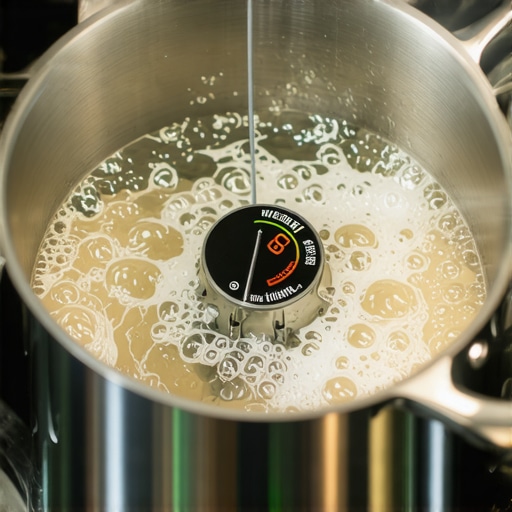
I remember the first time I performed this test on my old ’98 sedan. I was convinced I needed a new water pump. As the water began to simmer, I watched the thermometer climb: 180, 190, 200… nothing. The valve did not budge. That tiny, $12 piece of metal was the only thing standing between me and a cracked head gasket. Seeing it fail in that pot was a massive relief because it meant I did not have to tear the front of my engine apart. This kind of DIY diagnosis is exactly how a simple tune-up fixed my mystery hesitation and saved me hundreds in labor costs.
How to Spot a Lazy Valve Before It Kills Your Engine
As the water heats up, watch the temperature closely. Most thermostats are stamped with a degree rating, usually 180 or 195 degrees. The valve should start to crack open right at that number. If it waits until the water is a rolling boil at 212 degrees to finally open, it is “lazy.” A lazy thermostat is a silent killer; it causes your engine to run hotter than designed for minutes at a time, which degrades your oil and wears out your internal seals faster. Ensuring your cooling system operates at the exact right window is vital for how regular tune-ups improve fuel efficiency and safety over the long haul. Once the water cools, the valve should snap shut tightly. If there is even a tiny gap left, toss it and buy a new one. It is a small price to pay for the peace of mind that comes with knowing your cooling system is actually doing its job.
It is easy to think that once you have seen the valve open in a pot of water, you are in the clear. But here is the contrarian truth that most forum experts miss: a thermostat that opens is not always a thermostat that works. I have seen enthusiasts fall into the trap of installing a ‘fail-safe’ model thinking it is an upgrade, only to realize these parts often lock open permanently after a single minor temp spike. This forces the car into a perpetual warm-up loop, which is a disaster for your fuel mapping. If you have ever wondered how a simple tune-up fixed my mystery hesitation, it often comes down to ensuring the engine actually reaches its operating temperature so the computer can exit ‘open-loop’ mode.
Why Do Brand New Thermostats Still Fail the Install?
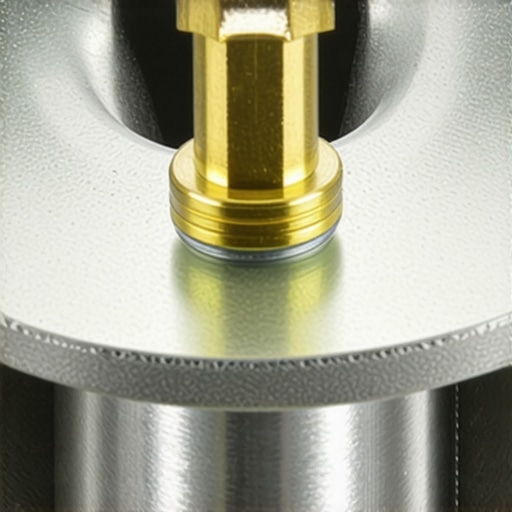
The most common mistake I see—and I have made it myself—is ignoring the ‘jiggle pin’ or the air bleed valve. If you look closely at the flange of a high-quality thermostat, there is a tiny hole with a brass pin in it. That pin must be positioned at the 12 o’clock (highest) position during installation. If it is at the bottom, air gets trapped behind the valve, creating a steam pocket. The thermostat won’t ‘see’ the hot coolant because it is surrounded by air, and your engine will overheat while the radiator stays stone cold. It is a frustrating cycle that makes you think you have a collapsed brake hose style blockage, but in your cooling system instead. According to the National Institute for Automotive Service Excellence (ASE), improper cooling system bleeding is a leading cause of ‘comebacks’ in professional shops. Even the pros rush this step sometimes.
Another nuance involves the radiator cap. You can have a perfect thermostat, but if the cap cannot hold pressure, the coolant will boil at a lower temperature, creating gas bubbles that cavitate the water pump. This is one of those brake service myths style misconceptions where people assume the most obvious part is the only part that matters. In reality, the cooling system is a pressurized ecosystem. If you are already doing a tune up for peak performance, spend the extra five dollars on a new pressure-rated cap. It is cheap insurance against a cracked head. Have you ever spent hours replacing a major component only to find out a tiny air bubble or a five-dollar cap was the real culprit? I would love to hear your ‘ghost in the machine’ stories in the comments below.
The Danger of the Colder Thermostat Myth
I often hear people say they are ‘upgrading’ to a 160-degree thermostat to keep the engine cooler. Unless you are running a dedicated track car with a custom-mapped ECU, this is a mistake. Modern engines are designed to run at 195-210 degrees to maximize combustion efficiency and keep moisture out of the oil. Running too cold is just as bad as running too hot; it leads to carbon buildup on your valves and a noticeable drop in MPG. Keeping your car within the factory-spec heat range is vital for expert tune-up strategies that actually preserve the engine long-term. As we look at auto repair trends to watch in 2025, thermal management is becoming even more precise with electronic thermostats, making these basic mechanical checks even more critical for the DIYer to master.
While the boiling pot test is a classic, I eventually had to admit that my gut feeling wasn’t as accurate as a digital read-out. To truly verify a repair and avoid the cycle of ‘parts-cannon’ mechanics, I rely heavily on a bidirectional scan tool. I personally use an Autel MaxiCOM because it allows me to command the radiator fans to activate or cycle the water pump manually—crucial for verifying the whole circuit without waiting for the engine to heat up. If you are just starting, even a basic Bluetooth dongle can reveal how to tell if your computer is giving you a false error code before you start pulling perfectly good parts. I have seen enthusiasts spend a fortune on sensors when learning how to spot a bad ground wire causing electrical issues would have saved them weeks of headache. You have to bridge the gap between mechanical hardware and digital software to succeed in modern expert tune-up strategies.
Stop Throwing Parts at the Dashboard
According to Alldata, the industry standard for professional-grade technical documentation and wiring diagrams, even a minor vacuum leak can trick your ECU into thinking the cooling system is failing. This happens because a lean-running engine generates excessive combustion heat that the radiator was never designed to shed. This is why I always check my short-term fuel trims alongside my coolant temperature PIDs. If you see those fuel numbers spiking while your temperature rises, your thermostat might be fine, but your intake gaskets are leaking air. This level of detail is how professional diagnostics found my ghost electrical leak after three different shops gave up on the vehicle because they weren’t looking at the whole ecosystem.

How do I maintain a cooling system over a 200,000-mile lifespan?
It comes down to chemistry rather than just mechanical checks. Coolant is not just about preventing a freeze; it is about keeping corrosion inhibitors active. These chemicals have a finite shelf life and can become acidic over time. I have made it a habit to use a refractometer—a specialized tool that looks like a tiny telescope—to check the actual glycol concentration and chemical health of my mixture. It is far more accurate than those plastic ‘floating ball’ testers that react differently based on the ambient temperature. Consistent care is the backbone of how regular tune-ups improve fuel efficiency and safety. If you let that fluid turn acidic, you are not just replacing a thermostat; you are slowly dissolving your radiator and heater core from the inside out, leading to expensive failures that no basic flush can fix.
What the Future Holds for Thermal Management
We are rapidly moving away from the simple, reliable wax-pellet thermostats I have described earlier. As we look at auto repair trends to watch in 2025, expect to see fully electronic, mapped thermostats that the ECU controls with pinpoint precision based on load, speed, and even GPS data. Imagine a car that ‘pre-cools’ the engine because it knows you are about to climb a steep mountain pass in three miles. It sounds like science fiction, but it is already appearing in high-end European models. For us DIYers, it means our toolkits need to evolve from simple wrenches to laptops and specialized diagnostic software. The key to keeping these complex systems running is staying ahead of the data curve.
Next time you are under the hood, I challenge you to look beyond the obvious physical parts. Plug in a scanner and watch your ‘Engine Coolant Temp’ (ECT) sensor in real-time as the car warms up from a cold start. Does the live data match what your dashboard needle is telling you? Finding that 5-degree discrepancy before the needle even moves is the first step to truly mastering your machine and preventing a roadside disaster.
What I Wish I Knew Before My First Cooling System Meltdown
Over the years, I have realized that the thermostat is the most misunderstood part of the engine. Here are a few ‘lightbulb moments’ that saved me from future headaches: First, never trust a bargain-bin part; I have had brand-new, non-OEM thermostats fail right out of the box, leading to hours of wasted labor. Second, don’t assume the temperature sensor is the villain just because your dash is acting up. Sometimes a computer giving you a false error code can mask a mechanical sticking point. Finally, the ‘jiggle pin’ I mentioned earlier is non-negotiable—ignoring it is the fastest way to trap air and cause a localized hotspot that can warp your cylinder head before you even leave the driveway.
The Reliable Gear in My Diagnostic Arsenal
If you want to move beyond the kitchen stove and get serious about your cooling system, there are three things I always keep in my garage. I rely on a bidirectional scan tool like an Autel or a high-end Bluetooth dongle to see raw sensor data, which is far more accurate than the dampened needle on your dashboard. I also highly recommend a vacuum coolant refill kit; it sucks all the air out of the system before you add fluid, which is the gold standard for expert tune-up strategies. Lastly, keep a physical service manual handy for your specific vehicle. Knowing the exact torque specs for the housing prevents you from cracking the aluminum or causing a slow leak that could eventually save your transmission from heat damage by keeping the whole thermal system in balance.
#IMAGE_PLACEHOLDER_E#
Stop Fearing the Temperature Needle
Cooling issues feel overwhelming because the stakes involve a total engine replacement, but the boiling pot test is your secret weapon. When you master these troubleshooting common auto repair issues, you aren’t just performing maintenance; you are gaining the mechanical intuition needed to drive any distance with total peace of mind. Keeping up with a consistent tune up for peak performance is the best way to ensure your ride stays on the road for another decade. Have you ever had a brand-new part fail right after you installed it? Let me know your most frustrating ‘parts-cannon’ stories in the comments below!