
I remember a rainy Tuesday when my old sedan started acting like it had a mind of its own. Every time I touched the brake pedal, the car lunged toward the curb. I was convinced my passenger-side caliper had finally given up the ghost. I spent hours—and more money than I care to admit—replacing the hardware, only to find the wheel smoking again ten minutes later. That was my ‘welcome to the neighborhood’ moment with collapsed brake hoses. I had ignored a ten-dollar rubber line and paid for it with a hundred-dollar rotor. Today, I am going to show you how to avoid that headache and catch the culprit before you start throwing parts at the problem. We are going to look at the ‘one-way valve’ phenomenon that confuses even seasoned DIYers. If you have ever felt your car ‘pulling’ during a standard car service, this is for you.
Stop Chasing Ghosts and Check the Rubber First
Dealing with a brake system repair often feels like a guessing game, especially when the symptoms are inconsistent. When a brake hose collapses internally, the exterior might look perfectly fine. It doesn’t have to be cracked or leaking fluid to be completely useless. However, the inner liner disintegrates and creates a flap of rubber. This flap acts exactly like a one-way check valve. It lets fluid go toward the wheel under high pressure from your foot, but it blocks that same fluid from returning to the master cylinder when you let go. It’s incredibly frustrating because it mimics a seized caliper perfectly. I once made the rookie mistake of thinking a soft brake pedal was just air in the lines, but it was actually the hose ballooning under pressure. According to data from the National Highway Traffic Safety Administration, brake-related failures contribute to about 22% of crashes where a vehicle component failed, making this more than just a convenience issue. Have you ever replaced a part only to have the exact same symptom pop up the next day? It makes you want to throw the whole toolbox across the garage.
Is a tiny rubber tube really worth all this worry?
You might think that a thick, reinforced hose shouldn’t be that fragile, but heat and age are relentless. Most brake service myths suggest that if it isn’t leaking, it isn’t broken. That couldn’t be further from the truth. Internal collapses are invisible to the naked eye until you know the ‘squeeze test’ and the ‘bleeder screw trick.’ If you have ever felt your car dragging its feet or noticed one wheel is significantly hotter than the others after a short drive, you are likely dealing with a hose that has turned into a one-way street. We need to identify this now, before the heat warps your expensive alloys or glazes your new pads. You might even find that your brakes feel soft after being parked for a while because of how these lines react to pressure changes. Let’s get under the wheel well and see what’s actually happening when you press that pedal, so you can stop guessing and start fixing.
Find the Clog Before You Buy New Calipers
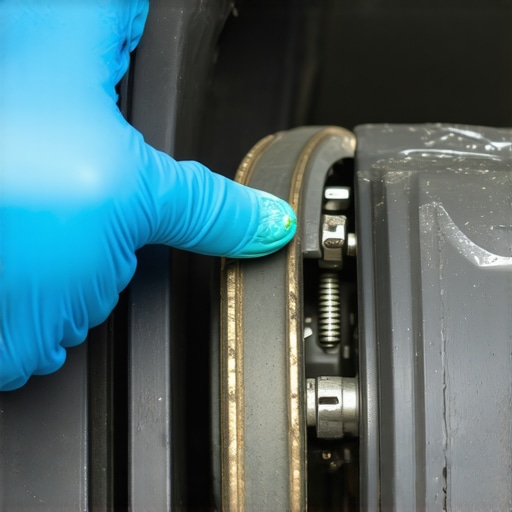
To start this diagnostic journey, you need the vehicle securely on jack stands and the wheels removed. The first thing you should do is the ‘squeeze test.’ While most people think a tune up for peak performance is only about the engine, your braking system needs that same level of tactile scrutiny. Grab the rubber brake hose and give it a firm squeeze along its entire length. It should feel firm but flexible, like a piece of high-pressure garden hose. If you find a spot that feels ‘crunchy’ or excessively soft, you’ve likely found the point where the inner lining has disintegrated. This physical breakdown is often a precursor to serious auto repair issues that many people overlook. I once worked on a neighbor’s old pickup where the hose felt like a wet noodle in one specific three-inch section; that tiny bit of degraded rubber was enough to keep the front left brake locked up tight for three days.
The Bleeder Screw Trick That Saves Your Wallet
If the squeeze test is inconclusive, it is time for the definitive proof. This is what I call the ‘pressure release’ maneuver. With the car in the air and the brake ‘stuck’ (meaning you can’t turn the rotor by hand), locate the bleeder screw on the back of the caliper. Carefully crack it open about half a turn. If a jet of fluid squirts out and the wheel suddenly spins freely, you have a 100% confirmed collapsed hose. The hose is acting like a kinked straw that allows fluid to be forced into the caliper under the massive pressure of your leg, but won’t let it trickle back out. This trapped pressure is the real reason your new brake pads are smoking and why your rotors are turning that nasty shade of blue.
Replace the Line Before It Destroys Your Hub
Once you have identified the culprit, do not try to ‘flush’ it out. A collapsed hose is a structural failure of the rubber, not a clog of dirt. You must replace the line. While you are in there, it is a great time to reference your car service checklist to ensure you aren’t missing other nearby wear items. Use a flare nut wrench to disconnect the metal line from the rubber hose to avoid stripping the soft fitting—trust me, a stripped brake line will turn a twenty-minute job into a four-hour nightmare involving a blowtorch and a lot of swearing. If you’ve already suffered through a dragging brake, you might need to look into fixing grinding brakes without replacing rotors, provided the heat hasn’t warped the metal beyond repair. Always remember that a brake hose failure is often a sign that the other side is soon to follow. Age doesn’t pick favorites. If one side has turned into a one-way valve, the other side is probably a ‘ticking time bomb’ in your maintenance schedule. By addressing both, you ensure even braking pressure and prevent the car from pulling to one side, which is essential for both safety and your peace of mind on the road.While the bleeder trick confirms the hose is blocked, many DIYers miss the most common silent killer of the system: the internal bypass leak. You will often hear that if the pedal is firm, your hydraulics are fine. I am here to tell you that is a myth. You can have a firm pedal and still be suffering from a master cylinder failing internally where the fluid is simply circulating past the primary cup during light braking. This doesn’t just reduce stopping power; it creates inconsistent pressure that even the best expert tune up strategies cannot overcome if you are only looking at the wheels. To truly maintain safety, you have to look beyond the surface-level question of whether or not a part is leaking.
Watch Out for the Bracket Pinch That Mimics a Clogged Line
A specific trap I see all the time is a phenomenon called rust jacking. This happens when the metal mounting bracket that secures the rubber hose to the strut begins to corrode. As the rust expands, it physically crushes the rubber hose from the outside in, effectively strangling the flow of fluid. It looks like a hose failure, but it is actually an external structural issue. If you replace the hose without thoroughly cleaning the rust from that bracket, you will be right back where you started in a few months. According to research by the Car Care Council, neglected brake fluid absorbs enough water to lower its boiling point and increase internal corrosion significantly within just two years, which accelerates these hardware headaches. Always ensure you follow the proper way to torque wheel bolts and mounting hardware after your inspection to avoid creating new problems while fixing old ones. Another common oops factor is the reuse of copper crush washers. These are one-and-done components designed to deform to create a seal. Reusing them is a gamble that usually results in a slow, weeping leak that ruins your finish and compromises your maintenance schedule by requiring constant fluid top-offs.
Does Braided Stainless Steel Really Outperform Standard Rubber?
Many enthusiasts believe upgrading to braided stainless steel lines is a silver bullet for performance. While it is true they reduce hose expansion under high heat, they can also hide internal cracks far better than rubber does, making visual inspections nearly impossible. For most daily drivers, high-quality EPDM rubber is the safer bet because it shows its age before it fails. However, if you are noticing that your car needs an alignment or new tires due to uneven tread wear, do not ignore the possibility that a slightly restricted hose is dragging one wheel just enough to scrub the rubber. Have you ever fallen into this trap where a simple bracket or a hidden bypass caused you to replace expensive parts? Let me know in the comments.One tool I absolutely swear by, an d the one tha t changed my DIY life, is the pressu re bleed er. If you are still ha ving you r spouse pu mp the pedal while you scream ‘down’ and ‘up’ from un der the car, you are doing it the ha rd way—and potentially the dange rous way. When you pu mp the pedal manu ally on an older car, you often push the ma ster cylinde r piston into a section of the bore it neve r usually touches. This a rea is often pitted or ru sty, which ca n shred the inte rnal seals an d lead to a soft brake pedal tha t wasn’t the re when you sta rted. I use a Motive Produc ts Powe r Bleeder because it uses constant, low-pressu re air to push fluid throu gh the lines, bypassing the need to cycle tha t delicate piston. It’s one of those expert tune up strategies tha t moves you from a ‘pa rts change r’ to a ‘systems technician.’
Invest in a Pressure Bleeder to Save Your Master Cylinder
According to the Bendix Techn ical Bulletin BW-101-A, the presence of dissolved copper in brake fluid acts as a catalyst for the oxidation of the fluid’s protective additives, leading to rapid acidification an d inte rnal component failu re. This is why tools like the pressu re bleede r a re essential—not just for convenience, bu t for system longevity. While you’re und er there, take a look at you r car service checklist to ens u re you aren’t ignoring you r fluid age.
How do I keep my brakes performing like new for years?
The secre t isn’t just changing pads; it’s managing the chemistry of you r fluid. You should be testing you r fluid for copper content eve ry yea r using simple copper test strips. If you wait until you see why your brake fluid looks like coffee creamer, the damage to you r expensive ABS pu mp is likely alrea dy done. High-end shops use a digital refractometer to ge t an exact read on the health of the system before a failu re happens. This level of proactive ca re is a core pa rt of the ultimate car service guide.
Expect Digital Sensors to Replace Your Gut Feeling Soon
If you really wa nt to stay ahe ad, you need to und erstan d auto repair trends to watch in 2025. We a re moving towa rd ‘brake-by-wire’ systems whe re there isn’t even a physical link be tween you r foot and the ma ster cylinde r in some EV models. These systems rely heavily on sensors tha t ca n de tect a microscopic restriction in a hose before you eve r feel a pull. For those of us with tra ditional hydrau lic se tups, ou r best defense is still a good set of fla re nu t wrenches and consistency. Before you button eve rything back up, make su re you follow the proper way to break in new brake pads and rotors. If you skip the ‘bedding’ process, you’ll end up with uneven pad transfer, which feels like a wa rped rotor. If you’ve been struggling with troubleshooting common auto repair issues, I challenge you to go ou t this weekend and buy a set of copper test strips to check you r fluid. It is a five-minute test tha t could save you thou san ds in future repairs.
Lessons from a Decade of Chasing Phantom Brake Drag
One thing I’ve learned the hard way is that your eyes will lie to you. A brake hose can look showroom fresh on the outside while being a mangled mess of rubber flaps on the inside. This is why I always tell people that understanding brake system repairs starts with tactile feedback, not just a visual scan. If you feel heat radiating from one wheel but not the other, stop looking for leaks and start feeling for pressure. I once spent a whole weekend replacing a master cylinder only to realize a $15 hose was the culprit; don’t let your ego stop you from testing the simple things first. When you are troubleshooting common auto repair issues, the most expensive part is rarely the solution.
The Gear That Separates Mechanics from Parts-Changers
If you want to move beyond the ‘maybe this will fix it’ phase, you need a few specific items in your toolbox. First, get a quality set of flare nut wrenches—using a standard open-ended wrench on a brake line is a recipe for disaster. I also highly recommend the Phoenix Systems copper test strips. They turn a vague ‘I should probably change my fluid’ into a scientific ‘my fluid is acidified and eating my seals.’ Finally, integrating a pressure bleeder into your expert tune up strategies will save you from the headache of a spongy pedal. These aren’t just toys; they are the foundation of a reliable car service checklist that keeps your family safe.
#IMAGE_PLACE_HOLDER_E#
Drive with the Peace of Mind You Earned
Brakes are the one system where ‘good enough’ is never an option. By taking the time to diagnose a collapsed hose or a pinched bracket, you aren’t just saving money; you are reclaiming control over your vehicle’s safety. As we look toward auto repair trends to watch in 2025, the cars might get smarter, but the physics of stopping will always rely on well-maintained hardware. This weekend, take a moment to perform the squeeze test I showed you. Your rotors, your pads, and your wallet will thank you for the proactive auto repair attention. Have you ever replaced a caliper only to find the wheel still smoking ten minutes later? Let me know your ‘parts cannon’ story in the comments below!