
I was sitting at a red light last Tuesday when I noticed it again—that low-frequency hum of my gas engine running when it definitely should have been silent. My Prius, usually my reliable little fuel-sipper, was acting like a gas-guzzling truck from the 90s. I looked at the energy monitor, and the battery bars were bouncing around like a heart rate monitor after a double espresso. It’s a gut-wrenching feeling because you know, deep down, that the “big battery” might be calling it quits. I remember the panic I felt thinking about the repair costs, but catching it early saved me thousands. Today, I’m going to share the exact symptoms I missed and the ones I finally caught so you don’t get stuck on the side of the road.
That Sinking Feeling When Your MPG Tanks
For a long time, I convinced myself that my sudden drop in gas mileage was just because I was running the AC too hard or maybe I needed new tires. I even went through a whole car service checklist trying to find a cheaper culprit. I made the classic mistake of thinking I could just ignore the “turtle mode” acceleration and it would go away. Spoiler alert: it didn’t. In fact, ignoring these signs is exactly the real cost of skipping major service that ends up doubling your repair bill later. We are going to dive into why your engine is working overtime and how to tell if you’re facing a simple repair or a full-on replacement. Have you noticed your car’s fan running unusually loud lately, even on short trips?
Is It Just My Imagination or Is the Battery Dying?
It’s easy to get paranoid. You start watching the dashboard like a hawk, wondering if those four bars should actually be six. According to data from Consumer Reports, while hybrid batteries are robust, heat and high-mileage driving habits can degrade cells much faster than the manufacturer’s estimate. I learned the hard way that a simple tune-up won’t fix a chemical degradation issue inside the battery pack. If you’re seeing “Rapid State of Charge” fluctuations—where the battery goes from full to empty in minutes—your car is trying to tell you something serious. Let’s break down the diagnostic steps you can take at home before you head to the shop.
Listen for the Screaming Cooling Fan
The battery cooling fan is your hybrid’s first line of defense. Think of it like a computer’s processor fan—if it’s working at maximum speed just to keep things from melting, you have a problem. I remember a summer drive through the city where my rear fan sounded like a miniature jet engine taking off behind the backseat. I ignored it for a week, thinking the cabin was just hot, but the reason your engine fan keeps running after you turn off the car is often a desperate attempt by the ECU to dump heat from a struggling battery pack. High heat kills lithium-ion and NiMH cells faster than mileage ever will. If you hear that fan while the AC is on and you’re driving normally, your battery is likely working overtime to compensate for high internal resistance in its cells. 
Track Your Rapid State of Charge Fluctuations
The second major sign is what I call the yoyo effect. On a healthy hybrid, the battery bars should move predictably and smoothly. If you see the battery go from nearly full to two bars just by accelerating up a single hill, or if it charges to 100% in under a minute of braking, the capacity is likely degraded. I spent a Saturday afternoon troubleshooting common auto repair issues before visiting the shop and realized my full battery only had about twenty percent of its original storage capacity. It’s exactly like a smartphone battery that says it is at 100% but dies after one five-minute phone call. This erratic behavior forces the gas engine to kick in more often, which is why your MPG falls off a cliff.
Plug In a Scan Tool Before Panicking
I once took my car to a dealer who quoted me $4,000 for a new pack after a thirty-second look at the dashboard. Instead of folding, I bought a cheap OBDII Bluetooth dongle and downloaded a diagnostic app. I saw that only one single block of cells was out of voltage range while the others were perfect. By replacing that one module for fifty dollars and using some essential maintenance tips to clean the battery bus bars, I got another two years out of that car. You don’t need to be an electrical engineer; modern apps translate the raw data into simple green and red blocks. If you see one block significantly lower than the rest under load, you’ve found your smoking gun.
Rule Out Simple Engine Issues First
Before you drop thousands on a battery, you have to rule out the small stuff. Sometimes a rough-running engine can feel like a battery struggle because the electric motor is trying to smooth out a misfire. You might need to maximize your car’s lifespan with expert tune-up strategies to see if the gas side of the hybrid is just dragging the system down. A clogged air filter or old plugs can make the transition between electric and gas feel clunky and unresponsive. You should always know how to tell if your car needs a simple tune-up or a major repair because a minor engine service is much easier to swallow than a total battery swap. Even something as unrelated as understanding brake system repairs is crucial, as seized calipers can create mechanical drag that mimics the feeling of a sluggish, dying hybrid system.
Your Dashboard Monitor is Just Making an Educated Guess
Most modern car owners have been conditioned to wait for a little light to tell them when to visit the shop. Here is the nuance: most oil life monitors are just mathematical algorithms based on engine revolutions and temperature, not an actual chemical analysis of your oil. This is exactly why I never trust the oil life monitor on my dashboard. If you do a lot of short-trip driving where the engine never reaches full operating temperature, those monitors can be dangerously optimistic. A study by Blackstone Laboratories has often highlighted that while some oils can theoretically go 10,000 miles, the contamination from moisture and fuel dilution in ‘city-driven’ cars happens much faster than the software predicts. I have seen engines with sludged-up valves despite the dashboard saying the oil had 20% life remaining.
The Dangerous Myth of Lifetime Transmission Fluid
Another trap I see people fall into is the ‘lifetime’ fluid marketing. Manufacturers often label transmission or coolant fluids as ‘lifetime’ to lower the perceived cost of ownership for the first 60,000 miles. But in the real world, ‘lifetime’ usually just means ‘until the warranty expires.’ If you want your car to last 200,000 miles, you need to maximize your car’s lifespan with expert tune-up strategies that ignore those marketing labels and focus on actual fluid health.
Can a Tiny Change in Fluid Color Warn You of Brake Failure?
Here is something most ‘quick-lube’ shops won’t tell you: your brake fluid should be clear or slightly amber. If you open the reservoir and see a swampy tint, you are looking at a chemical breakdown. I have had readers ask if it is okay to just top it off, but understanding why your brake fluid is green and what it says about your car is a game changer. It means the copper lining in your brake lines is eroding due to moisture. This is one of those brake service myths where people think ‘if it stops, it is fine’—until the internal corrosion causes a caliper to seize on the highway. #IMAGE_PLACE_HOLDER_C#
Avoid the Most Expensive DIY Trap in Modern Repair
We have all been there: the car won’t start, or a window stops moving, and we immediately assume the motor or the alternator is dead. Before you spend $300 on a new part, you have to look for the ‘electrical ghost.’ I once spent a whole weekend trying to fix a ‘dead’ starter only to realize a ground wire was slightly loose. Learning how to tell if your electrical problem is a blown fuse or a bad ground wire can save you more money than any coupon ever will. This is especially true for newer cars where how to tell if your local mechanic actually has the tools for a proper ADAS calibration becomes critical; a simple bumper repair can throw off your entire safety system if the sensors aren’t aligned correctly. Have you ever replaced a part only to find out the ‘fix’ was a five-cent fuse or a simple cleaning? Let me know in the comments, because I have definitely been there.
Stop Guessing and Start Reading the Data
I’ve spent enough time under hoods to know that your ears can lie, but a live data stream doesn’t. When I’m troubleshooting common auto repair issues before visiting the shop, my first move is always to plug in a high-quality scanner. I’m not talking about the ones that just give you a code; I use an interface that allows for bi-directional control. For my Toyota, I use the Techstream software, which is the same technical documentation and interface used by dealership technicians. It allows me to manually trigger the battery cooling fan or reset the adaptive learning on a transmission. If you want to maximize your car’s lifespan with expert tune-up strategies, you need to see what the ECU sees. According to the Society of Automotive Engineers (SAE) J1979 standard, your car’s onboard diagnostics provide a wealth of ‘Mode 06’ data that can predict a failing component before the check engine light even blinks. If you can see a misfire count rising on cylinder three, you can swap a coil pack before it leaves you stranded. 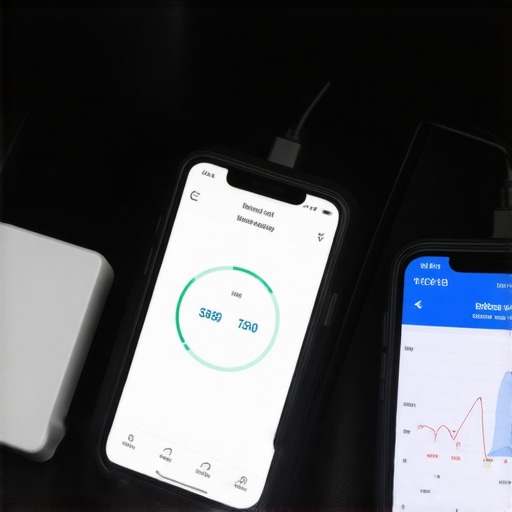
The $20 Multimeter is Your Most Powerful Weapon
You don’t need a massive rolling toolbox to handle 90% of electrical issues. A simple multimeter is the difference between a successful fix and throwing parts at a problem. I’ve used mine for everything from checking parasitic draws to learning how to test your alternator with a simple multimeter at home. If your battery is sitting at 12.2 volts while the car is off, it’s only about 50% charged. If it doesn’t jump to 13.5-14.5 volts when the engine is running, your alternator is likely toast. This tool is also essential for figuring out how to tell if your electrical problem is a blown fuse or a bad ground wire. I once saved a neighbor from a $500 ‘wiring harness’ repair just by using the continuity setting on a multimeter to find a corroded ground bolt.
How do I keep my car running for 300,000 miles?
Maintenance isn’t a one-time event; it’s a rhythm. I follow a strict car service checklist that ignores the ‘standard’ intervals and leans toward ‘severe’ conditions. This means 5,000-mile oil changes and 30,000-mile transmission drains. Beyond the fluids, I’m a big believer in chemical maintenance. I’ve found that how to fix a sticking power window with a can of silicone spray is a real thing—keeping the rubber tracks lubricated prevents the motor from burning out. I also use a simple spray bottle for more than just cleaning; you can use it for identifying a vacuum leak using a simple spray bottle by misting water over intake gaskets and listening for a change in RPM.
The Future of DIY Repair is Digital and Gated
Looking ahead, auto repair trends to watch in 2025 suggest that ‘Right to Repair’ will be the biggest battleground. Manufacturers are increasingly encrypting the gateways to their systems, making it harder for us to perform even a basic tune-up for peak performance without a specialized subscription. However, the DIY community is resilient, and open-source tools are already bypassing these locks. If you own a modern car, start looking into ‘pass-through’ devices like the J2534 today. My best advice? Buy a basic OBDII Bluetooth dongle this week and just watch your fuel trims while you drive—you’ll learn more about your car in ten minutes than you have in the last ten years.
Hard Truths I Learned While Keeping My High-Mileage Hybrid Alive
After years of chasing electrical gremlins and monitoring cell voltages, I’ve realized that most owners spend way too much because they wait for the dashboard to light up like a Christmas tree. Here are the lightbulb moments that changed how I maintain my vehicles:
- The Dealer Isn’t Always Right: Many service centers are trained to replace entire battery packs when a simple bus bar cleaning or a single module swap would suffice. Always get a second opinion from a hybrid specialist.
- Airflow is Life: The tiny air intake filter for your hybrid battery is often neglected. If it’s clogged with pet hair or dust, your battery will overheat and degrade regardless of how well you drive.
- MPG is Your Dashboard’s Truth: Before you even see a warning light, a persistent 10-15% drop in fuel economy is the most reliable early warning sign of a struggling hybrid system.
By staying ahead of these issues, you can significantly maximize your car’s lifespan with expert tune-up strategies that focus on prevention rather than expensive cures.
The Minimalist Kit for Staying Ahead of the Shop
You don’t need a professional garage to diagnose your own car. To keep my fleet running, I rely on a few specific tools that have paid for themselves ten times over. First, a Bluetooth OBDII dongle paired with a dedicated hybrid diagnostic app is non-negotiable for real-time monitoring. Second, a high-quality digital multimeter is essential for debunking common brake service myths related to regenerative braking sensors. Lastly, I always keep a copy of the ultimate car service guide handy to ensure I never miss a fluid interval. #IMAGE_PLACEHOLDER_E#
Your Hybrid is a Marathon Runner Not a Sprinter
Taking control of your car’s health can feel like a steep learning curve, but it is the most rewarding way to avoid the stress of unexpected breakdowns. Every time you perform a tune-up for peak performance, you are learning the unique language of your vehicle. Remember that regular tune-ups improve fuel efficiency more effectively than any ‘magic’ fuel additive ever could. Don’t be afraid to get your hands a little dirty; the more you know about your car, the less you’ll fear the mechanic’s bill. Stay proactive with your auto repair routine and your car will reward you with another 100,000 miles. Have you ever noticed your hybrid fan getting loud after a long drive? Let me know in the comments below!