

I remember the first time I loaded my old F-150 with just a few yards of gravel. I looked in the rearview mirror and realized I couldn’t see anything but the blue sky. My truck wasn’t just “squatting”—it was begging for mercy. I spent weeks convincing myself that it was just a temporary weight issue, but even when the bed was empty, the rear end sat lower than a lowrider at a Sunday car show. I was making a classic rookie mistake: I thought I could just ignore it as long as the wheels were turning. But then came the swaying on the highway and the teeth-rattling thuds every time I hit a small pebble. Eventually, I realized that my leaf springs hadn’t just ‘settled’; they had completely given up the ghost. Today, I’m going to help you avoid the expensive headaches I stumbled into. We are going to look at the dead giveaways that your suspension has reached its limit. Whether you’re a weekend hauler or just want your daily driver to handle safely, knowing how to spot sag is a vital part of your car service checklist. Have you ever felt like your truck was swaying like a boat on a choppy lake while you were just trying to drive to the grocery store?
Your Truck Should Not Look Like It Is Preparing for Takeoff
When you look at your vehicle from the side on level ground, it should have a slight “rake”—meaning the back should be just a hair higher than the front to account for future loads. If it’s sitting perfectly level or, heaven forbid, the rear is lower than the nose, your springs are tired. I once spent way too much money on new struts because I didn’t know the simple way to tell if your shocks are actually worn out versus when the springs have lost their tension. Shocks dampen the bounce, but those steel leaves are what actually hold the weight of the chassis. According to the historians at Britannica, the leaf spring is one of the oldest forms of suspension, dating back to ancient horse-drawn carriages. Even though the design is centuries old, the metal still suffers from fatigue over time. If you start noticing that your tires are wearing out on the edges or you hear a sharp metallic “clack” when you hit a bump, your suspension is screaming for help. Don’t wait until you’re stranded on the side of the road with a snapped leaf to take action.
Is Swapping Out Tired Springs Actually Worth the Trouble?
You might be tempted to just “live with it” like I did for nearly six months. But here is the cold, hard truth: sagging springs put massive stress on your drivetrain, your universal joints, and your brakes. When I finally crawled under my rig to do some troubleshooting common auto repair issues, I found that my u-joints were vibrating themselves to pieces because the pinion angle was all wrong. It’s not just about the look of the truck; it’s about the safety of everyone in the cab. A sagging rear end changes the way your vehicle handles in a panic stop, often making the front end dive uncontrollably. Getting a proper tune up for your suspension is just as important as changing your oil. Trust me, the peace of mind you get from a level ride and predictable handling is worth every penny and every bruised knuckle you might get under the wheel well.
Get Out the Tape Measure and Stop Guessing
To really know if your springs are shot, you need hard numbers. Park your rig on the flattest concrete you can find. Measure from the center of the wheel hub straight up to the bottom edge of the fender flare. Do this on all four corners. If the rear is lower than the front, or if one side is more than half an inch lower than the other, you’ve got a problem. This is just as critical as checking for alignment issues because a lean in the rear affects how the weight transfers to your front tires, making your steering feel light and disconnected.
Look for the Telltale Gaps and Rust Dust
Grab a flashlight and crawl under there. You’re looking for “fretting,” which is a fancy word for metal-on-metal rubbing. When the plastic liners between the leaves wear out, the steel starts grinding against itself, creating a fine, orange-colored dust. If you see that dust, your spring rate is already compromised. I remember doing this on my old truck; I saw a tiny line that I thought was just a hair. I poked it with a flathead screwdriver, and a two-inch chunk of the third leaf just fell onto my chest. That was my wake-up call that a standard car service wasn’t going to fix a structural failure. If you find cracks, stop driving immediately; a snapped spring can puncture a tire or even your fuel tank.
Don’t Forget the Rubber That Holds it All Together
Sometimes the metal leaves are okay, but the bushings—the rubber cylinders at the ends of the springs—are pulverized. When these go, your axle can actually shift slightly forward or backward during acceleration. This leads to that annoying sensation where the truck feels like it’s “dog-tracking” or wandering. It’s a similar feeling to hearing a loud pop when you back out of the driveway, which often points to suspension components under tension finally giving way. If the rubber looks cracked or is squishing out of the eyelet like an old marshmallow, it’s time to swap them out during your next tune up to restore that factory-fresh handling.
Should You Add-a-Leaf or Replace the Whole Pack?
You’ll hear guys at the parts counter talk about “Add-a-leaf” kits. Think of these like putting a fresh battery in a remote with three dead ones; the new leaf will do all the heavy lifting until it eventually wears out the old ones even faster. If you’re already troubleshooting auto repair issues that involve significant sag, do yourself a favor and replace the whole pack. When I finally bit the bullet and put in a fresh set of heavy-duty leaves, the difference was night and day. The truck didn’t just sit higher; it stopped “diving” every time I touched the brakes. Speaking of which, if your suspension is sagging, you should also be looking at understanding brake system repairs, because your rear brakes are likely doing more work than they were designed for to compensate for the weight shift during a stop.
Most guys think that if the truck is squatting, they just need ‘beefier’ shocks. That is the single biggest myth in the garage. Shocks are dampers; they manage the energy of the bounce, not the ride height. If you’ve got sag, you’ve got a spring fatigue issue, plain and simple. In fact, technical data from automotive engineers at places like Eaton Detroit Spring often points out that once leaf springs pass their ‘yield point,’ the molecular structure of the steel has permanently changed. I’ve seen people throw high-end gas-charged shocks at a sagging truck only to find out they still can’t clear a speed bump without a cringe-inducing thud. This is a classic case of misdiagnosing a structural failure as a simple car service requirement.
Stop Blaming Your Shocks for a Saggy Rear
Everyone wants the ‘easy fix,’ but the reality is that springs and shocks have completely different jobs. If you find yourself looking at brake service myths because your stopping distance has increased, your real culprit might be that sagging rear end shifting too much weight off the front wheels.
Can You Simply Re-Arch an Old Spring?
I get asked this all the time by guys trying to save a buck. You can take a spring to a shop to have it ‘re-arched,’ but here is the nuance: cold re-arching is just a temporary bend. Without a full heat-treatment cycle, the steel retains a ‘memory’ of being flat. Within a few thousand miles, you’ll be right back where you started. If you want to maximize your car’s lifespan, skip the temporary fixes and invest in new leaf packs. It’s the difference between a patch and a cure.
The Hidden Danger of a Flipped Shackle
Here is the ‘oops’ factor most DIYers miss: the shackle angle. When your springs go flat, the shackle—the swinging link at the rear—gets pushed into a horizontal position. If it flips forward and locks against the frame, your suspension loses all travel. It feels like your axle is welded to the frame. I’ve seen people replace perfectly good bushings when the real problem was this geometry disaster. Have you ever fallen into this trap of replacing the ‘easy’ part first only to realize the problem was deeper? Let me know in the comments. This is why troubleshooting common auto repair issues requires looking at the whole system, not just the part that’s making noise. If your truck is ‘dog-tracking’ or leaning, don’t just search for a tune up; get under there with a pry bar and check the tension of those leaves.If you are going to dive into leaf springs or heavy-duty suspension work, you cannot rely on the same budget kit you use to hang pictures in the hallway. I have learned the hard way that a standard 3/8-inch ratchet will either snap or strip when you are fighting decades of road grime and rust. You need a 1/2-inch drive breaker bar and, more importantly, a high-quality digital torque wrench. When I was troubleshooting common auto repair issues on my F-150, I realized that getting the U-bolt tension right is not just about ‘tight enough.’ According to technical standards from SAE International, specifically the J429 standard for fastener strength, the clamping force of a U-bolt is what actually holds your axle in place. If those bolts are loose, your axle will shift, leading to a brake pedal that feels spongy or a steering wheel that is never centered.
Invest in Tools That Do Not Snap Your Knuckles
Beyond the big bars, I always keep a bottle of high-grade penetrant like PB Blaster or Kroil on the shelf. Spraying your leaf spring hardware three days before you start the job is the difference between a two-hour afternoon and a two-day nightmare involving a torch. This level of preparation should be a permanent part of your car service checklist. I also recommend a heavy-duty C-clamp for holding the leaf pack together if you ever have to replace a center pin; if that pack shifts while the pin is out, you are in for a world of hurt trying to realign the holes.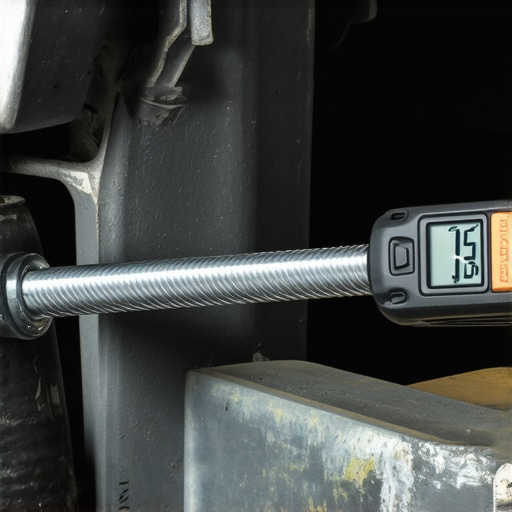
How do I maintain my suspension over time?
The secret to a long-lasting leaf spring setup is surprisingly simple: cleanliness and lubrication. Most people assume leaf springs are ‘set it and forget it’ parts, but road salt and grit act like sandpaper between the leaves. Every six months, I use a pressure washer (carefully) to blast out the debris between the metal layers. If your springs have greaseable shackles, hit them with a high-quality synthetic grease during every oil change. This is one of those expert tune-up strategies that costs almost nothing but adds years to the life of your bushings and prevents that annoying ‘old bed frame’ squeak every time you hit a bump.
Why the Future of Truck Suspension is Smart
Looking ahead, the days of simple stacks of steel are numbered. If you look at auto repair trends to watch in 2025, we are seeing a massive shift toward composite materials and load-leveling air-assist systems that integrate directly with the vehicle’s computer. These ‘smart’ suspensions can adjust on the fly to prevent the very sag we have been talking about. However, until we all trade in our rigs for these high-tech wonders, we have to stick to the fundamentals of metallurgy and mechanics. If you want to keep your ride level and your tires wearing evenly, you have to be proactive. My advanced tip for you this week: Grab a torque wrench and check your U-bolt nuts. Even if you haven’t touched them in years, they can stretch and loosen over time, and a quick fifteen-minute check could save you from a major brake system repair down the road.
The Expensive Lessons My F-150 Taught Me the Hard Way
One of the hardest things to accept is that suspension sag is progressive. It starts with a little lean and ends with vibrating U-joints and blown seals. I learned that ignoring the ‘Carolina Squat’ on a work truck actually eats your tires from the inside out and ruins your braking efficiency. When you are trying to figure out how to tell if your car needs a simple tune-up or a major repair, always look at the geometry of your leaf springs first. If the springs are flat or inverted, no amount of alignment will save your front end. Another lightbulb moment was realizing that ‘load-leveling’ shocks are often just a band-aid that hides a structural failure. Real safety comes from the steel holding the frame, not the oil inside a shock absorber.
Gear That Belongs in Your Suspension Toolbox
If you plan on tackling this yourself, don’t even start without a high-quality penetrant and a half-inch breaker bar. I personally swear by a digital torque wrench for those U-bolts because the ‘feel’ of a manual wrench can be deceptive when you are lying on your back in the dirt. #IMAGE_PLACEHOLDER_E# These tools are essential for any car service guide that involves heavy-duty components. I also recommend a pair of 6-ton jack stands; you need the height to let the axle droop so you can actually get the old leaf packs out without a struggle. Don’t forget a set of safety glasses, because road grit in the eye is the fastest way to end a productive Saturday.
Take Back Your Right to a Level Ride
You don’t have to settle for a truck that drives like a boat and looks like it’s perpetually overloaded. Taking the time to inspect your leaves and bushings is the ultimate way to maximize your car’s lifespan and ensure your family stays safe on the highway. A level truck is a predictable truck, and a predictable truck is a safe one. Use your car service checklist to stay ahead of the rust, and your suspension will reward you with decades of service. Have you ever had a leaf spring snap on you in the middle of a haul? Let me know your survival stories in the comments below.