
I’ll never forget the first time my old sedan started talking back to me after I pulled into the driveway. I had just finished a long commute, clicked the ignition off, and stepped out into the quiet evening. Suddenly, a high-pitched whistle started coming from under the hood. It sounded like a tea kettle reaching its boiling point. I stood there, groceries in hand, half-expecting the car to lift off like a rocket or, worse, burst into flames. My first instinct was to panic and start troubleshooting common auto repair issues late at night. I ended up replacing a perfectly functional radiator cap the next morning because I thought it was the culprit. Talk about an expensive lesson in jumping to conclusions! If you are standing in your garage right now hearing that same ghostly hiss, take a deep breath. It’s usually not a haunting, but it is a sign that your car is trying to tell you something important about its internal pressures. Today, I’m going to help you pinpoint exactly where that noise is coming from and whether you should be worried.
Stop Fearing the Post-Drive Whistle
The truth is that your car is a pressurized ecosystem. When you shut off the engine, fluids stop circulating, but the heat remains. This is when you might start how to spot a coolant leak by just listening. Sometimes it’s just the air conditioning system equalizing, and other times it’s a tiny vacuum leak that only reveals itself when the engine vacuum drops. I once spent hundreds on a mechanic only to realize I could have handled identifying a vacuum leak using a simple spray bottle myself. Have you ever felt that sinking feeling when your car makes a sound you can’t explain?
Is this sound actually going to drain my bank account?
This is the big fear, right? We hear a noise and immediately see dollar signs flying away. However, many whistling sounds are actually benign. For instance, the expansion valve in your AC system often whistles as high-pressure refrigerant moves to the low-pressure side. According to the Car Care Council, a non-profit organization dedicated to car maintenance education, a faulty radiator cap or a small pinhole in a hose are actually more common causes of pressure-related noises than actual engine failure. If you also notice that the reason your engine fan stays on after you turn the car off is related to high temperatures, the whistle might just be a cooling system under stress. It is all about context. If there are no puddles on the ground and your temperature gauge stayed steady, you likely aren’t facing a catastrophe today. We are going to look at the three most common culprits so you can sleep better tonight.To solve this mystery, you need to act quickly while the engine is still hot enough to maintain pressure but safe enough to touch. Think of your engine bay as a giant, mechanical tea kettle where the pressure is constantly looking for the weakest exit. Your first diagnostic tool isn’t a high-tech computer scanner; it is actually a simple piece of rubber tubing.
Pinpoint the Hiss Before You Open Your Wallet
The Hose-to-Ear Trick That Never Fails
Take a three-foot length of heater hose or even a clean piece of garden hose. Place one end firmly against your ear and move the other end slowly around the engine’s top components. This makeshift stethoscope amplifies the ‘hiss’ so you can differentiate between a cooling system leak and a vacuum issue. I remember my first project car, a beat-up 1998 hatchback. It whistled like a choir of birds every single time I turned it off. I was convinced the engine block was cracked and I was ready to scrap the car. I used this hose trick and found a tiny split in a vacuum line near the intake manifold within minutes. I realized I didn’t need a new engine, just a five-cent piece of rubber. It is a perfect example of why a car service checklist should always begin with careful sensory observation before you start buying parts. 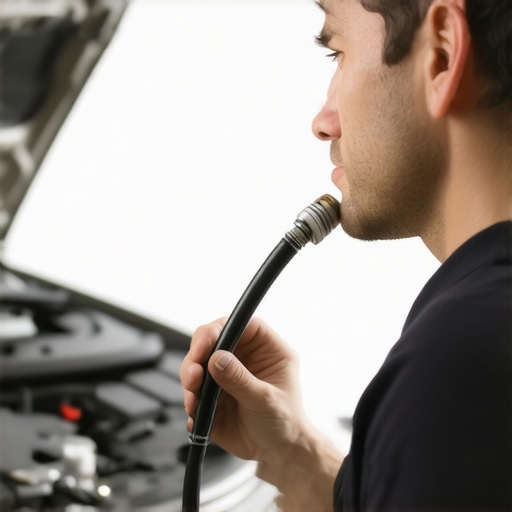
Check the Radiator Cap for Signs of Fatigue
If the sound is coming from the very front of the vehicle, specifically near the coolant reservoir or the radiator, the cap is your prime suspect. A radiator cap is more than just a lid; it is a calibrated pressure release valve designed to keep your coolant from boiling. Over time, the internal rubber seals dry out and crack. If it fails, coolant steam escapes with a high-pitched whistle that can last for several minutes after the engine stops. Look for white, crusty residue around the cap, which is a telltale sign of dried coolant. Knowing how to tell if your radiator is clogged often starts with ensuring the pressure remains contained where it belongs. If you see bubbles in the overflow tank after shutdown, your cooling system is literally gasping for breath through a faulty seal.
Hunt Down Vacuum Leaks with Household Supplies
If the cooling system seems tight, you likely have a vacuum leak. These occur in the plastic or rubber lines that help your engine breathe and manage emissions. You can use a spray bottle filled with soapy water or specialized carb cleaner to find the source. While the engine is idling, spray a small mist onto the hoses. If the idle speed changes or the whistling pitch shifts, you have found the hole. This is a fundamental part of a proper tune up for your car and can save you from a ‘lean’ fuel mixture code on your dashboard later on.
Test the PCV Valve in Under Two Minutes
Another hidden culprit is the Positive Crankcase Ventilation (PCV) valve. This little valve regulates gases inside the engine block. When it gets stuck or the internal spring weakens, it can create a vacuum whistle that mimics a much more serious internal engine problem. Learning how a clogged PCV valve leads to expensive oil leaks will show you how this tiny part can cause catastrophic pressure build-up if ignored. To test it, pull the valve out; if it doesn’t rattle when you shake it, it is dead. Replacing it is one of the easiest ways to maximize your car’s lifespan with minimal effort. Ultimately, determining how to tell if your car needs a simple tune up or a major overhaul usually comes down to whether these small, accessible components are functioning properly.Most drivers assume that if the ‘Check Engine’ light isn’t glowing, their car is in perfect health. This is a dangerous trap. Modern ECUs are programmed with wide tolerances; they often won’t trigger a trouble code until a vacuum leak is severe enough to cause a noticeable misfire or a ‘lean’ condition. In my years of working on high-mileage engines, I’ve found that a persistent whistle is often the ‘pre-code’ warning. If you ignore it because the dashboard is dark, you are missing the golden opportunity to perform how regular tune-ups improve fuel efficiency and safety before the damage requires a tow truck. A technical report from the National Institute for Automotive Service Excellence (ASE) highlights that mechanical air-leaks are frequently misdiagnosed as sensor failures, leading to hundreds of dollars in unnecessary electrical repairs.
Can a failing brake booster actually cause that engine whistle?
Here is the high-level nuance most people—and even some junior mechanics—miss: the brake booster is essentially a giant vacuum diaphragm. If the internal seal begins to tear, it can pull air through the brake pedal assembly inside the cabin. This creates a haunting whistle that sounds like it is coming from the dashboard rather than the engine bay. You might think it is a harmless air conditioning sound, but if you notice the reason your brake pedal goes all the way to the floor or even just a slight stiffness when stopping, you are looking at a critical safety fault. Many owners dive into understanding brake system repairs thinking they need new pads or rotors, when they actually have a vacuum leak in the booster that is leaning out their engine. 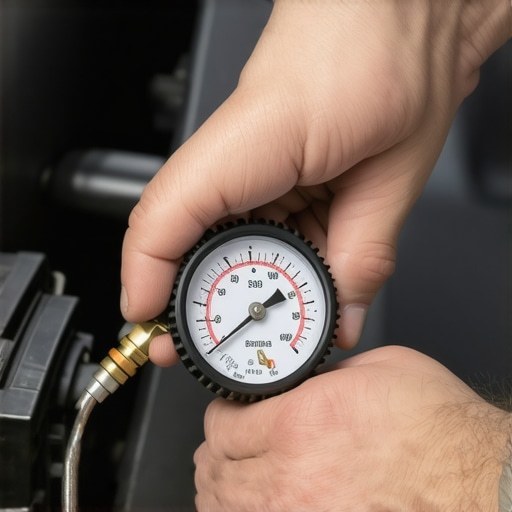
Why Your Multi-Point Inspection Often Misses the Real Culprit
Most ‘standard’ inspections are visual, but whistling leaks are often invisible. The ‘oops’ factor I see most often is the ‘spray-and-pray’ method. DIYers will spray carb cleaner on the top of the hoses but forget the bottom. Gravity and engine heat cause rubber hoses to crack on the underside first, where they rest against hot metal components. If you are only looking at the parts you can see, you are only doing half the job. This is why you should never fall for common brake service myths that suggest a noise is ‘just the car getting old.’
Stop Throwing Expensive Parts at a 50-Cent Problem
Another common mistake is the ‘premium parts’ fallacy. I see people buying the most expensive iridium spark plugs thinking it will solve a rough idle caused by a whistle. But if your air-to-fuel ratio is compromised by a 50-cent vacuum hose, those fancy plugs will foul out in a month. Don’t invest in performance upgrades until the basics are sealed tight. Even the truth about high-mileage oil filters won’t matter if your engine is sucking in unfiltered air through a cracked intake boot. The secret to a long-lasting vehicle isn’t just buying the best parts; it is having the discipline to find the source of the sound before the computer tells you to. Have you ever fallen into this trap and replaced a sensor that wasn’t actually broken? Let me know in the comments.I shifted from the “hose-to-ear” trick to professional-grade tools because precision matters. I personally use a dedicated smoke machine—not the expensive shop versions, but a reliable DIY model like the AutoLine Pro. Why? Because it finds leaks in the evaporative system that a simple spray bottle simply cannot reach. If you are serious about troubleshooting common auto repair issues, this tool is the bridge between amateur and professional results. According to the Bosch Automotive Handbook (10th Edition), vacuum systems are integral to volumetric efficiency; even a 2% leak can drastically increase exhaust gas temperatures and lower engine life. This is why I also swear by a high-quality digital multimeter. Learning how to test your alternator with a simple multimeter at home is just the start of electrical diagnostics. I use mine to back-probe sensors when that whistling sound turns into a persistent rough idle that the computer can’t quite explain. 
Stop Guessing and Start Measuring with These Pro Tools
Many drivers wait for a breakdown before they buy equipment, but I recommend building your kit while the car is running well. Aside from the smoke machine, a dedicated OBDII scanner with live data capabilities is essential. I prefer units that allow you to graph fuel trims in real-time. If your “Short Term Fuel Trim” is spiking into the double digits while you hear that whistle, you’ve confirmed a vacuum leak without turning a single wrench. This level of data is crucial for understanding brake system repairs involving boosters or complex intake manifolds.
How do I keep my car’s vacuum and cooling systems healthy for the long haul?
Consistency is the secret sauce that separates lucky drivers from smart ones. I follow a strict car service checklist that includes a deep-clean and visual inspection of every rubber component every six months. Rubber hates heat cycles, and engine bays are essentially ovens. Over time, the materials used in coolant hoses and vacuum lines become brittle and fail from the inside out. To maximize your car’s lifespan, you should proactively replace these high-wear items every 80,000 to 100,000 miles, even if they look fine to the naked eye. This preventive strike is a core part of the ultimate car service guide for anyone wanting to avoid the side of the highway.
The Next Decade of Repairs is Already Here
Looking ahead, we’re seeing a massive shift in how these systems interact. As we transition toward 2025, auto repair trends to watch suggest that software and active thermal management will dominate. Even electric vehicles have complex cooling loops that can “whistle” if a thermal valve fails or a pump cavitates. The mechanics of the future will need to be part-plumber and part-programmer to keep these machines silent and efficient. If you want to take your maintenance to the next level, I challenge you to go beyond the visual today. Pick up a basic vacuum gauge and test your manifold pressure at idle. It’s the most honest way to see if your engine is truly “sealed” or if it’s gasping through a hidden crack. You might find that tuning up your car for peak performance starts with a single needle reading.
What I Discovered After Replacing Three Working Parts
My biggest takeaway from a decade of wrenching is that the human brain loves to jump to the most expensive conclusion first. I used to hear a whistle and think ‘head gasket’ because it sounded dramatic and scary. Now, I start with the simplest ten-cent seals. One lightbulb moment for me was realizing that sound travels through metal; a whistle at the back of the engine can actually be a leak at the front. If you are ever in doubt, refer back to the ultimate car service guide to see where these small pressure checks fit into your long-term maintenance schedule. Remember, a car that ‘talks’ to you isn’t necessarily broken; it is simply inviting you to perform some much-needed auto repair before a small leak becomes a massive bill.
The Gear That Separates Guesswork from Professional Results
If you want to move beyond the spray bottle method, I highly recommend investing in a dedicated vacuum gauge. It is an analog tool that tells you exactly how healthy your engine’s internal ‘lungs’ are by measuring manifold pressure. I also suggest keeping a digital multimeter in your glovebox. Even though we have been discussing air leaks, learning how to test your alternator with a simple multimeter at home is vital because electrical surges can sometimes cause solenoids to hum or whistle, mimicking a vacuum leak. Finally, always have a high-quality car service checklist printed out in your garage to ensure you don’t miss the small stuff like the PCV valve or the gas cap seal.
#IMAGE_PLACEHOLDER_E#
Keep Your Engine Quiet and Your Wallet Full
Don’t let a small sound steal your peace of mind or make you lose sleep. Most of the time, your vehicle is just giving you a polite heads-up before a minor issue turns into a major headache. By mastering these simple diagnostic tricks, you can maximize your car’s lifespan and avoid the unnecessary stress of a breakdown. The road ahead is much smoother and quieter when you know exactly what is happening under the hood. Take control of your car’s health today and turn that whistle back into a purr. Have you ever spent hours chasing a mysterious car noise only to find it was something incredibly simple like a loose radiator cap or a cracked five-cent hose? Let me know your most frustrating diagnostic story in the comments below!