
I remember the day vividly. I was cruising down the highway in my old 1994 pickup, feeling absolutely invincible, when a rhythmic tink-tink-tink started echoing under my floorboards. I ignored it, convinced it was just a pebble caught in the tire tread. Big mistake. Ten miles later, that tink became a violent bang that shook my entire world, and I watched in the rearview mirror as my driveshaft pole-vaulted my truck’s rear end into the air. It was terrifying, incredibly expensive, and completely preventable if I had just known what to look for.
Stop Ignoring That Tiny Squeak Under Your Seat
It starts so small. You might notice a little vibration at highway speeds or perhaps a faint chirp when you shift from Park into Reverse. Most people assume it is just an old vehicle being temperamental. But a universal joint, or U-joint, is the unsung hero of your drivetrain. When it fails, it does not just quit; it often tries to take the transmission housing or the rear differential with it. I learned the hard way that troubleshooting common auto repair issues before visiting the shop is the difference between a fifty-dollar part and a three-thousand-dollar nightmare. If you have ever wondered why your car shudders when you accelerate from a dead stop, you are likely feeling the needle bearings inside a U-joint grinding themselves into dust.
Is a tiny piece of metal really that dangerous?
Absolutely. According to structural engineering data from SAE International, a drivetrain failure at highway speeds can exert several thousand pounds of kinetic force in directions your chassis was never designed to handle. You are not just losing power to the wheels; you are losing control of a multi-ton machine. Early in my DIY days, I once replaced a perfectly good set of tires because my car vibrated specifically when I reached 60 miles per hour, only to realize later the front U-joint was bone dry and seized. It was a classic rookie mistake that cost me a week’s pay and a lot of pride.
Catch the Warning Signs Before the Disaster
You have to learn to listen to your car. It talks to you through the steering wheel and the vibration in your seat. If you hear a loud clunk every time you put the car in gear, your U-joints are begging for grease or replacement. While I always recommend keeping the ultimate car service guide handy for routine checks, some parts demand immediate, visceral attention. Even the best essential maintenance tips won’t save you once the metal-on-metal grinding starts. Have you ever felt a weird shimmy and just turned up the radio to drown it out? Tell me about your closest calls in the comments. We are going to dive into the physical tests you can do in your driveway to stay safe.
Get Your Hands Dirty and Test for Play
Before you start tearing things apart, you need to verify that the U-joint is actually the culprit. You do not need a high-end scanner or a degree in engineering for this; you just need to get underneath the vehicle. However, physics is a cruel mistress. I once saw a guy try to check his driveline on a slight incline without chocks, and the truck started rolling the second he popped it into neutral. Always use jack stands and wheel chocks. It is much easier to learn how to tell if your car needs a simple tune up or a major repair when you are not pinned under two tons of steel.
Put the Transmission in Neutral
This is the step most people forget. If your car is in Park or in gear, the drivetrain is under tension. That tension “loads” the U-joint, which can mask even a severely worn bearing. You might shake the driveshaft and think it feels solid as a rock, only to have it fail ten miles later. By shifting into neutral (with the wheels safely blocked!), you release that load. It is similar to how the reason your steering wheel feels loose after an alignment often comes down to small, unloaded components having too much room to wiggle.
Grab the Yoke and Shake
Reach up and grab the driveshaft near the yoke where it meets the transmission or differential. Give it a firm, aggressive shake up and down, then side to side. There should be zero—and I mean absolutely zero—perceptible movement within the joint itself. If you see the cross-piece moving inside the caps, you have found your problem. 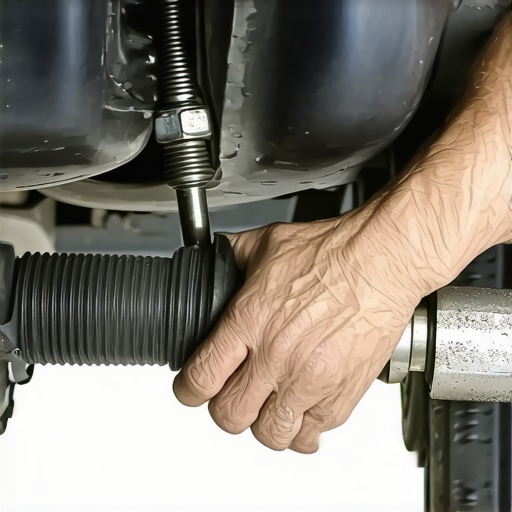
Identify the Red Dust of Death
Sometimes the play is hard to feel, but the visual evidence is damning. Look at the seals on the U-joint caps. If you see a fine, rusty-colored powder coating the area, that is the “red dust of death.” It is not actually rust from the outside; it is the pulverized remains of the needle bearings that have run out of grease and are grinding themselves into a metallic flour. I remember a project truck I bought for five hundred bucks; the previous owner thought the vibration was just a tire out of balance. When I looked under there, the entire rear yoke was orange with this dust. It was a ticking time bomb. Keeping a car service checklist helps you spot these stains before they lead to a catastrophic snap.
Decide if You Are Ready for the Replacement
Swapping a U-joint is a rite of passage for any home mechanic. It is more physically demanding than understanding brake system repairs because it often involves a large hammer or a heavy-duty press. If your vehicle has original factory joints, they might be held in by plastic “injected” retainers that require a torch to melt away. This is where you have to be honest with yourself about your tool kit. Referencing the ultimate car service guide can help you decide if this is a driveway job or a shop job.Many people think a “tune-up” is just a fancy word for changing spark plugs and air filters. In my years under the hood, I’ve found that’s a dangerous oversimplification. While those parts matter, a true professional looks at the engine’s health holistically. I’ve seen enthusiasts spend hundreds on high-end plugs only to see their fuel economy tank because they ignored a vacuum leak or a failing sensor. In fact, learning how regular tune-ups improve fuel efficiency and safety involves checking the ignition timing and fuel trim—things a simple plug swap won’t fix.
Can a Worn Drivetrain Mimic a Failed Brake System?
This is a question I get from advanced DIYers all the time. The answer is a resounding yes. If you feel a pulsation through the floorboard when you decelerate, your first instinct is to blame the rotors. But a seized U-joint or an out-of-balance driveshaft can create a vibration that feels remarkably like warped brakes. I once spent three hours performing a brake service on a client’s SUV, only to find the “pulsation” was actually a dry U-joint binding up as the vehicle’s weight shifted forward. It’s one of those brake service myths that can lead you down a very expensive rabbit hole. One contrarian view I hold—and many old-school mechanics will agree—is that dashboard technology isn’t always your friend. This is why I never trust the oil life monitor on my dashboard. These systems are calculated algorithms, not actual sensors measuring oil quality. If you drive in dusty environments or do a lot of idling, those “10,000-mile” intervals are a death sentence for your camshafts. According to the Car Care Council, nearly 80% of vehicles on the road have at least one unperformed maintenance task because owners wait for a light to tell them something is wrong. 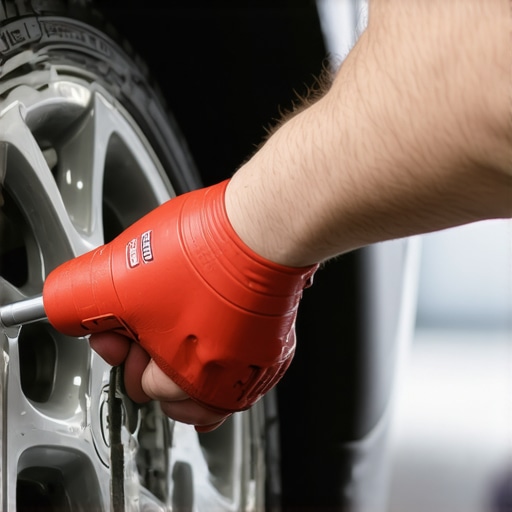
The Danger of Over-Torquing Your Success
If you decide to tackle that U-joint or a brake job yourself, here is the “oops” factor that kills more parts than anything else: the “ugga-dugga” method. Most people think “tighter is better,” but over-torquing the bolts on a U-joint strap or a brake caliper can stretch the metal, leading to a snap under load. Even worse, if you just finished a brake job and didn’t follow the proper way to break in new brake pads and rotors, you might experience a terrifying smell. Don’t panic if your new brake pads are smoking during the first few miles; it’s often just the resins curing. But if it persists, you’ve got a mechanical bind. To truly maximize your car’s lifespan with expert tune-up strategies, you have to be more observant than the average driver. Have you ever fallen into the trap of replacing parts that weren’t broken because you misdiagnosed a symptom? Let me know in the comments below; we’ve all been there!
Tools that saved my knuckles and my wallet
If you are serious about moving beyond basic oil changes, your tool chest needs to evolve. I used to think a basic socket set was enough, but as tolerances get tighter, precision becomes everything. For instance, when I am working on drivetrain components or brakes, I never reach for a standard wrench anymore. I rely on a split-beam torque wrench. Why? Because the click-style ones can lose calibration if you do not dial them back to zero after every use. If you are handling a critical component, you need to know the proper way to torque wheel bolts without a manual to avoid catastrophic hub failure. Precision is not just for professional shops; it is the difference between a repair that lasts a decade and one that fails in a week.
How do I maintain my vehicle’s reliability between major services?
The secret is not just checking fluids; it is monitoring the invisible data. I always keep a digital multimeter in my glovebox. It is the single most versatile tool you can own. Whether I am hunting down a parasitic draw or trying to see if my battery is actually taking a charge, that little box of electronics is my eyes and ears. I have even used it to verify how to test your alternator with a simple multimeter at home before I waste money on a new one. Beyond that, I am a big advocate for high-quality filtration. Do not fall for the marketing hype on the box; investigate the truth about high-mileage oil filters and if they actually work for your specific engine type. 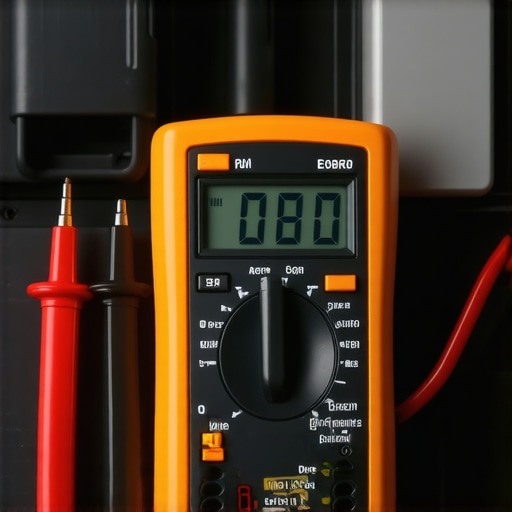
The digital shift is changing how we wrench
Looking ahead, we are moving into an era where software matters more than iron. By 2025, I predict that auto repair will consist of 40% mechanical work and 60% software recalibration. We are already seeing this with ADAS systems. If you want to stay ahead, you need to keep an eye on auto repair trends to watch in 2025 because even a simple windshield replacement now requires a computer to re-aim the cameras. According to technical documentation from the Equipment and Tool Institute (ETI), the complexity of secure gateway modules in modern vehicles is making it harder for DIYers to access data without specialized scanners. This shift means that maintenance now includes updating firmware, not just greasing joints. To truly maximize your car’s lifespan with expert tune-up strategies, you have to be proactive about things the manual does not even mention. For example, many modern transmissions are ‘sealed for life,’ which is often a marketing myth. My advanced tip for you: buy a basic OBDII live-data scanner that can read transmission temperatures. If you see that temp spiking while you are towing or sitting in traffic, you have caught a problem before the service engine light even thinks about turning on. These data-driven habits keep your car on the road for 300,000 miles or more.
The Hardest Lesson I Learned About Sudden Drivetrain Failure
Looking back at that day on the highway with my old truck, I realize the biggest mistake wasn’t the repair itself—it was the delay. I’ve learned that silence is rarely a sign of health in a high-mileage vehicle. Here are a few lightbulb moments from my years in the garage:
- Noises are data points. That chirp when you shift into Reverse isn’t just character; it is a mechanical SOS.
- Safety over ego. I used to be embarrassed to ask for help, but understanding brake system repairs and drivetrain physics taught me that a second pair of eyes can save your life.
- Algorithms aren’t mechanics. Your car doesn’t know if you’re driving through a desert or a swamp; it only knows what the computer calculates.
#IMAGE_PLACEHOLDER_E#
Gear That Actually Belongs in Your Trunk for DIY Success
If you want to move beyond being a part changer and become a true diagnostic expert, you need a few specific items in your arsenal. I never start a weekend project without my split-beam torque wrench—it is more reliable than the clicker types and keeps me from snapping bolts. I also swear by a high-quality digital multimeter. Whether you’re checking a battery or verifying how regular tune-ups improve fuel efficiency and safety, it is the only way to see what the electricity is actually doing. Lastly, invest in a bidirectional scan tool. As we look toward auto repair trends to watch in 2025, being able to talk to your car’s modules is just as important as knowing how to swing a hammer.
Stop Turning Up the Radio and Start Listening to Your Car
Taking ownership of your vehicle’s health is one of the most rewarding things you can do. It is about more than just saving money at the local shop; it is about the peace of mind that comes from knowing exactly what is happening beneath your floorboards. When you maximize your car’s lifespan with expert tune-up strategies, you aren’t just maintaining a machine—you are protecting your freedom to move. Don’t be afraid to get your hands dirty. Every expert was once a beginner with a squeaky U-joint and a sense of curiosity. Have you ever heard a weird clunk and hoped it would just go away on its own? Let me know what happened in the comments below!