
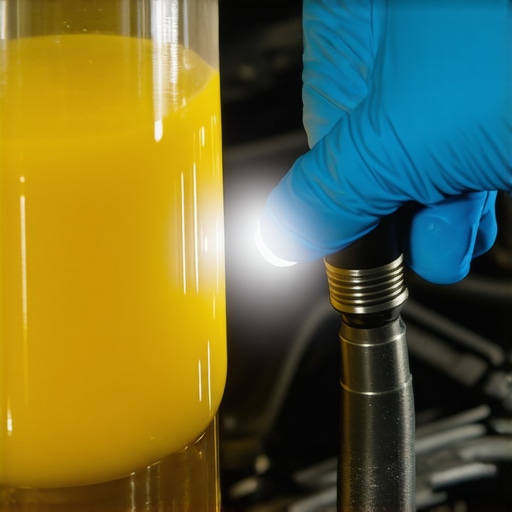
I remember standing in my driveway last November, shivering in the damp air, staring at a plastic reservoir that was stubbornly half-empty. For the third time in a month, I was pouring in more DOT 3 fluid, yet my garage floor was bone dry. No drips, no green-tinged puddles, nothing. I felt like I was being gaslit by my own car. I even checked the driveway with a flashlight at 2 AM like a crazy person, convinced I’d catch a sneaky leak in the act. But the concrete remained spotless. Early in my DIY days, I made the dangerous mistake of assuming that if I didn’t see a puddle, the fluid was just ‘settling.’ I kept topping it off, ignoring the fact that a closed hydraulic system shouldn’t have a thirst. Today, we are going to solve this mystery together and find exactly where that liquid is hiding before your pedal hits the floor at a red light.
Stop Pouring Money into a Ghost Leak
If you are constantly refilling that little plastic tank but your driveway looks brand new, you aren’t crazy, but you might be in trouble. Unlike engine oil, which can slowly burn off, brake fluid doesn’t just evaporate. If the level is dropping, it is going somewhere. Often, the culprit is hiding in plain sight within the components themselves. For instance, as your brake pads wear down, the calipers have to extend further, which naturally draws more fluid down into the lines. It’s a subtle shift, but it’s one of those troubleshooting common auto repair issues you learn to spot with experience. However, if the drop is significant, you might be dealing with a master cylinder that has decided to leak internally, dumping fluid directly into the brake booster where you’ll never see it. This is why understanding brake system repairs is so vital for every driver. Have you ever noticed your fluid level drop without seeing a single spot on the ground? Tell me about it in the comments.
Is an internal leak actually worth the panic?
It absolutely is. When fluid bypasses the seals inside your master cylinder, you lose the hydraulic pressure necessary to stop a two-ton machine. According to the National Highway Traffic Safety Administration (NHTSA), brake-related issues are cited in approximately 22% of crashes where a vehicle component failure was the primary cause. I once ignored a slightly soft brake pedal thinking I just needed a quick bleed, only to find out my master cylinder was slowly drowning my vacuum booster in corrosive fluid. If you want to stay safe, you need to know how to tell if your master cylinder is failing internally before the symptoms get worse. We aren’t just talking about a minor car service here; we are talking about your primary safety net. It’s time to stop guessing and start looking into the dark corners of your engine bay where the ‘invisible’ leaks love to hide.
Look for Grime Instead of Puddles
If you are waiting for a bright yellow puddle to appear under your wheel, you might be waiting forever. In many cases, a slow leak won’t ever reach the pavement. Instead, the fluid seeps out just enough to attract road dust and brake dust, creating a thick, greasy paste around the caliper piston or the bleeder screw. This is why a proper car service checklist involves getting the wheels off and physically touching the components. I once spent two hours hunting a leak on an old truck only to realize the fluid was collecting inside the rubber dust boot of the caliper. It was holding nearly half a cup of DOT 3 like a water balloon. When I squeezed the boot, it squirted right onto my shoes. Check every junction where a flexible hose meets a hard line. If the fitting looks ‘wet’ or darker than the surrounding metal, you’ve found your ghost. This is one of the most common brake service myths—that a leak must always be visible on the ground to be dangerous.
Peeking Behind the Master Cylinder Curtain
If your lines and calipers are dry as a bone, the problem is likely internal. This is where things get messy and expensive if you ignore it. The master cylinder is bolted to a large, round black drum called the vacuum booster. There is a seal at the back of the master cylinder designed to keep fluid inside the pressurized chamber. When this seal fails, the fluid doesn’t leak onto the engine block; it gets sucked directly into the booster by engine vacuum. 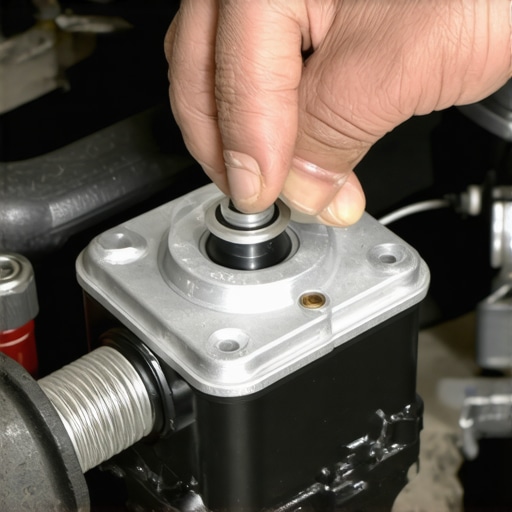 I remember a 2004 Civic I worked on where the owner complained of a brake pedal goes all the way to the floor in traffic. When I unbolted the two 12mm nuts holding the master cylinder and pulled it forward, nearly a quart of fluid poured out of the booster. It was literally drowning the vacuum diaphragm. To check this yourself, you don’t even need to disconnect the brake lines. Just loosen the mounting nuts and pull the cylinder forward an inch. If you see a trail of fluid running down the front of the booster, you need to know how to tell if your master cylinder is failing internally and replace it immediately.
Pull the Boots on Your Rear Drums
If your car has drum brakes in the rear, the leak is often trapped behind the brake shoes where you can’t see it without removing the drum. Inside the drum is a wheel cylinder with two rubber boots on either end. These are notorious for weeping fluid as they age. This hidden moisture can actually cause your brakes to grab or lock up unexpectedly. If you suspect this, look for dampness on the bottom of the backing plate or pull the drum and gently peel back the edge of the rubber boot with a small screwdriver. If fluid leaks out, the cylinder is shot. Knowing how to tell if your drum brakes are dragging in the rear is often the first clue that a leak has contaminated the friction material, making the shoes ‘sticky.’ Dealing with these hidden spots is the difference between a basic ‘check-up’ and a professional-grade diagnosis.Most DIYers think that as long as the fluid level is between the ‘min’ and ‘max’ lines, they are good to go. But there’s a nuance here that even some seasoned weekend warriors miss: brake fluid is hygroscopic, meaning it actively sucks moisture out of the air. According to a study by the Car Care Council, roughly 20% of vehicles on the road have brake fluid with dangerously high water content. Even if your system is perfectly sealed against leaks, that fluid is degrading from the inside out every time you open the cap to ‘check’ it. This is one of the most persistent brake service myths—that fluid age doesn’t matter as much as fluid level.
Stop Chasing Levels and Start Testing Chemistry
If you only pay attention to the reservoir level, you are missing the real threat to your safety. Over time, the protective additives in your brake fluid break down. Pro-level diagnostics often involve testing for copper parts per million. As the internal lining of your steel brake lines wears away, copper leaches into the fluid and acts as a catalyst for corrosion in your expensive ABS pump. This is why a real car service checklist isn’t just about looking at levels—it’s about testing the integrity of the chemistry.
Does high-moisture fluid actually affect your stopping distance?
It absolutely does, but not in a way that shows up during a casual drive. When you are forced into a panic stop or have to ride your brakes down a steep mountain pass, the heat generated can cause the moisture trapped in your fluid to boil. Since steam is compressible and brake fluid is not, your pedal will suddenly sink to the floor. This is ‘brake fade’ in its most dangerous form. This is why maximize your cars lifespan with expert tune-up strategies must include a full hydraulic flush every two years, regardless of how many miles you’ve driven.
The Paint-Stripping Trap of Over-Filling
Here is an ‘oops’ factor I see all the time in home garages: topping off the reservoir because the pads are getting thin. When your pads wear down, the fluid level naturally drops as the caliper pistons extend. If you top it off to the ‘max’ line now, you are setting a trap. When you eventually perform understanding brake system repairs and compress those pistons to fit new pads, that extra fluid has nowhere to go but out the top.  Since DOT fluid is a powerful solvent, it will quickly eat through the paint on your frame and inner fenders before you even realize what happened. Have you ever topped off your fluid only to have it overflow later? Let me know in the comments if you’ve fallen into that trap. Beyond just the mess, failing to ‘bed in’ your new hardware is another advanced mistake. You must follow the proper way to break in new brake pads and rotors to ensure the friction material transfers correctly. If you skip this, you’ll end up with uneven deposits that feel like warped rotors. As we look at auto repair trends to watch in 2025, keeping your hydraulic system clean remains the single best way to avoid a four-figure repair bill at the shop.To really move beyond the ‘weekend warrior’ phase and achieve professional-level results, you need to stop relying on your spouse to pump the pedal while you scream ‘down’ from under the wheel. I finally invested in a Motive Products Power Bleeder, and it changed everything. This tool uses a pressurized tank to push fresh fluid through the lines from the top down, ensuring not a single bubble of air remains. It is the centerpiece of any serious car service checklist because it allows for a complete, one-man hydraulic flush that is actually effective.
 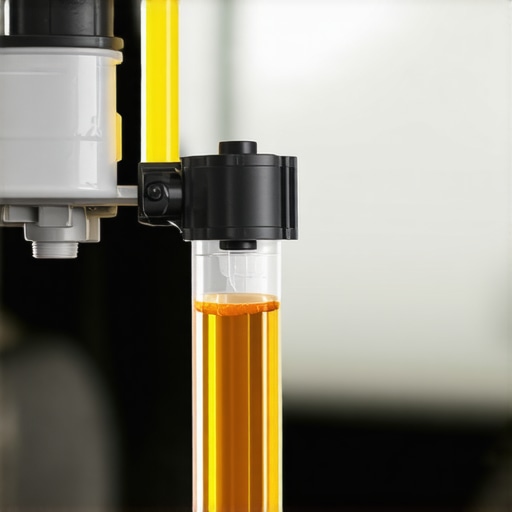 I have found that using this tool every two years is the only way to truly maximize your cars lifespan with expert tune-up strategies.
How do I keep my brakes performing like new for years?
The secret isn’t just changing parts; it is chemical monitoring. I use copper testing strips—specifically the ones recommended by the Motorist Assurance Program (MAP)—to check for internal corrosion. Once your fluid hits 200 parts per million of copper, it is actively eating your brake lines from the inside. This is a level of detail that even some shops skip when you go in for a basic tune up. If you want to get serious, grab a pack of these strips and test your reservoir today. It is much cheaper than replacing an ABS module later. Looking ahead at auto repair trends to watch in 2025, we are seeing the rise of ‘smart’ braking systems that integrate with ADAS. This means your understanding brake system repairs will soon need to include digital calibrations. In the future, your car might even lock out your cruise control if the brake fluid moisture content gets too high. If you are doing your own work, make sure you know how to tell if your local mechanic actually has the tools for a proper ADAS calibration for when things get too complex for the home garage. I challenge you to go out this weekend, pull one wheel, and check for that grime-covered ‘ghost’ leak I mentioned earlier—your safety is worth the twenty minutes of dirt on your hands.
The Day My Brake Pedal Lied to Me
I used to think that as long as the fluid level was between the lines, I was safe. I was wrong. I’ve learned the hard way that a reservoir can be full while the system is failing from the inside out. One of the biggest brake service myths is that fluid level equals fluid health. In reality, the chemistry matters more than the volume. I’ve seen fluid that looked clear but failed a copper test miserably, leading to a massive repair bill for an ABS module later on. Always trust your foot over your eyes; if the pedal feels different, something is wrong, even if the tank is full. Finding the fix for a soft brake pedal often starts with admitting that the fluid itself might be the enemy, not just a leak.
Tools That Saved My Sanity and My Wallet
If you want to stop guessing and start fixing, you need to upgrade your toolkit beyond a basic wrench. I personally rely on three things for every hydraulic job. First, a pressure bleeder like the Motive Power Bleeder—it’s the only way to ensure 100% of the air is out of the lines without needing a second person. Second, MAP-approved copper testing strips; they are the only way to see the ‘invisible’ corrosion happening inside your lines. Finally, always keep a comprehensive car service checklist handy to ensure you don’t miss the small things, like greasing the slide pins. These tools take the mystery out of understanding brake system repairs and give you the confidence to know your car will stop every single time.
Take Back Control of Your Stopping Power
Don’t let a ghost leak or old, moisture-heavy fluid compromise your safety on the road. Whether you are dealing with a master cylinder failing internally or just performing a routine tune up, attention to detail is your best defense. By staying ahead of auto repair trends to watch in 2025 and maintaining your hydraulics, you can maximize your cars lifespan with expert tune-up strategies that keep you out of the shop and on the asphalt. Your brakes are the only thing standing between you and a very bad day. Have you ever found a brake leak in a completely bizarre place? Let me know in the comments below!