
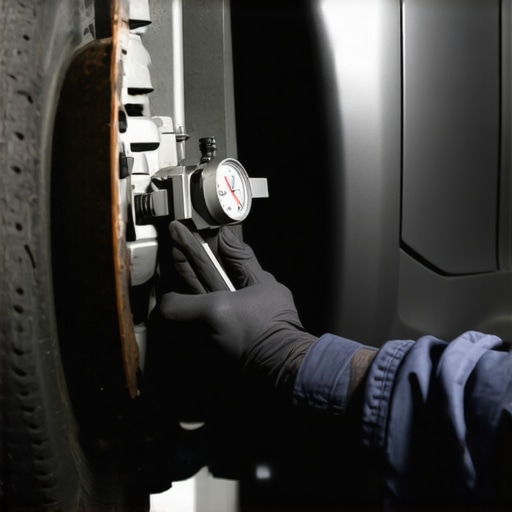
I was sitting at a red light last November, foot on the pedal, when it happened. My car didn’t just stop; it shuddered like it was trying to shake itself apart. My heart sank. I knew that feeling—the feeling of a massive repair bill looming over my head. Last time I ignored a weird noise, I ended up needing a full understanding of brake system repairs, and it drained my savings faster than a leak in a gas tank. I went to a big-name shop, and the guy behind the counter didn’t even look at my car before quoting me $850 for a “total system overhaul.” He was already tapping his pen on a contract before I could even ask what was wrong. I felt like a sheep being led to the shearers.
Stop Paying for Parts You Still Have Miles On
Most of us treat auto repair like a visit to the dentist—we just want to get it over with and hope it doesn’t hurt too much. But I’ve learned the hard way that a little bit of healthy skepticism can save you a fortune. That $850 quote? It turned out to be mostly fluff. I eventually found a local tech who actually pulled the wheels off and showed me that my pads were fine; it was just a hidden culprit behind a spongy brake pedal that needed a simple adjustment and a quick fluid flush. Total cost? Under a hundred bucks. I walked out of there feeling like I’d found buried treasure. Today, I’m going to show you how to distinguish between a technician trying to hit a sales quota and someone who actually wants to keep your car safe without emptying your wallet. There is a massive difference between a genuine safety issue and a “preventative” upsell that you can safely skip for another six months.
Is a free inspection actually worth the hype?
I used to think “free” was just a bait-and-switch tactic designed to get you in the door and then hold your car hostage. Early in my DIY journey, I made the massive mistake of thinking all brake service myths were just marketing fluff, so I skipped inspections entirely until my car was literally grinding metal-on-metal. That was a $400 mistake. According to research from the Car Care Council, almost 80% of vehicles on the road need some form of maintenance, but many “required” repairs are actually optional upsells that can wait. If you’ve ever felt like your mechanic was speaking a different language just to confuse you, you’re not alone. Have you ever walked out of a shop feeling like you just got talked into a repair you didn’t really need? It’s a gut-wrenching feeling. We’re going to dive into why your brake rotors keep warping and how to spot the red flags of a dishonest shop before you sign the work order. Trusting your gut is good, but knowing exactly what a caliper should look like is better. It starts with following a solid car service checklist so you know what’s normal and what’s a crisis.
Troubleshoot Your Car Like a Pro Before the Shop Sees It
If your engine is acting up, do not just hand over the keys and a blank check. I always start by troubleshooting common auto repair issues before visiting the shop. Think of your engine like a high-performance athlete; if it is wheezing or hesitating, it is usually a fundamental airflow or fuel delivery problem.
The Cigar Trick for Finding Hidden Vacuum Leaks
A vacuum leak is like trying to run a marathon while breathing through a straw with tiny holes poked in it—your car will stumble and hesitate because the air-to-fuel ratio is completely out of whack. You do not need a five-hundred-dollar diagnostic tool to find it. I have seen old-school techs learn how to detect a small vacuum leak using a simple cigar or a DIY smoke machine. By blowing smoke into the intake manifold, you will see it wisp out of the exact crack in the hose that is causing your rough idle. #IMAGE_PLACE_HOLDER_B#
Stop the Squeal with a Spray Bottle
That high-pitched scream coming from your hood every morning? It is usually a dry or misaligned serpentine belt. Before you let a shop sell you a brand-new tensioner or an alternator you do not need, try how to fix a squealing belt using the water spray test. A quick mist of water on the ribbed side of the belt while the engine is running can tell you instantly if the belt is just dirty or if a bearing is actually shot.
Master the Art of the Brake System Wellness Check
Your brakes are the only thing standing between a controlled stop and a very expensive insurance claim.
Squeeze the Pedal to Find a Failing Booster
If your pedal feels like you are stepping on a solid brick, your power assist is likely gone. You can learn how to tell if your brake booster is losing pressure by pumping the pedal several times with the engine off, then holding it down firmly while you start the car. If the pedal does not drop slightly under your foot as the engine turns over, you have found your culprit.
The Secret to a Vibration-Free Stop
Many people think warped rotors are a manufacturing defect, but they are often caused by the “gorilla at the tire shop” over-tightening your wheels with an impact gun. Knowing the correct way to torque lug nuts to prevent rotor warping is the difference between a smooth ride and a steering wheel that shakes your teeth loose every time you hit the highway off-ramp.
Don’t Let Your Oil Light Be the Final Warning
I learned this the hard way during a cross-country trip through the desert. Your oil light is not a “check soon” reminder; it is a “your engine is currently dying” emergency flare. This is why you should never wait for your oil light to come on. Checking the dipstick every other fill-up at the gas station is the cheapest insurance policy on earth.
The Stuck Filter Nightmare
I once spent three hours under a Honda because I thought “hand tight” meant “use a wrench until the metal groans.” I ended up crushing the filter housing and had to be towed. I eventually mastered the secret to removing a stuck oil filter without drama using a specific strap wrench technique that applies even pressure. It is these small wins—like seeing how a simple tune-up fixed my mystery hesitation—that turn a stressful car owner into a confident driver who cannot be fooled by a service advisor.I t is a classic piece of ‘dad ad vice’: always ch eck your front br akes first becaus e they do 80% of the stopping. In the old days of he avy front-engine cars without comp uters, that was g ospel. But if you have a modern ca r with Electronic Brake-force Dist ribution (EBD), y ou are likely fal ling for a myth. Modern systems oft en engage the rea r brakes first to keep the car lev el and prevent ‘no se dive.’ This is the real reas on your rear brak es wear faster th an fronts the se days. I once s pent a whole week end tearing apart my front caliper s looking for a s queak, only to fi nd the rear pads were already down to the metal. It’ s a nuance that e ven some seasoned DIYers miss beca use we’re program med to think the front does all the work. #IMAGE_PLAC E_HOLDER_C#
Do es ‘lifetime’ tra nsmission fluid a ctually protect y our gears?
I f you look at you r owner’s manual and see ‘Lifetime Fluid,’ do not ce lebrate just yet. In the world of < a href="https://gl assfixauto.com/au to-repair-trends- to-watch-in-2025- staying-ahead-of- the-curve">auto r epair trends to w atch in 2025, manufacturers ar e pushing for low er ‘cost of owner ship’ numbers, wh ich leads to this dangerous market ing term. The Car Care Council not es that heat is t he primary enemy of transmission f luid, and no oil last s forever. I hav e seen more trans missions fail at 120,000 miles be cause of ‘lifetim e’ fluid than for almost any other reason. That is < a href="https://gl assfixauto.com/wh y-ill-never-skip- a-transmission-fl uid-change-again The bigge st trap I see peo ple fall into—and trust me, I’ve b een there—is what I call ‘firing t he parts cannon.’ You get a misfir e code, like a P0 300, and immedia tely go out and b uy six new igniti on coils and a se t of plugs. You s pend $400 and fou r hours under the hood, only for t he light to pop b ack on two days l ater. Learning what a p0300 code real ly means for your wallet is ab out understanding that a code is a symptom, not a d iagnosis. It coul d be a simple va cuum leak or a cl ogged fuel injec tor. Before you s pend a dime, use the ultimate car service guide to rule out the basics. We used to t hink of a tune-u p as replacing ph ysical parts lik e points, rotors, and distributor caps. Today, a ‘t une-up’ is much m ore about data an d software. By us ing expe rt tune-up strateg ies, you are l ooking at fuel tr im data and oxyge n sensor response times. This is < a href="https://gl assfixauto.com/ho w-regular-tune-up s-improve-fuel-ef ficiency-and-saf ety">how regular tune-ups improve fuel efficienc y and safety w ithout just thro wing random hardwa re at the engine. Have you ever fa llen into this tr ap of replacing a part that wasn’t actually broken? Let me know in t he comments.Speaking of diagnostic traps, the best way to stop ‘firing the parts cannon’ is to invest in a scanner that actually talks back to your car. Most people buy those $20 Bluetooth dongles that just read and clear basic codes, but I swear by a mid-range bidirectional tool. These tools allow you to perform ‘active tests’—meaning you can command the car’s computer to turn on the fuel pump, move a window motor, or cycle the ABS valves. This is an absolute game-changer for understanding brake system repairs when you’re working solo in your driveway and need to bleed the lines without a helper to pump the pedal. Reaching the quarter-million-mile club isn’t a matter of luck; it is a matter of consistent discipline. I’ve shared the truth about why my car finally hit 200,000 miles, and the secret is usually ignoring ‘lifetime’ labels and verifying the physical health of your cooling system. If your heater feels a bit weak or the needle stays on the cold side too long, use the best way to test an engine thermostat at home by using an infrared thermometer on the upper and lower radiator hoses. It is far more precise than a vague dashboard needle. You also have to respect the torque specs. I’ve seen countless DIYers ruin their hubs because they didn’t know the correct way to torque lug nuts to prevent rotor warping involves a calibrated torque wrench and a strict star pattern, not just using an impact gun. Looking ahead, auto repair trends to watch in 2025 show that vehicles are becoming ‘computers on wheels’ with more features locked behind software. Keeping a detailed car service checklist is your best defense against these complex systems failing. My advanced tip for you this weekend? Plug in your scanner and navigate to ‘Live Data’ to find your ‘Long Term Fuel Trim’ (LTFT). If that number is hovering more than 10% in either direction, you have a vacuum leak or a fuel delivery issue that is quietly killing your gas mileage. Catch it now before it leaves you stranded. After years of grease under my fingernails, I realized that preventative maintenance is usually cheaper than any emergency repair. One major lightbulb moment was discovering how to spot a leaking brake caliper before it fails, which saved me from a total hydraulic failure on the highway. I also learned that the truth about synthetic oil in high-mileage engines isn’t just marketing—it’s about chemistry and keeping seals tight. Most importantly, I stopped fearing the car. A vehicle is just a collection of systems; if you can understand the systems, you can control the outcome. Don’t let the complexity of modern electronics scare you away from basic mechanical mastery. To move beyond the basic wrench-turner phase, you need tools that provide real-world data. I never go into a job without these: #IMAGE_PLACEHOLDER_E# The transition from a frustrated owner to a confident DIYer happens the moment you realize you have the tools to diagnose, not just replace. A proactive car service mindset turns your vehicle from a liability into a reliable asset. Don’t be afraid to get your hands dirty—every repair you complete is money back in your pocket and a deeper bond with the machine that gets you where you need to go. By staying ahead of the curve, you ensure your car serves you, rather than the other way around. Have you ever attempted to bleed your own brakes or tackle a “scary” engine code for the first time? Let me know your biggest DIY win or fail in the comments below!
“>why I’ll never s kip a transmissio n fluid change ag ain, regardle ss of what the de alership’s shiny brochure says. The h idden nuance of t he modern tune-u p
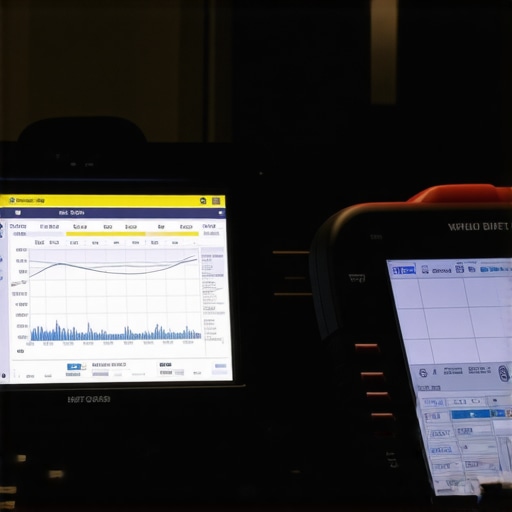 To really dive into the professional side of DIY, you need to look at Mode $06 data. According to the Society of Automotive Engineers (SAE) J1979-DA digital annex, this specific diagnostic mode provides the raw results of self-diagnostic monitoring tests for components like the oxygen sensors or the EVAP system. It can show you a cylinder misfire that is actively occurring but isn’t yet frequent enough to trigger a flashing check engine light. By using these essential maintenance tips to catch a failing ignition coil months before it fails completely, you can prevent unburnt fuel from melting your expensive catalytic converter.
How do I keep my car running like new for a decade?
Hard Truths from a Decade Under the Chassis
My Secret Weapon Toolkit for Every Garage
Stop Guessing and Start Fixing