
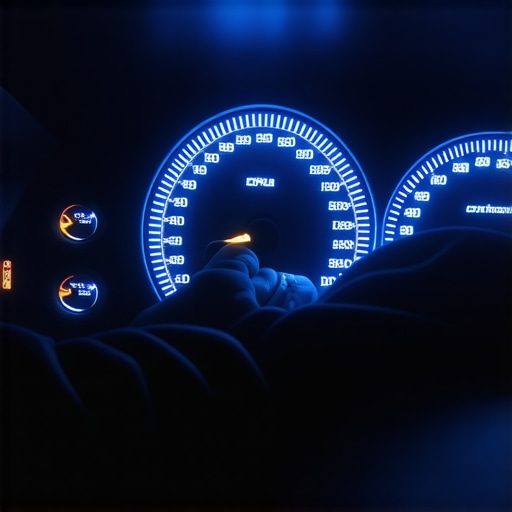
I was driving home on a rain-slicked Tuesday night when I realized I couldn’t actually see how fast I was going. My dashboard wasn’t dead—not exactly—but it was glowing with the pathetic intensity of a dying firefly. I found myself leaning forward, squinting through the steering wheel, and for a second, I felt like I was eighty years old. It was frustrating, dangerous, and honestly, a bit embarrassing. I almost pulled over to call a tow, assuming my entire instrument cluster had fried. That feeling of being blind to your own car’s vitals is exactly why we’re going to fix this today, and we’re going to do it without handing a mechanic three hundred bucks for something you can likely handle in your driveway.
The Scary Moment My Speedometer Disappeared
I’ll admit it: years ago, I made the classic rookie mistake of assuming a dim dash meant a total electrical meltdown. I once spent a small fortune at a shop only to have the technician smirk while he pointed at my dimmer switch, which I had accidentally bumped with my knee. Talk about a blow to the ego. But since then, I’ve learned that most dimming issues come down to simple maintenance or minor part swaps rather than a full-blown crisis. Before you start [troubleshooting common auto repair issues before visiting the shop](https://glassfixauto.com/troubleshooting-common-auto-repair-issues-before-visiting-the-shop), you need to realize that these lights are your primary line of communication with your engine. If you can’t see them, you won’t see that overheating warning or the low oil pressure light until it’s too late. According to the National Highway Traffic Safety Administration (NHTSA), instrument cluster visibility is a critical safety component, yet it’s one of the most neglected areas of DIY car care. Have you ever found yourself frantically tapping on your dashboard just to see your fuel gauge? It’s a common frustration, but usually, the fix is sitting right in front of you.
Do You Really Need a Mechanic for a Five-Minute Fix?
I know what you’re thinking—electrical stuff is terrifying. You’re worried about blowing a computer or setting off an airbag. But the reality is that [how to tell if your electrical problem is a blown fuse or a bad ground wire](https://glassfixauto.com/how-to-tell-if-your-electrical-problem-is-a-blown-fuse-or-a-bad-ground-wire) is actually quite straightforward once you know where to look. We aren’t rebuilding the transmission here; we are restoring visibility. Sometimes, it’s just a matter of [the reason your dashboard lights dim when you roll up the windows](https://glassfixauto.com/the-reason-your-dashboard-lights-dim-when-you-roll-up-the-windows) or a simple bulb that has reached the end of its life. If you can change a TV remote battery, you can likely handle a dash light refresh. We’re going to walk through the ‘free’ checks first, then move into the cheap replacements that make your interior feel brand new again.
Check the Dial Before You Pull the Dash Apart
It sounds ridiculous, but start with the dimmer switch. I once spent three hours tracing wires in an old Toyota, convinced I had a massive ground issue, only to realize I had bumped the rheostat while cleaning the steering column. If the dial is turned all the way up and the lights are still weak, we move to the fuse box. Think of a fuse as a security guard for your electrical system; if it senses too much heat, it sacrifices itself to save the expensive computer modules. You need to identify how to tell if your electrical problem is a blown fuse or a bad ground wire because a loose ground can cause that annoying ‘ghost’ flickering where lights dim and brighten at random. If you find a ‘zombie’ fuse—one that looks okay but has a microscopic hairline fracture—it’s enough to starve your dashboard of the voltage it needs to shine. 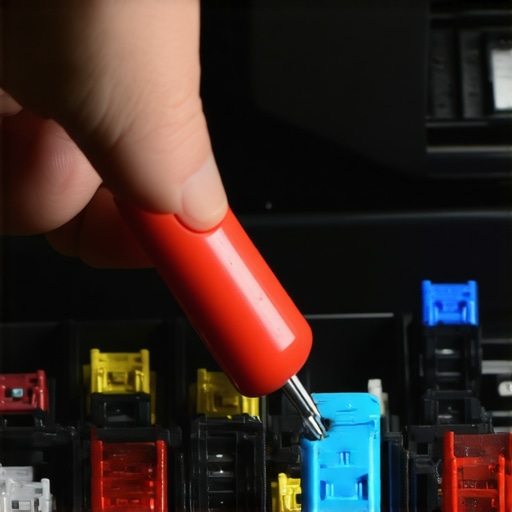
Find the Hidden Fuse That Is Ruining Your Night Vision
Most cars have two fuse boxes: one under the hood for heavy-duty stuff and one under the dash for your interior electronics. Grab your owner’s manual and look for a fuse labeled ‘PANEL’ or ‘ILLUM.’ If that fuse is cloudy or the metal bridge inside is snapped, swap it out with one of the exact same amperage. While you are poking around in there, it is a great time to evaluate how to tell if your car needs a simple tune-up or a major repair, as persistent electrical gremlins often point toward an aging alternator. If your dash lights only brighten when you rev the engine, your alternator is likely gasping for air and can’t keep up with the electrical load.
Why Your Battery Might Be Starving Your Dash for Power
A dying battery is often the culprit behind a dim cabin. When the battery can no longer hold a steady 12.6 volts, the car starts prioritizing vital systems like the fuel pump and ignition, leaving your accessories—like those dashboard LEDs—to fight for the scraps. You should know how to test your alternator with a simple multimeter at home to see if the charging system is actually feeding the battery. In my experience, the hidden drain that kills your battery while the car is parked can also weaken the intensity of your gauges over time as the battery plate health declines. If the voltage is low, your lights will look yellow and sickly rather than crisp and white.
Swap Your Old Bulbs for Bright Modern LEDs
If your fuses and battery are healthy but the gauges are still dim, the physical bulbs are likely ‘smoked.’ Over time, traditional incandescent bulbs develop a dark metallic coating on the inside of the glass as the filament degrades. I remember pulling the cluster out of a high-mileage truck and finding every single bulb looked like it had been dipped in black paint. Replacing these with modern LEDs is a game-changer. It’s like switching from a candle to a flashlight. Just be careful when troubleshooting common auto repair issues before visiting the shop; some instrument clusters are integrated, meaning you can’t just swap a bulb. But for most cars made before 2015, a $10 pack of bulbs and a screwdriver are all you need to make that speedometer look brand new again. Pay close attention to the reason your dashboard lights dim when you roll up the windows, as this often indicates the internal wiring in the door is putting a strain on the same circuit as your dash illumination.While a dim dash is an annoyance, it’s often just a symptom of a much larger neglect cycle that affects your entire vehicle’s safety profile. We tend to focus on what we can see, but the most dangerous myths involve the parts we take for granted. Everyone says ‘lifetime’ fluids mean you never have to crack the cap, but in my experience, that is the fastest way to kill a modern transmission or power steering rack. Manufacturers use that term to lower the ‘perceived’ cost of ownership for the first three years, but if you want to [maximize your cars lifespan with expert tune-up strategies](https://glassfixauto.com/maximize-your-cars-lifespan-with-expert-tune-up-strategies), you need to ignore the marketing and look at the chemistry.
Stop Falling for the ‘Lifetime’ Fluid Trap
Most people assume that if the car is running fine, the fluids are doing their job. However, brake fluid is hygroscopic, meaning it literally sucks moisture out of the air. Over time, this water content lowers the boiling point of the fluid and corrodes your internal ABS valves. This is the hidden nuance: you don’t notice the degradation until you are descending a steep grade and your pedal suddenly turns to mush. According to a study by the Car Care Council, nearly 80% of vehicles on the road fail at least one component of a basic safety inspection, and contaminated fluids are a leading culprit. Understanding [why your brake fluid is green and what it says about your car](https://glassfixauto.com/why-your-brake-fluid-is-green-and-what-it-says-about-your-car) can save you from a catastrophic master cylinder failure down the road.
Why Your Brakes Shake Even With New Parts
I’ve seen this a thousand times: a DIYer or a rushed shop installs brand new rotors and pads, only for the car to start vibrating again within three thousand miles. The common belief is that the rotors are ‘warped’ from heat. In reality, rotors rarely warp. The vibration is usually caused by ‘Lateral Runout’—essentially, the rotor isn’t sitting perfectly flat against the hub because someone didn’t clean the rust off the mating surface. This causes uneven pad material transfer, which creates high spots on the disc. It’s a classic ‘Oops’ factor that leads to unnecessary replacements. If you want to avoid this, you must ensure the hub is surgical-grade clean before the new rotor touches it. This is one of those [brake service myths what you need to know before your next stop](https://glassfixauto.com/brake-service-myths-what-you-need-to-know-before-your-next-stop) that separates the pros from the part-swappers. 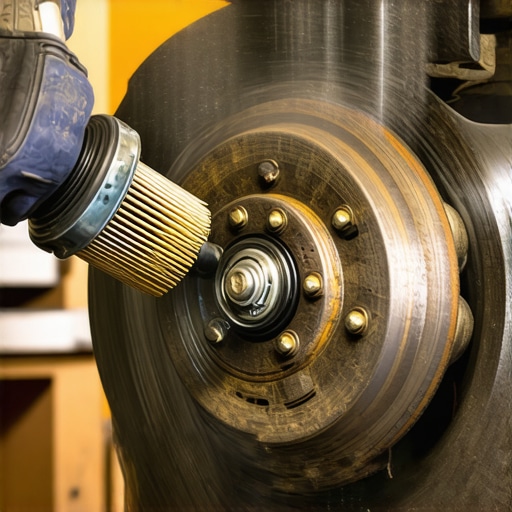
Is Your Brake Pedal Sinking Only in Heavy Traffic?
This is an advanced symptom that often baffles even experienced owners. If your pedal feels firm on the highway but slowly sinks toward the floor while you’re sitting at a red light in the heat, you likely have an internal bypass leak in your master cylinder. The seals have aged and are letting fluid slip past the piston under low-pressure holding. Identifying [the reason your brake pedal goes all the way to the floor in traffic](https://glassfixauto.com/the-reason-your-brake-pedal-goes-all-the-way-to-the-floor-in-traffic) early is critical; it’s the difference between a controlled stop and a low-speed fender bender. Don’t wait for a warning light that might never come on.
The Danger of the Slap-On Tune Up
We also need to talk about the ‘tune-up’ myth. In the old days, a tune-up meant points and a condenser. Today, people think it’s just throwing in a set of spark plugs. But a real modern tune-up requires looking at fuel trims and sensor data. If you change your plugs but ignore a vacuum leak or a dirty intake, you’re just putting a band-aid on a broken leg. You should realize [how regular tune ups improve fuel efficiency and safety](https://glassfixauto.com/how-regular-tune-ups-improve-fuel-efficiency-and-safety) by keeping the air-to-fuel ratio perfect. If your engine is ‘hunting’ for a steady idle, it’s not just a spark issue—it’s a communication issue between your sensors and the computer. Have you ever fallen into the ‘warped rotor’ trap or ignored a sinking pedal? Let me know in the comments.
Invest in a Real Torque Wrench or Regret It
If you are still tightening your lug nuts ‘by feel’ with a standard tire iron, you are rolling the dice on your safety and your wallet. I used to think my ‘calibrated elbow’ was good enough until I started measuring the runout on my rotors. Even a slight variation in torque across the wheel studs causes the rotor to heat and expand unevenly, leading to that annoying pedal pulse. I personally recommend a split-beam torque wrench; it stays calibrated longer than the cheap ‘click’ types you find in bargain bins. This is the foundation of understanding brake system repairs a guide for vehicle owners because precision prevents the rework that kills your Saturday afternoon.
My Secret Weapon for a Solo Brake Bleed
Most people hate bleeding brakes because it requires a second person to pump the pedal while you get covered in fluid. I solved this years ago by buying a pressure bleeder. It’s essentially a garden sprayer modified for brake fluid that threads onto your master cylinder. You pump it up to 15 PSI and simply crack the bleeders one by one. It’s cleaner, faster, and ensures no air stays trapped in the ABS module. According to Bosch’s technical documentation on Electronic Stability Program (ESP) service, failing to cycle the return pump during a fluid flush can trap air and old debris within the hydraulic modulator, eventually leading to internal valve failure. If your car has a complex ABS system, you might also need a bidirectional scan tool to ‘home’ the valves during the process. 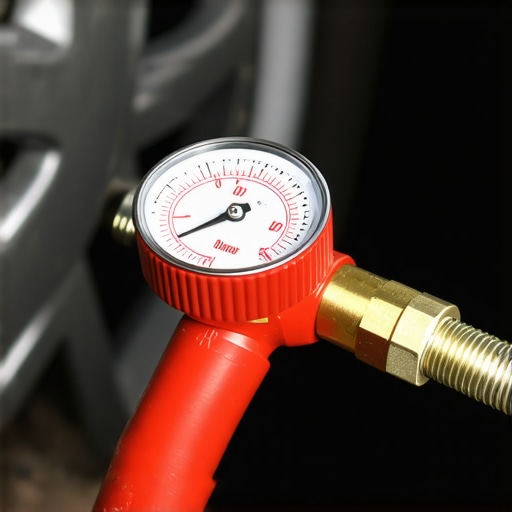
How can I maintain my car’s responsiveness over the long haul?
Maintenance isn’t a one-time event; it is a lifestyle for your vehicle. To keep things crisp, you need a solid car service checklist how to keep your vehicle in top shape. Every six months, I make a point to check the ‘hidden’ items: the slide pins on the brake calipers, the ground straps in the engine bay, and the condition of the vacuum lines. If those slide pins get dry, your pads will wear at an angle and your fuel economy will take a hit. This is why the ultimate car service guide when and why to schedule maintenance emphasizes the small stuff. Consistent, incremental checks prevent the kind of massive failures that force people to sell cars they otherwise love.
Why Your Next Repair Might Require a Computer Scientist
As we look toward auto repair trends to watch in 2025 staying ahead of the curve, the line between mechanical and digital is disappearing. Modern cars use Advanced Driver Assistance Systems (ADAS) that rely on cameras and radar. If you change your brakes or adjust your alignment, these sensors often need recalibration. You should know how to tell if your local mechanic actually has the tools for a proper ADAS calibration because if they don’t, your emergency braking system might react incorrectly. The future is about data just as much as it is about grease. If you want to keep your car for the next decade, start getting comfortable with a tablet and a code reader alongside your wrenches. Go grab a pressure bleeder and flush your lines this weekend—you’ll be shocked at how much firmer your pedal feels when the fluid is fresh and air-free.
The Hardest Lesson I Learned About DIY Brake Service
Over the years, I’ve realized that auto repair isn’t just about turning bolts; it’s about the surgical precision of the prep work. My biggest mistake early on was rushing through a job because I thought I knew the shortcuts. I learned the hard way that skipping the cleaning phase of a hub surface is a recipe for vibration. Now, I spend more time with a wire brush and brake cleaner than I do with the actual wrench. It makes the difference between a job that lasts 10,000 miles and one that lasts 50,000. Another breakthrough was realizing that the secret to making your brake pads last twice as long often comes down to lubricating the slide pins—something most ‘express’ shops skip entirely. #IMAGE_PLACE_HOLDER_E#
The Gear Every Aspiring Home Mechanic Needs
If you want to move beyond basic oil changes, you need a few specialized tools that make the impossible feel easy. First, get a high-quality split-beam torque wrench; it’s the only way to ensure your wheels and brakes are mounted safely. Second, I cannot recommend a pressure bleeder enough. It turned a two-person, hour-long headache into a ten-minute solo victory. For those deep-diving into performance, follow the advice in tune up your car for peak performance essential maintenance tips to see how the right sensors and plugs interact. Lastly, always keep a can of high-quality silicone spray in your cabinet—it’s the cure-all for everything from how to fix a sticking power window to preserving door seals in the winter.
Take the First Step Toward a Healthier Car
Modern vehicles can feel like rolling computers, but they still rely on the same fundamental physics they did fifty years ago. Don’t let the complexity of new tech scare you away from a basic car service. Whether you’re just swapping a dim dash bulb or performing a full fluid flush, every small action builds your confidence and saves you money. You can maximize your cars lifespan with expert tune up strategies just by paying attention to the details others ignore. Your car is likely your second most expensive investment; treat it with the respect it deserves. Start with a small task this weekend and see how much better your drive feels. Have you ever attempted a repair and found a ‘secret’ trick that made it ten times easier? Let me know in the comments below!