

I’ll never forget the night I thought I’d finally achieved ‘supervision’ behind the wheel. My dashboard was glowing like a Christmas tree on steroids, and my headlights were piercing the darkness with an intensity that would make a lighthouse jealous. I felt like a genius until the smell hit me—a pungent, nose-wrinkling scent of rotten eggs that filled the cabin. I pulled over, popped the hood, and found my battery literally sizzling. That was my ‘welcome to the world of overcharging’ moment. Most people worry about their car not starting because of a dead battery, but having an alternator that won’t stop pushing juice is like trying to fill a water balloon with a fire hose. It’s a mess waiting to happen.
My Battery Literally Smelled Like Sulfur
Today, we are going to dive into the signs that your alternator has gone rogue. I want to save you from the expensive mistake I made early on: I replaced three batteries in a single year, convinced I was just buying ‘duds’ from the local parts store. In reality, my alternator’s voltage regulator had failed, and it was sending nearly 16 volts into a system designed for 14. If you’ve noticed your car acting strange, you might be dealing with more than just a simple discharged or dead battery. Overcharging can fry your electronics, melt your battery plates, and leave you stranded with a much higher repair bill than a simple routine tune-up would have cost.
Is This Really Something You Should Worry About?
It’s easy to think, ‘Hey, more power is better, right?’ Wrong. Your car’s electrical system is a delicate balance. When the alternator loses its ‘brain’—the voltage regulator—it starts dumping excessive current everywhere. This is often why you’ll notice your car smells like rotten eggs when you hit the gas; that’s the sulfuric acid in the battery boiling off. Even more confusingly, it can mimic other problems. You might think you have a bad ground wire or a failing sensor when, in fact, your computer is just being overwhelmed by high voltage. Have you ever seen your dashboard lights flicker or noticed your bulbs burning out way too fast? According to the Automotive Service Association, electrical system issues are often misdiagnosed, leading to over $2 billion in unnecessary parts replacements annually. Don’t let yourself be part of that statistic. We’re going to walk through the exact symptoms to look for so you can catch this before it cooks your expensive ECU. Have you ever opened your hood to find a battery that felt hot to the touch or looked bloated?
Put Your Multimeter to Work Immediately
To stop the damage, you need a digital multimeter. Think of this tool as a blood pressure monitor for your car. To get an accurate reading, set your meter to the DC voltage setting (usually 20V). With the engine off, a healthy battery should sit around 12.6 volts. The real test happens when you turn the key. Start the engine and touch the probes to the terminals again. You are looking for a steady flow between 13.8 and 14.4 volts. If that number climbs past 15 or starts bouncing toward 16, your alternator’s internal dam has broken, and a flood of electricity is about to wreck your sensors. I once helped a neighbor whose headlights kept popping like popcorn; he’d replaced three bulbs in a month. When we finally hooked up the meter, the alternator was screaming at 16.5V, essentially turning his light filaments into flashbulbs. This is a much higher priority than a scheduled maintenance appointment because high voltage can cook your car’s brain in minutes. 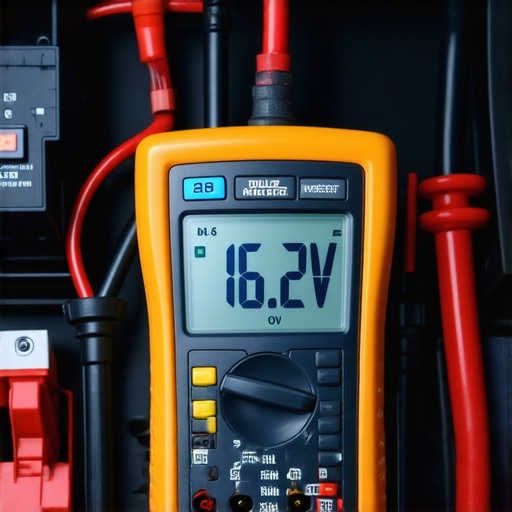
Check the Battery for Physical Deformities
While the engine is running, use your senses to spot a crisis. An overcharging alternator forces the battery to work overtime, causing the electrolyte solution inside to boil. If you see the sides of the battery casing bulging out like it’s trying to hold its breath, shut the engine off immediately. This is far more dangerous than figuring out if a battery is just discharged or dead; a bloated battery is a pressurized vessel of sulfuric acid. If you notice a wet film on top of the battery or around the vents, that is acid being forced out by the internal heat. It’s a messy, dangerous scenario that requires baking soda and water to neutralize the spill before it eats through your metal battery tray.
Protect Your Computer from Electrical Surges
Modern cars are essentially rolling computers, and computers hate inconsistent power. When the voltage regulator fails, it doesn’t just hurt the battery; it sends ‘noise’ through the entire electrical system. This can lead to erratic behavior that mimics a bad ground wire or a failing transmission. I remember working on an old truck where the radio would jump to full volume every time the owner hit the gas. It turned out the surge was confusing the audio control module. Before you start troubleshooting common auto repair issues like sensor failures, you must stabilize the power supply.
Swap the Regulator or the Entire Alternator
In many modern vehicles, the voltage regulator is tucked inside the alternator housing, making it difficult to service on its own. If your tests confirm a high-voltage output, your best bet is usually a full replacement. If you are mechanically inclined, you can learn how to replace your own alternator with basic hand tools. Just remember to always disconnect the negative battery cable first. If you don’t, that high-output wire on the back of the alternator will turn your wrench into a welding torch the second it touches the frame. Treat the electrical system with the same respect you would a high-pressure hydraulic line, because the ‘pressure’ in this case is enough to melt wires and end your commute permanently.Most DIYers—and even some pros—make the mistake of treating the symptoms rather than the cause. When a Check Engine Light pops up, they immediately buy whatever sensor the code reader points to. But here’s the contrarian truth: your sensors are usually fine. The problem is often ‘dirty’ power. If your voltage is spiking or you have a failing ground, your ECU will throw a dozen codes at once. You’ll find yourself wondering how to tell if your computer is giving you a false error code because the logic just doesn’t add up. High voltage from a runaway alternator can actually scramble the internal logic of these sensors, making them report data that isn’t there. It’s like trying to listen to a whisper in the middle of a rock concert.
Is Your Voltage Regulator Actually Lying to You?
Sometimes the regulator fails ‘soft,’ meaning it only overcharges when the engine gets hot or when you’re at high RPMs. This is the ultimate trap. You test it in your driveway, and it looks fine, but the moment you hit the highway, it starts cooking your battery. This is why I always recommend a ‘stress test’ with the headlights and AC on while checking your multimeter. If you don’t do this, you’re just guessing. According to the National Institute for Automotive Service Excellence (ASE), electrical diagnostic errors are a leading cause of unnecessary part replacements in professional shops. These are expensive mistakes that could be avoided by simply checking for voltage drops across the system.
The Hidden Trap of the Easy Battery Swap
We often think a ‘tune-up’ is just a set of new spark plugs. But in the modern age, how regular tune-ups improve fuel efficiency and safety is more about the health of your charging system and electrical connections than ever before. For example, people often overlook the battery terminals themselves. I’ve seen people crank down on terminal bolts until the lead post literally cracks. This creates a tiny, invisible leak of acid and gases that mimics the ‘rotten egg’ smell of an overcharging alternator. You might spend $200 on a new alternator you didn’t need just because you were too aggressive with a wrench. The same logic applies to your brakes. There are so many brake service myths floating around, like the idea that a squeak always means you need new pads. In reality, it could just be a lack of high-temp grease on the slide pins or a bad ground wire affecting an ABS sensor. If you’re diving into understanding brake system repairs, remember that the smallest details matter more than the brand of the parts you buy. Have you ever fallen into this trap of replacing a ‘bad’ part only to have the same problem return? Let me know in the comments.
Stop Chasing Shadows and Invest in the Right Gear
I spent years guessing until I finally bought a high-quality OBDII scanner with live data capabilities. Don’t settle for the cheap $20 dongles that only read codes. I personally use a tool that allows me to monitor ‘Charging System Voltage’ and ‘Control Module Voltage’ simultaneously while I am actually driving. This is the only way to catch those intermittent spikes that cook your components when you hit 3,000 RPM. If you are serious about troubleshooting common auto repair issues before visiting the shop, you need to see what the computer sees in real-time. I’ve found that a difference of more than 0.5 volts between the alternator output and the ECU input usually points to a hidden resistance in the harness. This is how you catch a problem before it leaves you stranded or forces an expensive understanding brake system repairs because your ABS module got fried.
How can I keep my car’s electrical system healthy for the long haul?
The answer isn’t just buying a new battery every three years; it is about managing the connections. Every six months, I make it a point to perform a ‘voltage drop test’ on the main ground strap. Corrosion is an invisible thief that steals voltage and forces your alternator to work harder than it should, eventually leading to the overcharging nightmare I described earlier. While you are at it, add a quick inspection of your belts to your car service checklist. A slipping belt might not always squeal, but it can cause erratic voltage outputs that confuse your car’s voltage regulator.
The One Hidden Enemy Modern Cars Face
Most DIYers focus on DC voltage, but there is a hidden killer: AC ripple. Robert Bosch GmbH technical documentation specifically states that an alternator’s AC ripple should stay well below 500mV. If the diodes in your alternator begin to fail, they allow ‘dirty’ alternating current to leak into your DC system. This is what actually scrambles sensors and leads to people asking how to tell if your computer is giving you a false error code. To test this, set your multimeter to AC volts while the engine is running; if you see anything over 0.5V AC, your alternator is essentially ‘poisoning’ your electronics, even if the DC voltage looks perfect. This level of detail is what separates a parts-changer from someone who actually masters expert tune-up strategies.
Look Toward the Future of Smart Charging
As we move toward 2025, we are seeing ‘smart’ charging systems that communicate via LIN-bus or CAN-bus. The car’s computer now tells the alternator exactly how much to charge based on temperature and load. This means your old-school ‘14.4V’ rule might not always apply. If you want to stay ahead, keep an eye on auto repair trends to watch in 2025, because the way we diagnose electrical failures is shifting from simple analog tests to digital protocol analysis. My best advice? Go out today, grab your multimeter, and perform that AC ripple test I mentioned. It takes thirty seconds and could save you from a $1,500 ECU replacement.
What I Learned the Hard Way About Electrical Gremlins
Over the years, I’ve realized that electrical diagnostic work is 90% patience and 10% having the right tools. Here are a few lightbulb moments from my time under the hood:
- Don’t trust the box: I once installed a ‘brand new’ alternator that immediately spiked to 17 volts. Just because a part is new doesn’t mean it’s functioning perfectly; always verify with your multimeter before closing the hood.
- Heat reveals the truth: An alternator might behave perfectly while idling in your driveway but start overcharging once the engine bay reaches operating temperature. If you suspect an issue, test it after a long drive.
- The simple fix is often the winner: I’ve seen people spend hundreds on sensors when how a simple tune-up fixed my mystery hesitation was really just about cleaning dirty battery terminals and checking for loose grounds.
- Documentation is key: Keep a log of your voltage readings. It helps you spot trends before they become catastrophes, which is a core part of how to maximize your cars lifespan with expert tune-up strategies.
Gear That Saves Me Thousands Every Year
You don’t need a professional shop to diagnose these issues, but you do need a few reliable items in your garage. These are my go-to resources:
A High-Impedance Digital Multimeter: This is non-negotiable. I personally trust brands like Fluke or Klein because their readings don’t ‘drift’ when the tool’s own battery gets low. It is the only way to accurately detect the subtle signs of an overcharging alternator. OBDII Scanner with Live Data: Being able to monitor your charging system while you are actually driving allows you to catch intermittent spikes. This tool is essential for staying on top of auto repair trends to watch in 2025. Electrical Contact Cleaner: A simple can of specialized cleaner can solve ‘phantom’ high voltage codes caused by resistance in a plug. It’s a staple on my car service checklist.
Take Control of Your Car’s Brain Today
Your vehicle’s electrical system is the nervous system of your car. While a rogue alternator can feel like a nightmare, catching it early turns a potential disaster into a simple Saturday afternoon project. Don’t be afraid to poke around with a meter; the more you understand the flow of power, the less likely you are to be stranded. Protecting your car from high voltage is the ultimate way to ensure your ride stays reliable for years to come. Have you ever had a mystery electrical problem that turned out to be a simple fix? Let me know in the comments below!