
I was sitting at a red light on 4th Street last Tuesday, holding a lukewarm latte, when my dashboard started doing a drum solo. My mirrors were blurring, and my teeth felt like they were vibrating right out of my skull. The weirdest part? As soon as I slid the shifter into Neutral, the world went quiet. Back into Drive, and the earthquake returned. It’s a nerve-wracking sensation that makes you wonder if your engine is about to drop onto the pavement. I’ve been there, and I’ve made the expensive mistakes—like the time I replaced an entire fuel system only to realize the real reason your engine vibrates while you are stopped at a red light is usually far simpler and cheaper to fix than you’d think.
Your Car Isn’t Dying, It’s Just Sending a Message
If you’re feeling that low-frequency growl specifically when you have your foot on the brake and the car is in gear, you aren’t alone. It’s one of the most common complaints I hear from folks who are troubleshooting common auto repair issues before they head to a mechanic. Today, I’m going to show you how to pinpoint exactly why that rumble happens. We’ll look at the parts that usually take the blame and how you can spot the real culprit without spending a fortune on “diagnostic fees.” You might just find that a quick look at your car service checklist solves the mystery before you even open your wallet.
Is it time to panic about a failing transmission?
I get it. When the car acts up while it’s in gear, your mind immediately goes to the most expensive component in the drivetrain. You start seeing dollar signs and imagining a three-week stint in a rental car. But here is a little secret: transmissions usually slip or grind; they rarely just “rumble” silently at a stop. Most of the time, the issue is about how the engine is held in place or how it’s breathing. Think about your engine mounts as the shock absorbers for your motor. They are rubber blocks designed to soak up all that kinetic energy. When they harden or crack, that energy has nowhere to go but into the frame of the car. [image] According to data from Consumer Reports, while these mounts are technically “lifetime” parts, harsh climates and stop-and-go traffic can cause the rubber to fail much earlier than expected, sometimes in as little as 60,000 miles. If you’ve noticed why your car shudders when you accelerate too, you’re almost certainly looking at a mount issue rather than a transmission ghost. Have you ever felt like your car was trying to shake itself apart the moment you stopped at a light? I’d love to hear your story in the comments below.
Diagnose the Shudder Without a Lift
To get your hands dirty—figuratively or literally—you need to determine if this is a mechanical vibration or an engine performance stumble. Think of your engine like a runner; it needs to stay steady on its feet (the mounts) and breathe properly (the intake). If the runner is gasping for air or their shoes are falling apart, the rhythm gets sloppy. When you are stopped at a light in Drive, the engine is under load but not moving, which creates a ‘stress test’ environment that reveals every tiny flaw. To start, you must decide how to tell if your car needs a simple tune up or a major repair by checking the physical stability of the block first.
The Power Brake Trick for Motor Mounts
You don’t need a professional garage to check your motor mounts; you just need a friend you trust and a clear driveway. Pop the hood and have your friend stand to the side (never directly in front) of the car. With the engine running, put your foot firmly on the brake and shift into Drive. Give the gas pedal a very quick, light tap while keeping the brake mashed down. If the engine looks like it’s trying to leap out of the engine bay, those rubber mounts are shot. I remember a customer’s Camry that shook so hard her rearview mirror fell off. She was convinced the transmission was toast, but it was just a $40 rubber mount that had snapped in half. 
Clean the Air Pathways First
If the engine isn’t physically jumping, the vibration is likely a ‘lean’ condition or a rough idle. This is where the engine is struggling to maintain a consistent RPM because the air-to-fuel ratio is slightly off. Before you start buying expensive sensors, look at the components that get dirty. A carbon-clogged throttle body is the most common culprit. It acts like a partially blocked windpipe, making the engine struggle for breath at idle. You should also consider how a dirty mass airflow sensor can trigger a lean code error and cause that annoying rhythmic pulsing through the steering wheel. Cleaning these parts costs less than ten dollars and often restores that factory-smooth idle immediately.
Check for Hidden Vacuum Leaks
A vacuum leak is essentially an unmetered breath of air entering the engine, causing it to stumble. I once spent three hours trying to diagnose a bad fuel pump with a rubber mallet only to realize it was a tiny, split vacuum hose tucked behind the intake manifold. Listen for a faint hissing sound while the engine is idling. If the shaking gets worse when you turn the steering wheel or use the defrost, you are dealing with a load-related issue. Sometimes, the reason your engine vibrates when the air conditioning is on is simply a failing idle air control valve that can’t compensate for the extra drag of the compressor. Inspecting your hoses for cracks or brittleness is a crucial part of any car service checklist and can save you from a complete engine stall at a busy intersection.Most DIYers and even some shops fall into the ‘parts cannon’ trap—firing expensive components at a problem and hoping something sticks. I’ve seen it a hundred times: someone spends $400 on new spark plugs, ignition coils, and a fuel filter, yet that stoplight vibration remains exactly the same. Here is a contrarian truth most shops won’t tell you: the traditional ‘tune-up’ is effectively dead. Modern engines are controlled by incredibly sensitive software that adapts to wear and tear. If you replace parts but don’t address the computer’s ‘learned’ behavior, you’re only doing half the job. You need to maximize your cars lifespan with expert tune up strategies that involve more than just a socket wrench.
Is Your Engine Computer Actually Working Against You?
When your engine gets dirty over 50,000 miles, the Powertrain Control Module (PCM) slowly adjusts the fuel trim and idle air bypass to keep things running. When you suddenly clean the system or replace a sensor, the computer is still trying to run the engine as if it were dirty. This ‘memory’ can cause a rough idle that feels like a mechanical failure. In fact, a study by the National Institute for Automotive Service Excellence (ASE) highlights that modern ‘drive-by-wire’ systems require specific reset procedures that many hobbyists skip. If you’ve ever wondered why your gas mileage dropped suddenly after a spark plug change, it’s often because the PCM is struggling to calibrate to the new, more efficient spark. 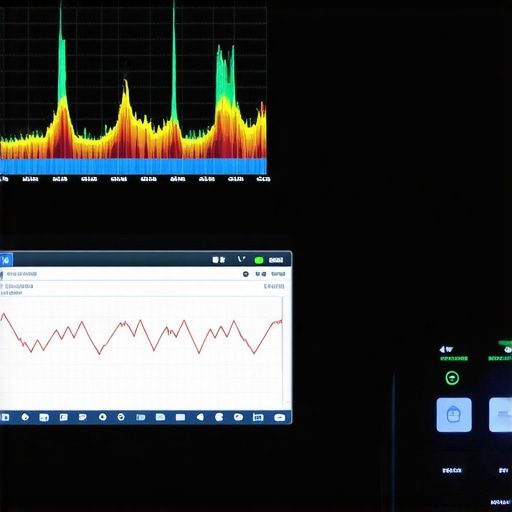
The Expensive Trap of High-Mileage Marketing
Another common pitfall is the belief that ‘specialty’ products can substitute for actual mechanical repair. For instance, the truth about high mileage oil filters and if they actually work is that they are rarely a fix for the internal vibrations caused by worn bearings or oil pressure drops. People often buy these thinking they’ll swell a seal or ‘quiet’ a rumble, but it’s a temporary Band-Aid at best. If you want to tune up your car for peak performance, you have to look at the data. Use an OBD-II scanner to look at your Long Term Fuel Trims (LTFT). If those numbers are higher than 10%, your car is compensating for a problem you haven’t found yet—regardless of how many new parts you’ve installed. This is how you differentiate between how to tell if your car needs a simple tune up or a major repair. Always remember: a computer reset is often as important as a new set of plugs. Have you ever fallen into this trap where you replaced everything but the vibration stayed? Let me know in the comments below.
If you’ve spent weeks chasing a vibration that won’t quit, it’s time to stop swapping parts and start reading data. I eventually realized that my ‘gut feeling’ was costing me hundreds, while a sixty-dollar tool could have told me the truth in seconds. To move past the guesswork of troubleshooting common auto repair issues before visiting the shop, I had to upgrade my toolbox. My go-to recommendation is a high-quality OBD-II scanner that supports live data streaming. Most people just use these to clear codes, but the real magic is in watching the Short Term Fuel Trim (STFT) while you are sitting at that vibrating stoplight. If you see the STFT climbing into the double digits the moment you stop, your car is gasping for fuel, and no amount of new spark plugs will fix a vacuum leak.
The One Tool That Stopped My Guessing Game
Beyond the scanner, I’ve found that a simple multimeter is the unsung hero of the garage. You can use it to verify your battery health or learn how to test your alternator with a simple multimeter at home without removing a single bolt. When my old truck started shaking at idle, it wasn’t the engine at all—it was a failing alternator diode creating ‘AC ripple’ that confused the ignition system. According to the SAE International J1979 standard, which governs how cars talk to diagnostic tools, modern vehicles provide hundreds of data points that can lead you straight to the problem. Relying on these standards instead of ‘mechanic’s intuition’ is how you actually maximize your cars lifespan with expert tune up strategies.

How do I maintain my engine’s smoothness over time?
The secret to a car that feels new at 150,000 miles isn’t just oil changes; it’s about managing the ‘invisible’ wear. This means cleaning your throttle body every two years to prevent carbon buildup and ensuring you follow a strict ultimate car service guide for fluid flushes. When you keep the intake system clean, you ensure that how regular tune ups improve fuel efficiency and safety isn’t just a marketing slogan, but a reality you feel in the steering wheel. I also recommend a ‘top-tier’ fuel detergent every few thousand miles to keep those injectors from dripping, which is a common cause of that low-frequency rumble at red lights.
Look Ahead to the 2025 Tech Shift
We are entering an era where your car might tell you it’s broken before you even feel the first shudder. Looking at auto repair trends to watch in 2025, we are seeing more integration between smartphone apps and vehicle telematics. In the near future, DIYers will likely use augmented reality overlays to find vacuum leaks or identify specific sensors under the hood. For now, the best thing you can do is tune up your car for peak performance by mastering the tools we have today. If you want to really get ahead of the game, try performing an ‘idle relearn’ procedure after your next battery change—it’s an advanced move that forces the computer to find its perfect rhythm again.
The Hardest Lesson I Learned About Stoplight Shudders
For years, I thought every vibration meant a massive repair bill was coming. The most humbling lesson I learned was that throwing parts at a problem is the most expensive way to fix a car. I once replaced an entire set of fuel injectors because I was convinced they were clogged, only to realize a five-dollar vacuum hose had a hairline fracture. This taught me that troubleshooting common auto repair issues before visiting the shop isn’t just about saving money; it’s about actually understanding the machine you trust with your life every day. I also learned that your car’s computer is often ‘lying’ to you by compensating for small leaks, which is why you need to know how to tell if your car needs a simple tune up or a major repair before the check engine light even blinks. Finally, never ignore the electrical health of your vehicle; sometimes a vibrating idle is actually a signal that you need to learn how to test your alternator with a simple multimeter at home to rule out phantom ignition issues.
The Gear That Finally Stopped the Guesswork
If you are tired of the ‘parts cannon’ approach, I highly recommend building a small but mighty diagnostic kit. First, get a Bluetooth OBD-II adapter; it allows you to see what the engine sees in real-time, specifically the fuel trims. Second, keep a can of specialized throttle body cleaner handy—it’s the easiest way to tune up your car for peak performance without ever visiting a dealership. These tools transform you from a frustrated passenger into an informed owner who can follow a car service checklist with total confidence. I trust these methods because they rely on data, not guesses.
Reclaim Your Peace of Mind on the Road
You don’t have to live with a car that feels like it’s falling apart every time you hit a red light. By taking a systematic approach—checking your mounts, cleaning your intake, and resetting your computer—you can maximize your cars lifespan with expert tune up strategies that keep your ride smooth for another 100,000 miles. Remember, the real reason your engine vibrates while you are stopped at a red light is usually a cry for basic maintenance, not a death sentence for your transmission. Take the weekend to run these tests; your steering wheel and your wallet will thank you. Have you ever replaced a part only to find out the real issue was something small? Let me know your story in the comments below!