
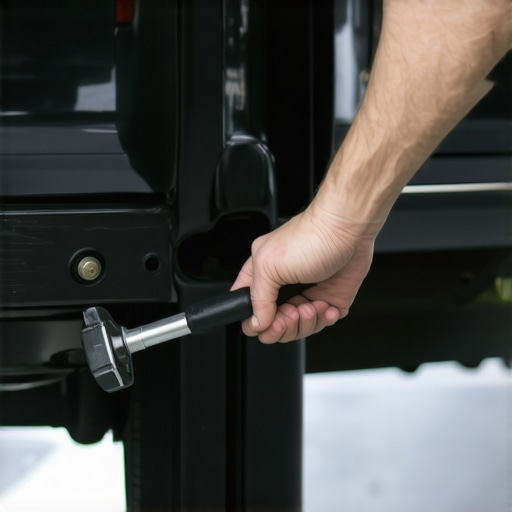
There I was, sitting in my beat-up truck in the middle of a grocery store parking lot, ice cream melting in the back and the sun beating down on the asphalt. I turned the key, expecting that familiar rumble, but all I got was the pathetic crank-crank-crank of an engine that had no intention of starting. My heart sank. I knew I had gas, and the battery was strong. It felt like a fuel issue, but I wasn’t ready to shell out hundreds of dollars for a tow and a shop diagnostic. I remembered a trick my neighbor showed me years ago—something that sounds like caveman logic but works more often than you would think. I grabbed my trusty rubber mallet from the toolbox, crawled under the rear of the truck, and gave the fuel tank a few firm thumps. To my disbelief, the truck roared to life on the next try.
Save Your Saturday by Using This Low-Tech Diagnostic Trick
The reality of car ownership is that components usually fail at the worst possible time. If you have ever wondered about the difference between a transmission slip and a fuel system hiccup, you know that diagnosing these things can be a nightmare. Today, I am going to show you how to use a simple rubber mallet to confirm if your fuel pump is the culprit behind your no-start condition. We are not just hitting things for fun; we are using physics to overcome a common mechanical failure. I will be honest: I have not always been this handy. Early in my DIY days, I once spent an entire Saturday afternoon and $150 replacing a fuel pump on a car that would not start, only to find out later it was a blown fuse. That is a mistake that sticks with you. It taught me the importance of troubleshooting common auto repair issues before visiting the shop. Sometimes, the most complex problems have the simplest answers, or at least a way to verify them without a computer.
Does hitting your gas tank really do anything?
It sounds ridiculous, right? You might think that whacking a component is just a way to vent frustration, but there is real science here. Most fuel pumps are DC motors. Over time, the brushes inside can develop dead spots or get stuck due to debris or wear. A sharp vibration from a rubber mallet can jar those brushes just enough to make contact and get the motor spinning again. It is a temporary fix—a limp home mode—but it is an incredible diagnostic tool. Have you ever been stranded because your car suddenly refused to start despite having plenty of juice? Before you assume it is the end of the world, consult the ultimate car service guide when and why to schedule maintenance to see if you have just been pushing your luck too far. It is worth noting that while this trick is a lifesaver, it does not fix the underlying wear. According to the Car Care Council, fuel pumps are cooled by the gasoline itself, meaning running on empty can cause the motor to reach temperatures high enough to seize internal parts. Once you have had to use the mallet, you definitely need to figure out if your car needs a simple tune-up or a major repair. In the next few minutes, I will walk you through exactly where to hit and how to do it safely.First, you have to find the gas tank. It is usually a large, plastic or metal container slung under the rear of the vehicle. Think of it as the belly of the beast. You are looking for a spot that sounds solid but slightly hollow. I remember helping my buddy Dave with his 2004 Civic during a torrential downpour. He was convinced his engine was toast, but I crawled into the mud with my mallet. One solid thwack on the center of the tank while he cranked it, and the engine coughed into life. He thought I was a wizard, but really, I was just troubleshooting common auto repair issues before visiting the shop. 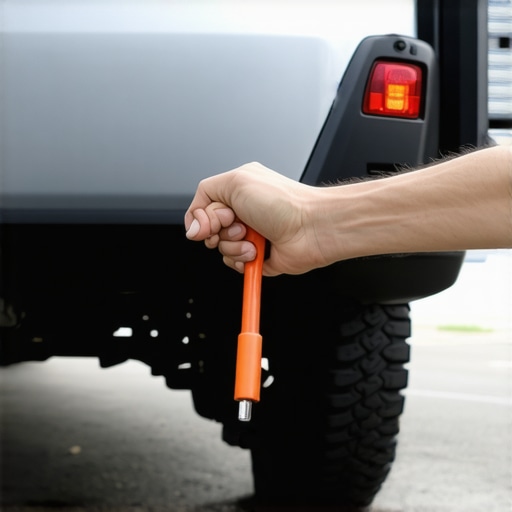
Find the Tank and Target Your Strike
Most people make the mistake of hitting the tank like they are trying to break a piñata. Do not do that. You want a firm, decisive blow, but you are not trying to dent the metal or crack the plastic. Imagine you are knocking on a very heavy door. The goal is to send a shockwave through the fuel to the pump inside. This vibration is often enough to break the motor loose from a dead spot. If you have been diligent about your car service checklist how to keep your vehicle in top shape, you might not even face this, but age catches up to every part eventually.
The Two-Person Dance for Best Results
This is rarely a solo mission. You need someone in the driver seat who knows how to turn the key at the exact second you strike the tank. The timing is everything. As the ignition sends power to the pump, the mallet strike provides the physical nudge needed to get things rotating. It is much like push-starting a manual car; you need momentum and power to hit at the same time. If the car starts, you have confirmed the pump is dying. Now you have to decide how to tell if your car needs a simple tune-up or a major repair. Usually, a failing pump is a major one.
Keep Your Eyes Clear and Your Hands Safe
Safety is non-negotiable when you are under a car. Beyond the obvious danger of the vehicle falling—never crawl under a car supported only by a jack—you have to watch out for falling debris. Years of road salt and grime love to fall right into your eyes the moment you hit the tank. I learned that the hard way during Dave’s repair; I spent ten minutes flushing grit out of my eyes afterward. Once you get the car home, it is time to maximize your cars lifespan with expert tune-up strategies to prevent being stranded again. This trick is a band-aid, not a cure. If you ignore the warning sign, you will be calling a tow truck next time, so check the ultimate car service guide when and why to schedule maintenance and get that pump replaced immediately.While my mallet trick is a great way to escape a parking lot nightmare, relying on ‘old school’ logic for every repair is a recipe for an empty wallet. We often treat our vehicles like they are still running on 1970s technology, but the reality is much more complex. I see it all the time: a driver thinks their car is dying, when in reality, they just haven’t learned how to tell if your car needs a simple tune-up or a major repair. If you are still asking for a ‘tune-up’ at the shop, you might be falling for an outdated concept.
The Modern Tune-up is Mostly a Myth
Everyone says you need a tune-up every 30,000 miles to keep the engine purring. In my experience, the traditional tune-up—adjusting carburetors and swapping points—died twenty years ago. Modern engines are managed by incredibly sensitive computers that adjust timing and fuel flow thousands of times per second. Today, a ‘tune-up’ is really just a glorified inspection of sensors and filters. If you are chasing a rough idle by just throwing new spark plugs at it, you are likely wasting money. According to the National Institute for Automotive Service Excellence (ASE), technicians now spend more time analyzing data streams than turning wrenches, because a ‘misfire’ is rarely just a bad plug anymore; it is often a vacuum leak or a failing oxygen sensor. You should focus on maximizing your cars lifespan with expert tune-up strategies that prioritize electronics over just mechanical parts. Have you ever fallen into this trap of replacing parts that weren’t actually broken? Let me know in the comments. 
Why is my gas mileage still dropping after a fresh service?
This is the question that separates the pros from the amateurs. Most people think new oil and plugs equal instant efficiency. However, the ‘Oops’ factor here is often the Mass Airflow (MAF) sensor or an aging oxygen sensor that hasn’t quite failed yet but is ‘lazy.’ These components tell the computer how much fuel to dump into the cylinders. If they are slightly off, you lose 10-15% of your MPG without ever seeing a check engine light. This is why I personally never trust the oil life monitor on my dashboard to tell me the whole story of my engine’s health.
Stop Assuming Your Brakes are Shot Just Because They Squeak
Another huge myth is that a squeal from your wheels always means you need a full brake system repair. We’ve been conditioned to panic at the first sign of noise. But if you’ve ever looked into how to tell if your brake squeak is serious or just morning moisture, you know that high-performance ceramic pads often make noise simply because they are cold or dusty. The biggest mistake DIYers make is failing to follow the proper way to break in new brake pads and rotors. If you don’t ‘bed’ them properly by performing a series of specific stops, you’ll end up with uneven pad transfer, which feels like a warped rotor. Before you let a shop talk you into a four-figure brake job, make sure you understand the brake service myths what you need to know before your next stop. Real expertise isn’t about knowing how to change a part; it is about knowing why that part failed in the first place.I will tell you the one tool that changed my life more than any socket set: a proper bi-directional scan tool. Most people grab a twenty-dollar code reader from the bin at the parts store and think they are ready to play mechanic. But a basic reader only gives you the ‘what,’ not the ‘why.’ When I was troubleshooting that intermittent stall on my truck, a cheap reader told me ‘Lean Condition.’ Big deal. My Autel scanner showed me the live data stream, proving my short-term fuel trims were spiking only at idle. That is how I knew I had a vacuum leak, not a bad pump. You need to learn how to test your alternator with a simple multimeter at home before you start throwing expensive parts at a charging issue. This level of precision is the difference between a successful fix and a wasted weekend. 
How do I keep my car running like new for decades?
It isn’t about luck; it is about a relentless adherence to a car service checklist how to keep your vehicle in top shape. I have seen Toyota Land Cruisers with 400,000 miles that drive better than five-year-old sedans simply because the owner did not treat ‘maintenance’ as an optional suggestion. You have to look at the fluids. Most people forget that brake fluid is hygroscopic—it absorbs water over time. If you do not flush it, you are looking at internal corrosion that eventually leads to an expensive brake system repair. I personally follow the ‘severe’ maintenance schedule in the manual because, let us be honest, stop-and-go traffic in our city is severe. Following these essential maintenance tips ensures that you are not caught off guard by a breakdown. The technical side of this is documented heavily by the Society of Automotive Engineers (SAE) in their J1979 standard, which dictates how diagnostic data is communicated. If you really want to dive deep, learning to read ‘Mode $06’ data on your scanner—which shows the results of self-diagnostic monitors—can tell you a part is failing weeks before the light comes on. This is the secret to how regular tune-ups improve fuel efficiency and safety without the guesswork. I also recommend investing in a high-quality torque wrench. I used to ‘finger-tighten’ everything and give it a ‘good ugga-dugga’ with the impact, but that is how you warp rotors and snap manifold bolts. When you are working on maximizing your cars lifespan with expert tune-up strategies, precision matters. A few foot-pounds of difference can be the reason your new gasket leaks within a month. If you have ever wondered how to troubleshoot common auto repair issues before visiting the shop, start with the basics of clean connections and proper torque. Looking ahead, I see a massive shift toward software-defined vehicles. We are moving toward a world where you might need a digital handshake just to bleed your brakes. Keeping up with auto repair trends to watch in 2025 is going to be vital for anyone who wants to keep turning their own wrenches. My advanced tip for you this week: Grab a multimeter and check the voltage drop across your battery terminals while someone else cranks the engine. If the reading drops below 9.6 volts, your battery is likely failing, even if it looks fine on the surface. It is a five-minute test that saves a two-hour headache later.
The Hard Lessons I Learned While Covered in Grease
If there is one thing a decade of DIY repair has taught me, it is that your gut is often a liar, but data is your best friend. Looking back at that afternoon in the parking lot with the rubber mallet, I realize it wasn’t just about getting the truck started; it was about the shift from guessing to testing. First, never underestimate the power of a simple ground wire. I once spent three days chasing a fueling issue that turned out to be a rusty bolt on the frame. If you are struggling with a phantom electrical bug, check how to tell if your electrical problem is a blown fuse or a bad ground wire before you tear out your dashboard. Second, the most expensive tool you own is the one you do not know how to use. I have seen guys buy thousand-dollar scanners and still not understand why their car is stumbling because they ignore the basics. Finally, recognize when you are out of your depth. There is no shame in calling a pro when a job requires a lift or a specialized factory tool that costs more than the repair itself.
#IMAGE_PLACEHOLDER_E#
The Gear That Separates Mechanics from Parts-Changers
You do not need a shop full of industrial equipment to be a successful home mechanic, but you do need quality essentials. I personally swear by three specific resources. 1. The Factory Service Manual (FSM): Forget the generic store-bought guides; the FSM contains the exact tolerances and wiring diagrams the engineers intended. 2. A High-Impedance Multimeter: This is non-negotiable for modern cars. You can easily learn how to test your alternator with a simple multimeter at home to save yourself from buying a battery you do not actually need. 3. A Quality Torque Wrench: Guessing how tight a bolt is leads to snapped studs and warped rotors. I trust my split-beam torque wrench for everything from spark plugs to lug nuts because precision is what keeps your car service checklist accurate and safe.
Take Back Control of Your Driveway
Working on your own vehicle can be intimidating, especially with how complex modern systems have become. But remember, at its core, an engine still needs air, fuel, and spark to run. By taking the time to understand the ‘why’ behind a failure, you are doing more than just saving money—you are building the confidence to handle whatever the road throws at you. Whether you are performing a simple oil change or maximizing your cars lifespan with expert tune-up strategies, every successful repair is a win for your independence. Stay curious, keep your tools clean, and never stop learning about auto repair trends to watch in 2025 to stay ahead of the technology curve. Have you ever replaced a major part only to find out the problem was something as small as a loose gas cap or a dirty sensor? Let me know your biggest DIY ‘aha!’ moment in the comments below!