
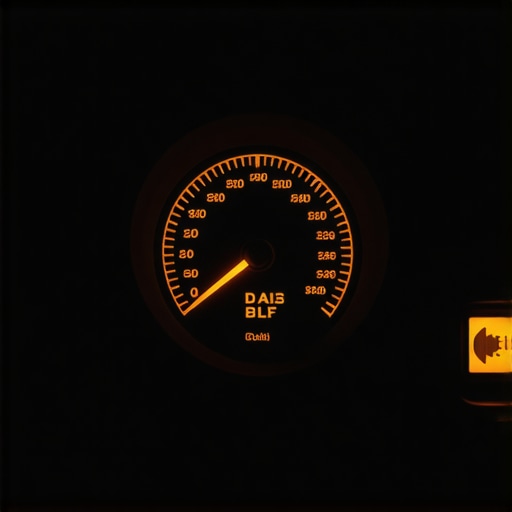
It was roughly 20 degrees outside, and I could see my own breath inside the cab of my old truck. I did what any sane person would do: I cranked the heater to the max and waited for that glorious blast of warm air. But then, I saw it. My temperature gauge, which had finally reached the middle, started sinking like a stone toward the ‘Cold’ mark. My heart sank with it. I honestly thought my engine was about to give up the ghost or that I was leaking coolant all over the asphalt. It felt like my car was literally shivering.
That Time My Dashboard Sent Me Into a Panic
I’ll be the first to admit that I made a massive mistake early in my DIY days. I assumed a dropping temperature meant my radiator was somehow ‘too good’ at its job, so I went out and replaced a perfectly functional radiator. It was a total waste of a Saturday and about $300 that I really didn’t have at the time. I didn’t realize back then that my heater core is essentially a mini-radiator. When you blast the heat, you are pulling thermal energy away from the engine. This kind of confusion is why troubleshooting common auto repair issues before throwing parts at a problem is so vital for your sanity. Today, I want to walk you through exactly why this happens and, more importantly, when it is actually a sign of a failing thermostat.
Is This Drop in Temperature Really a Problem?
You might be tempted to think that a cooler engine is a happier engine, but that is a myth. According to the U.S. Department of Energy, internal combustion engines are designed to operate within a specific window—usually between 195 and 220 degrees Fahrenheit—to maximize fuel vaporization and minimize emissions. If your temperature stays too low, you are essentially throwing money out of the tailpipe. I’ve learned the hard way that understanding how regular tune-ups improve fuel efficiency involves keeping an eye on that thermal balance. If your needle drops and stays down, we need to talk about the best way to test an engine thermostat at home. Have you ever noticed your temperature needle dipping the moment you turn on the defroster? I’d love to hear your story in the comments—did it freak you out as much as it did me? Before you head to the mechanic, check your fluid levels, as there is often a hidden cost of skipping a scheduled coolant flush that leads to these weird thermal fluctuations.
Why Your Heater Acts Like an Emergency Radiator
Think of your car’s cooling system like a big loop of hot water. When the engine gets too hot, the thermostat opens, and the radiator in the front cools it down. But there is a secret side-path. Your heater core is tucked under the dashboard, and it works exactly like a miniature radiator. When you turn that knob to red and crank the fan, you are blowing cold cabin air across that hot core. You are essentially adding a second cooling system to your engine. On a freezing day, that extra cooling is often enough to pull the needle down, especially if you are idling or driving slowly. It’s a common part of the ultimate car service guide: when and why to schedule maintenance.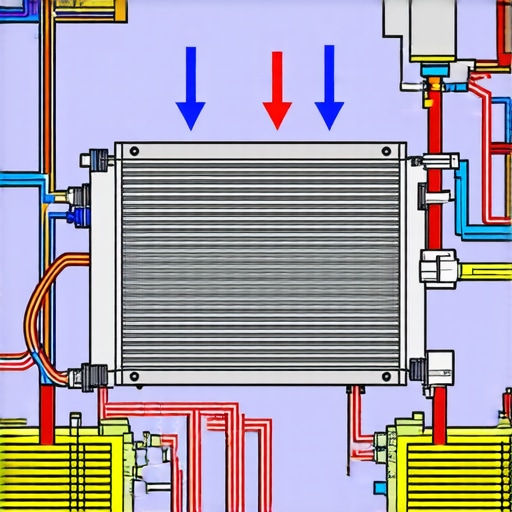
Identify a Stuck Thermostat Without a Mechanic
If your needle drops a tiny bit but then recovers, that is usually normal behavior in extreme cold. However, if it drops and stays in the ‘Cold’ zone, your thermostat is likely stuck in the open position. A healthy thermostat is a gatekeeper; it should snap shut to keep heat in the engine when things get too chilly. I remember working on an old sedan where the heat was lukewarm at best. I spent hours troubleshooting common auto repair issues before realizing the thermostat was jammed open with a piece of sediment. To check this at home, start your car from dead cold and feel the upper radiator hose. It should stay cold for several minutes while the engine warms up. If it gets warm immediately, your ‘gatekeeper’ is broken, and you’re losing fuel efficiency because the engine never reaches its thermal sweet spot. This is one of those essential maintenance tips to tune up your car for peak performance.
Don’t Forget the Bubbles in the Line
Sometimes the drop isn’t the thermostat at all—it’s air. I once did a quick coolant swap and thought I was done. Three miles down the road, my gauge was dancing like a rhythmic gymnast. Air pockets, or ‘airlocks,’ prevent coolant from flowing through the heater core or the sensor correctly. You have to ‘burp’ the system to get that air out. Ignoring this can lead to the hidden cost of skipping a scheduled coolant flush. If you’ve recently had any auto repair work done on the cooling system and the needle is acting up, check the levels again.
The Five-Minute Thermostat Test You Can Do in Your Driveway
If you suspect a failure, you don’t always need tools to confirm it. Pay attention to the speed of the drop. If the needle plummets the second you turn on the fans, but your engine performance feels sluggish, you are likely over-cooling. This forces the computer to dump more fuel into the cylinders to keep the fire going, which is the opposite of what you want when you’re trying to maximize your car’s lifespan with expert tune-up strategies. You should also test an engine thermostat at home by monitoring how long it takes to reach operating temperature without the heater on. If it takes more than 10 minutes of driving to get that needle to the middle, that part is toast.It is easy to think that once you have figured out the thermostat, you have mastered the art of thermal management. However, there is a much bigger trap people fall into when they talk about a ‘tune-up.’ Most folks still think a tune-up is just swapping spark plugs and calling it a day. In my years under the hood, I have realized that how regular tune-ups improve fuel efficiency and safety has shifted toward the digital side. It is no longer just about hardware; it is about the health of your oxygen sensors and the cleanliness of your throttle body. If those are off, your fuel trims will be a mess, and your ‘new’ plugs won’t save your gas mileage.
Your Brake Rotors Probably Are Not Warped
Here is a controversial take: ‘Warped’ rotors are a bit of an urban legend in the automotive world. I cannot tell you how many times I have seen people throw away perfectly good metal because of a vibration. According to a technical study by StopTech, what most drivers experience as warping is actually uneven pad deposit—a layer of friction material that has baked onto the rotor unevenly. This creates high spots that the naked eye cannot see. If you do not follow the simple way to bed-in new brake pads, you are basically inviting this vibration to start on day one. It is one of the biggest brake service myths that keeps parts stores in business while draining your wallet. 
Why the Brake Pedal Pulsing Returns After Two Months
Have you ever replaced your brakes only to have the same shuddering return eight weeks later? This is the ultimate ‘oops’ factor. Most DIYers (and even some pros) forget to clean the hub surface where the rotor sits. A tiny speck of rust—thinner than a human hair—can cause ‘runout’ that amplifies at the edge of the rotor. This is the real reason your car pulses every time you hit the brakes despite having brand-new parts. I have learned that essential maintenance tips to tune up your car for peak performance must include surgical cleanliness of the mating surfaces. If you ignore the hub, you are just putting a Band-Aid on a broken bone. Dealing with these nuances is how you truly maximize your car’s lifespan with expert tune-up strategies. It is not just about replacing parts; it is about the precision of the install. Have you ever fallen into this trap of replacing the same part twice because of a tiny mistake? Let me know in the comments—I have certainly been there more than once.
Modern Cars Need More Than Just Parts
Moving into the future, we have to recognize that auto repair trends to watch in 2025 are leaning heavily toward preventative diagnostics. It is no longer enough to wait for a part to fail. For instance, check out the ultimate car service guide to see how sensor calibration is becoming part of a standard service. If you are tackling your own repairs, remember that the smallest details—like using a torque wrench instead of ‘calibrated elbows’—are what separate a successful fix from a return trip to the shop. Under-tightening is a risk, but over-tightening can crush seals and strip threads, leading to failures that look like ‘bad parts’ but are actually installation errors. Keep your eyes on the details, and your car will stay on the road much longer.I’ve learned that the jump from a ‘weekend warrior’ to a seasoned DIYer isn’t just about the scars on your knuckles—it’s about the tools you trust. If you’re serious about your car’s health, you need to stop guessing. For years, I relied on those cheap code readers that give you a generic error and nothing else. But when I upgraded to a professional-grade bidirectional scan tool, it changed everything. I could finally see real-time data on fuel trims and oxygen sensor voltages. It’s exactly how professional diagnostics found my ghost electrical leak by monitoring parasitic draw, something a simple multimeter often misses during a quick check.
Stop Guessing and Start Measuring Every Bolt
One tool I will never go without is a high-quality torque wrench. Most people think they can ‘feel’ the correct tightness, but according to technical documentation from the Society of Automotive Engineers (SAE), improper fastener tension is a leading cause of premature component failure, especially in modern aluminum engine blocks. When I’m performing a tune-up for peak performance, I torque everything from the spark plugs to the valve cover bolts. This prevents the ‘mystery leaks’ that plague so many older vehicles. If you want to maximize your car’s lifespan, you have to treat every bolt with the respect the engineers intended.
How can I make my engine and brakes last forever?
The secret isn’t a magic additive; it’s consistency and surgical cleanliness. I’ve found that staying on top of your car service checklist is the only way to avoid the ‘snowball effect’ of repairs. For instance, when I do a brake job, I don’t just swap pads. I use a dedicated wire brush and brake cleaner to strip away every bit of road salt and dust from the caliper slides. This prevents the uneven wear that people mistake for warping. It’s why the real reason your car pulses often has nothing to do with the rotors and everything to do with a sticky slide pin that hasn’t been cleaned in years.
Looking Toward the Digital Future of Auto Repair
Looking ahead, I see auto repair trends for 2025 shifting heavily toward predictive maintenance powered by telematics. We are moving away from generic ‘change it every year’ intervals and toward sensors that tell you the actual chemical health of your oil or the exact thickness of your brake pads via your smartphone. This level of data is going to make the ultimate car service guide look very different in a few years, but the mechanical basics will always remain. If you want to take your skills to the next level today, I challenge you to perform a ‘smoke test’ on your intake manifold. It’s the most effective way to check for vacuum leaks with smoke and find those tiny cracks that cause a rough idle before they turn into a full-blown engine stall.
The Maintenance Habits That Finally Saved My Wallet
Over the years, I have realized that the difference between a reliable daily driver and a driveway ornament comes down to a few hard-won realizations. First, never trust a part just because it is brand new. I have seen “out of the box” failures more times than I can count, which is why troubleshooting common auto repair issues manually is still faster than blindly swapping parts. Second, the most expensive tool you own is the one you didn’t use—like a torque wrench on a delicate valve cover. Finally, ignoring the small stuff like a scheduled coolant flush always leads to a massive bill later. Consistency beats intensity every single time when you are trying to keep a machine alive.
#IMAGE_PLACEHOLDER_E#
The Tech and Tools I Swear By
If you want to stop guessing and start fixing, you need to invest in your own “mechanical intelligence.” I personally swear by factory service manuals—not the generic ones found at the supermarket, but the deep-dive manuals written by the original engineers. I also can’t live without a bidirectional scan tool; it is the only way to see if your car’s computer is actually talking to your sensors. For my brakes, I always keep a high-quality silicone paste nearby to ensure brake system repairs actually last through the winter. These aren’t just gadgets; they are the reason my car finally hit 200,000 miles without a major engine overhaul.
Take the First Step Toward a 200,000-Mile Car
Getting your hands dirty is about more than just saving money; it is about the peace of mind that comes from knowing your machine inside and out. Whether you are dealing with a fluctuating temperature gauge or a pulsing brake pedal, do not be afraid to slow down and measure twice. If you hit a wall or find something you can’t handle alone, you can always contact us for advice, but I bet you have what it takes to finish the job. Your journey in auto repair is just beginning, and every successful fix makes you a more confident driver. Have you ever had a “simple” 15-minute fix turn into a weekend-long project? Share your story in the comments below—I would love to hear how you handled it!