

I stood there, staring at the engine of my old truck, feeling like a complete failure. My hands were greasy, my back was aching, and the idle was still hunting up and down like a caffeinated squirrel. I had already thrown a new mass air flow sensor and a set of spark plugs at it, convinced that regular tune-ups would fix the stumble. It did not. I was chasing a ghost, and it was not until I wasted three days and two hundred bucks that I realized my biggest rookie mistake: I was guessing instead of testing. That ‘ghost’ was a tiny, hairline fracture in a vacuum line buried deep behind the intake manifold, hidden from sight and mocking my frustration.
Stop Guessing and Start Seeing the Invisible
Most of us have been there. You get a lean code, the car shudders at stoplights, and you immediately start Googling the price of oxygen sensors. But here is the thing I learned the hard way: your car engine is essentially a giant vacuum pump. If air is getting in where it should not—bypassing the sensors—everything goes haywire. Finding those leaks used to involve spraying flammable brake cleaner around a hot engine and hoping for a change in RPM, which is about as safe as juggling chainsaws. Today, I am going to show you a much better way to handle troubleshooting common auto repair issues without the fire hazard. We are going to use smoke. It is simple, it is visual, and it works every single time. It should be part of every car service checklist when the engine starts acting up.
Is this smoke trick really safe for my expensive sensors?
I get it; the idea of pumping smoke into your intake feels like something out of a backyard mechanic’s fever dream. You might worry about gunking up your throttle body or cleaning your mass air flow sensor for the tenth time because of residue. However, when done correctly, this method is incredibly safe. In fact, professional shops use machines that cost thousands of dollars to do exactly this. According to data from the National Institute for Automotive Service Excellence (ASE), unmetered air—what a vacuum leak actually is—can cause combustion temperatures to rise significantly, which is far more dangerous to your engine than a little bit of non-toxic smoke. We are essentially using the diagnostic smoke method to make the invisible visible. It is about working smarter, not harder. Before I walk you through the gear you need, let me ask: have you ever spent a weekend replacing parts only to find out the problem was a five-dollar rubber hose? I want to make sure that never happens to you again.
Build Your Own Smoke Rig for Cheap
You do not need a thousand-dollar professional machine to get professional results. You can build a DIY version using a paint can, some clear vinyl tubing, and a glow plug from an old diesel engine. It is essentially a heavy-duty incense burner for your car. If you want to go even more old-school, you can learn how to identify a vacuum leak using a simple cigar, which is basically the MacGyver version of this test. The goal is to create a thick, visible vapor that stays in suspension long enough for you to find the exit point. This isn’t just about saving money; it is about having a tool in your arsenal that makes a complex tune up your car for peak performance much easier to execute. Think of your intake system like a drinking straw with a tiny pinhole; you can’t see the hole until you blow something through it. 
Seal the Intake or You are Just Blowing Air
Your engine is designed to breathe, but for this test, we need it to hold its breath. You have to seal off the main air intake, usually at the throttle body or right after the air filter box. Use a rubber glove and a rubber band to cap the intake tube—it is a cheap, effective way to create a pressure-tight seal. While you have these parts disconnected, it is the perfect time for how to clean your throttle body to restore throttle response, because a carbon-caked butterfly valve can mimic the symptoms of a vacuum leak by sticking open just a fraction. Once the main inlet is sealed, you hook your smoke source into a small vacuum line, like the one going to the brake booster. This ensures the smoke is forced through the entire manifold instead of just escaping through the air filter.
Follow the White Trail to the Source
With the system sealed and the smoke pumping in at about one to two PSI—no more, or you will pop delicate seals—you just wait and watch. Within a minute, the smoke will fill the intake manifold and start looking for a way out. I remember a specific 2002 Jeep Grand Cherokee that had been through three different shops. Everyone thought the rough idle was a fuel pump issue or a bad sensor. I hooked up the smoke, and within thirty seconds, a thin, ghostly plume started dancing out from behind the cylinder head. It was an intake manifold gasket that had failed in the one spot no one could see. It turned out the owner had been chasing ghosts because they did not know how to tell if your computer is giving you a false error code versus a physical hardware failure. Seeing that smoke was like turning on a light in a dark room. This method is the ultimate truth serum for any engine, far more reliable than just listening for hissing or spraying soapy water around hot components. It takes the guesswork out of troubleshooting common auto repair issues before visiting the shop.Most people think a ‘check engine’ light is a direct order to buy a specific part. If the code says ‘P0420,’ they buy a catalytic converter. If it says ‘O2 sensor lean,’ they buy a sensor. But here is the contrarian truth: the computer is a witness, not a judge. It tells you what it sees, not what caused it. Relying solely on a scanner is the fastest way to drain your bank account without fixing the car. I have seen enthusiasts dump hundreds into sensors when the real culprit was a corroded ground wire. Learning how to spot a bad ground wire causing electrical issues is the fundamental difference between a real mechanic and a parts-changer.
Does your brake fluid actually need a flush every two years?
This is a major point of contention in every garage. You will hear people say, ‘If the brakes feel fine, do not touch the fluid.’ In my experience, that is a dangerous mistake. Brake fluid is hygroscopic, meaning it literally sucks moisture out of the air. A study by the Society of Automotive Engineers (SAE) found that brake fluid can absorb up to 2% water in just twelve months, which drastically lowers the boiling point and causes internal corrosion. If you wait until the pedal feels ‘spongy,’ you are already dealing with internal damage. This is why brake service myths often lead to expensive master cylinder replacements later. Don’t just look at the thickness of the pads; look at the color of that fluid. If it looks like dark tea instead of light honey, it is time for a change. 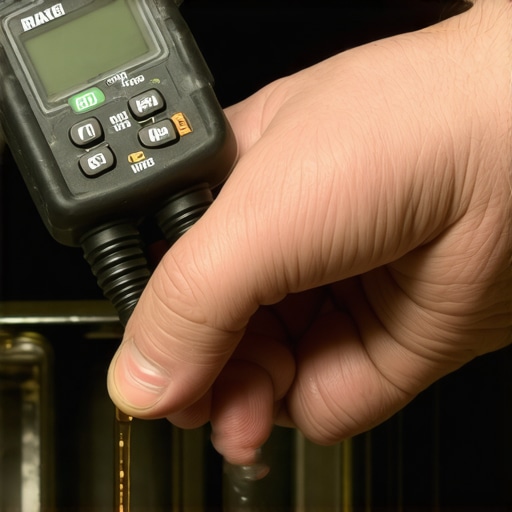
The Caliper Trap That Ruins New Rotors
One of the biggest ‘oops’ factors I see involves the calipers during a standard brake job. You spend the afternoon putting on high-end ceramic pads and brand-new rotors, only to have them warp or squeak three weeks later. Why? Because you didn’t check the slide pins or the internal health of the hoses. A sticky pin keeps the pad pressed against the rotor constantly, creating massive heat that destroys the metal. Even worse, you might have a ‘check valve’ effect from an aging, internally collapsed hose. Knowing how to spot a collapsed brake hose in seconds can save your new rotors from a fiery, expensive death. It is about the entire hydraulic system, not just the shiny parts you can see through the rims. We often get caught up in the marketing hype of long-life consumables, but the truth about 10,000-mile oil change intervals is that they are designed for ‘ideal’ conditions—which almost no one actually encounters. If you are doing short trips, idling, or sitting in heavy traffic, you are in the ‘severe’ maintenance category. Have you ever fallen into the trap of following the manual perfectly only to find your oil is pitch black and low? Let me know in the comments. I want to hear about your diagnostic ‘ghosts’ and the simple fixes that finally laid them to rest.If you really want to scale your maintenance from ‘just getting by’ to ‘indestructible,’ you have to stop relying on the generic tool kits from big-box stores. For me, the game changed when I invested in a bidirectional scan tool. Unlike a basic reader that just clears codes, a bidirectional tool lets you command the car to perform specific tasks—like firing a fuel injector or bleeding an ABS pump. It turns the car into an active participant in the diagnosis. This is the level of precision required in the ultimate car service guide if you want to avoid the parts-cannon approach. I also never touch a wheel bolt without a high-quality click-type torque wrench. Guessing the tightness of your lug nuts is a recipe for warped rotors and snapped studs. Learning the proper way to torque wheel bolts without a manual ensures that your brake components stay true and heat-cycle evenly over thousands of miles.
Don’t Just Install Your Brakes—Season Them
Most DIYers finish the last bolt on a brake job, drop the jack, and head straight to the grocery store. That is a massive mistake. You have to ‘bed’ the pads. This process involves a series of controlled stops that transfers a thin layer of friction material from the pad to the rotor surface. Without this transfer layer, you get uneven deposits that feel like a warped rotor but are actually just poor metallurgy. Following the simple way to bed in new brake pads is the difference between a silent, powerful stop and a pedal that vibrates your teeth out after a month of driving. According to the engineering standards in the Bosch Automotive Handbook, improper bedding can reduce braking effectiveness by up to 15% during the initial lifecycle of the friction material. 
How do I keep my car running like new for a decade?
Maintenance isn’t just a list of chores; it is a philosophy of ‘catch it while it is small.’ Every six months, I do a deep-dive inspection that goes beyond the standard oil change. I am looking for the ‘sweat’ on a shock absorber or the slight fraying of a belt. This is the secret to getting 200,000 miles out of your original engine. It is about using expert tune-up strategies to prevent the cascade of failures that usually kills older vehicles. If you ignore a tiny coolant seep today, you are buying a head gasket tomorrow.
Where the Garage is Heading in 2025
We are entering an era where your car will likely tell your phone it is sick before you ever feel a shudder. I predict that the biggest shift we will see in auto repair trends to watch in 2025 is the democratization of telematics. Soon, DIYers will have access to the same live-streamed data that manufacturers use to track fleet health. This will make tuning up your car for peak performance a data-driven exercise rather than a series of guesses. I encourage you to try the bedding-in procedure on your very next brake job—you will feel the difference in the pedal immediately.
The Hardest Lesson I Learned While Chasing Engine Ghosts
I used to think that a loud engine always meant a massive repair bill, but my experience taught me that silence can be just as deceptive. For years, I treated my truck like a mystery box, but once I started understanding brake system repairs and vacuum logic, the mystery vanished. The biggest ‘lightbulb moment’ for me was realizing that most failures are not sudden—they are the result of tiny, ignored signals. I wasted so much time being afraid of the trick to replacing a spark plug without stripping threads, only to find out that patience is the most valuable tool in the box. Don’t be a parts-changer; be the investigator who knows exactly why a component failed before you ever reach for a wrench.
My Essential Toolkit for Precision Diagnostics
If you want to move beyond basic oil changes and truly master your vehicle, you need gear that provides data, not just leverage. A high-quality click-type torque wrench is non-negotiable for keeping your rotors true and your head gaskets sealed. I also recommend a dedicated vacuum gauge, which is essential when you are trying to figure out how to tell if your brake booster is losing pressure or if your manifold has a tiny leak. Finally, a bidirectional scan tool changed my life by allowing me to talk to the car’s computer rather than just listening to it. These tools shift the power back into your hands, saving you thousands in unnecessary diagnostic fees at the dealership.
Take Control of Your Own Service Bay Today
The transition from a casual driver to a confident DIYer is one of the most rewarding journeys you can take. It’s not just about saving money on auto repair; it’s about the peace of mind that comes from knowing your family is safe because you did the job right. Whether you’re hunting down the hidden culprit behind a spongy brake pedal or perfecting your engine’s idle, remember that every master mechanic started with a greasy set of hands and a lot of questions. Don’t let the complexity of modern cars intimidate you—they are still just machines that need a little attention and the right strategy. Have you ever spent a whole weekend fixing one part, only to realize the real problem was something as simple as a loose wire? Let me know your most frustrating ‘ghost’ story in the comments below!