

It started on a rainy Tuesday. I was backing out of my tight driveway, trying to avoid my neighbor’s prize-winning rose bushes. I flicked the little joystick on my door to tilt the passenger mirror down, but nothing happened. It clicked. It whirred. It moved left, right, and up, but it absolutely refused to look at the ground. It’s one of those tiny mechanical betrayals that makes you want to pull your hair out. You don’t realize how much you rely on that fourth direction until it’s gone, leaving you squinting and crane-necking just to see if you’re about to curb a rim.
The Frustrating Reality of the Three-Way Mirror
Most of us ignore these little glitches until they become a safety hazard. I’ve been there, thinking I could just “set it and forget it,” but life isn’t a static parking spot. Whether you’re doing a standard car service checklist or just getting ready for work, your equipment needs to work. I remember the first time I faced this. I assumed the motor was fried. I went out and bought a whole new mirror assembly for my old sedan, spent three hours fighting with the door trim, only to realize the “broken” motor worked fine—the internal plastic track was just jammed with old, crusty grease. It was a classic case of over-diagnosing a simple mechanical hiccup.
Is a DIY Mirror Fix Really Worth the Hassle?
You might be tempted to just leave it. After all, three out of four isn’t bad, right? But here’s the thing: a mirror that won’t move is often a symptom of failing electrical contacts or a snapped actuator gear. It’s similar to how troubleshooting common auto repair issues early can save you from a massive headache later. According to a report by the Car Care Council, neglected small repairs are the leading cause of “cascading failures” in older vehicles. If your mirror is stuck, it might be a ghost electrical leak or just a bit of road grit. Have you ever had your mirror stop moving right when you needed it most? We’re going to look at the wiring and the gears to get that fourth direction back today.
Check the Power Before You Pull Everything Apart
Before you start prying plastic, you have to rule out the brain of the operation. If your mirror moves in some directions but not others, your fuse is likely fine, but your switch might be the culprit. I once spent forty minutes wrestling with a door panel only to realize the joystick switch had a crumb of old granola wedged inside, preventing the ‘down’ contact from touching. It is a classic example of why troubleshooting common auto repair issues starts with the simplest interface. Use a can of compressed air or some electronic cleaner on the switch itself. If the mirror is completely dead, check your owner’s manual for the specific fuse. If the fuse is blown, you might be dealing with a short circuit, and you’ll want to learn how to spot a bad ground wire causing electrical issues before you pop a new fuse in and watch it blow again.
How to Pop the Glass Without Making a Mess
If the switch is fine but the mirror is groaning or clicking, you need to get inside the housing. This is where most DIYers get nervous, and for good reason—mirror glass is thin and brittle. I’ll never forget the sound of my first mirror glass shattering because I tried to use a flathead screwdriver as a pry bar. The secret is using a wide, plastic trim tool and patience. Tilt the mirror as far up as it will go manually, then slide your tool behind the bottom edge. You aren’t looking to ‘bend’ the glass; you’re looking to pop the circular plastic clip at the center. Once that pops, the glass should hang by two thin wires—these are for your heated mirror element. Unclip them carefully. This internal access is vital, much like how how professional diagnostics found my ghost electrical leak by looking past the obvious symptoms to the core components. 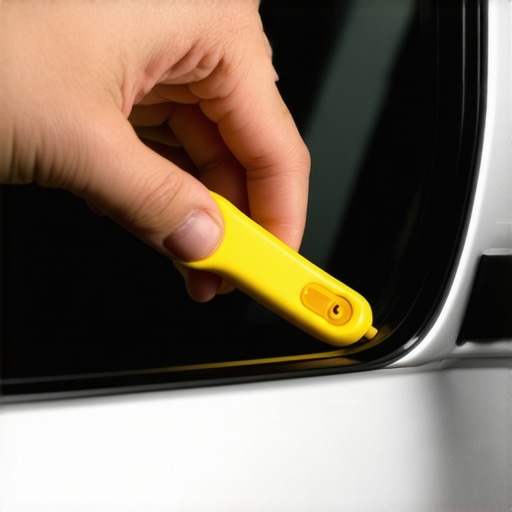
Wipe Away the Gunk Holding Your Gears Back
Inside, you’ll see the actuator—a little plastic box with two motors. If you hear a clicking sound when you hit the switch, your motor is trying, but the gears are slipping or stuck. This is often just road grit, salt, and old grease turned into a thick paste. It’s a lot like why the hidden cause of a clicking sound under your dash is often a struggling plastic blend door. Use a toothbrush and some mild degreaser to clean the pivoting tracks. Once it’s dry, apply a small amount of white lithium grease. This isn’t just about a quick fix; it’s about the same mindset you use to maximize your car’s lifespan with expert tune-up strategies by maintaining the moving parts before they fail completely.
The Multimeter Test for Dead Actuators
If there is no sound at all from the mirror when you toggle the switch, you need to verify if power is actually reaching the motor. Unplug the harness from the back of the actuator and set your multimeter to DC volts. Have a friend toggle the switch while you probe the pins. If you see 12 volts, your motor has officially given up the ghost and needs replacement. Replacing the actuator is usually just three T10 Torx screws. I once tried to ‘rebuild’ an actuator motor by hand—spoiler alert: those tiny copper brushes are nearly impossible to reseat once they pop out. If the motor is dead, just swap the unit. It’s a clean, 10-minute job that saves your sanity.
Stop Trusting the Dash Light for Every Diagnosis
Most drivers treat the ‘Check Engine’ light like an oracle, but the reality is far more nuanced. While a scanner tells you what the computer thinks is wrong, it doesn’t always point to the failed part. For instance, a lean code might tempt you to buy a new mass airflow sensor, but in my experience, it’s usually just a $5 vacuum leak or a cracked intake boot. This is exactly how to tell if your computer is giving you a false error code before you waste hundreds on hardware. According to a 2023 report by CarMD, nearly 10% of engine light issues are related to simple, non-mechanical failures like a loose gas cap. Learning to look past the sensor reading is the hallmark of a true expert. 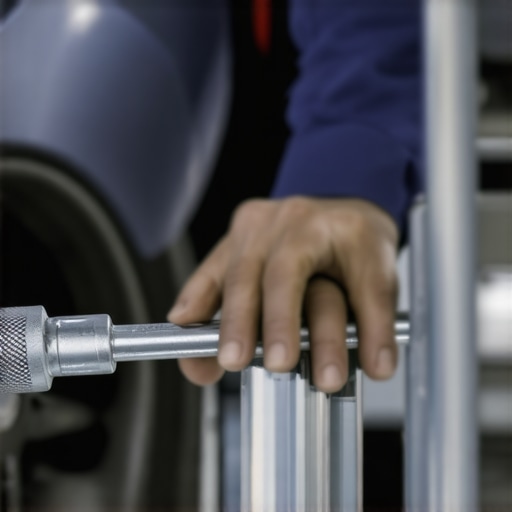
The Fallacy of the Universal 3,000-Mile Oil Change
Everyone says you need fresh oil every 3,000 miles, but that’s an outdated relic from the era of conventional lubricants. If you’re running a modern vehicle with a high-quality lubricant, you’re likely throwing money away. However, the ‘oops’ factor here is switching to high-mileage blends without understanding the chemistry. I’ve seen people transition to synthetic too late, only to find that the detergent properties began cleaning away the very sludge that was keeping their old seals from leaking. It’s vital to understand the truth about synthetic oil in high-mileage engines before making the jump.
Why do your brake rotors keep warping every few months?
This is one of the most frustrating ‘phantom’ repairs. Most shops will tell you the metal warped because of heat, but the hidden nuance is often ‘torque variation.’ If you or your mechanic tighten the lug nuts with an impact wrench rather than a torque wrench, the uneven pressure causes the rotor to flex and wear unevenly. This creates a thickness variation that feels like warping. Getting a handle on understanding brake system repairs means realizing that precision is more important than raw force. If you’ve been through three sets of rotors in a year, check your lug nut torque specs—not just your driving habits.
Keep the Wrong Grease Away from Your Calipers
One of the biggest mistakes DIYers make is using petroleum-based grease on brake slide pins. I’ve made this mistake myself; petroleum causes the rubber boots to swell and seize, which leads to your brakes dragging and your fuel economy plummeting. You must use high-temp silicone-based lubricant. This level of detail is what allows you to maximize your car’s lifespan with expert tune-up strategies. It isn’t just about changing parts; it’s about the chemistry and physics behind how those parts interact. I remember how a simple tune-up fixed my mystery hesitation simply because I cleaned the throttle body and used the correct dielectric grease on the coil packs. It’s those small, professional-grade choices that separate a reliable daily driver from a money pit. Have you ever fallen into the trap of over-repairing something that just needed a simple adjustment? Let me know in the comments below.If you want to move beyond the basics, you need to invest in data, not just sockets. I finally bit the bullet and bought a bidirectional scan tool. Most people think a cheap code reader is enough, but it won’t help you bleed ABS modules or recalibrate a steering angle sensor after a suspension job. When you’re looking at auto repair trends to watch in 2025, it’s clear that software-interfacing is the new essential skill. I personally use an Autel because it lets me toggle individual solenoids, which is a lifesaver for troubleshooting common auto repair issues without a single drop of sweat.
Stop Guessing with a Real OBD2 Scanner
Using a tool that can read ‘live data’ allows you to see exactly what the computer sees in real-time. If your car is stumbling, you can look at the short-term fuel trims. If the percentage is high, you have a vacuum leak; if it’s low, you’ve got a fueling problem. This data-driven approach is the only way to tune up your car for peak performance without throwing parts at a ghost.
Precision is Better Than a Heavy Hand
Beyond electronics, my most trusted physical tool is a split-beam torque wrench. According to SAE International’s J2271 standard on fastener integrity, the precision of your bolt tension directly impacts the fatigue life of your critical components. This is why I never touch a head bolt or a caliper bracket without a calibrated wrench. Unlike the old ‘clicker’ style, the split-beam stays calibrated longer and doesn’t need to be wound down to zero after every use, making it the perfect companion for understanding brake system repairs where even pressure is everything.
How do I keep my high-mileage engine running forever?
It’s about the cumulative effect of small wins. You don’t just ‘do a tune-up’ once and call it a day. You have to maximize your car’s lifespan with expert tune-up strategies by monitoring the health of your fluids and sensors every few months. I’ve made it a habit to perform the 5-minute check to prevent transmission failure every time I rotate my tires. It’s about catching that slight pink-to-brown transition in the fluid before it smells like burnt toast. This proactive approach is the truth about why my car finally hit 200000 miles while others were left on the side of the road. #IMAGE_PLACE_HOLDER_D#
The Future of the Home Garage
Looking toward the future, we’re seeing a shift where ‘repairs’ often mean software updates or sensor cleaning rather than traditional metal replacement. Even so, the mechanical fundamentals—like knowing how to fix a squealing belt using the water spray test—will always be the baseline. If you really want to level up your garage game this weekend, go out and perform that water spray test on your serpentine belt. It’s the fastest way to stop a noise and prove you know more than the guy just guessing.
Hard-Won Truths from My Grease-Stained Driveway
After years of turning wrenches, I’ve realized that the most expensive tool you own is your own ego. Thinking you can skip a step or ‘eye-ball’ a torque spec is how simple fixes turn into weekend-long nightmares. One major takeaway is that cleanliness is actually a repair strategy; removing road salt and old grit from a mirror track or a brake slider is often the entire ‘fix.’ Additionally, never underestimate the power of documentation. I used to think I could remember where every bolt went, but now I take photos of every stage. This habit, combined with following the ultimate car service guide, has cut my repair times in half and stopped the ‘leftover bolt’ anxiety. Lastly, remember that your car talks to you through vibrations and clicks—ignoring a small noise is just giving it permission to become a loud, expensive failure later.
The Toolkit That Actually Saved My Sanity
You don’t need a professional shop to get professional results, but you do need the right gear. Beyond the standard socket set, I swear by my bidirectional scan tool. It moves the conversation from guessing to knowing, which is essential for modern auto repair trends to watch in 2025. I also highly recommend a split-beam torque wrench; it’s the only way to ensure you aren’t the reason why your brake rotors keep warping from uneven lug nut pressure. For chemicals, always keep a tube of high-temp silicone lubricant on hand. Using the wrong petroleum grease is a rookie mistake that can ruin your seals, whereas the right silicone keeps everything sliding smoothly for years. These aren’t just gadgets; they are the foundation of a reliable home garage.
#IMAGE_PLACEHOLDER_E#
Take Control of Your Commute Today
The transition from a ‘car owner’ to a ‘car maintainer’ is a powerful one. It saves you thousands of dollars and gives you a level of confidence that no dealership service center can provide. Whether you are performing a simple tune-up to improve fuel efficiency or tackling a complex mirror actuator swap, the key is to start small and stay consistent. Don’t be afraid of the grease or the learning curve. Every expert was once a beginner staring at a broken part and wondering where to start. Your vehicle is an investment in your freedom—treat it with the respect it deserves and it will reward you with another 100,000 miles of reliability. Master your own car service and you’ll never feel helpless on the side of the road again.
Have you ever solved a ‘major’ car problem with a surprisingly simple five-minute fix? Let me know in the comments below!