

Last Tuesday, I was cruising down the bypass, minding my own business, when the needle hit 60. Suddenly, my coffee was sloshing in the cup holder and my hands were buzzing like I was holding a lawnmower. It wasn’t just a vibration; it was a rhythmic assault on my sanity that seemed to disappear the moment I slowed back down to 50. If you have ever felt that specific, high-frequency shimmy that only shows up once you hit highway speeds, you know how unnerving it is. I have been there, and I have made the expensive mistakes so you do not have to. Years ago, I actually replaced my entire front braking system because I was convinced I had warped rotors, only to find out I was chasing the wrong ghost entirely. Today, we are going to pin down exactly why your car develops this ‘magic number’ shudder and how we can get your ride back to being buttery smooth.
Stop the Shakes Before They Ruin Your Commute
The reason 60 MPH is such a common threshold for vibration is not just bad luck; it is physics. Every mechanical system has a resonant frequency—a specific speed where even a tiny imbalance gets magnified until it shakes the whole frame. When your tires are just a fraction of an ounce off, they might feel fine around town, but once they reach that highway rotation speed, they start acting like a washing machine with a heavy load on the spin cycle. I remember once ignoring a slight shimmy for a month, thinking it was just a bad road surface, until I realized I was shaving miles off my tire life with every mile. Identifying the culprit early is the difference between a cheap fix and a massive car service bill. Have you ever felt that weird buzz through the wheel the moment you hit the highway on-ramp? According to technical data from the Society of Automotive Engineers, even a 0.25-ounce imbalance can create significant centrifugal force at 60 MPH, leading to the exact vibration you are feeling right now. If you have felt this, it is time to stop guessing. We need to look at everything from how to tell if your wheel alignment is off to the way your tires sit on the rim.
Is a professional wheel balance actually worth the hype?
You might be skeptical that a few tiny lead weights clipped to your rim can solve a problem that feels like your engine is falling out. I used to be too. But after troubleshooting common auto repair issues on my own for decades, I have learned that the simplest explanation is usually the right one. While a shudder can sometimes mimic the feel of vibrations at 55 mph, the 60 MPH mark is the classic signature of tire imbalance or a failing CV joint. Don’t let a mechanic talk you into a whole new front end before you have checked the basics.
Determine if the Problem is in the Front or Rear
The first thing you need to do is pay attention to where exactly the vibration hits your body. If the steering wheel is dancing in your hands like a caffeinated toddler, the issue is almost certainly located in your front tires or steering components. However, if the steering wheel stays relatively still but you feel the shimmy through your seat or the floorboards, the culprit is usually sitting in the rear of the vehicle. I once spent three days tearing apart my front brakes only to realize I had a massive clump of dried mud stuck inside the inner barrel of my rear passenger-side rim. It acted like a counterweight in all the wrong ways. Before you spend a dime, get under there with a hose and ensure your wheels are clean of debris. 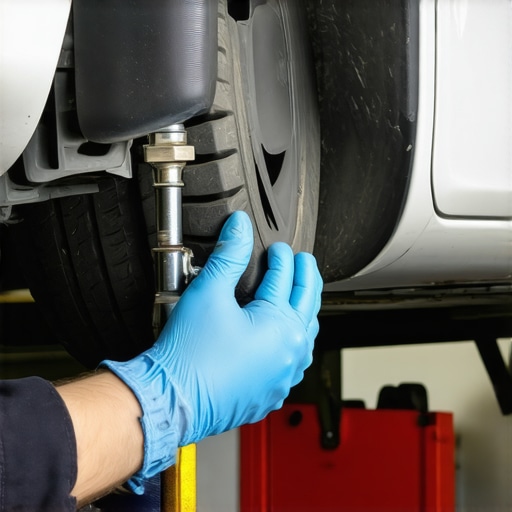
Inspect Your Tires for Hidden Damage
A vibration that only appears at 60 MPH is often the result of a ‘flat spot’ or a broken internal belt. Even if the tread looks deep, tires can develop internal structural failures that only reveal themselves under high centrifugal force. Use the simple trick to finding a nail in your tire tread to see if a slow leak has caused you to run on low pressure, which often leads to sidewall damage. While you are down there, look for ‘cupping’—uneven dips in the tread that look like someone took a small ice cream scoop to your tire. This usually happens when your suspension is tired and allows the tire to bounce down the road. You can perform the simple test for worn-out shocks using your own body weight by pushing down hard on each corner of the car; if it bounces more than once, your shocks aren’t keeping the tires planted, leading to that high-speed buzz.
Test for Play in Your Steering and Suspension
If the tires look perfect, we need to talk about the mechanical links between your hands and the road. Loose components can vibrate at specific speeds when they hit their harmonic ‘sweet spot.’ You can how to check your tie rod ends with minimal tools by jacking up the car and grabbing the tire at the 3 o’clock and 9 o’clock positions. If there is any click-clack movement when you wiggle it, those joints are shot. I remember helping a neighbor who was terrified his transmission was failing because of a highway shudder; it turned out his lower ball joint was so loose the wheel was practically oscillating. By troubleshooting common auto repair issues before visiting the shop, we found the $40 part that saved him a $2,000 ‘mystery’ repair bill.
Rule Out the Brake System and Driveline
While most 60 MPH shakes are tire-related, don’t ignore the possibility of a ‘hanging’ brake caliper. If a caliper doesn’t fully retract, it can create immense heat and a rhythmic vibration. This is a core part of understanding brake system repairs a guide for vehicle owners; if one wheel smells like burnt hair or feels significantly hotter than the others after a drive, you found your ghost. Finally, check your CV axles. If the rubber boots are torn and grease is spraying everywhere, the joint will eventually develop enough play to cause a shudder during acceleration. Keeping a car service checklist how to keep your vehicle in top shape will help you catch these torn boots before they turn into a full-blown highway seizure.Let’s dig deeper into what is actually happening when you feel that rhythmic thrumming. One thing that drives me nuts is the ‘warped rotor’ myth. Most people think their metal rotors have literally turned into a taco shape from heat. However, unless you are racing at Le Mans, rotors rarely warp in the traditional sense. What you are likely feeling is cementite—an uneven buildup of brake pad material that creates ‘high spots’ on the disc. If you do not follow the simple way to bed in new brake pads, you are basically inviting this vibration into your life. This is a classic example of where brake service myths lead to unnecessary spending on parts that are not actually broken. In my years under the hood, I have seen hundreds of ‘warped’ rotors that were just dirty or improperly broken in.
Why does my car still shake after a standard balance?
You take it to the shop, they spin the wheels, say it is ‘zeroed out,’ and yet the 60 MPH shimmy remains. Why? Because a standard spin balance does not account for ‘road force.’ Imagine a tire with a stiff spot in the sidewall; it might be perfectly balanced in the air, but under the 1,000-pound load of your car, it acts like a square. The Tire Industry Association (TIA) emphasizes that Road Force Balancing—which uses a roller to simulate the weight of the vehicle—is the only way to catch internal tire defects or ‘runout.’ If your shop is not using this technology, you are only getting half the story. It is one of those auto repair trends to watch as modern tires become lower profile and more sensitive to minor imperfections. The most common ‘trap’ I see is the over-zealous use of an impact wrench. If a technician hammers those lug nuts on without a torque wrench, they can actually distort the hub or the rotor hat. This is why I always check how to keep your vehicle in top shape by insisting on hand-torquing. Distortion at the hub translates directly into a high-speed vibration that feels identical to a bad tire. 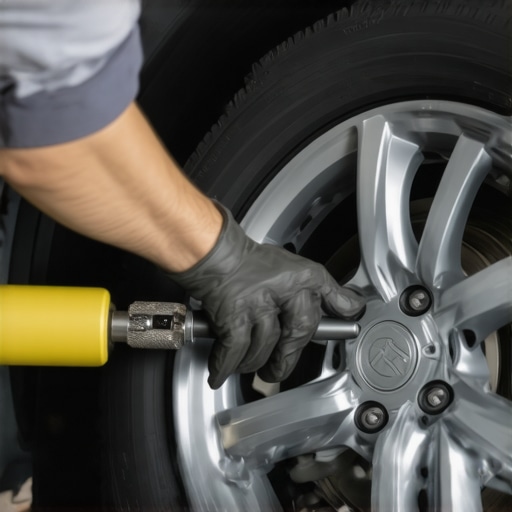 When you are maximizing your car’s lifespan, it is these tiny procedural details that separate an expert fix from a temporary patch. Even a tune-up for peak performance is not just about spark plugs; it is about the mechanical harmony of the entire driveline. Have you ever fallen into this trap and replaced a part only for the problem to stay exactly the same? Let me know in the comments below.
Once you have identified that the 60 MPH shake is likely a balance issue or a mechanical quirk, the real work begins: keeping it from coming back. I have spent too many Saturdays chasing the same vibration twice because I cut corners the first time. The difference between a fix that lasts a month and one that lasts a decade comes down to the precision of your equipment and your commitment to a strict car service checklist. I stopped relying on ‘feel’ years ago when I realized my elbow was not a calibrated instrument. If you want a smooth ride, you have to treat your garage like a laboratory.
Precision tools that stop you from over-tightening everything
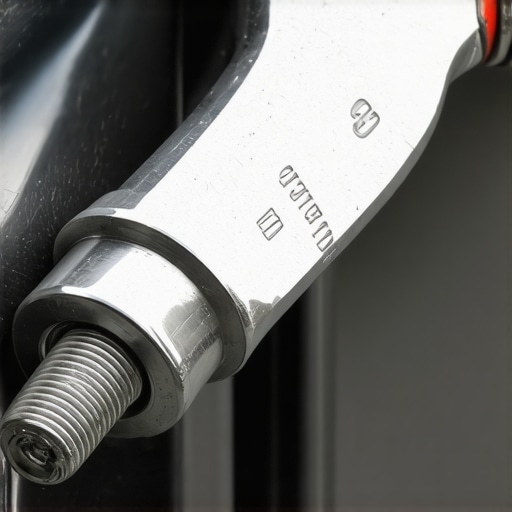
The most important tool in my kit is a high-quality split-beam torque wrench. Most DIYers think torque specs are just suggestions, but uneven pressure on your lug nuts is a leading cause of rotor distortion. When you are understanding brake system repairs, you learn quickly that a hub must be perfectly flat. If you hammer those nuts on with an impact gun, you are practically begging for a vibration. I also highly recommend a digital dial indicator. It allows you to measure ‘runout’—the tiny side-to-side wobble of a rotor or hub—down to the thousandth of an inch. If your hub has more than 0.002 inches of runout, no amount of balancing will ever make that car feel right. It is even useful for the trick to replacing a spark plug without stripping threads, as it helps you stay mindful of the delicate nature of aluminum threads versus steel bolts.
How do I keep my car smooth over the long haul?
Maintenance is not just about reacting to problems; it is about staying ahead of the physics of wear and tear. I make it a point to perform a ‘health check’ every 5,000 miles that goes beyond just oil. This includes maximizing your car’s lifespan with expert tune-up strategies by checking for dry-rotted bushings and leaking struts that could allow a minor tire imbalance to feel like a major earthquake. For technical specifications, I swear by Mitchell 1 DIY, which provides the exact factory wiring diagrams and torque values that the pros use. Using professional-grade data ensures you are not guessing about your vehicle’s specific tolerances. Looking forward, auto repair trends to watch in 2025 suggest we will soon see internal tire sensors that detect balance issues before you even feel them through the steering wheel. Until then, you need to be the sensor. Using a scanner to check live data can even show you if a slight highway shudder is actually a subtle engine misfire, which is how a simple tune-up fixed my mystery hesitation on my last project car. My advanced tip for you today: get a tread depth gauge and how to read the date code on your tires. If your rubber is over six years old, it is hardening, and that loss of elasticity is likely the root of your highway vibration. Go check those four-digit codes right now—it might save you a thousand dollars in unnecessary suspension parts.
What I Finally Realized After Wasting Thousands on Shaky Rides
Over the years, I have learned that a vibration is a language your car uses to tell you something is loose, bent, or out of round. One ‘lightbulb moment’ was discovering that even a brand-new tire can be defective from the factory. If you have ruled out the basics and the shake persists, do not be afraid to question the parts you just installed. Also, I realized that why your car shakes only when you accelerate is a different beast entirely than a constant 60 MPH cruise vibration—knowing the difference saves hours of labor. Finally, never underestimate the power of a clean hub; a single flake of rust between the rotor and the wheel can mimic a warped component perfectly.
The Gear That Actually Saved My Sanity
If you want to move beyond guessing, you need the right resources. I personally rely on the Hunter Road Force® Elite balancer; if a shop does not have one, I keep driving until I find one that does. For documentation, I always refer back to the ultimate car service guide to ensure I am not missing a factory-recommended inspection interval. I also keep a set of chassis ears in my toolbox. These are microphones you clip to the suspension to hear exactly where a noise is coming from while driving. If you suspect a hub issue, learning the secret to diagnosing a bad wheel bearing fast can help you differentiate between a tire hum and a mechanical failure.
Claim Back Your Smooth Commute
You do not have to accept a vibrating steering wheel as a part of your daily life. Whether it is a simple balance issue or a more complex drivetrain problem like why your transmission shudders on the highway, every vibration has a root cause that can be solved with patience and the right diagnostic approach. Take it one step at a time, trust your gut when something feels ‘off,’ and prioritize your vehicle’s health. Your car—and your coffee cup—will thank you for the effort. Have you ever had a vibration that only appeared at a specific speed and vanished as soon as you slowed down? Let me know in the comments below!