

I still remember the cold sweat that broke out on my forehead the moment I felt the wrench go limp. I was nineteen years old, trying to perform a basic car service on my old sedan, feeling pretty proud of myself for dodging the dealership’s labor rates. Then it happened. That sickening, smooth rotation that tells you you’ve just turned a thirty-minute maintenance task into a week-long nightmare involving a tow truck and a helicoil kit. I had cross-threaded the spark plug into an aluminum cylinder head. It was a rookie mistake that cost me nearly two weeks of paychecks, all because I didn’t know the “feel” of the threads. If you’ve ever worried about ruining your engine while trying to maximize your car’s lifespan with expert tune-up strategies, you aren’t alone. Today, I’m going to share the exact method I use now to ensure I never strip another thread, even when working blindly in the back of a cramped engine bay.
Why Aluminum Heads Make This So Dangerous
Modern engines are marvels of engineering, but they are also incredibly fragile compared to the heavy iron blocks of the past. Most cars on the road today use aluminum cylinder heads to save weight and improve heat dissipation. However, aluminum is much softer than the steel of a spark plug. According to the Car Care Council, improper installation is one of the leading causes of avoidable engine damage during routine DIY repairs. If you don’t line those threads up perfectly, the steel plug will win the fight every single time, carving new, destructive paths through your expensive engine head. Have you ever felt that terrifying “crunch” while tightening a bolt and prayed you didn’t just ruin your day? Tell me your most stressful garage moment in the comments.
Is a piece of garden hose really better than a socket wrench?
You might be thinking that using fancy tools is the best way to prevent damage, but the opposite is true. When I first started out, I relied too much on the leverage of a long-handled ratchet. That was my downfall. If you’re wondering how to tell if your spark plugs are fouled by oil or just old, you eventually have to get them out—and more importantly, get the new ones back in. The secret isn’t a better wrench; it’s actually using no wrench at all for the first few turns. Before we dive into the specific mechanics of the “hose trick,” we need to talk about the prep work. Whether you are using budget spark plugs or high-end iridium ones, the threading process remains the same. You need a clean surface and a gentle touch. One of the biggest auto repair issues people face is rushing the re-assembly. I’ll show you how to use a simple length of vacuum line or fuel hose to gain the tactile feedback your heavy metal tools are hiding from you. [IMAGE_PLACEHOLDER]
Master the Rubber Hose Hack for Flawless Threading
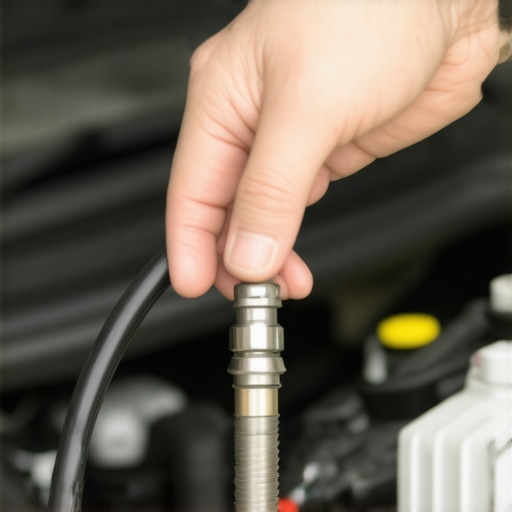
Using a ratchet to start a spark plug is like trying to thread a needle while wearing boxing gloves. You lose all tactile sensation, and by the time you realize something is wrong, the damage is done. The best tool for this job isn’t in your chrome-plated chest; it’s a simple six-inch piece of 3/8-inch vacuum line or fuel hose. This trick is the cornerstone of any car service involving ignition components. You simply push the porcelain end of the spark plug into the hose so it’s held snugly. Now, use that hose as a flexible extension of your fingers to lower the plug into the cylinder head.
The beauty of the hose is that it acts as a mechanical fuse. If the plug starts to cross-thread, the hose will simply spin around the plug or slip out of your fingers. It lacks the torque to carve new threads into that soft aluminum. I learned this the hard way on a cramped 2004 Honda Odyssey. The rear spark plugs were practically in the dashboard, and I was flying blind. By using the hose, I could feel exactly when the threads were clean and when they were resisting. Even if you’ve invested in high-quality spark plugs, they won’t do much for your performance if they aren’t seated correctly.
The Secret Click That Saves Your Cylinder Head
Before you ever turn the plug clockwise to tighten it, there is a counter-intuitive step that most pros use. It’s the “back-turn” method. Once the plug is resting in the hole, rotate it slowly counter-clockwise (lefty-loosey). You are waiting for a distinct, subtle “click” or a tiny drop. That sensation is the start of the plug thread falling into the start of the cylinder head thread. It’s a trick I also use when learning how to torque wheel bolts or dealing with delicate interior screws. Once you feel that click, you know the paths are aligned, and you can safely begin turning clockwise by hand.
Why Hand-Tightening is Your Only Real Safety Net
A common mistake in DIY auto repair is reaching for the wrench too early. You should be able to spin the spark plug all the way down until the gasket or crush washer meets the head using only your fingers. If you feel resistance before the plug is seated, stop immediately. There might be carbon buildup or a stray piece of grit in the way. Forcing it with a tool is a recipe for a multi-thousand-dollar repair bill. Treat it with the same patience you’d use when you replace your own alternator—rushing the small details always leads to bigger headaches. Once it’s finger-tight, then and only then do you break out the torque wrench to finish the job to the manufacturer’s specific foot-pound rating.
Most DIY enthusiasts think that more protection is always better, but in the world of high-performance auto repair, that mindset can be a silent killer. Take the common practice of using anti-seize on spark plug threads. Everyone from your grandfather to the local parts store clerk will tell you to slather those threads in silver goop to prevent them from getting stuck. However, I’ve found that this is often the fastest way to ruin a cylinder head. Modern manufacturers like NGK actually issue technical bulletins stating that their plugs come with a special trivalent zinc chromate plating. This plating is designed to break away and provide its own lubrication during installation. If you add anti-seize on top of that, you are essentially double-lubricating the threads. This reduces the friction so much that your torque wrench won’t click until you’ve already over-stretched the metal. According to technical data from NGK Spark Plugs, applying anti-seize can lead to over-tightening by as much as 30 percent, which is the hidden ‘oops’ factor that leads to snapped plugs or distorted shells.

Why your torque wrench might be lying to you
This brings us to the hidden nuance of the torque wrench itself. We often trust these tools blindly, but a torque wrench measures resistance, not the actual ‘stretch’ of the bolt. If there is debris in the hole or if you’ve used the wrong lubricant, the reading is essentially useless. It’s the same logic I apply when dealing with brake service myths. Many people assume a soft brake pedal is always caused by air in the lines, but a sophisticated technician knows to check for a collapsed internal hose or even the chemical condition of the fluid. If your brake fluid looks like coffee creamer, it’s not just dirty; it’s moisture-contaminated and ready to fail. Whether you’re installing budget spark plugs or high-end components, the trap is assuming that a tool replaces the need for tactile feedback. Have you ever fallen into this ‘extra-protection’ trap? Let me know in the comments.
Stop guessing and start logging your engine data
I used to think a $20 code reader was the height of diagnostic technology. I’d plug it in, see a code for a lean condition, and start throwing parts at the engine. That is the most expensive way to handle auto repair. If you want to move beyond being a ‘parts swapper’ and become someone who actually understands their machine, you need a bidirectional scan tool. I personally use a tablet-based system because it allows me to perform ‘active tests’—like firing individual fuel injectors or checking the operation of the variable valve timing solenoid while the engine is running. This level of detail is essential if you want to know how regular tune-ups improve fuel efficiency and safety without wasting money on sensors that aren’t actually broken.
According to the Society of Automotive Engineers (SAE) in their technical paper J1979, the precision of Mode $06 diagnostic data is what separates a guess from a guaranteed fix. This data shows you the ‘test results’ for components that haven’t failed yet but are on the edge of their tolerances. By checking these ‘monitor’ results during your routine car service, you can see a failing ignition coil weeks before it causes a misfire that leaves you stranded. 
How do I maintain my vehicle’s health over the next decade?
Consistency is the only real ‘magic’ in the garage. I’ve spent years documenting the secret to getting 200,000 miles out of your original engine, and it always comes down to catching small deviations in sensor data before they become hard failures. Don’t just wait for a light on the dash. Every six months, I perform a ‘health check’ where I look at my long-term fuel trims. If the computer is adding more than 10% extra fuel, I know I have a vacuum leak or a dirty mass air flow sensor, even if the car feels like it’s running fine. This proactive approach is the core of any professional car service checklist.
The digital future of your home garage
As we look toward auto repair trends to watch in 2025, it’s clear that the ‘wrench and hammer’ era is fading. We are moving into a period of telematics and real-time wear monitoring. I predict that within the next few years, even budget-friendly DIY tools will include AI-driven ‘predictive maintenance’ features that tell you exactly which bolt is loosening or which bearing is beginning to vibrate at a frequency the human ear can’t detect. The key to staying ahead is learning the software side of your car today. I want you to try this: the next time you have your hood up, don’t just look for leaks. Use a basic scanner to check your coolant temperature and compare it to your dashboard gauge. If they don’t match, you’ve just found a failing sensor before it caused an overheat.
Hard Lessons from My Most Expensive Garage Mistakes
If there’s one thing a decade under the hood has taught me, it’s that patience is a more valuable tool than any impact wrench. When you’re working on a car service, the difference between a successful fix and a disaster is often just five seconds of double-checking. I’ve learned that the click of a torque wrench isn’t a replacement for the feel of a thread. If something feels tight before it should, it usually means something is wrong. I also realized late in the game that cleanliness is non-negotiable; a single grain of sand in a spark plug well can cause a compression leak that mimics a much larger auto repair issue. My biggest lightbulb moment? Realizing that modern cars don’t need more parts; they need more precision.
The Only Three Tools You Truly Need for a Perfect Tune-Up
You don’t need a professional-grade shop to do professional-grade work. My first recommendation is always a dedicated car service checklist to keep your head in the game and ensure no bolt is left loose. Beyond that, I swear by a quality bidirectional scan tool; it’s the only way to see what the engine is thinking in real-time. Finally, keep a five-inch length of fuel hose in your top drawer—it’s the simplest way to maximize your car’s lifespan with expert tune-up strategies by preventing cross-threading in those delicate aluminum heads. These tools, combined with a healthy skepticism of brake service myths, will save you thousands over the life of your vehicle.
Build the Skills to Keep Your Engine Running Forever
Getting your hands dirty is about more than just saving money. It’s about the peace of mind that comes from knowing exactly how your machine works. When you understand how regular tune-ups improve fuel efficiency and safety, you stop being a passenger in your own car’s maintenance history and start being the pilot. Don’t be intimidated by the sensors, the software, or the auto repair trends to watch in 2025. Take it one bolt at a time, and remember that the secret to getting 200,000 miles out of your original engine isn’t a mystery—it’s just consistent, careful attention to detail. Have you ever had a simple repair turn into a weekend-long project because of one stubborn bolt? Let me know your stories in the comments below!