
I walked into my garage last summer and honestly thought I’d left a tuna sandwich on the manifold. The smell was unmistakable—pungent, salty, and distinctly fishy. It wasn’t the lunch I’d forgotten; it was my car screaming for help. If you’ve caught a whiff of a seafood market coming from your engine bay, you aren’t crazy, and you definitely aren’t alone. Most folks assume a weird smell means a dead animal or a spilled grocery bag, but when that scent follows you after a long drive, the culprit is usually buried deep inside your gearbox. Today, I’m going to break down exactly why this happens and why you need to act before your gears turn into expensive metal shavings.
That Stink Signifies a Chemical Meltdown
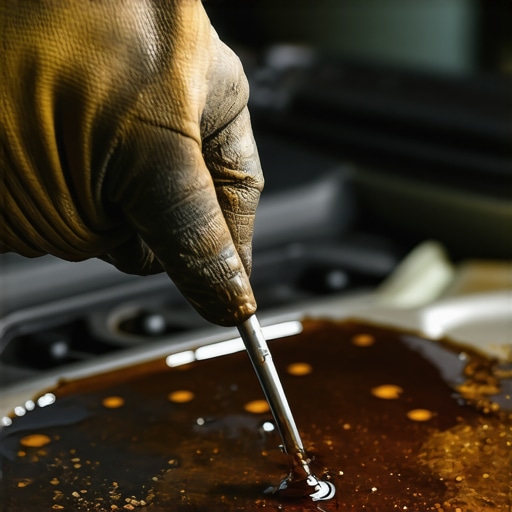
I remember the heat of that August afternoon specifically because the air was so still, it made the smell hang in the garage like a heavy curtain. I was so convinced it was a dead rodent that I spent an hour poking around the radiator with a flashlight. That was my early-career mistake—I was looking for a physical intruder when the problem was actually a chemical collapse happening inside my transmission. It’s a gut-sinking feeling when you realize your neglect has a literal scent. [image_placeholder_1] By the time I actually checked my dipstick, the fluid was as black as coffee and smelled like a burnt harbor. It turns out, transmission fluid contains various additives, including sulfur and organic compounds called amines. When your transmission overheats, these chemicals break down and release that specific oceanic stench. This happens because the fluid’s temperature has likely soared past its stable operating range, causing the protective properties to vanish.
Is this smell actually a death sentence for my car?
Not necessarily, but it is a final warning. That fishy odor is the scent of oxidation. According to the Automatic Transmission Rebuilders Association (ATRA), excessive heat is the primary cause of transmission failure, and once the fluid starts smelling like a dockside market, its molecular structure is compromised. Before you panic and head to the mechanic, try troubleshooting common auto repair issues before visiting the shop to see if you caught it in time. If you’ve noticed that your automatic transmission hesitates between second and third gear, the fluid has likely lost its hydraulic integrity. This isn’t just about a bad smell; it’s about preventing a total mechanical meltdown. Have you ever popped your hood and been hit by a smell that belonged in a sushi bar? Drop a comment and tell me how long you ignored it—I promise I won’t judge, because I’ve been there too. Keeping a solid car service checklist is the only way to catch these chemical breakdowns before they leave you stranded on the shoulder of the interstate. Ignoring that smell is like ignoring a fire alarm just because you don’t see flames yet.
Stop Guessing and Start With the Dipstick
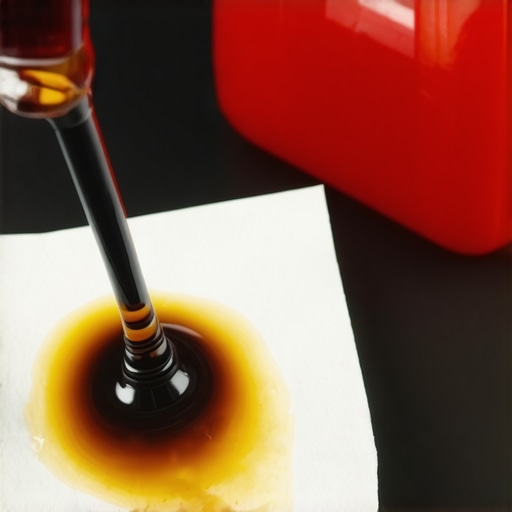
Analogies work best here: your transmission fluid is the lifeblood of the car, but unlike your own blood, it shouldn’t smell like a Tuesday morning at the fish market. I once tried to ignore this scent during a weekend trip to the coast, convinced it was just the salty sea air. By the time I reached my hotel, my car refused to shift into reverse. I had to enlist three strangers to help me push a dead sedan into a parking spot. That embarrassment could have been avoided if I’d just pulled the dipstick. To check yours, let the engine reach operating temperature, keep it idling, and pull the wand out. Wipe it on a clean white paper towel. If the fluid is bright red, you’re golden. If it looks like why your brake fluid looks like coffee creamer or, worse, a dark muddy brown, your additives are toasted.
Don’t Just Dump New Oil Into a Bad System
A lot of guys think a “drain and fill” solves everything, but that’s like putting a fresh shirt on after a three-day hike without taking a shower. You’re just mixing clean fluid with the sludge trapped in the torque converter. If the smell is pungent, you need to determine if you’ve got a mechanical failure or just aged fluid. Use the DIY way to test a transmission solenoid at home to see if your electronics are still talking to your gears. Often, a “fishy” smell accompanies a car that hesitates between second and third, which means your internal seals might be hardening from the heat.
Why You Need a Full System Flush
A full flush uses a machine to cycle out every drop of the old, burnt fluid. While some worry this “dislodges gunk,” that’s usually a myth—if your transmission was held together by gunk, it was already dead. If you find yourself needing a replacement, make sure you know the honest truth about used transmission warranties so you don’t get burned twice. Taking the time for a maximize your cars lifespan with expert tune-up strategies approach means looking beyond the fluid and checking your cooling lines for clogs that caused the overheat in the first place. You need to ensure the system is actually cooling the fluid, or you will be back at square one with a stinking garage in less than a month.
The Old School Tune-up is Dead
Everyone tells you that your car needs a regular tune-up, but if you walk into a shop asking for one on a car built after 2010, you’re likely paying for a phantom service. In my experience, the traditional concept of a tune-up—adjusting carburetors and swapping points—has been replaced by complex data management. Most owners think they just need new spark plugs, but they ignore the software side of the equation. To truly maximize your cars lifespan with expert tune-up strategies, you have to look at fuel trim data and sensor latency, not just physical hardware. A car can run seemingly ‘fine’ while its computer is overcompensating for a vacuum leak, killing your fuel economy long before a check engine light appears.

New Brakes Shouldn’t Smell Like a Barbecue
One of the biggest ‘oops’ factors I see involves the DIY brake job. You finish the work, take a drive, and suddenly you smell something burning. While some people say this is ‘normal seating,’ it often means you skipped a crucial step. If you don’t know the proper way to break in new brake pads and rotors, you risk glazing the pads, which leads to permanent noise and reduced stopping power. If you find the real reason your new brake pads are smoking is a stuck caliper slide pin you neglected to grease, you’ve just wasted a Saturday and a set of parts. Expertise isn’t just about swapping parts; it’s about the chemistry of friction materials.
Is my transmission cooler actually the hidden killer?
Many advanced drivers realize that heat is the enemy, but they fail to account for the efficiency of the heat exchanger itself. According to the Society of Automotive Engineers (SAE), even a 20-degree Fahrenheit increase over the standard operating temperature can cut the life of your transmission fluid by half. This is why a simple flush isn’t enough if your cooling lines are restricted. If you’ve been struggling with the fix for a soft brake pedal that mechanics keep missing or a transmission that still hunts for gears after a service, you need to look at the thermal management system. Modern cars rely on precise temperature windows to maintain fluid viscosity; once you’re outside that window, the additives break down regardless of how ‘new’ the oil is. Have you ever fallen into this trap of replacing parts without checking the system that supports them? Let me know in the comments. Using a tune up your car for peak performance essential maintenance tips approach means being proactive with data, not just reacting to smells and sounds. Remember, how regular tune ups improve fuel efficiency and safety is mostly about keeping those sensors and cooling systems within their factory-specified tolerances.
Buy the Scanner Your Mechanic Does Not Want You to Have
I’ve spent thousands of dollars on tools over the last decade, and if there’s one thing I’ve learned, it’s that a $20 socket set won’t save you from a $5,000 repair bill. You need data. For years, I relied on ‘feel’ and ‘sound,’ but today’s cars are basically rolling laptops. I personally recommend investing in a bidirectional OBD2 scanner. Unlike those cheap readers that just give you a P-code, a bidirectional tool allows you to command the car to perform tasks. I once used mine to determine if the DIY way to test a transmission solenoid at home was enough or if I needed a full teardown. Being able to toggle a cooling fan or a fuel pump with a screen tap is like having a superpower in your garage. If you want to maximize your cars lifespan with expert tune-up strategies, you have to stop guessing and start reading the actual sensor data the car is providing.
Thermal Imaging Is the Only Way to See the Invisible
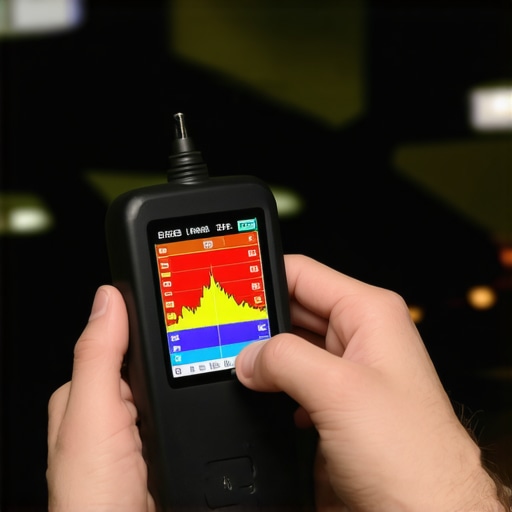
Beyond the digital stuff, my secret weapon is a thermal imaging camera. If you want to know how to spot a coolant leak before your temperature gauge spikes, you stop looking for puddles and start looking for heat signatures. A clogged radiator or a dragging brake caliper stands out like a sore thumb on a thermal screen. This proactive approach is the difference between a minor fix and a catastrophic overheat. I use my thermal camera every time I do a brake service to ensure both sides are cooling at the same rate. This level of precision is how you catch a failing wheel bearing before it starts to howl or smoke on the highway.
How can I maintain my vehicle for the next decade?
Longevity isn’t about luck; it’s about consistency. I tell everyone to follow the ultimate car service guide religiously. You need to be checking things like the hidden benefit of cleaning your mass air flow sensor every time you change your air filter. According to a study published in the International Journal of Automotive Technology, thermal cycling is the primary driver of polymer degradation in modern engine seals. This means your maintenance schedule should be more aggressive if you live in a climate with extreme temperature swings. Looking ahead, auto repair trends to watch in 2025 suggest that predictive AI will soon tell us when a part is failing before it even makes a noise. Until then, you need to be the AI. Grab a scanner, check your car service checklist, and stop guessing. If you’ve never used a bidirectional scanner, go rent one this weekend and run a full system test—it will change how you see your engine forever.
Hard-Earned Lessons from the Garage Floor
If there is one thing a decade of greasy knuckles has taught me, it’s that your car rarely lies to you; it just speaks a language most of us choose to ignore. That fishy smell isn’t a fluke—it’s a plea for help. I’ve learned that fixing a car by just topping off the fluid is like trying to fix a leaky boat with a bucket; you’re managing the symptom, not the cause. Another lightbulb moment for me was realizing that modern vehicles aren’t just mechanical—they’re digital. If you aren’t looking at the data, you’re just guessing, and guessing is expensive. [image_placeholder_final] Most importantly, I’ve realized that a car service isn’t a chore; it’s an investment in your freedom and safety on the road.
The Gear That Saved My Sanity
When you’re ready to move beyond basic wrenches, I highly recommend building a specialized toolkit. First, get a decent bidirectional scanner; it’s the only way to perform a proper the DIY way to test a transmission solenoid at home. Second, I swear by my compact thermal imaging camera for finding those invisible hot spots. Third, keep a printed copy of the ultimate car service guide in your glovebox so you never miss a milestone. Finally, always have a high-quality torque wrench—never guess on wheel bolts or pan bolts again.
Take the Wheel of Your Car’s Health
Don’t let the complexity of modern engines intimidate you. Whether it’s tackling a brake service or simply learning how to spot a coolant leak before your temperature gauge spikes, every small step you take adds years to your vehicle’s life. Being proactive with a car service checklist means you’ll be the one driving while others are stuck waiting for a tow. You have the tools and now you have the knowledge—go out there and show your car some respect. Have you ever smelled something weird under the hood and ignored it only to regret it later? Let me know your story in the comments below!