
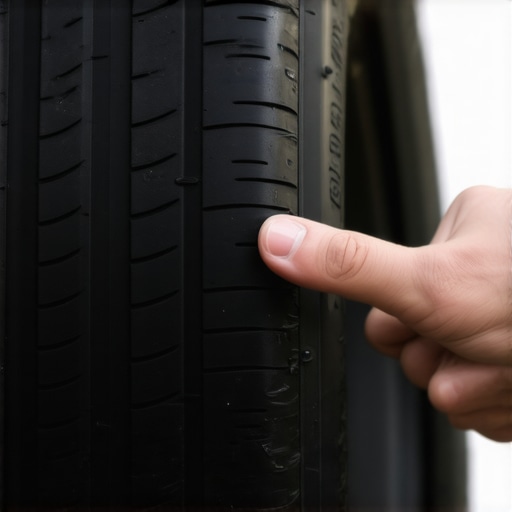
My heart was in my throat as the back end of my sedan started a slow, nauseating slide across the wet pavement of I-40. I had plenty of tread—I’d checked it myself with a penny—so I couldn’t figure out why my car felt like it was wearing plastic skates. It wasn’t until I limped into a shop that a crusty old mechanic pointed at a small four-digit number on the sidewall and told me my tires were eleven years old. To the naked eye, they looked brand new, but the rubber had essentially turned into a hockey puck. I felt like an idiot. I’d spent so much time learning how to tell if your car needs an alignment or new tires based on wear patterns, yet I completely ignored the expiration date. Today, I’m going to make sure you never make that same mistake. We are going to decode the secret language on your sidewalls so you can drive with actual peace of mind, not just the illusion of it. Have you ever checked the actual birth date of the rubber you’re riding on, or do you just trust the tread depth? [image_placeholder_1]
Old Tires Hide Their Weakness Better Than You Think
The biggest mistake I ever made was assuming that “unused” meant “safe.” I bought a set of “new” tires from a guy’s garage once, thinking I was getting a steal. They were shiny, dark, and deep-grooved. But here is the kicker: rubber is organic. It dries out, loses its elasticity, and begins to rot from the inside out the moment it leaves the factory. According to the National Highway Traffic Safety Administration (NHTSA), many tire manufacturers recommend replacing tires every six to ten years, regardless of how much tread is left, because the internal structure simply gives up. If you’ve noticed that the real reason your car vibrates at exactly 55 mph isn’t a balance issue, it might actually be the internal belts of an old tire beginning to separate. It’s a silent failure that a quick visual inspection won’t catch. You need to know the date.
Does the age of the rubber actually matter if the car stays in a garage?
You bet it does. Even if you aren’t hitting the road every day, oxygen is the enemy. It seeps into the tire and hardens the compounds. It’s why the truth about nitrogen in your tires is such a hot topic; it’s all about slowing down that inevitable degradation. Whether you are doing a routine car service checklist or just prepping for a road trip, checking that four-digit DOT code is the most important five seconds of your maintenance routine. It’s the difference between a controlled stop and a catastrophic blowout.
Find the Four Numbers That Save Your Life
To find the age of your tire, you have to look for the letters ‘DOT’ on the sidewall. Following that acronym is a series of letters and numbers, but you only care about the very last four digits in the sequence. I remember helping my neighbor, Steve, prep his old truck for a dump run. He swore the tires were fine because the truck sat in a barn for five years. When we looked, the code was ‘0802.’ That meant those tires were manufactured in the 8th week of 2002. They were over two decades old. As I touched the sidewall, a chunk of rubber literally flaked off in my hand like a dry biscuit. This is a crucial part of troubleshooting common auto repair issues before visiting the shop, as many people mistake age-related vibration for a mechanical failure.
Decode the Week and Year in Seconds
The first two digits of that four-number code tell you the week of the year it was made, and the last two tell you the year. So, if you see ‘3221,’ your tire was born in the 32nd week of 2021. If your tires only have three digits, they were made before the year 2000 and should be treated as museum pieces, not safety equipment. Checking this is as essential as any item on the ultimate car service guide when and why to schedule maintenance. Think of rubber like a rubber band you find in the back of a junk drawer; it might look okay, but the moment you stretch it, it snaps. On the road, that ‘snap’ is a blowout at 70 mph. 
Spot Dry Rot Before It Spots a Curb
Age isn’t just a number; it manifests in physical degradation called dry rot. Look for tiny spiderweb cracks in the sidewalls or inside the tread grooves. If you see those, the structural integrity of the tire is compromised. I once ignored a few ‘minor’ cracks on a set of rear tires because I was trying to save money for understanding brake system repairs a guide for vehicle owners. That ‘savings’ vanished when the tread delaminated on a bridge, taking my fender liner with it. If you aren’t sure if the cracks are dangerous, or if why your low tire light blinks instead of staying solid is driving you crazy, look at the color. Healthy rubber is deep black or dark grey; aging, dangerous rubber often looks ashy or brownish.
Don’t Forget the Forgotten Spare
Your spare tire is the most common victim of neglect. Most people check their main four tires during a car service checklist but leave the spare to rot in the dark. Heat is a major catalyst for rubber breakdown, and the trunk of a car can reach 140 degrees in the summer. A ten-year-old spare tire is essentially a ticking time bomb. If you ever have to use it, you’re putting a brittle, weakened component under maximum stress at the exact moment you’re already having a bad day. Always check that DOT code on the spare at least once a year to ensure your backup plan doesn’t fail you when you need it most.
The Low Mileage Myth That Ruins Engines
Beyond the birthdate of your tires, there’s a broader misconception that often leads to expensive repairs: the ‘Garage Queen’ fallacy. Most people believe a car with low miles is a safer bet, but in my experience, a car that sits is a car that rots. While you might be focusing on how regular tune-ups improve fuel efficiency and safety, a car that hasn’t moved in months is suffering from dried-out seals and stagnant fluids. According to a study by the Car Care Council, nearly 80 percent of vehicles on the road fail at least one component of a basic safety inspection, and a huge chunk of those are ‘low use’ vehicles where owners assumed everything was fine because the odometer hadn’t moved. Rubber components, including belts and hoses, need the heat and movement of regular operation to stay pliable. If you think you’re saving the car by not driving it, you’re actually accelerating its trip to the scrap heap.
Why is my brake pedal still mushy after a professional service?
This is a classic ‘advanced’ problem that leaves many drivers frustrated. You go in for a brake job, pay for premium parts, and yet the car doesn’t stop with that crisp, bitey feel you expected. Usually, this happens because the technician (or the DIYer) skipped the ‘bedding-in’ process. It’s one of the most common brake service myths that new pads are ready for 100% performance the second they are installed. In reality, you need to perform a specific series of controlled stops to transfer a layer of friction material from the pad to the rotor. Without this, you end up with uneven deposits that feel like a warp or a soft pedal. Always ask your shop if they bedded the brakes, or follow the proper way to break in new brake pads and rotors yourself before you hit heavy traffic. If the softness persists, it could be a master cylinder issue or air trapped in the ABS module, which is the fix for a soft brake pedal that mechanics keep missing during a standard bleed.
Ditch the Impact Wrench to Save Your Rotors
Here is a trap that even seasoned car enthusiasts fall into: over-torquing your wheel bolts. We see it at every cut-rate tire shop—a technician with an air-powered impact wrench hammering away until the nut won’t budge. This is a nightmare for your braking system. Over-tightening causes uneven pressure on the brake rotor hat, which eventually leads to lateral runout—that annoying pulsing you feel in the steering wheel when you slow down. People often blame ‘warped rotors,’ but it’s usually just uneven torque. You must use a calibrated torque wrench to ensure every bolt is tightened to the exact foot-pound specification. Learning the proper way to torque wheel bolts without a manual can save you hundreds in unnecessary rotor replacements. Precision beats brute force every single time when it comes to auto repair.
Maintenance isn’t just about checking boxes; it’s about understanding the synergy between these components. Whether you are performing a DIY car service checklist or dropping your car off at a pro shop, being aware of these nuances keeps you in control. Have you ever fallen into this trap? Let me know in the comments.
Put Down the Generic Scanner and Get Specific
I used to think a $20 code reader from a big-box store was all I needed to stay ahead of my car’s problems. I was wrong. Modern vehicles are essentially rolling computers, and if you want to perform a real tune-up for peak performance, you need a tool that can read manufacturer-specific PIDs. I personally switched to a bi-directional scanner because it allows me to test individual components—like cycling the ABS pump—without leaving the driver’s seat. This level of detail is vital for troubleshooting common auto repair issues before visiting the shop. According to the Society of Automotive Engineers (SAE) J1979 standard, diagnostic data is becoming increasingly complex, and having a tool that can parse that data is the difference between a guess and a fix.
How do I keep my car running for 200,000 miles or more?
It’s not about one big repair; it’s about the cumulative effect of small, precise actions. I live by the philosophy of maximizing your car’s lifespan with expert tune-up strategies. For me, that means using a digital torque wrench for everything. When I’m working on my suspension or brakes, I don’t just tighten until it “feels right.” I use the exact specs because even a five-pound difference can lead to vibration or premature wear. If you want the secret to getting 200,000 miles out of your original engine, you have to treat every nut and bolt with that level of respect. It sounds tedious, but it’s the only way to ensure the machine performs as the engineers intended.
The Digital Shift is Coming for Your Garage
As we look at auto-repair trends to watch in 2025, the biggest change isn’t under the hood—it’s in the sensors. We are moving toward a world of “predictive maintenance” where your car tells you a part is failing before it actually breaks. This is why you need to know how to tell if your local mechanic actually has the tools for a proper ADAS calibration. If they are still using old-school methods for a car equipped with lane-keep assist and emergency braking, they might be doing more harm than good. Precision isn’t just for luxury cars anymore; it’s the new standard for everyone. My advice? Grab a digital torque wrench this weekend and re-check your lug nuts using the proper way to torque wheel bolts without a manual—it’s the best way to start building that “precision” habit today.
Lessons Bought with a Tow Truck Bill
After years of turning wrenches, I’ve realized that car maintenance is rarely about the big, flashy repairs. It’s the subtle things that catch you off guard. First, never trust your eyes alone when it comes to rubber. I’ve seen tires that looked showroom-fresh but were hard enough to snap a fingernail because they were a decade old. Second, a car that sits is a car that suffers; your engine and seals need the movement to stay alive. Third, precision is your best friend. Guessing on bolt tightness is how you end up with steering wheel feels loose after an alignment issues or warped components. Finally, remember that the secret to getting 200,000 miles out of your original engine is often found in the small, consistent habits you form today.
The Toolbox Essentials for Every Serious Owner
If you want to move beyond the basics, you need gear that gives you real data. I always recommend a digital torque wrench to ensure your rotors and wheels are perfectly seated. For diagnostics, skip the cheap readers and invest in a bi-directional scanner that lets you perform a real tune-up for peak performance. I also suggest keeping a shortcut to the NHTSA database on your phone; knowing about recalls before your mechanic does is a massive advantage in the world of auto repair. Finally, if you are replacing parts, always follow the proper way to break in new brake pads and rotors to get the most out of your investment and ensure your stopping power is consistent from day one.
Take Control of Your Safety Today
It’s easy to feel overwhelmed by the complexity of modern vehicles, but the goal isn’t to become a master mechanic overnight. It’s about being an informed advocate for your own safety. When you understand maximizing your car’s lifespan with expert tune-up strategies, you stop being a victim of “bad luck” on the road. You’re building a machine that will take you another 100,000 miles with confidence. Proper auto repair is a journey, and you’ve already taken the most important step by learning the secret language of your sidewalls. Drive safe, stay curious, and always trust the data over the “deal.” Have you ever checked your DOT codes only to realize you were driving on ancient rubber? Let me know your story in the comments below!