

I’m sitting at the busiest intersection in town, the AC is blasting, and my 2021 crossover is purring like a kitten. Too much of a kitten, actually. Usually, when I hit this light, the engine cuts out into that eerily quiet ‘eco-mode.’ But today? Nothing. The tachometer needle stayed pinned at 800 RPM. I felt that sudden pit in my stomach—the one that usually precedes a very expensive bill at the local shop. If your car has stopped doing that little ‘dip’ into silence at stoplights, you aren’t alone, and it’s probably not as catastrophic as you think. It’s a frustrating quirk that makes most drivers think their engine is on its last legs, but more often than not, it is just your car being overprotective. Today, I am going to walk you through exactly why your car is choosing to stay awake, from simple settings you forgot to check to the underlying health of your electrical system. Have you ever been stuck at a light, staring at that crossed-out ‘A’ symbol on your dash, wondering if you are burning through cash for no reason? [image placeholder]
Your Car Isn’t Broken Just Because It Keeps Running
When I first noticed my stop-start failing, I skipped the basics in the ultimate car service guide and went straight to panic mode. I actually spent a whole afternoon checking fuses when I should have been looking at my climate control settings. I felt like a total amateur when I realized the only ‘problem’ was that I had my defrost on high—a setting that automatically overrides the system to keep the windshield clear. We have all been there. These systems are like a picky toddler; if the cabin temperature isn’t exactly where you set it, or if the battery is just slightly discharged, the computer decides it is safer to keep the engine spinning. It is not a failure; it is a prioritized decision. Before you rush into a major troubleshooting session, you need to understand that your car is constantly calculating a dozen variables just to decide if it is safe to shut down for thirty seconds.
Is this fancy fuel-saving tech actually killing my battery?
It is the question I get asked more than anything else at backyard BBQs. People are terrified that the constant cranking is going to leave them stranded in the middle of a four-way stop. The truth is, these cars use heavy-duty AGM batteries and reinforced starters designed for hundreds of thousands of cycles. However, while regular tune-ups improve fuel efficiency, they also ensure your charging system is up to the task of supporting these high-demand components. According to a study by the Society of Automotive Engineers (SAE), while these systems can save up to 7% in fuel in heavy traffic, they require a battery state-of-charge often above 75% to even engage. If you have been doing mostly short trips around the block, your car might just need a long highway run or a peak performance tune-up to get the voltage back where it belongs. I learned the hard way that a ‘smart’ car is often smarter than its owner, and most of the time, the system is ‘failing’ specifically to protect your ability to actually restart the car. Let’s dig into the common culprits you can check in your own driveway before you spend a dime at the shop.
Your Battery Needs More Than Just a Spark
To get that engine to cut out at a red light, your battery has to be in peak physical condition. Think of your battery like a marathon runner; if they are even slightly dehydrated, they aren’t going to perform. Most modern cars use an AGM (Absorbent Glass Mat) battery because they handle the constant cycling better than old-school lead-acid types. If your voltage drops below a specific threshold—usually around 12.4 to 12.6 volts while the car is off—the computer will disable the stop-start feature to ensure you actually have enough juice to restart. You need to know how to tell if a battery is just discharged or truly dead before you start replacing parts. I once spent three days wondering why my car stayed running, only to find out a dashcam I’d plugged in was slowly draining the reserve just enough to keep the ‘eco’ mode from ever engaging. 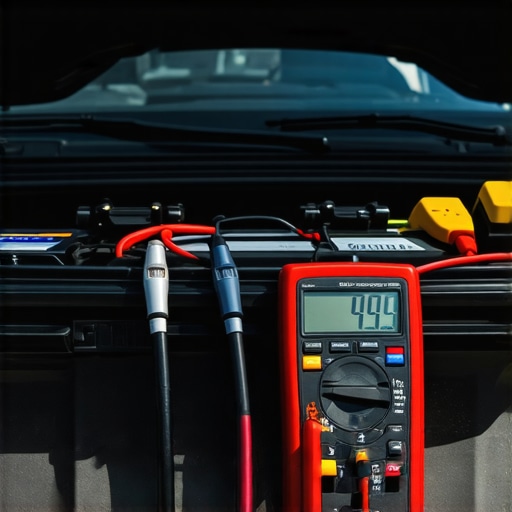
Don’t Fight Your Own Climate Control
Your car’s brain is constantly playing a game of ‘Priority.’ If you have the AC cranked to ‘Max’ on a 95-degree afternoon, the engine simply won’t shut off. It knows that the electric fan and the compressor need that engine spinning to keep you from melting into your leather seats. It is a common reason why your car stalls only when the AC is running or, in this case, refuses to stop idling at all. If the difference between your set temperature and the actual cabin temperature is more than a few degrees, the system stays active. I remember a particularly frustrating week where I thought my sensors were shot, but it turned out I just had the defroster on. Most systems are programmed to keep the engine running if the defroster is active to ensure the windshield stays clear. It’s not a bug; it’s a safety feature.
Why Your Seatbelt Might Be Killing Your Fuel Economy
This is the one that catches everyone off guard. I once had a client bring in a luxury SUV because the auto-stop ‘failed.’ I spent twenty minutes looking for a false error code in the ECU before I realized he wasn’t wearing his seatbelt. For the system to engage, the car needs to confirm that you aren’t going to hop out while the engine is ‘off.’ If your seatbelt isn’t buckled, the driver’s door isn’t fully latched, or the hood is slightly ajar, the system shuts down for safety. Even your brake pedal plays a role. These systems often require a specific amount of vacuum pressure. If you have a ‘mushy’ feel, you might be looking for the fix for a soft brake pedal that mechanics keep missing, which can lead to the computer thinking you aren’t actually at a complete, secure stop.
Search for the Invisible Resistance
If your battery and settings are fine, it’s time to look at the ‘nerves’ of the car. Corrosion on a ground wire can increase resistance just enough to trick the sensors into thinking the electrical load is too high. Learning how to spot a bad ground wire causing electrical issues is a game-changer here. A dirty connection at the battery terminal or a loose wire on the chassis can make the system behave sporadically, working one day and disappearing the next. It’s a mechanical game of ‘telephone,’ and if the signal is fuzzy, the car defaults to keeping the engine running as a fail-safe.Beyond simple wires, there’s a massive mistake I see even seasoned DIY owners make: the registration trap. In the old days, you swapped a battery and went on your way. Now, if you do not tell the computer there is a new power source, it continues to charge at the high-voltage old battery rate, effectively frying your expensive new AGM unit in a matter of months. This is exactly why you need a real expert tune-up strategy rather than just simple parts-swapping. If your vehicle thinks the old, weak battery is still installed, it will keep the stop-start system disabled to save power, even if the new battery is at 100% health. 
Does your car actually know you replaced the battery?
Most drivers do not realize that the Intelligent Battery Sensor (IBS) monitors internal resistance and temperature to calculate the battery’s age. According to the Battery Council International (BCI), modern charging algorithms vary voltage based on battery chemistry and degradation to extend its lifespan. If you skip the registration step, your stop-start system will remain disabled because the computer is still stuck in a fail-safe mode designed for a dying unit. It is one of those common auto repair issues that sends people to the dealership unnecessarily when a simple software reset was all that was needed.
Why 10,000-mile oil changes are a gamble for stop-start engines
Here is the contrarian truth that most manufacturer marketing teams won’t tell you: even if your manual says you can go 10,000 miles between services, you probably shouldn’t, especially with stop-start tech. These engines endure significantly more thermal cycling and internal friction. I have seen countless modern engines where the 10,000-mile oil change interval led to microscopic sludge buildup that clogged the screens in the Variable Valve Timing (VVT) solenoids. When those solenoids clog, your idle becomes unstable, and the computer will immediately disable the fuel-saving features to prevent a stall at a busy intersection. While you are checking your systems, do not forget that your brakes provide the critical vacuum signal for the engine to shut down; if you recently had work done, ensure you followed the simple way to bed in new brake pads to keep the entire system’s feedback loop clean. Have you ever fallen into this trap of following the owner’s manual too closely only to have it backfire? Let me know in the comments.
The One Tool That Stops You From Guessing
If you’re serious about DIY, you need more than a socket set. I personally rely on a bi-directional scan tool like an Autel or Ancel because it’s the only way to perform the ‘Battery Registration’ I mentioned earlier. Without it, you’re just throwing parts at the car and hoping for the best. This tool lets you look at the ‘State of Charge’ (SoC) in real-time. If your SoC is sitting at 65%, the car will never shut off at a red light. By checking this data first, you can follow a car service checklist that actually targets the root cause instead of replacing a perfectly good starter motor. 
How Do I Keep My Stop-Start System Healthy Long-Term?
To keep this tech from becoming a headache once you pass the 80,000-mile mark, you have to treat it differently than a 1995 sedan. First, I recommend moving away from 10,000-mile oil changes and sticking to 5,000-mile intervals. This keeps the Variable Valve Timing (VVT) solenoids free of sludge, which is vital for a smooth, instantaneous restart. Second, keep an eye on your vacuum lines. Since the engine is off at stops, the car relies on a vacuum reservoir to keep your brake pedal firm. If you notice any change in pedal feel, you should dive into understanding brake system repairs because even a pinhole leak in a vacuum hose can disable the entire eco-mode. According to technical documentation from Robert Bosch GmbH, these systems utilize specialized starters designed for up to 300,000 cycles—roughly ten times the durability of standard units—but they only reach that lifespan if the engine isn’t fighting internal friction or poor electrical grounding. You must maximize your car’s lifespan with expert tune-up strategies that include cleaning the throttle body and inspecting ground wires for corrosion twice a year.
The 48-Volt Evolution Is Changing Everything
We are currently in a transitional phase in the automotive world. Most auto repair trends to watch in 2025 point toward the eventual replacement of traditional 12-volt stop-start systems with 48-volt ‘mild hybrid’ setups. These newer systems use a belt-integrated starter generator that makes the transition from ‘off’ to ‘on’ almost imperceptible. However, until you trade in for a 2025 model, staying on top of your current AGM battery health is your number one priority. If you’re currently troubleshooting common auto repair issues related to your engine staying awake at stoplights, I highly recommend grabbing a multimeter and checking your battery voltage after the car has sat overnight. If it is reading below 12.4 volts, skip the complex sensor diagnostics and put that battery on a dedicated smart charger. You will be surprised how many ‘broken’ systems are actually just thirsty for a full charge. Go check your resting voltage tonight; it is the single best way to see if your car is actually struggling or just being cautious.
Secrets I Have Uncovered After Diagnosing Hundreds of Idle Issues
In my two decades under the hood, I have realized that modern engine management is as much about software logic as it is about metal and oil. One of the biggest lightbulb moments I had was seeing how much the danger of leaving your car idling for too long can actually confuse the ECU’s fuel-trim calculations over time. Most owners think they are helping their car by letting it warm up for twenty minutes, but they are actually just shortening the lifespan of their sensors. I also discovered that many ‘broken’ stop-start systems are actually the car’s way of screaming for help before a larger failure happens; if the engine stays on, it might be trying to prevent you from needing to learn how to save your transmission from heat damage during a low-voltage event. The hardest lesson learned? Always trust the battery tester over the dashboard display. Your dash might say the battery is ‘OK,’ but the computer knows the internal resistance is too high to risk an engine shutdown.
#IMAGE_PLACEHOLDER_E#
The Gear That Separates Guesswork from Genuine Repair
If you want to stop guessing and start fixing, you need to curate a toolkit that speaks the car’s language. I personally swear by a digital multimeter with a ‘Min/Max’ setting; it’s the only way to see if your voltage is dipping too low the exact millisecond the starter engages. I also recommend every DIYer keep a copy of a professional car service checklist in their glovebox to track the health of their AGM battery and ground wires over time. For those looking to go deeper, the book ‘Automotive Electrical Systems’ by Bosch is the gold standard for understanding how these stop-start loops are programmed. These resources don’t just help you fix the current problem—they prepare you for the next one before it even happens.
Taking the Fear Out of Your Car’s Brain
It is easy to feel intimidated by a car that seems to have a mind of its own, but these systems are designed to be your ally, not your enemy. By staying proactive with your maintenance, you can maximize your car’s lifespan with expert tune-up strategies that keep every sensor and solenoid firing exactly when they should. Don’t be afraid to dive into your settings or pick up a scan tool; the more you understand the ‘why’ behind your car’s behavior, the more enjoyable and reliable your drive will become. Your vehicle is a high-tech partner, and with a little bit of knowledge, you can keep it running perfectly for years to come. Have you ever had a mysterious dashboard symbol turn out to be something as simple as a loose gas cap or an unbuckled seatbelt? Let me know in the comments below!