
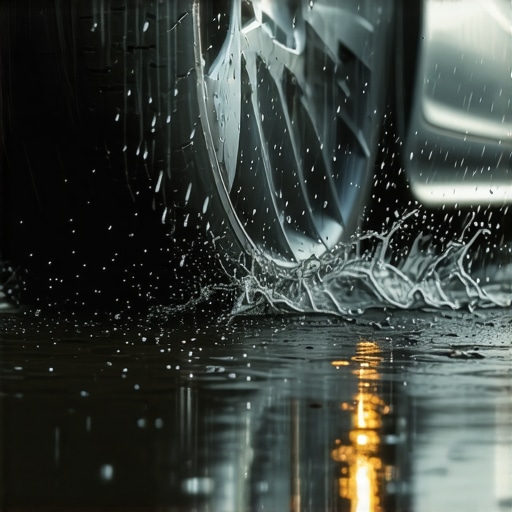
The sky was a bruised purple, and the rain was coming down in those big, heavy sheets that make your wipers work for their lives. I was cruising down the main drag, minding my business, when the light ahead turned yellow. I eased onto the brake pedal. Instead of a smooth slow-down, my entire front end felt like it was trying to shake itself apart. It wasn’t just a vibration. It was a rhythmic, bone-jarring shudder that made my heart skip a beat. I had spent good money on what I thought was a decent brake service just a month prior, yet there I was, sliding toward an intersection with a steering wheel that felt like a jackhammer. That moment of panic changed how I look at my car’s maintenance forever.
Stop Your Steering Wheel from Dancing in the Rain
Most people think a shudder only happens when your rotors are warped, but that is a bit of a myth I had to learn the hard way. On rainy days, the problem is often about how your brake pads interact with a thin film of water and road grime. If you have ever wondered why your car pulses every time you hit the brakes, it is usually because of uneven pad deposits that get aggravated by moisture. I once tried to save fifty bucks by buying the cheapest pads on the shelf. Big mistake. Those pads did not handle the heat-cool cycle of a rainy commute, and they left a patchy mess on my rotors that only showed its true colors when things got wet.
Is it just my imagination or do brakes actually fail more in the wet?
It is definitely not your imagination. According to research on friction materials, the presence of water can significantly alter the friction coefficient between the pad and the rotor, sometimes leading to a phenomenon known as ‘morning sickness’ for brakes. In fact, studies by organizations like the National Highway Traffic Safety Administration (NHTSA) have long highlighted how environmental factors like rain can exacerbate existing mechanical issues, leading to increased stopping distances and unpredictable pedal feel. You are not crazy; your car is reacting to a very real physical change. Today, I am going to pull back the curtain on how to get that glass-smooth stop back, even when you are driving through a monsoon. We are going to look past the basic car service checklist and get into the nitty-gritty of rotor preparation and pad selection. Have you ever felt that terrifying vibration when you are just trying to get home safely in a storm? Tell me I am not the only one who has sat at a red light with white knuckles. Properly understanding brake system repairs is the difference between a relaxing drive and a stressful one. It is not just about stopping; it is about stopping predictably. If you have been putting off a check-up, you might be dealing with more than just old pads—sometimes it is as simple as knowing how to spot a collapsed brake hose in seconds before it ruins your day. Let’s get under the hood to see what is really going on.
Get Your Rotors Ready for the Next Downpour
To stop the “death wobble” in the rain, you have to treat your braking surface like a high-end chef treats a seasoned skillet. If there is any leftover grease, road salt, or old pad material, the water acts as a lubricant for that junk, causing the pads to slip and grab unevenly. I start every brake job by drenching the rotors in brake cleaner. I learned this lesson the hard way when I threw a pair of shiny new rotors onto my old truck without cleaning off the factory shipping oil. Five minutes into the drive, smoke was pouring out of my wheel wells and the pulsation was worse than before I started.
Clean the Surface Like Your Life Depends on It
Think of your rotor as a vinyl record. If there is dust in the grooves, the music skips. In your car, those “skips” are the vibrations you feel in the pedal. You need to strip away any glazing—that shiny, mirror-like finish that happens when pads get too hot. A bit of medium-grit sandpaper used in a circular motion can break that glaze and give the new pads a fresh surface to bite into. This is a critical part of any expert tune-up strategy because it ensures your hardware is actually working together rather than fighting for grip. 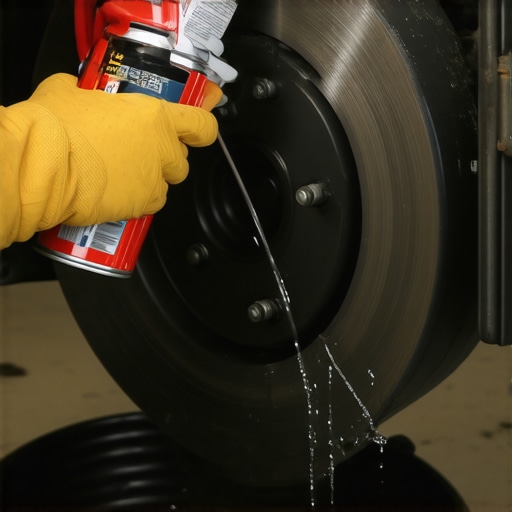
Master the Art of Bedding in Your Pads
Once the hardware is clean, you cannot just drive off and hope for the best. You have to “marry” the pad to the rotor through a process called bedding. This involves a series of controlled stops that transfer a thin, even layer of friction material from the pad to the steel disc. If you skip this, you get “hot spots” where the pad material sticks in clumps, which is exactly why your car pulses every time you hit the brakes. I usually find a quiet backroad and perform five moderate decelerations from 45 mph to 10 mph, never coming to a full stop. For a detailed breakdown, you should check out the simple way to bed in new brake pads to avoid warping your new investment.
Check the Hardware That Does the Heavy Lifting
While you are in there, do not ignore the sliding pins and the caliper itself. If a pin is seized, the pad will press against the rotor at an angle. In the dry, you might not notice it much, but in the rain, that uneven pressure traps water on one side of the rotor, leading to hydroplaning between the friction surfaces. It is just as important as troubleshooting common auto repair issues before they leave you stranded. I make it a habit to look for moisture around the piston seals; knowing how to spot a leaking brake caliper before it fails can save you from a complete loss of hydraulic pressure when you need it most. Use high-temp silicone grease on those pins—standard chassis grease will just melt and turn into a sticky mess that causes the very shuddering you are trying to fix.It is easy to get lulled into a false sense of security by modern marketing. Many manufacturers now claim their vehicles come with ‘lifetime’ transmission or coolant fluids. In my experience, ‘lifetime’ usually means ‘until the warranty expires.’ If you want to see 200,000 miles, you have to ignore those marketing labels. For instance, brake fluid is hygroscopic—it literally sucks moisture out of the air. Even if your pads look thick, that water-laden fluid is boiling and corroding your internals from the inside out. This is a massive part of the ultimate car service guide that often gets ignored because it isn’t ‘broken’ yet. Understanding the real difference between a transmission flush and a drain and fill can be the nuance that saves you five thousand dollars down the road.
Stop Trusting the ‘Lifetime’ Label on Your Fluids
The ‘Oops’ factor often comes when people think a tune-up is still just changing plugs and wires. On modern cars, your computer is constantly ‘trimming’ fuel to compensate for small air leaks or carbon buildup. You might think your car is fine because there’s no check engine light, but if your long-term fuel trims are at 10%, you’re losing power and gas mileage. I’ve seen how a simple tune-up fixed my mystery hesitation just by cleaning a mass air flow sensor and resetting the adaptations. This digital cleaning is just as vital as any mechanical part swap. If you’re relying on a dash light to tell you when to visit the shop, you’re already behind the curve. According to data from the Car Care Council, roughly 80 percent of vehicles on the road are in need of at least one service or repair, often hidden behind ‘normal’ computer adjustments that a DIYer might miss. 
Why a Tune-Up is Now a Digital Game
This is where the hidden nuance of car maintenance really hides. If you are not looking at the data, you are just guessing. Using a professional scanner to see how to tell if your computer is giving you a false error code can prevent you from throwing money at parts that are actually working perfectly.
Can a sub-par brake job eventually ruin your wheel bearings?
In short, yes. This is the advanced nuance most budget shops won’t tell you. If a rotor is even slightly out of parallel—what we call lateral runout—it creates a rhythmic pulse. Over time, that vibration isn’t just annoying; it is hammer-drilling your wheel bearings and suspension bushings. It’s a classic example of brake service myths that suggest the only downside to cheap rotors is a little noise. In reality, you are trading a cheap brake job for a very expensive suspension overhaul. I learned to how to use your ears to find a suspension clunk specifically because I let a ‘pulsing’ rotor go too long and it killed my lower control arm bushings. Have you ever fallen into this trap where a ‘simple’ fix led to a much bigger headache? Let me know in the comments.I spent years working in driveways and cramped garages, and if I have learned one thing, it is that your hands are only as good as the tools they hold. When it comes to preventing that dreaded brake shudder, I stopped guessing and started using a split-beam torque wrench. Most people just ‘ugga-dugga’ their lug nuts with an impact gun, but uneven clamping force is the fastest way to warp a rotor. According to technical bulletins from Akebono, one of the world’s leading friction material experts, improper lug nut torque can lead to disc thickness variation (DTV) in as little as 3,000 miles. This level of precision is the real secret to getting 200,000 miles out of your original engine and its supporting hardware—focusing on precision over raw power.
The Tools That Saved My Knuckles and My Wallet
I also swear by a high-quality OBDII scanner. I am not talking about the twenty-dollar dongles that just clear codes; I mean a tool that shows live fuel trim data. If you want to maximize your car’s lifespan with expert tune-up strategies, you need to see what the computer sees before the dashboard light ever blinks. I used mine last week to find a tiny vacuum leak that was making my idle slightly rough—a fix that cost me two bucks for a new hose instead of four hundred for a new sensor later. It is about being proactive rather than reactive, much like performing a 5-minute check to prevent transmission failure before you notice a slip. #IMAGE_PLACE_HOLDER_D#
How do I keep my brake system healthy over the long haul?
Long-term results come from the small details, like using a stainless steel wire brush to clean the hub surface before the new rotor goes on. If there is even a speck of rust trapped behind that disc, the rotor sits crooked. I also recommend following the trick to replacing a spark plug without stripping threads to ensure your cylinder heads stay healthy during every deep tune-up. As we look at auto repair trends to watch in 2025, we are seeing more ‘brake-by-wire’ systems where software manages the actual pedal feel. This means your physical maintenance—clean fluid and perfect hardware—will be even more critical because the computer will eventually struggle to mask mechanical flaws. My advice for this week? Grab a torque wrench and double-check your wheel lugs. It is a ten-minute task that ensures your ‘shudder-free’ drive stays that way for years to come.
Hard Lessons from My Driveway Disasters
Over the years, I have realized that the most expensive brake job is the one you have to do twice. My biggest ‘lightbulb moment’ came when I discovered that skimping on cleaning is the root of all evil. If you leave even a microscopic layer of oil on a new rotor, you are essentially baking failure into your car. I also learned that the only way to fix grinding brakes without replacing rotors is often just a thorough cleaning of the guide pins and pad shims—not more force. Another hard-earned truth? Don’t trust your eyes alone. A rotor can look perfectly flat but be ‘out of true’ by a hair, which is why I now use a dial indicator for every brake service I perform. Finally, I stopped ignoring the small stuff; I found that the hidden benefit of cleaning your mass air flow sensor during a routine check can improve your idle so much that you’ll stop blaming your motor mounts for vibrations.
The Gear That Keeps Me Off the Side of the Road
To do this right, you need more than just a set of wrenches. I personally swear by a split-beam torque wrench because it doesn’t lose its calibration if you forget to dial it back to zero. This tool is the only way to ensure your lug nuts are tightened evenly, preventing the rotor warp that leads to that terrifying rain-soaked shudder. I also highly recommend a dedicated brake pressure bleeder; it turns a two-person struggle into a five-minute solo job. For the digital side of things, an entry-level scanner that shows live data is non-negotiable. Knowing how to maximize your car’s lifespan with expert tune-up strategies starts with seeing what your oxygen sensors are doing in real-time. Lastly, keep a tub of high-quality ceramic brake grease in your kit—it stays where you put it, even during the hottest summer drives.
Take Charge of Your Shudder-Free Future
Driving should not be a test of your nerves every time a storm cloud rolls in. By taking these small, precise steps, you move from being a passive driver to an active guardian of your vehicle. It is incredibly empowering to hit the pedal in a downpour and feel nothing but smooth, controlled deceleration. Remember, how regular tune-ups improve fuel efficiency and safety is not just about the parts you swap, but the care you take during the process. As we look toward auto repair trends to watch in 2025, keeping your mechanical foundations solid will keep you ahead of the curve. Have you ever felt that rhythmic pulse in your steering wheel when trying to stop in the rain? Let me know in the comments below!