
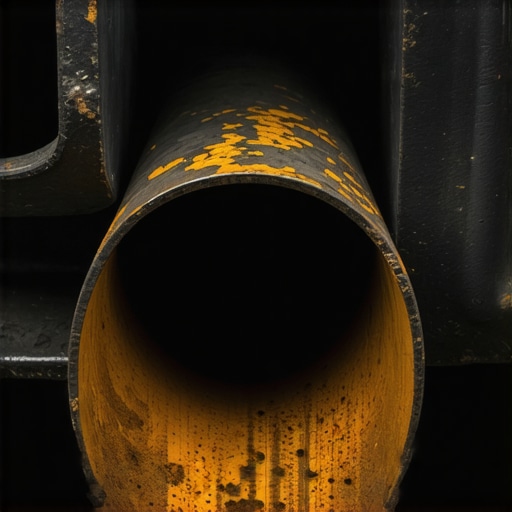
I’ll never forget the morning I pulled out of my driveway and felt like I was dragging a chain-link fence behind me. The noise was unbearable, but looking at my muffler, everything seemed fine. It was shiny, or at least mostly silver, and there weren’t any gaping holes. I felt like I was losing my mind. This is the tricky thing about exhaust systems: they are masters of deception. If you’ve been following the ultimate car service guide, you know that external inspections are only half the battle. You can’t just trust your eyes when your ears are telling you something is very wrong. It’s that low-frequency drone that starts to vibrate your coffee in the cup holder. You check the tires, you check the wheel bearings, but the sound persists. It’s like a hum that follows you everywhere. I once drove 500 miles on a road trip with that sound, convinced my transmission was about to explode, only to find out my muffler’s internal walls had turned into iron oxide flakes.
The Silent Killer Hiding Under Your Floorboards
Internal rust is a sneaky beast. It happens because moisture—a natural byproduct of combustion—gets trapped inside the muffler and just sits there, eating away at the baffles while you’re inside eating dinner. Early in my DIY days, I made the mistake of ignoring a subtle “tinkling” sound; I thought it was just the car cooling down. Turns out, my internal baffles had completely detached and were dancing around inside the shell. I ended up needing a full auto repair session that cost me way more than a simple replacement would have if I’d caught it early. [IMAGE_PLACEHOLDER]
Does Internal Rust Actually Matter if There are No Holes?
You might be skeptical. How can metal that looks solid be failing? Well, science is a bit of a jerk sometimes. According to the Car Care Council, internal corrosion can happen even in dry climates if you mostly drive short distances where the exhaust doesn’t get hot enough to evaporate the condensation. This buildup eventually chokes your engine, causing a massive drop in performance. I learned this the hard way when how a simple tune-up fixed my mystery hesitation turned out to be a temporary fix for a much larger exhaust blockage. We’re going to dive into the exact signs you need to watch for, from the “rattle test” to the “shop-vac trick.” Have you ever noticed your car getting louder over time, or maybe a strange drop in fuel economy that no one can explain? Tell me in the comments, because you might be dealing with a muffler that’s literally crumbling from within. To get started, you might even want to try the secret to finding an exhaust leak with a shop vac.
Stop Guessing and Start Testing Your Exhaust Health
Identifying internal failure requires a bit of tactile detective work. You can’t wait for a hole to appear, because by then, the debris has likely already started backing up your system. Start by safely jacking up your car and securing it on jack stands—never work under a car held only by a jack. Once you have access, it’s time to perform the ‘mallet test’ to see if your muffler has turned into a maraca.
Whack It with a Rubber Mallet
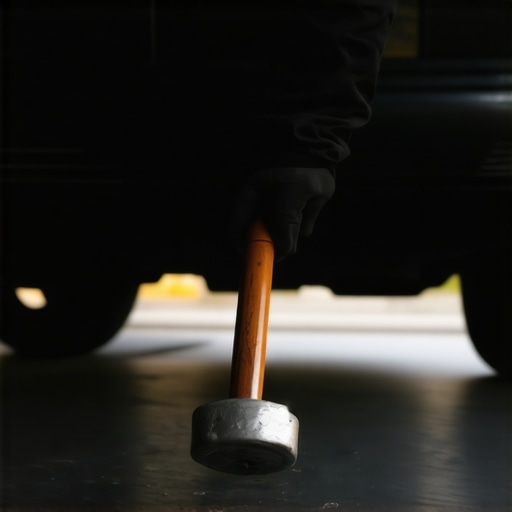
Take a standard rubber mallet and give the muffler body a few firm taps in different spots. You’re listening for a solid, thudding sound. If you hear a metallic ‘tinkling’ or a rattle that sounds like a box of loose gravel, your internal baffles have rusted through and are physically falling apart. I remember chasing a phantom vibration on my 2004 sedan for weeks. I was convinced it was a drivetrain issue and even looked into why your transmission shudders on the highway, only to find out that a three-inch piece of internal exhaust pipe was bouncing around like a pinball inside my resonator. It felt like a mechanical failure, but it was just a loose piece of scrap metal causing a resonant frequency nightmare.
Check for Clogged Flow Patterns
If the internal structure collapses, it doesn’t just make noise—it blocks the exit for exhaust gases. This creates backpressure that makes your engine work twice as hard for half the power. You might think you need a massive engine overhaul, but you should first learn how to tell if your catalytic converter is actually clogged, as the symptoms are nearly identical to a collapsed muffler. A quick way to test this is the ‘hand-feel’ method: with the engine running (and the exhaust cold!), hold your hand a few inches from the tailpipe. You should feel distinct ‘puffs’ of air. If the flow feels weak, steady, and strangely hot, something is obstructing the path inside.
Master the Shop-Vac Pressure Trick
For those who want absolute certainty without getting their hands covered in soot, the secret to finding an exhaust leak with a shop vac is your best friend. By hooking the vacuum hose to the tailpipe on the ‘blow’ setting and spraying soapy water on the muffler, you can see if the internal rust has created micro-fissures you can’t see with the naked eye. This is a crucial step in troubleshooting common auto repair issues before visiting the shop. I once saved myself $400 in diagnostic fees just by showing a mechanic the bubbles forming on a ‘perfectly clean’ muffler seam. It’s about being proactive rather than reactive with your car service checklist.
The Temperature Gradient Test
If you have access to an infrared thermometer, you can find internal blockages by measuring the temperature at the inlet and the outlet of the muffler. Typically, the outlet should be cooler than the inlet. If you find a ‘hot spot’ in the middle of the muffler body, it usually indicates a pile of rust flakes is trapping heat in one area. This is the kind of detail that separates a basic oil change from a true tune-up for peak performance. Ignoring these thermal cues is how a simple exhaust repair turns into an overheated engine.
The Myth of the Lifetime Brake Pad
Common wisdom says if you have “meat” left on your pads, your brakes are fine. I’m here to tell you that’s a dangerous oversimplification. In my years under the hood, I’ve seen countless owners ignore brake service myths that lead to total system failure. The real nuance isn’t the friction material; it’s the hydraulics. Most people assume a soft pedal means they need new pads, but it’s often a sign that you need to know how to tell if your master cylinder is failing internally. When the internal seals perish, fluid bypasses the piston, and no amount of new ceramic material will stop you at a red light.
Why does your brake fluid look like coffee?
Here is the trap most DIYers and even some chain shops fall into: they forget that brake fluid is hygroscopic. It literally sucks moisture out of the air. According to a study by SAE International, brake fluid can absorb significant moisture in a short period, which drastically lowers the boiling point and leads to internal corrosion. This is the “oops” factor that kills calipers from the inside out. You might think you’re saving money by skipping a flush, but you’re actually setting yourself up for a massive bill. I always check for a collapsed brake hose whenever I see uneven wear, rather than just slapping on new parts. 
Master the Bedding Process for Professional Results
Another “hidden nuance” is the bedding-in process. Most people drive away from a brake job and immediately start normal stop-and-go driving. This is a mistake. You need to learn the simple way to bed in new brake pads to transfer a layer of friction material onto the rotor. Without this, you’ll get “warped” rotors—which usually aren’t warped at all, but rather have uneven pad deposits causing a pulse. It’s the same logic behind why how regular tune-ups improve fuel efficiency and safety; it’s about the harmony of the entire system. Have you ever fallen into the trap of thinking a “quick fix” was enough? Let me know in the comments, because these nuances are what keep your car out of the scrap yard and on the road.
I personally won’t touch a car without a bi-directional scan tool anymore to monitor that system harmony. While a $20 dongle can tell you why your check engine light is on, it can’t tell your ABS module to bleed itself or command a fuel pump to turn on for a pressure test. This is the level of detail needed for troubleshooting common auto repair issues before visiting the shop. If you are serious about DIY, you need to understand how to tell if your computer is giving you a false error code by looking at live fuel trims rather than just blindly replacing sensors.

Stop Relying on Cheap Code Readers
Using a professional-grade tool allows you to perform a tune-up for peak performance that actually addresses the root cause. According to the Bosch Automotive Handbook, 11th Edition, the breakdown voltage for spark plugs increases significantly as the electrode gap erodes, which puts undue stress on your ignition coils. A bi-directional tool lets you monitor misfire counts in real-time, even if they aren’t frequent enough to trigger a light. This proactive data is the only way to stay ahead of expensive failures and keep your ignition system healthy.
How do I keep my car running past 200,000 miles?
Longevity isn’t about luck; it’s about fluid chemistry. I’ve seen engines that look brand new inside at a quarter-million miles because the owner followed expert tune-up strategies that prioritize preventative flushes over reactive repairs. You need to look beyond the basic car service checklist and start sending your oil out for laboratory analysis. Knowing the secret to getting 200,000 miles out of your original engine often boils down to spotting microscopic traces of bearing metal in the oil before they cause a catastrophic seizure.
The Coming Wave of Digital Lockouts
Looking toward the horizon, I predict that the biggest challenge for us won’t be mechanical; it will be software. We are already seeing auto repair trends to watch in 2025 that suggest manufacturers are moving toward ‘component matching,’ where even a simple window switch requires a dealer-level computer to ‘handshake’ with the car. This makes our tools and our community knowledge more vital than ever. My challenge to you: Don’t just clear that code next time. Use a scanner to watch the live data stream while the car is idling and see if those O2 sensors are actually switching as fast as they should.
The Hardest Lesson I Learned While Chasing Phantom Brake Shudder
Most people blame the hardware, but I’ve learned that the environment and installation technique are usually the real culprits. For years, I replaced parts when I should have been replacing my habits. Here are the lightbulb moments that changed my approach to maintenance:
- Never skip the bed-in process: It is the difference between a smooth stop and wondering why your brake rotors keep warping every few months. It’s not about heat; it’s about pad transfer.
- Fluid is a wear item: Moisture is your brake system’s silent enemy. If you’re feeling a soft response, you’re likely dealing with the hidden culprit behind a spongy brake pedal—old, saturated fluid that is literally boiling under pressure.
- Vibration is a messenger: Your ears are often faster than your scanner. Listen for the metallic pinging of a failing muffler baffle before it becomes a performance-choking blockage. If it sounds like gravel in a tin can, your exhaust is done.
What Is Inside My Diagnostic Go-Bag
You don’t need a professional garage to get professional results, but you do need tools that tell the truth. I rely on three specific items to cut through the guesswork. First, a simple infrared thermometer—it’s unbeatable for finding exhaust hot spots or sticking calipers. Second, a vacuum gauge; it’s old-school but tells you more about engine health than most cheap sensors. Finally, always have a quality torque wrench. I’ve seen too many DIYers struggle because they didn’t know the trick to replacing a spark plug without stripping threads. These tools turn a basic understanding of brake system repairs into a practical skill you can rely on every single weekend.
Stop Being a Passenger in Your Own Maintenance
Taking control of your vehicle’s health is about more than saving money; it’s about the confidence that comes with knowing every bolt and fluid level is exactly where it should be. Don’t just follow a generic car service checklist—try to understand the ‘why’ behind each task. Whether you’re learning how to check your power steering fluid the right way or diagnosing a crumbling muffler from the inside out, you’re building a relationship with your machine that lasts 200,000 miles and beyond. Have you ever found a major mechanical problem just by listening for a strange noise or feeling a tiny vibration? Let me know what you discovered in the comments below!