
I was cruising down I-77, coffee in the cup holder and a podcast playing, feeling like I had everything under control. Then, a ladder fell off the back of a contractor’s truck right in front of me. I mashed the brake pedal with everything I had. Instead of stopping in a straight line, my sedan took a violent, unprompted dive toward the right-hand guardrail. My heart didn’t just skip a beat; it did a full Olympic floor routine. I managed to keep it on the road, but the car and I weren’t on speaking terms for the rest of the drive. It felt like the steering wheel was being ripped out of my hands by an invisible force.
That Heart-Stopping Moment When the Steering Wheel Fights Back
If you have ever felt that scary tug to the left or right when you are trying to slow down, you know exactly how unsettling it is. You start to doubt your car’s reliability. You might even notice your car drifts to one side during normal highway cruising, but the sheer violence of a pull under heavy braking is a different animal entirely. It is a sign that your vehicle’s safety systems are out of balance. Today, I am going to help you look past the obvious and find the real culprit so you can get back to feeling safe behind the wheel. We aren’t just talking about a little vibration; we are talking about regaining control of your vehicle’s trajectory.
Is a Simple Alignment Really the Problem?
Most people—including me, back when I first started twisting wrenches in my driveway—immediately blame the wheel alignment. I once spent a hard-earned hundred dollars on a precision 4-wheel alignment thinking it would fix my scary braking dive. It did absolutely nothing. While knowing if your wheel alignment is actually off is important for preventing tire wear, it rarely causes a pull that *only* happens when you hit the brakes. If the car drives straight as an arrow until you touch that pedal, you aren’t looking at an alignment issue. You are looking at a hydraulic or mechanical failure within the brake system itself. Have you ever had your car try to change lanes on you the second you applied pressure to the stop pedal? I’d love to hear your story in the comments.
The Hidden Mechanical Gremlin in Your Brake Lines
The real reason for this behavior usually boils down to uneven pressure. If your front-left brake is working at 100% capacity but the front-right is only grabbing at 60%, the car is naturally going to pivot toward the stronger side. It is basic physics. According to data from the National Highway Traffic Safety Administration (NHTSA), brake-related issues are a factor in roughly 22% of crashes caused by mechanical failure, often due to neglected maintenance. Often, this happens because of a seized caliper piston or a slide pin that hasn’t seen grease in five years. You can often spot a leaking or failing brake caliper if you know the telltale signs of wetness around the seals, but sometimes the failure is invisible and internal. For instance, an old brake hose can actually collapse on the inside, acting like a one-way check valve that holds pressure on one wheel while the other side releases. I have seen folks replace every single part of their brake system only to realize they could have spotted a collapsed brake hose in seconds with a simple temperature test. Let’s dig into how we can narrow this down without throwing parts at the problem.
Stop Throwing Parts and Start Testing
To find out why your car is trying to change lanes every time you hit the brakes, you have to stop guessing. Think of your brake calipers like a pair of hands grabbing a spinning bicycle wheel. If one hand is weak or oily, the wheel will lurch toward the stronger hand. Before you run to a shop, you should be troubleshooting common auto repair issues before visiting the shop. The most effective way to start is by comparing the two front wheels. If the car pulls left, the right side is likely the failure point—it isn’t doing its share of the heavy lifting.
Read the Wear Pattern on Your Pads
Pull your wheels off and look at the brake pads side-by-side. If the pads on the driver’s side are significantly thinner than the passenger’s side, you have found your imbalance. This isn’t just about friction; it is about heat and pressure. Often, people fall for brake service myths that suggest pads always wear evenly. They don’t. A pad that looks brand new while its partner is metal-on-metal tells you that the caliper is seized or the slide pins are stuck. I once worked on an old truck where the inner pad was shredded to the backing plate while the outer pad looked factory-fresh. The culprit? A slide pin so rusted it required a torch to move. Keeping a car service checklist helps you catch these dry pins during tire rotations before they ruin your rotors.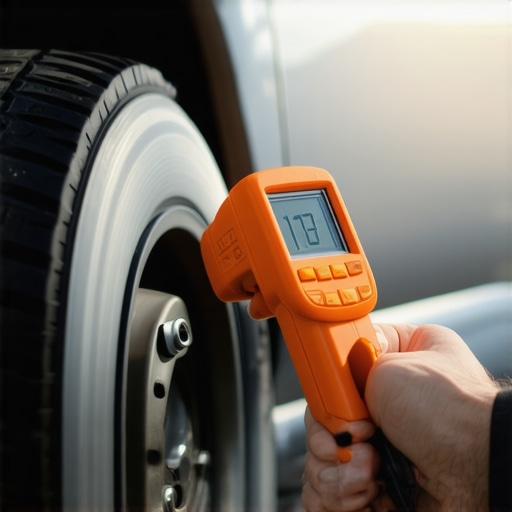
The Simple Temperature Trick That Saves Money
I remember a particularly frustrating afternoon with a sedan that wouldn’t stop straight. I had already replaced the pads and rotors, yet the pull remained. Instead of buying a new master cylinder, I grabbed an infrared temperature gun. After a few hard stops, I measured the rotor temperatures. The left rotor was 250 degrees; the right was barely 100. That 150-degree difference was the smoking gun. If you don’t have an IR gun, you can carefully feel the heat radiating from the wheels (don’t touch them!). This test helps you confirm if fluid is actually reaching the caliper. If it is cold, you might need to know how to tell if your master cylinder is failing internally or if a hose is blocked.
Look for the Swelling in Your Brake Hoses
Brake hoses are the most overlooked part of the system. Over time, the rubber degrades from the inside out. This creates a flap of rubber that acts like a heart valve, letting fluid go in but not come out—or blocking it entirely. You can spot a collapsed brake hose in seconds by having a friend pump the brakes while you watch the hose. If it swells or moves significantly, it’s done. This is a critical part of understanding brake system repairs because a bad hose can mimic a bad caliper, leading you to spend money on the wrong part. Always check for cracks or wet spots where the rubber meets the metal fittings. If the hose feels soft or ‘spongy’ compared to the other side, replace it immediately to restore balanced pressure across the axle.The myth of the ‘warped rotor’ is perhaps the most persistent lie in the automotive world. I have seen countless drivers throw money at new rotors every six months because they feel a vibration or a pull, convinced the metal has somehow melted and bent. In reality, cast iron rotors rarely warp under street driving conditions. What you are likely feeling is Disc Thickness Variation (DTV). According to technical researchers at the Friction Materials Standards Institute, most brake pulsations are caused by uneven pad material transfer, not bent metal. When you don’t use the simple way to bed in new brake pads, you end up with ‘hot spots’ of cementite—an ultra-hard iron carbide—forming on the rotor surface. This creates an uneven surface that feels like a warp. It is one of those brake service myths that keeps the parts stores in business. 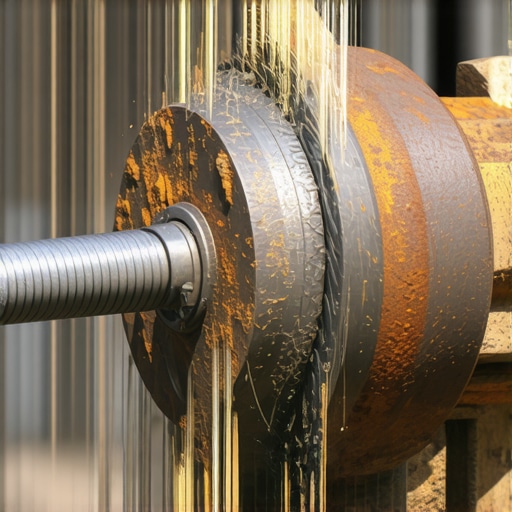
Can a Dirty Hub Ruin Your Brand New Brakes?
Here is the ‘oops’ factor that most DIYers and even some professional shops miss: lateral runout. If you do not use a wire brush to clean every speck of rust off the wheel hub before sliding on a new rotor, that rotor will sit at a microscopic angle. Even a piece of rust the thickness of a human hair can cause the rotor to wobble. Over a few thousand miles, that wobble causes the pads to hit the rotor unevenly, eventually leading to the dreaded pulsation. This is why expert tune-up strategies always include cleaning mating surfaces. If you ignore this, you will be asking why your brake rotors keep warping every few months despite buying the premium brand. Beyond the brakes, how regular tune-ups improve fuel efficiency and safety often comes down to these small, meticulous details that prevent premature part failure. Have you ever fallen into this trap of replacing the same part twice? Let me know in the comments.
Stop Over-tightening Your Wheels with an Impact Gun
If there is one tool that has saved my sanity (and my rotors), it is the torque wrench. Most people think ‘tighter is better,’ but when it comes to wheel lugs, that is a dangerous lie. If you use a heavy-duty impact wrench to zip your lug nuts on without a care, you are almost guaranteed to create uneven clamping force. This uneven pressure actually pulls the hub and rotor out of alignment, leading right back to the vibration issues we discussed. I personally use a split-beam torque wrench because it doesn’t need to be turned back to zero after every use, making it faster to maximize your cars lifespan with expert tune-up strategies. It is the only way to ensure your wheels are mounted perfectly flat against the hub.
Invest in a Dial Indicator for True Precision
If you really want to get technical, you need a dial indicator. This is a small gauge that measures movement in thousandths of an inch. By mounting it to your steering knuckle and spinning the rotor, you can see exactly how much ‘wobble’ or lateral runout you have. As noted in Brembo’s official technical documentation, even a tiny amount of runout—often less than .002 inches—can cause the pads to knock against the rotor as you drive, leading to thin spots. This is how you debunk those common brake service myths once and for all. Seeing the needle move on the gauge gives you the data you need to decide if you should clean the hub more or replace the rotor entirely. 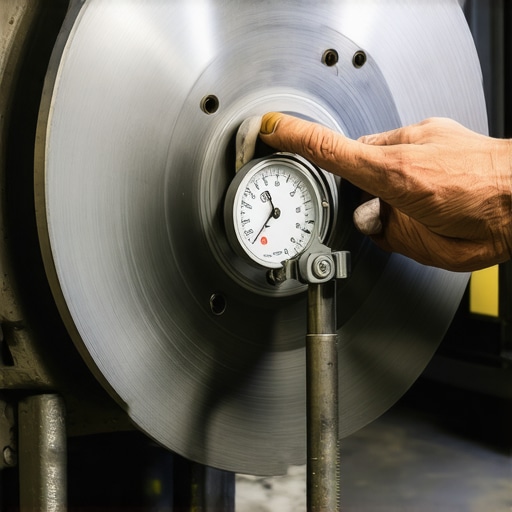
How can I keep my braking system smooth for years?
Maintaining your brakes long-term is less about buying the most expensive ceramic pads and more about the fluid. Most drivers ignore their brake fluid until the pedal hits the floor, but that fluid is ‘hygroscopic,’ meaning it literally sucks moisture out of the air. This water leads to internal corrosion in your calipers and ABS module. I recommend using a simple copper-strip test or an electronic fluid tester every spring to check the health of your system. Including a fluid check in your car service checklist prevents the expensive failures that happen when old, wet fluid boils under heavy braking. If you want a car that stops as well at 100,000 miles as it did on day one, you have to follow the ultimate car service guide when and why to schedule maintenance religiously.
The Shift Toward Brake-by-Wire Systems
Looking ahead, the way we interact with our brakes is changing. We are moving toward ‘brake-by-wire’ systems, where there is no physical connection between your foot and the master cylinder. Instead, sensors detect your pedal pressure and tell a computer how much hydraulic force to apply. While this sounds complex, it allows for much more precise control and better integration with regenerative braking in EVs. Keeping an eye on these auto repair trends to watch in 2025 will help you understand why your next car might feel a bit different when you hit the stop pedal. For now, I want you to try this: the next time you have your wheels off, take five minutes to wire-brush your hub surfaces until they shine. It is an advanced tip that costs zero dollars but makes a world of difference. If you have questions about a specific tool or a weird noise, feel free to contact us and let’s figure it out together.
The $500 Mistake I’ll Never Make Again
The hardest lesson I ever learned in my driveway wasn’t about a complex engine rebuild; it was about a simple $10 bottle of brake fluid. I spent weeks chasing a pull to the left, replacing calipers and pads, only to find out the fluid was so contaminated with moisture it was causing the internal seals to swell and seize. Now, I never skip a fluid health check during my car service checklist routines. I also realized that while many folks focus only on the big components, the hidden benefit of rotating tires every 5000 miles is that it gives you a prime opportunity to inspect those slide pins for rust before they freeze up. Don’t be like me and ignore the small signs—a tiny vibration today is a failed inspection tomorrow. Your brakes are only as good as the maintenance you put into them.
The Gear That Keeps My Garage Running
If you are serious about your own understanding brake system repairs, there are three things I never work without. First, a high-quality infrared thermometer; it is the fastest way to find a ‘lazy’ caliper without getting your hands dirty. Second, a dedicated wire brush set to ensure your hubs are clean enough to eat off of—this prevents 90% of the pulsation issues people misdiagnose as warped rotors. Finally, always follow tune-up your car for peak performance essential maintenance tips by using a calibrated torque wrench for your lug nuts. I personally trust brands that provide a certificate of calibration because precision is everything when it comes to stopping power and balanced clamping force.
Take Back Control of Your Drive
Driving shouldn’t be a wrestling match with your steering wheel every time a light turns red. When you take the time to address these mechanical imbalances, you aren’t just fixing a machine; you’re ensuring that you and your family stay safe during an emergency maneuver. I have seen personally how a simple tune-up fixed my mystery hesitation and restored a driver’s confidence, and your brake service is no different. You have the tools and the knowledge now to stop guessing and start fixing with precision. If you run into a snag or a bolt that just won’t budge, don’t hesitate to contact us for guidance. Have you ever felt your car take a terrifying dive toward the shoulder when you hit the brakes? Let me know your experience in the comments below!