
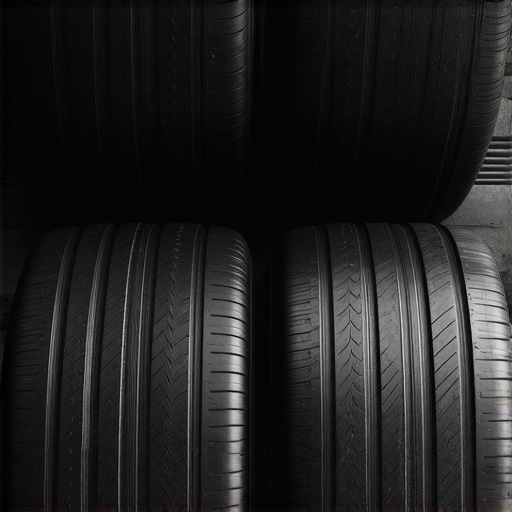
I remember standing in my driveway, staring at my front passenger tire and feeling like a complete idiot. I had just bought those tires eighteen months prior, and the tread on the outer edge was already balding like a middle-aged accountant. Meanwhile, the rear tires looked brand new. I’d convinced myself that the 5,000-mile rotation rule was just a clever marketing ploy to get me into the shop more often. I was wrong, and that stubbornness cost me a cool four hundred bucks for a premature pair of replacements. Dealing with troubleshooting common auto repair issues is much easier when you aren’t the one who caused them by being cheap. Today, I want to show you why that 5,000-mile mark is actually the ‘sweet spot’ for your wallet and your safety.
My Expensive Lesson in Front-Wheel Physics
Most of us drive vehicles where the front tires do all the heavy lifting. They handle the steering, most of the braking, and usually the engine’s power. If you leave them there for too long, they get chewed up while the rears just along for the ride. I made the classic mistake of thinking that because my car felt fine, the tires were fine. It wasn’t until I noticed the real reason your car vibrates at exactly 55 mph that I realized my tread was unevenly worn. By then, it was too late to save them. Following a solid car service checklist would have saved me a lot of grief. According to research by the NHTSA, tire-related crashes are often preventable through simple maintenance like proper inflation and regular rotation.
Is Rotating Tires Every 5,000 Miles Actually Necessary?
You might be thinking that 5,000 miles comes up awfully fast, especially if you have a long commute. Is it really worth the hassle? In my experience, yes. If you wait until the 10,000-mile mark, the wear patterns on the front tires can become ‘set,’ meaning even after you move them to the back, they’ll never quite ride smooth again. I used to think it was just a way to upsell a tune up for peak performance, but it’s actually the cheapest insurance policy you can buy for your car. Have you ever noticed your steering wheel pulling slightly or felt a weird rhythm through the floorboards lately? If so, tell me about it in the comments; I’ve likely ignored that same sound before! We are going to dive into how this simple habit extends your tire life by years and keeps your wheel alignment from feeling like a wrestling match.
Moving the Rubber Around the Right Way
When you get the car up on jacks, you aren’t just playing musical chairs with your tires. For most front-wheel-drive vehicles, the engine’s weight and the friction of steering act like a belt sander on your front tires. To combat this, the ‘Forward Cross’ is the gold standard: move the front tires straight back to the rear, and bring the rear tires up to the front, but swap their sides. This ensures every inch of that rubber eventually sees every corner of the asphalt. It is like rotating a mattress, but with much higher stakes for your expert tune-up strategies. If you have ‘directional’ tires, which usually have an arrow on the sidewall pointing toward the front of the car, you can only move them front-to-back on the same side. Get this wrong, and you will deal with noisy tires that sound like a swarm of bees following you down the highway.
Peek at Your Pads While the Wheels are Off
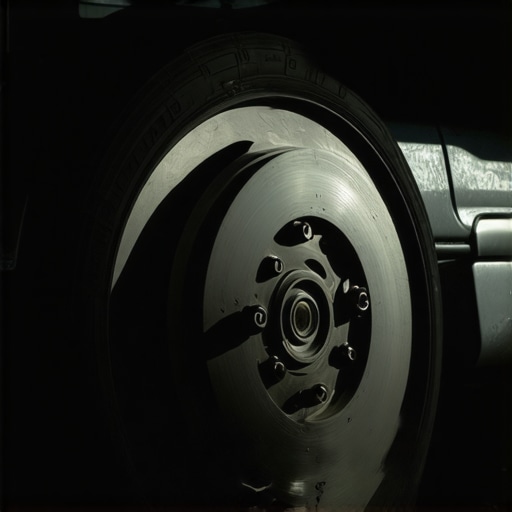
The best part about rotating your tires is that the ‘scary’ parts of your car are suddenly exposed. Don’t waste the opportunity to play detective. While the wheel is off, look at your brake pads. If they look thinner than a couple of stacked quarters, you are heading toward a grinding brake nightmare. I once ignored this and ended up needing a full brake system repair because the metal backing plate started eating my rotors. It takes ten seconds to check, and it saves you hours of labor later. Check for any wetness around the calipers too; a leak there is the primary reason for dropping brake fluid levels without a puddle on the driveway.
Tighten Them Down Like a Pro
I will never forget the time I changed a flat on the side of I-77. I was in such a rush that I just cranked the lug nuts as hard as I could with the trunk wrench and called it a day. Three days later, I felt a rhythmic ‘thump-thump’ and realized my front left wheel was wobbling because the bolts had stretched and loosened. I did not use a torque wrench, and I almost paid for it with a detached wheel on the highway. You must use the proper way to torque wheel bolts to ensure they stay seated. It is not about ‘strong-man’ strength; it is about precision and following a star pattern. If you have just put on fresh parts, make sure to follow the simple way to bed in new brake pads to get that stopping power perfect immediately.
Why Your Front End Might Still Feel Weird
Even with a fresh rotation, if your car still pulls to one side, you might have an issue deeper than just tread wear. This is when I tell people to look at their suspension components. Give your shocks a quick visual check for any oily residue. If they are leaking oil, they are not doing their job of keeping your tires firmly planted. This is all part of a smart car service checklist that prevents tiny issues from becoming bank-account-draining disasters. Keeping an eye on these small details is the difference between a car that lasts 100,000 miles and one that makes it to 300,000. When you stay ahead of the curve with scheduled maintenance, you are the one in control of your car’s lifespan.
But here is the thing: scheduled maintenance isn’t just a simple checklist from the 1980s anymore. A modern tune up for peak performance involves way more than just swapping out a few spark plugs. Most people think a tune-up is a ‘one and done’ event, but in my experience, the true experts focus on the sensors and fluids that the manufacturer often labels as permanent. If you really want to maximize your car’s lifespan, you have to look past the marketing. Have you ever fallen into the trap of believing a part was ‘maintenance-free’? Let me know in the comments; I know I have!
Stop Falling for the Lifetime Fluid Trap
One of the biggest myths currently circulating in the automotive world is the concept of ‘lifetime’ transmission fluid. Manufacturers often claim you never need to change it, but talk to any high-mileage driver, and they will tell you otherwise. Over time, heat and friction break down the additives, leading to internal wear that no ‘lifetime’ promise can fix. When you do decide to service it, you need to know the real difference between a transmission flush and a drain and fill. A full flush on an older car can actually dislodge debris that clogs delicate valves, while a simple drain and fill is much safer. Research from the Car Care Council suggests that neglected maintenance is the primary culprit behind the majority of roadside failures, and fluid degradation is at the top of that list. Understanding these tune-up benefits for fuel efficiency starts with realizing that no fluid lasts forever.
Is Your Brake Fluid Secretly Killing Your Master Cylinder?
Another advanced nuance most DIYers miss is the hygroscopic nature of brake fluid—meaning it literally sucks moisture out of the air. You might have plenty of fluid in the reservoir, but if it has absorbed water, it will boil under heavy braking and corrode your system from the inside out. This is often the hidden culprit behind a spongy brake pedal that most people ignore until it is too late. If you wait until you feel a sink in the pedal, you might need to learn how to tell if your master cylinder is failing internally. Don’t let yourself get caught in the middle of common brake service myths; changing your fluid every two years is much cheaper than replacing the entire hydraulic system.
Why Your Car Still Pulls After a Fresh Alignment
It is incredibly frustrating to spend money on a professional alignment only to find your car still drifting toward the shoulder. Advanced readers should know that an alignment only adjusts the angles of the wheels; it doesn’t fix worn-out rubber bushings or a failing steering rack. If you’ve just come off the rack and things still feel ‘off,’ you might be dealing with why your steering wheel feels loose after an alignment. Often, the issue is ‘radial pull’ from a tire that has developed an internal defect, or a missing mechanical fix that the technician overlooked. Following a comprehensive car service guide ensures you aren’t just throwing parts at a symptom, but actually solving the root cause of the problem.I used to think that having a big toolbox meant I was a real mechanic, but I quickly learned that the most powerful tool in my garage weighs less than a pound. If you are tired of being at the mercy of a dealership’s diagnostic fee, you need to invest in a high-quality OBD-II scanner. I’m not talking about the five-dollar ones from the bargain bin; I mean a bidirectional tool that can actually talk to your car’s computers. This is the first step in troubleshooting common auto repair issues before you even think about getting your hands greasy. When I started using one, I stopped guessing which sensor was bad and started actually fixing the root cause. This level of precision is exactly what you need for a modern tune up for peak performance. According to the Society of Automotive Engineers (SAE), diagnostic standards are becoming increasingly complex, meaning your old-school ‘ear for the engine’ needs a digital upgrade to keep up with current vehicle architecture.
The One Tool That Finds Invisible Leaks
One of the most frustrating things I ever dealt with was a rough idle that no amount of spark plug swapping could fix. It turned out to be a pinhole leak in a vacuum hose that was practically invisible. That is when I discovered the magic of a smoke machine. You don’t need a professional-grade unit; you can actually use the simple way to identify a vacuum leak to see exactly where air is escaping. Once you find that leak, your engine’s computer can finally balance the air-fuel ratio again, which is a huge part of how regular tune-ups improve fuel efficiency. While you are under there, don’t forget to look at your sensors. I’ve found that cleaning your mass air flow sensor is often the difference between a sluggish car and one that feels brand new.

How do I maintain these complex systems over time?
Consistency is the only real secret to longevity. You have to move beyond just oil changes and start looking at the electrical health of your vehicle. Every time I do a car service checklist, I make sure to inspect the grounding points. A little bit of corrosion on a frame bolt can cause a cascade of ‘ghost’ errors in your computer. Learning how to spot a bad ground wire can save you from replacing expensive control modules that aren’t actually broken. It’s about protecting your investment with expert tune-up strategies that focus on the ‘veins and nerves’ of the car, not just the ‘muscles’ like the engine and transmission.
The Future of Your Garage is Data-Driven
Looking ahead, I see a major shift toward predictive maintenance. We are moving into an era where your car will tell you a part is going to fail three weeks before it actually does. If you want to stay ahead of the curve, you should keep an eye on auto repair trends to watch in 2025, which will focus heavily on telematics and integrated software diagnostics. This isn’t just for the pros anymore; as a DIYer, you can use these tools to ensure you never face a brake system repair or a transmission failure by surprise. The goal is to reach a point where you are never reacting to a breakdown, but always performing a scheduled maintenance task on your own terms. I highly encourage you to go out this weekend, grab a can of specialized cleaner, and try cleaning your MAF sensor—it is the easiest high-impact maintenance task you can do right now.
What My Ripped Knuckles Taught Me About Preventative Care
If there is one thing a decade of DIY wrenching has taught me, it is that your car is always talking to you; we just usually choose to ignore it. I used to think I could ‘feel’ my way through a problem, but I quickly realized that by the time you feel a vibration, the damage is already done. Now, I never skip a 5,000-mile check because it is my chance to find the secret to getting 200,000 miles out of your original engine. Another lightbulb moment was realizing that ‘clean’ is a performance metric. Whether it is cleaning your throttle body or wiping down battery terminals, removing the grime prevents the ‘ghost’ electrical issues that drive people to trade in perfectly good cars.
The Gear That Actually Lives in My Trunk
I do not believe in buying every gadget at the auto parts store, but three things are non-negotiable for me. First is a reliable torque wrench; guessing on lug nuts is how you end up wondering why your car wanders across the lane at high speeds. Second is a decent OBD-II scanner—it turns a terrifying ‘Check Engine’ light into a simple task list. Finally, I always keep a bottle of high-mileage oil additives on the shelf for my older vehicles. These tools do not just fix cars; they eliminate the anxiety of the unknown, which is the most valuable part of any car service checklist.
Take Control of the Road Ahead
Maintaining a vehicle is not just about avoiding a bill at the mechanic; it is about the confidence that comes with knowing every bolt is tight and every fluid is fresh. When you stay ahead of the curve with auto repair trends to watch in 2025, you are not just a driver—you are an owner in the truest sense of the word. Do not let the complexity of modern engines intimidate you. Start with the basics, stay consistent, and your car will reward you with years of loyal service. Your next car service is an opportunity to learn, so grab your gloves and get started. What is the one weird noise your car makes that you have been pretending not to hear lately? Let me know in the comments, and let us troubleshoot it together!