
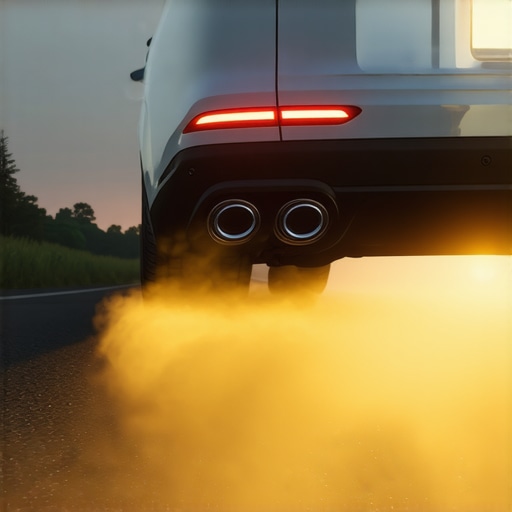
I was three hours into a drive back from the coast last summer when my passenger asked if I had accidentally left a carton of eggs under the front seat. I hadn’t. The stench was thick, sulfurous, and frankly, a bit embarrassing. I tried rolling down the windows, but the highway wind just pushed that nasty ‘rotten egg’ perfume right back into our faces. It was visceral. It was annoying. And most importantly, it was a warning sign I chose to ignore until my car eventually sputtered to a halt in my own driveway. I made the classic mistake of thinking a quick interior detail would solve the problem, but I quickly learned that why your car smells like rotten eggs when you hit the gas is rarely about cleanliness and almost always about chemistry. We are going to dig into exactly why your vehicle turns into a stink-bomb after a long haul and how you can stop it before you’re stranded. Have you ever noticed a weird scent right after pulling off the interstate?
That Stink is a Warning You Should Not Ignore
When you’ve been cruising at highway speeds for an hour or more, your engine and exhaust system reach peak operating temperatures. This is usually when hidden issues decide to introduce themselves. That sulfur smell is hydrogen sulfide, and it typically points to a failing catalytic converter or a battery that is literally cooking itself. Early in my DIY days, I spent a fortune on deodorizers before realizing I actually needed to check how to tell if your catalytic converter is actually clogged. I learned the hard way that masking a mechanical scent is like putting a band-aid on a broken leg. It feels better for a minute, but the underlying damage is still spreading. According to the Environmental Protection Agency (EPA), the catalytic converter is responsible for converting over 90% of harmful engine emissions into less toxic gases, and that ‘rotten egg’ smell is a sign the chemical reaction is failing.
Is a Smelly Car Always an Expensive Fix?
I know what you are thinking because I thought it too: ‘Great, there goes my entire weekend budget.’ It is easy to assume the worst, but sometimes the fix is simpler than a full exhaust replacement. It could be as basic as an overcharged battery or a sensor that needs a quick tune up to get the air-fuel mixture back in balance.
The Catalyst Behind the Chaos
Most of the time, the culprit is the catalytic converter. After a long trip, the internal honeycomb structure can become overheated or saturated. If your engine is running too ‘rich’—meaning there is too much fuel and not enough air—the excess gasoline ends up in the converter. It cannot process it all, and the byproduct is that lovely sulfurous aroma. I once ignored this for a month, and by the time I took it in for car service, the converter had melted internally. Don’t be like younger me; catch it while it is just a smell. If you’ve been putting off a tune up for peak performance, your exhaust system is likely the first place to show the strain of a long-distance drive.
Pop the Hood Before You Pull the Wallet Out
Before you assume the worst and start shopping for a new exhaust, you need to do some detective work. Most people jump straight to the catalytic converter, but I once had a sulfur smell so bad it made my eyes water, only to realize my battery was the culprit. If your alternator is overcharging, it can literally boil the sulfuric acid inside the battery, releasing that tell-tale odor. Use a multimeter to see if your charging system is pushing too much voltage. Learning how to tell if your alternator is overcharging the system is the first step in ruling out an electrical meltdown. If the battery feels hot to the touch or looks bloated, you’ve found your ‘rotten egg’ factory. 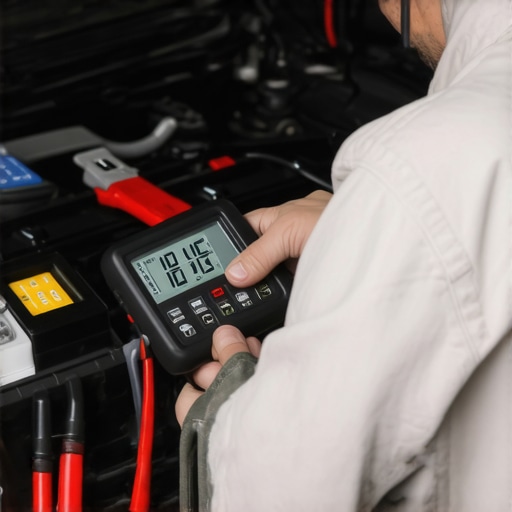
Stop the Fuel Flood with a Proper Tune Up
If the battery is fine, the smell usually means your engine is ‘dumping’ raw fuel into the exhaust. Think of your engine like a campfire; if you throw too many logs on at once, it smokes and smolders instead of burning clean. When your spark plugs are fouled or your sensors are lying to the computer, the unburned gas hits the hot catalytic converter and creates hydrogen sulfide. I managed to solve a persistent stench on my old sedan just by figuring out how a simple tune-up fixed my mystery hesitation and restored the air-fuel balance. You should prioritize troubleshooting common auto-repair issues before visiting the shop to see if a simple sensor cleaning or a new set of plugs can save your exhaust system from permanent damage.
Test the Converter Without Removing It
If the smell persists even after a tune-up, you need to check the health of the converter itself. A quick way to do this is with an infrared thermometer. After a long drive, the exit pipe of the converter should be significantly hotter than the entry pipe. If it is cooler or the same temperature, the chemical reaction isn’t happening. You can also listen for a rattling sound—like a box of rocks—which indicates the internal ceramic honeycomb has shattered. I learned the hard way that knowing how to tell if your catalytic converter is getting clogged early can save you from a total engine stall on the interstate. Keeping a car service checklist handy will help you monitor these components before they reach the point of failure. If the converter is indeed the issue, don’t just replace it; find out why it failed. A converter is a ‘pass-through’ part, meaning something else—like an oil leak or a rich fuel mixture—usually kills it first. Addressing the root cause is the only way to ensure your new parts don’t end up smelling like a science experiment gone wrong within a few months.Most drivers assume that if the Check Engine light isn’t blinking, the computer is handling everything perfectly. This is a dangerous trap. Modern ECUs are incredibly good at ‘trimming’ fuel to compensate for vacuum leaks or dirty sensors. You might think you’re saving money by skipping expert tune up strategies, but your car is actually working overtime to hide a failing component. By the time that sulfur smell hits your nose after a highway run, the ‘masking’ period is over. I see people fall into the ‘parts cannon’ trap all the time: they smell sulfur, they buy a converter, and three months later, the new one is clogged too. They missed the nuance that the converter didn’t just ‘get old’—it was murdered by a faulty oxygen sensor or a leaking fuel injector that never triggered a code.
Why Does My Emissions Data Look Perfect Despite the Stench?
It is entirely possible for a car to pass a standard emissions test while the exhaust still smells like a swamp. This happens because most tests are done at idle or low speeds where the converter isn’t under heavy load. The real test happens when you’ve been at 3,000 RPM for two hours. Research from the Car Care Council suggests that neglected ‘minor’ maintenance issues are the primary cause of ‘cascading failures’ in modern vehicles, where a simple $50 sensor eventually destroys a $1,500 catalytic system. If you aren’t troubleshooting common auto-repair issues with a live-data scanner, you are essentially guessing. 
The Braking System Myth That Could Cost You a Rotor
We see the same pattern with brakes. A common belief is that if the car stops and doesn’t squeak, the brakes are fine. But after a long, hot drive, you might notice a different scent or a slight vibration. Many owners ignore this until they’re looking at brake system repairs that involve replacing the entire hub assembly. In my experience, the ‘soft’ pedal you feel after a long trip isn’t just old pads; it’s often moisture-contaminated fluid reaching its boiling point. I always tell people to check for brake service myths before they assume they just need new ceramic pads.
Stop Chasing Symptoms and Start Fixing Causes
The ‘Oops’ factor usually hits when you try to save money by doing the bare minimum. If you’ve noticed your car acting up only after it gets hot, you are dealing with a thermal failure. This could be anything from a hairline crack in a vacuum hose to a failing ignition coil that only shorts out when it reaches a certain temperature. Instead of just replacing what smells or what rattles, use a car service checklist to look at the system as a whole. Have you ever fallen into the trap of replacing the same part twice because you didn’t find the root cause? Let me know in the comments below!If you want to move beyond the ‘maybe it’s this’ phase of car repair, you need better data. I stopped guessing years ago when I invested in a dedicated OBD2 scanner that supports live data streaming. Most people just read the code and clear it, but the real magic is in the ‘Fuel Trim’ values. If your Long Term Fuel Trim is consistently positive, your car is adding extra gas to compensate for a lean condition, which eventually overheats your exhaust. I personally use a Bluetooth dongle paired with a tablet because seeing those graphs in real-time while a passenger holds the screen tells me exactly when the system is failing. It’s how I discovered that regular tune ups improve fuel efficiency and safety by catching a lazy oxygen sensor that hadn’t even triggered a light yet. Using an infrared thermometer is another trick I swear by; hitting the inlet and outlet of your catalytic converter after a twenty-minute run will tell you immediately if the internal chemistry is working. 
How do I maintain my car’s performance over the long haul?
Keeping a car running like new isn’t about luck; it’s about a disciplined schedule. You need to maximize your car’s lifespan with expert tune up strategies that go beyond just changing the oil. This means checking your brake fluid copper content every two years and actually testing your coolant’s pH level. I’ve seen more engines ruined by acidic coolant eating through head gaskets than by actual mechanical failure. If you are serious about DIY, get a set of vacuum gauges. Being able to see a steady needle versus a vibrating one can tell you if you have a burnt valve or just a simple leak in a $2 hose. I also suggest you learn how to spot a collapsed brake hose in seconds, as these often act like one-way valves, holding pressure on your calipers and causing that ‘burning’ smell that people often confuse with engine issues. The Society of Automotive Engineers (SAE) J1979 standard actually dictates how this diagnostic data is reported, and understanding these ‘Mode $06’ monitors can give you a window into your car’s soul that even most mechanics ignore until a part actually breaks.
The Shift Toward Predictive Maintenance
Looking ahead, the world of auto repair trends to watch in 2025 suggests we are moving toward an era of predictive analytics. We are already seeing consumer-grade tools that can analyze the sound frequency of your engine to predict a bearing failure before you can even hear it with your ears. I predict that within the next three years, the average DIYer will have access to AI-driven apps that ‘listen’ to your brakes or ‘smell’ your exhaust via sensors to tell you exactly which seal is about to give up. It’s an exciting time to be a gearhead because the ‘mystery’ of the rotten egg smell is becoming a solved science. If you really want to stay ahead of the curve, my best advice is to stop waiting for a noise to appear. Buy a simple multimeter today and start checking your battery’s resting voltage and your alternator’s ripple current; it is the single best way to prevent an electrical surge from frying your expensive ECU.
The Sulfur Trap That Cost Me a Fortune
Looking back at my years under the hood, I realized that the biggest mistake isn’t ignoring a noise—it’s ignoring a smell. I once thought that a rotten egg scent was just ‘character’ for an older car, but that apathy led to a $2,000 exhaust overhaul. Here are the hard truths I learned the hard way:
- Your nose is faster than your dashboard: By the time a check engine light flickers, your catalytic converter might already be melting. If you smell eggs, your car is crying for help.
- Heat is a diagnostic tool: Components that work fine on a grocery run often fail during a two-hour highway stretch. This is why car service shouldn’t just be reactive; it needs to account for peak stress.
- The converter is rarely the murderer: It is usually the victim. If your exhaust stinks, don’t just swap the part. Look for the engine misfire or rich condition that ‘poisoned’ the catalyst in the first place.
- Don’t skip the basics: I’ve seen people buy new engines when they really just needed to know how a simple tune-up fixed my mystery hesitation and cleared out the sulfur.
My No-Nonsense Diagnostic Kit
I don’t believe in throwing parts at a problem. If you want to stop the stink for good, you need these three tools in your garage. They have saved me thousands by allowing me to perform a professional-grade tune up without the dealership markup.
First, get a Bluetooth OBD2 Scanner. Being able to see ‘Live Data’ allows you to monitor fuel trims while you drive, catching issues before they ruin your converter. Second, an Infrared Thermometer is essential for checking temperature differentials across your exhaust system. If the outlet isn’t hotter than the inlet, the chemistry has stopped. Finally, a Digital Multimeter is your best friend for electrical health. I use mine to verify how to tell if your alternator is overcharging the system and boiling your battery acid. Following a consistent car service checklist with these tools ensures you are never guessing.
#IMAGE_PLACEHOLDER_E#
Reclaim Your Peace of Mind on the Open Road
There is a certain kind of anxiety that comes with a car that smells like a swamp every time you hit 70 mph. But remember, you are in the driver’s seat—both literally and figuratively. When you take the time to maximize your car’s lifespan with expert tune up strategies, you aren’t just fixing a machine; you’re ensuring your safety and saving your hard-earned money. Don’t let a sulfurous scent ruin your next vacation. Tackle it now, trust your senses, and keep your vehicle running clean. Have you ever been embarrassed by a mystery smell in your car that turned out to be a simple fix? Let me know in the comments below!