

Last Tuesday, I hopped into my car for a quick grocery run and practically pulled a shoulder muscle just trying to back out of the driveway. My steering wheel felt like it was stuck in wet concrete, resisting every inch of movement. It’s that sinking feeling in your gut—the one where you start hearing the ‘cha-ching’ of a mechanic’s cash register before you’ve even left the neighborhood. I’ve been there. In fact, early in my DIY days, I made the massive mistake of replacing an entire steering rack on my old truck because I assumed the worst. It turned out to be a simple fluid issue I could have solved in ten minutes. I felt like a total amateur, but it taught me a valuable lesson: the most intimidating car problems often have the simplest solutions. Today, I’m going to show you exactly how to diagnose that heavy steering and get your smooth ride back without the hefty shop bill.
Stop Wrestling Your Car Every Time You Turn
If your car requires a gym membership’s worth of strength just to navigate a parking lot, you aren’t alone. Most people assume their power steering pump has died a permanent death, but that’s rarely the first thing to go. You might be surprised to learn that why your power steering fluid looks like foam is often a better indicator of the problem than the noise the pump makes. According to the National Highway Traffic Safety Administration (NHTSA), steering system issues are among the top mechanical causes of accidents, so ignoring that stiffness isn’t just a workout—it’s a risk. Have you ever felt your wheel lock up or get heavy out of nowhere? I want to know if you’ve been fighting your car lately. Before you panic, you need to check the basics. Sometimes it’s as simple as knowing how to tell if your rack and pinion is leaking fluid or even just inspecting a slipping serpentine belt that isn’t gripping the pulley like it used to.
Is This Really Fixable Without a Professional?
Many folks worry that messing with the steering is too dangerous for a driveway repair. While you should always respect the complexity of your vehicle, most stiff-steering culprits are external to the actual gear. It’s usually about fluid health, belt tension, or a minor leak. I’m here to walk you through the low-hanging fruit first, because there is no reason to pay a pro for something you can do with a flashlight and a bottle of fluid. We are going to look at the three most common ‘silent killers’ of easy steering and how to knock them out in an afternoon.
Kill the Resistance at the Reservoir
To start your DIY auto repair, you need to look at the lifeblood of the system. Power steering fluid isn’t just a lubricant; it’s a hydraulic fluid that does the heavy lifting for you. Open your hood and find the reservoir—it usually has a steering wheel icon on the cap. Wipe the dipstick, reinsert it, and check the level. If it’s low, you have a leak. But if the level is fine, look at the color. Fresh fluid is usually bright red or pink. If it looks like dark coffee or smells burnt, it has lost its viscosity and is actually creating friction rather than reducing it. I remember helping my neighbor with his ’98 sedan; he was convinced his steering rack was toast because the wheel felt like it was welded shut. I popped the cap and the fluid looked like a swamp. Five minutes of draining and refilling with fresh fluid, and he was backing out of the driveway with one finger on the wheel. It reminded me that a simple tune up of your fluids can save you $800 in parts. If you see bubbles, you might want to investigate why your power steering fluid looks like foam to prevent air from locking up the valves. 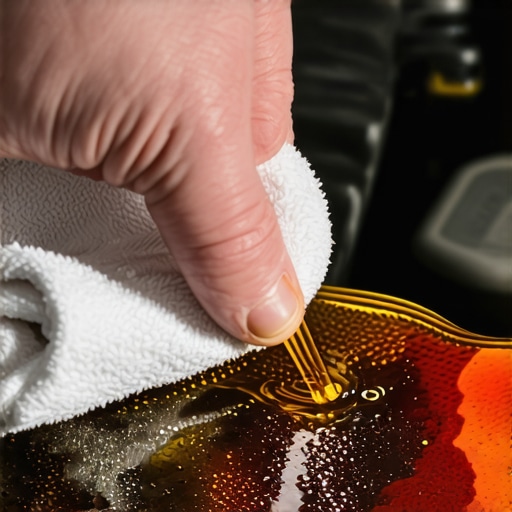
Hunt for a Slipping or Cracked Belt
If your fluid is pristine but the wheel is still heavy, the problem is likely mechanical power. Your power steering pump is driven by a serpentine belt. If that belt is loose, glazed, or worn down, it will slip on the pulley, especially when you put the system under load by turning the wheel. This is why you might hear a high-pitched squeal when navigating a tight corner. You should check for the hidden danger of a slipping serpentine belt by looking for cracks or shiny spots on the underside of the belt. A quick way to verify this is to try how to fix a squealing belt using the water spray test. If a mist of water temporarily quiets the noise or changes the steering weight, you’ve found your culprit. Replacing a belt is a standard part of any car service and is far cheaper than replacing a pump.
Locate Leaks and Mechanical Blocks
If the belt is tight and the fluid is full, you need to get dirty. Jack up the front end (using jack stands for safety!) and look at the rack and pinion. Look for wetness around the rubber bellows. Learning how to tell if your rack and pinion is leaking fluid is vital because a internal leak can bypass the pressure needed to assist your turn. While you are down there, grab the front wheels and try to shake them side-to-side. Excessive play usually means your tie rods are shot. You can easily learn how to check your tie rod ends with minimal tools. Just like you wouldn’t ignore a grinding sound during a brake service, you shouldn’t ignore the physical I’ve spent years under hoods, and if there’s one thing that gets my blood boiling, it’s the ‘sealed-for-life’ marketing gimmick. Manufacturers often tell you that your transmission or power steering systems never need a tune up or a fluid swap. It’s a flat-out lie designed to make the initial cost of ownership look lower on paper. In reality, the truth about why my car finally hit 200000 miles is that I ignored those manuals and changed my fluids anyway. Power steering fluid, much like engine oil, shears down under constant heat and pressure. Research from the Car Care Council indicates that neglected fluids remain the primary cause of premature component failure in modern vehicles. If you want to avoid a massive auto repair bill, you have to look past the ‘lifetime’ label. Understanding why I’ll never skip a transmission fluid change again is a lesson I learned the hard way when a supposedly ‘sealed’ unit failed at just 80,000 miles. Have you ever fallen into this ‘sealed for life’ trap? Let me know in the comments.
Why is my steering only heavy when I am trying to park?
This is a classic nuance that separates the pros from the parts-changers. Modern vehicles often use variable-assist power steering. At highway speeds, the system reduces assist to provide better stability. If your steering feels fine at 60 mph but turns into a wrestling match at 5 mph, your pump might be failing to provide enough pressure at low RPMs, or there is a glitch in the electronic control valve. It’s easy to misdiagnose this as a mechanical bind, but it is often a pressure-output issue. This is why how regular tune ups improve fuel efficiency and safety involves checking the digital sensors of your steering system, not just the greasy bits. If you are performing your own brake service, you might also run into a hidden ‘vibration trap’ that many assume is just bad pads.
Avoid the Overtightening Trap That Ruins Rotors
One of the biggest ‘oops’ moments in DIY repair happens right after you think you’ve finished the job. Most people throw their wheels back on and tighten the lug nuts as hard as they possibly can with a standard tire iron. This is a huge mistake. Uneven torque on your wheel studs is the top cause of lateral runout, which leads to that annoying pedal pulse. If you’ve wondered why your brake rotors keep warping every few months, look at your lug nuts first. You must use the correct way to torque lug nuts to prevent rotor warping by using a calibrated torque wrench in a star pattern. Don’t fall for the brake service myths that suggest more force is always better. Knowing these small details is what turns a weekend tinkerer into a master of their machine. I remember when how an honest brake inspection saved me hundreds simply because I realized the ‘warped’ rotors were actually just suffering from uneven torque. Real car service isn’t about replacing parts; it is about precision.If you want to move beyond basic wrench-turning, you need to understand that modern vehicles are essentially rolling computers with a few mechanical bits attached. To truly excel at your own auto repair, you need to stop guessing and start measuring. I spent years throwing parts at problems until I realized that a $150 bidirectional scan tool is worth ten times its weight in gold. While a cheap code reader tells you that a sensor is ‘bad,’ a professional-grade tool lets you perform active tests—like commanding the power steering pump to vary its pressure or checking the real-time duty cycle of your cooling fans. I remember a particularly frustrating case where how professional diagnostics found my ghost electrical leak; it wasn’t a broken wire, but a module that refused to go to sleep. Mastering these tools is the difference between a frustrating weekend and a successful car service.
How do I maintain my steering and suspension over time?
The secret isn’t just fixing things when they break; it’s about a relentless tune up schedule that looks at the ‘invisible’ wear. Every 15,000 miles, I perform a ‘dry park’ test. This involves having a partner wiggle the steering wheel back and forth while I crawl underneath (safely supported!) to feel for the slightest tick or play in the tie rods and ball joints. You also need to keep an eye on auto repair trends to watch in 2025, as steer-by-wire systems become more common, shifting our maintenance focus from grease fittings to electrical grounds and software updates. According to documentation from SAE International (SAE J1173), the thermal stability of power steering components is critical for maintaining consistent hydraulic pressure across varying operating temperatures. This is why I always use a high-quality synthetic fluid that exceeds the OEM spec; it handles the heat much better during heavy summer driving. To stay organized, I highly recommend following a comprehensive car service checklist to ensure you never miss the small stuff, like lubricating your door latches or checking for small cracks in your CV boots.
Future-Proof Your Ride with Precision
As we look ahead, the complexity of our vehicles is only going to increase. We are seeing a massive shift toward integrated vehicle health monitoring. If you want to maximize your car’s lifespan with expert tune-up strategies, you have to be proactive. This means looking at the ultimate car service guide not as a suggestion, but as a survival manual for your wallet. I’ve seen so many people trade in perfectly good cars because they neglected a few hundred dollars in fluid changes, leading to a multi-thousand dollar failure. Don’t let that be you. Whether you are performing a brake service or just a routine oil change, treat every moment under the hood as an inspection. My advanced tip for you this week: Perform a voltage drop test on your main ground wires. If you find even a 0.5-volt drop, cleaning that connection can solve ‘ghost’ issues with your power steering and fuel efficiency that no part-swapping ever could. It’s exactly how regular tune ups improve fuel efficiency and safety without spending a dime on new components.
Lessons I Paid for with My Own Wallet
I’ve spent years making mistakes so you don’t have to. The most important thing I’ve learned is that a tune up isn’t just about changing parts—it’s about listening to the vehicle. Early on, I ignored a slight groan in my steering, assuming it was just ‘old car noise.’ That noise eventually cost me a power steering pump because I didn’t realize how regular tune ups improve fuel efficiency and safety by catching low fluid levels before they caused cavitation. One major lightbulb moment for me was realizing that most ‘steering’ problems are actually ‘maintenance’ problems. If you stay on top of your fluids and belts, the heavy lifting of auto repair becomes a thing of the past. Always verify the simple stuff: Check your fuses and grounds before assuming a module is dead, and never ignore the smell of burnt fluid; it is the first sign of an impending shop bill. Finally, remember that precision beats power—using a torque wrench on your wheels is non-negotiable to prevent the issues found in brake service myths that lead to warped rotors.
My Must-Have Gear for Any Driveway Mechanic
If you want to move beyond basic oil changes, you need a few items that I swear by for consistent results. First, a quality bidirectional scan tool allows you to perform troubleshooting common auto repair issues before visiting the shop, saving you hours of guessing why a light is on. Second, a calibrated torque wrench is your best friend; I never put a wheel back on without one because it’s the only way to ensure the correct way to torque lug nuts to prevent rotor warping. Finally, I always keep a printed copy of the car service checklist in my garage. Having a physical list ensures I never skip the ‘small stuff’ like checking for the sign your master cylinder is giving out slowly during a routine inspection. These tools don’t just fix cars; they provide the confidence of a professional.
Your First Step Toward Mechanical Independence
Don’t be intimidated by the complexity of modern steering or hydraulic systems. Most of the time, your car is trying to tell you exactly what’s wrong; you just need to learn the language. Whether you are performing a simple fluid flush or gaining a deeper understanding of brake system repairs, take it one bolt at a time. Every successful car service you complete builds the confidence you need to keep your vehicle on the road for another 100,000 miles. By being proactive and following the ultimate car service guide, you are taking control of your vehicle’s future and your own safety. You’ve got the tools and the knowledge—now it’s time to get to work and enjoy that smooth, effortless turn once again. Have you ever had a simple fluid change solve a massive steering or braking headache? Tell me your ‘easy fix’ stories in the comments below!