
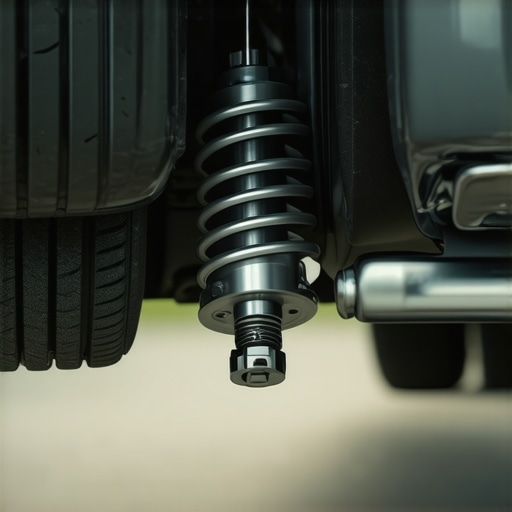
I remember cruising down a quiet backroad, the windows down, feeling like I finally had my old sedan running like a top. Then, I took a sharp right turn. Thud-clunk. It wasn’t loud, but I felt it right in the soles of my shoes. I laughed it off, figuring it was just a loose jack in the trunk. Huge mistake. Two weeks later, that ‘harmless’ rattle turned into a snapped control arm while I was merging onto the highway. I learned the hard way that your car is always talking to you, and when the suspension starts whispering, you’d better listen before it starts screaming.
Listen Closely Before Your Car Stops Listening to You
Most of us treat our cars like reliable appliances, but the suspension system is more like a complex musical instrument. When it’s out of tune, it doesn’t just sound bad; it becomes dangerous. I spent years troubleshooting common auto repair issues before visiting the shop, and the biggest lesson I can share is that suspension problems never fix themselves. They only get more expensive. If you’re starting to feel every pebble in the road, it might be time to look for the signs your struts are finally bottoming out. It’s not just about comfort; it’s about keeping your tires planted firmly on the asphalt. According to data from the National Highway Traffic Safety Administration, suspension and steering failures are leading contributors to mechanical-related vehicle accidents.
Is that little squeak really worth a massive repair bill?
You might be thinking, ‘It’s just a noise, I can live with it.’ But that squeak is often the sound of metal-on-metal friction because a protective bushing has rotted away. I once ignored a rhythmic clicking because I thought it was just a pebble in my tread. It turned out to be the hidden source of that clicking noise when you turn—a failing CV axle. Have you ever felt that sinking feeling in your stomach when a new noise pops up out of nowhere? Don’t let it sit. Whether it’s a groan, a pop, or a rhythmic thump, identifying it early is the difference between a quick fix and a week-long stay at the mechanic. Sometimes, it’s even simpler than you think, like the simple fix for a stiff steering wheel that saves you from a total rack replacement. We are going to dive into the four specific sounds that mean your car is waving a red flag.
Hunt for the Wet Spots and Cracked Rubber
To get a real handle on what’s happening underneath your car, you have to get your hands dirty. Start by parking on a level surface and turning your wheels all the way to one side. You’re looking for ‘wetness’ on the shocks or struts. A shock is like a hydraulic screen door closer; once the oil leaks out, there’s nothing left to dampen the spring’s energy. I remember helping a neighbor who complained his truck felt like a pogo stick. One look at his wheel well showed a strut coated in thick, black grime. That was a dead giveaway. While you’re in there, how to inspect your own cv boots for small cracks is the next logical step. If those rubber accordions are ripped, grease flies out and dirt gets in, leading to that expensive clicking sound I mentioned earlier.
Put Your Weight Into It to Test Those Struts
If you don’t see a leak, it doesn’t mean you’re in the clear. The ‘Bounce Test’ is a classic for a reason. Walk to one corner of your car and push down as hard as you can on the bumper or fender, then let go. The car should bounce up, maybe settle slightly, and stop. If it continues to oscillate like a bowl of jelly, you’ve found the signs your struts are finally bottoming out. I once did this on an old hatchback and the car bounced three times before stopping. The owner thought it was ‘just a smooth ride,’ but in reality, his tires were barely maintaining contact with the road over bumps. This isn’t just about comfort; it’s a major safety risk for your braking distance.
The 3-and-9 Shake for Your Steering
Next, you need to check the joints that actually point your wheels. Jack up the front of the car (use jack stands—never trust a floor jack alone) and grab a tire at the 3 o’clock and 9 o’clock positions. Give it a firm wiggle. If you feel any play or hear a metallic ‘tink,’ your tie rod ends are likely shot. This is a critical component of how to check your tie rod ends with minimal tools. I once ignored a tiny bit of play in my own steering, only to have the car start wandering across the lane every time I hit a pothole. It’s an unnerving feeling that you can avoid with five minutes of checking.
Stop the Grinding Before it Ruins Your Rotors
Suspension and brakes are cousins; when one fails, the other usually suffers. If your car is pulling or making a rhythmic scraping sound, you need to look at the calipers. Learning how to spot a leaking brake caliper before it fails can save you from a total loss of stopping power. When you’re putting your wheels back on after an inspection, remember the correct way to torque lug nuts to prevent rotor warping. Over-tightening them with an impact wrench is a rookie mistake that leads to a pulsating brake pedal a month later. Digging into understanding brake system repairs a guide for vehicle owners helps you realize that these systems are all interconnected. A loose ball joint can cause uneven tire wear, which then makes your brakes feel like they’re failing when they’re actually just fighting for grip.
Everyone tells you that your front brakes do 80% of the work, but if you’re driving a car made in the last decade, that’s a myth that could cost you a fortune. I’ve seen countless DIYers and even some shops overlook the real reason your rear brakes wear faster than fronts. Modern Electronic Brake Force Distribution (EBD) systems often engage the rear brakes first to prevent the nose of the car from diving, which keeps the chassis level but shreds those smaller rear pads. If you’re just checking the front and ignoring the back, you’re setting yourself up for a metal-on-metal disaster. I’ve learned that maximizing your car’s lifespan with expert tune-up strategies means looking past the 1990s playbook and understanding how your car’s brain actually manages its hardware.
Stop Assuming Your Rotors Are Actually Warped
Here is a nuance most people miss: that pulsing feeling in your brake pedal usually isn’t ‘warped’ metal. It’s actually uneven pad deposition. When you get your brakes smoking hot and then sit at a red light with your foot clamped down, a tiny layer of friction material welds itself to the rotor. This creates a high spot that feels like a warp. This is why your brake rotors keep warping every few months despite you buying the ‘premium’ ones. The trap here is the ‘pad-slap’—putting new pads on old, glazed rotors without cleaning the hub surface. If there is even a speck of rust between the rotor and the hub, it creates ‘runout’ that will vibrate your teeth loose within 3,000 miles. Always ensure the correct way to torque lug nuts to prevent rotor warping is followed, because an unevenly tightened wheel is the fastest way to ruin a brand-new brake job.
Why do your brand-new brakes still squeal like a subway train?
It’s the most frustrating sound in the world, and usually, it’s not because the pads are ‘cheap.’ High-performance semi-metallic pads are loud by nature, but why your new brakes are still squealing often comes down to the lack of high-temp grease on the contact points or a failure to ‘bed’ the brakes. You have to literally cook the pads into the rotors through a series of controlled stops to establish a transfer layer. According to a study by the Car Care Council, nearly 5% of all highway accidents are caused by mechanical failures that could have been prevented by a comprehensive car service checklist. Don’t fall for the truth about cheap brake pads and noise; sometimes the silence is more about the installation than the price tag.
The Ghost in the Machine Tune-Up
In the old days, a tune-up meant a distributor cap and a prayer. Today, it’s about sensor data. I once chased a ‘rough idle’ for a month, changing plugs and coils, only to realize how professional diagnostics found my ghost electrical leak was actually just a dirty Mass Air Flow sensor. We often mistake electronic glitches for mechanical failures. If you aren’t checking for vacuum leaks or cleaning your throttle body, you aren’t actually doing a tune-up; you’re just throwing parts at a problem. Have you ever fallen into this trap of replacing a part only for the light to come back on two days later? Let me know in the comments. Digging into understanding brake system repairs a guide for vehicle owners is the only way to stay ahead of the curve and keep your daily driver from becoming a lawn ornament.
I’ve realized that the difference between a ‘parts changer’ and a ‘mechanic’ is the diagnostic stage. I personally won’t touch a modern car without a bidirectional scan tool anymore. Those twenty-dollar Bluetooth dongles are fine for clearing a gas cap code, but they won’t show you the individual wheel speed sensor data or let you command an ABS pump bleed. For brakes, I swear by a pressurized power bleeder. It uses air to push fluid through the lines so you aren’t begging a family member to ‘pump the pedal’ while you get sprayed with DOT 4. This tool is a cornerstone of the ultimate car service guide for anyone serious about preventing master cylinder failure. Manual pumping often forces the piston into a part of the bore it never travels, where rust can tear the seals.
The Gear That Actually Saved My Knuckles
Beyond the electronics, you need a high-quality torque wrench that you actually trust. If you are guessing when tightening caliper bracket bolts, you are playing a dangerous game. I learned brake service myths what you need to know before your next stop the hard way when a loose bolt backed out on a bumpy road. Today, I also keep a smoke machine in my garage. It sounds like overkill until you realize how to detect a small vacuum leak using a simple cigar or a dedicated machine is the only way to find those tiny cracks in a plastic intake manifold that cause a P0300 code. This precise diagnostic approach is why how regular tune ups improve fuel efficiency and safety is more than just a marketing slogan; it is about keeping the engine’s air-fuel ratio within its factory parameters.
How can I keep my car running for 200,000 miles without a rebuild?
The secret isn’t a magic oil additive you buy at a gas station; it is the discipline of ‘service life.’ I follow maximize your cars lifespan with expert tune-up strategies by changing my transmission and brake fluids long before they turn into black sludge. According to SAE International (Standard J1703), brake fluid is hygroscopic and absorbs moisture from the atmosphere. Once it hits 3% water content, your boiling point drops significantly, leading to brake fade and internal corrosion. I check mine every year with a five-dollar moisture pen. This level of detail is the truth about why my car finally hit 200,000 miles while others are heading to the scrap yard at half that age. Consistency beats intensity every single time.
Why the Future of Car Care is in Your Tablet
In 2025 and beyond, we are seeing ‘Gateway Modules’ that lock DIYers out of their own car’s computers. Staying ahead means investing in software-as-a-service (SaaS) diagnostic platforms that can talk to these encrypted systems. As noted in auto repair trends to watch in 2025, the physical wrench is becoming secondary to the digital handshake. If you aren’t comfortable updating firmware, you might find yourself unable to even replace a battery on a new SUV without a trip to the dealer. We are moving toward a world where tune up your car for peak performance essential maintenance tips will include checking for over-the-air (OTA) update errors just as often as checking your spark plugs. My advice? Get comfortable with an OBDII-to-Ethernet cable now. For a quick win today, I highly recommend performing a ‘throttle body relearn’ after your next battery change—it’s an advanced tip that restores your idle quality instantly and saves you from a week of stalling at stoplights.
The Expensive Reality of Saving Five Dollars
Over the years, I have learned that some shortcuts are actually just long detours to the ATM. One of my biggest lightbulb moments was realizing that ‘lifetime warranty’ brake pads often achieve that longevity by being harder than the rotor, meaning you’ll be replacing expensive metal discs twice as often. I also discovered that a clean hub surface is non-negotiable; even a tiny flake of rust trapped behind a new rotor will eventually cause a vibration that feels like a failing suspension. Lastly, never underestimate the power of documentation. Knowing how to save 500 on your next major service is less about finding a coupon and more about knowing exactly what your car needs so you don’t get upsold on ‘induction flushes’ you don’t actually require.
Gear That Actually Earned its Keep in My Garage
If you want to stop guessing and start fixing, your toolkit needs more than just a socket set. I personally rely on an infrared thermometer to check rotor temperatures after a drive—if one wheel is 100 degrees hotter than the others, you’ve found a sticking caliper before it smokes. For those deeper dives, a digital micrometer is essential for measuring rotor thickness to see if they can be turned or if they must be replaced. I also highly recommend keeping a dedicated service log; following the ultimate car service guide ensures you never lose track of when that last brake fluid flush actually happened. These tools turn a frustrating afternoon into a successful brake service.
#IMAGE_PLACEHOLDER_E#
Take Control of Your Commute
The transition from being a passenger in your car’s life to being its caretaker is incredibly rewarding. Whether you are debunking brake service myths what you need to know before your next stop or simply performing your own oil changes, you are building a relationship with a machine that keeps your family safe. I remember the immense pride I felt when I realized how a simple tune up fixed my mystery hesitation and saved me a trip to the dealer. You don’t need to be a master technician to make a massive impact on your car’s lifespan; you just need to be observant and proactive. What’s the one tool or trick that finally helped you solve your most annoying car noise? Let me know in the comments below!