
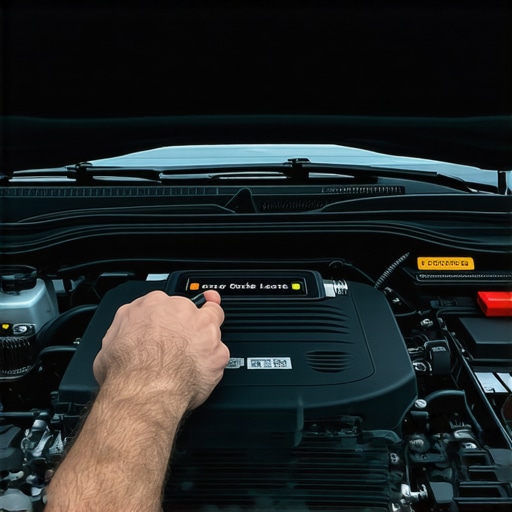
I stood there in the grocery store parking lot, staring at a hood that was literally vibrating from the heat. My old sedan was huffing like a marathon runner, and I knew the cooling fan had quit on me. In a moment of pure panic—and honestly, lack of sleep—I reached down to see if the fan blades would move. I didn’t touch them, thank God, but the blast of 220-degree air that hit my knuckles was a sharp reminder that engines are basically pressurized metal ovens. That was years ago, and since then, I’ve learned that you never, ever need to put your hands near a hot fan to see if it’s working. Today, I’m going to share the tricks I use to troubleshoot this without risking a trip to the emergency room.
Stop Reaching Into the Engine Bay While It’s Hot
The most common mistake I see—and yeah, I made it too when I first started tinkering—is trying to feel if the fan is spinning by getting way too close. If you’ve noticed that your engine temperature spikes only when idling, your fan is the prime suspect. But here is the deal: those blades can kick on at any second without warning, even if the car is off, thanks to the thermal switch. I once saw a guy lose a shirt sleeve to a fan that decided to wake up right as he was checking a belt. It’s not worth it. We can solve this with a bit of logic and a flashlight instead of brute force.
Does my car really need a fan if I am driving fast?
At highway speeds, the airflow through the grille usually does the heavy lifting. But the second you hit a red light or a traffic jam, that fan is the only thing keeping your head gasket from melting into a puddle of regret. According to the Car Care Council, cooling system failure is the leading cause of mechanical breakdowns on the highway. If you have been putting off scheduled car service, this is your sign to pay attention to the sounds under your hood.
The Safe Way to See What is Going On
Before you even pop the hood, there are ways to listen for the problem. A healthy fan has a distinct hum that you should hear when the AC is on. If it sounds like a jet engine, you might be dealing with a situation where your engine fans stay at high speed constantly. On the flip side, silence is usually bad news. Have you ever been stuck in traffic and felt that sudden wave of heat coming through the vents? That is often the first sign of a fan that has gone on strike. Drop a comment below—have you ever had your car overheat at the worst possible moment? We have all been there, and it is usually at a drive-thru or a busy intersection. In the next section, we will dive into using a simple multimeter or even just a flashlight to confirm if the motor is shot or if it is just a blown fuse. It is much easier than you think, and you won’t need to spend a dime at the auto repair shop just to get an initial diagnosis.
Check the Fuse Before You Buy Parts
Whenever I have a client roll in with an overheating issue, I always start at the fuse box. It is the gatekeeper of your electrical system. Think of a fuse like a sacrificial lamb; it’s designed to break so your expensive fan motor doesn’t melt down. Open your owner’s manual and find the diagram for the engine bay fuse box. You are looking for a high-amperage fuse, usually labeled ‘FAN’ or ‘RAD.’ If the little metal bridge inside that plastic housing is snapped, you’ve found your culprit. While you are poking around there, it is a great time to learn how to tell if a battery is just discharged or truly dead, as a weak battery can sometimes cause wonky electrical behavior. Replacing a fuse costs about fifty cents, which is a lot better than the triple-digit bill for a new motor.
Swap Your Relays to Rule Out Electrical Gremlins
If the fuse is intact, the next suspect is the relay. The relay is basically a remote-controlled switch that handles the heavy current needed to spin those blades. A classic trick I use is the ‘relay shuffle.’ Most cars use identical relays for different systems. I once worked on a buddy’s old Jeep that was red-lining on the temp gauge. I pulled the fan relay and swapped it with the one for the horn—which I knew worked because I’d just annoyed the neighbors with it. Suddenly, the fan kicked on. It’s a five-second test that bypasses hours of troubleshooting common auto repair issues before visiting the shop. If the swap works, you just need a new ten-dollar relay. If it doesn’t, we have to look deeper into the wiring.
Direct Power Is the Ultimate Truth Teller
When the fuses and relays check out, it’s time to see if the fan motor itself has given up the ghost. I like to use a ‘jumper wire’ to send 12 volts of battery power directly to the fan. This bypasses the car’s computer, the sensors, and the switches. If you hook it up and the fan spins like a propeller, the motor is healthy, and you likely have a bad temperature sensor or a wiring break. This is exactly how professional diagnostics found my ghost electrical leak on a project car last year—by isolating one component at a time.
Watch Out for Gritty Fan Bearings
While the car is completely off and cool, reach in with a long screwdriver or a stick and give the fan blades a gentle nudge. They should spin freely with almost no resistance. If they feel crunchy, stiff, or don’t move at all, the bearings inside the motor have seized. This usually happens because of age or if you’ve been dealing with the hidden cost of skipping a scheduled coolant flush, leading to a hotter-than-normal engine bay that cooks the motor’s lubricants. If it’s stuck, no amount of electrical poking will fix it; you need a new assembly. Always remember that a fan that feels ‘tight’ is a fire hazard because it will draw too much power and try to melt your wiring harness.Let’s dig deeper into why we often throw money at the wrong parts when things start heating up. Everyone tells you that if your steering wheel shakes when you slow down, your rotors are ‘warped.’ In my years under the hood, I’ve found that true metal warping is incredibly rare. Usually, it’s uneven brake pad material transfer caused by overheating or poor bed-in procedures. If you want to avoid this expensive mistake, you need to look into brake service myths before you shell out for new steel. According to a technical white paper by StopTech, most ‘warped’ rotors are actually victims of ‘cementite’ formation or uneven deposits. Have you ever fallen into the trap of replacing rotors only for the shake to return two months later? Let me know in the comments.
Warped Rotors are Usually a Myth
The nuance here is that when your fan fails to pull heat away, your brakes often suffer too. If you’ve been wondering why your car pulses every time you hit the brakes, it might actually be a cooling system failure that’s allowing the entire engine bay—and the nearby brake master cylinder—to soak up too much ambient heat. This heat thins out the fluid and makes every stop more abrasive than it needs to be.
Why does my car only overheat when the AC is blasting?
This is a classic advanced-level symptom. Your AC condenser sits right in front of your radiator. When you turn on the air conditioning, it dumps a massive amount of heat directly into the path of the engine’s cooling air. If your fan is even slightly weak, it won’t be able to pull air through both the condenser and the radiator simultaneously. This is why a car might stay cool on a 90-degree day with the windows down but red-line the second you want some climate control. Often, a simple tune-up fixed my mystery hesitation in the cooling system, but people often misdiagnose it as a bad AC compressor.
Don’t Let Your Impact Wrench Kill Your Brake Job
The biggest ‘oops’ factor I see with DIY repairs or even budget shops is over-torquing. People think ‘tighter is better,’ but using a pneumatic impact wrench to hammer down lug nuts is the fastest way to cause lateral runout. You absolutely must learn the correct way to torque lug nuts with a calibrated torque wrench. If you don’t, you’re literally pulling the hub out of alignment, which creates that wobbling sensation that everyone blames on ‘cheap rotors.’
Modern Tune-Ups are About Data Not Just Parts
A lot of folks think a ‘tune-up’ is a catch-all solution for any weird noise or stumble. But modern cars don’t have points and condensers to adjust like my old ’72 did. Today, expert tune-up strategies are more about software calibration and sensor health. If your fan is failing, a new set of spark plugs won’t save you. I once had a client spend four hundred dollars on a full ignition service when his only problem was a five-dollar coolant temperature sensor giving the computer bad data. Always verify the sensor data before you start swapping hardware. It’s the difference between a calculated repair and an expensive guess.I’ve spent far too many hours under the chassis of my daily driver to keep throwing the ‘parts cannon’ at every little noise. If there is one thing I’ve learned, it’s that the difference between a car that dies at 100k and one that cruises past 300k isn’t just luck; it’s the tools and the data you use to make decisions. You don’t need a five-thousand-dollar tool chest, but you do need to stop guessing.
Stop Guessing and Buy a Real Multimeter
The most valuable tool in my garage isn’t my impact wrench—it’s my digital multimeter. When I was first starting out, I’d replace a fan or a battery just because they ‘seemed’ weak. That is a recipe for an empty wallet. According to the ASE (Automotive Service Excellence) manual on electrical systems, voltage drop testing is the only reliable way to find high resistance in a circuit without physically opening the harness. By measuring the voltage at the fan motor while it’s actually running, I can tell if the wire is corroded inside the insulation. This is how I’ve avoided unnecessary understanding brake system repairs and electrical swaps that wouldn’t have fixed the root cause. If you aren’t testing, you’re just gambling.
How do I keep my car running past 200,000 miles?
Longevity comes down to a proactive car service checklist that focuses on fluids and thermal management. Most people wait for a light to come on, but I treat my car like an athlete. I’ve found that the truth about why my car finally hit 200,000 miles was simple: I changed the fluids before they looked ‘dirty.’ Once oil or coolant starts to degrade, it’s already causing microscopic wear on your bearings and seals. For example, if you’ve been wondering why your brake rotors keep warping every few months, it might actually be old, moisture-heavy brake fluid causing the calipers to drag and overheat. Fresh fluid is the cheapest insurance policy you can buy.
The Future of DIY is Software-Driven
We are moving into an era where your smartphone is just as important as your socket set. Looking at auto repair trends to watch in 2025, we are seeing more manufacturers lock down diagnostics, but the rise of affordable bi-directional scanners is keeping the power in our hands. These tools allow you to ‘command’ the radiator fan to turn on or the fuel pump to prime right from your screen. It eliminates the ‘is it the computer or the motor?’ mystery in seconds. I predict that within the next five years, AI-integrated OBD2 scanners will be able to listen to your engine through your phone’s mic and pinpoint a failing bearing before you can even hear it with your own ears. Grab a multimeter this weekend and perform a voltage drop test on your battery terminals—it is the absolute best way to spot a hidden power leak before it leaves you stranded.
What I Learned After Almost Melting My First Engine
The biggest takeaway from my years of DIY repair is that heat is a patient killer. You might think a slightly noisy fan or a minor temperature spike is just an “old car quirk,” but it is actually a countdown to a much bigger bill. I have seen more cars end up at the scrap yard because of a simple electrical fault than actual mechanical engine failure. When you start troubleshooting common auto repair issues before visiting the shop, you are not just saving money; you are developing an intuition that helps you hear a problem before it leaves you stranded. Also, never underestimate the power of a clean connection—half of the “dead” fans I have encountered just needed a bit of sandpaper on a corroded terminal to roar back to life.
#IMAGE_PLACEHOLDER_E#
The Gear That Actually Lives in My Trunk
I do not carry a whole shop with me, but these specific tools have saved my skin more times than I can count. First, a digital multimeter is non-negotiable; it is the only way to know if your fan is getting the 12 volts it craves without guessing. Second, I always keep a copy of the car service checklist tucked in my glovebox to stay ahead of the curve. Third, get a decent OBD2 scanner that can read “live data”—seeing your coolant temperature in real-time on your phone is much more accurate than that vague needle on your dashboard. Finally, an infrared thermometer is great for spotting “hot spots” on a radiator that might be clogged internally, which is a great way to verify the hidden cost of skipping a scheduled coolant flush before you start buying expensive new fans.
You Are More Capable Than the Dealership Wants You to Think
Modern vehicles are complex, but they are still mechanical beasts that follow the laws of physics. Whether you are performing a complex understanding brake system repairs or just checking a relay, the secret is to slow down and test one thing at a time. Every time you fix a small issue like a cooling fan yourself, you are adding years to your vehicle’s life and building the confidence to handle a major car service without the anxiety of a massive bill. The future of your car is literally in your hands—just make sure they are not near the fan blades while they are spinning! Have you ever had a “ghost” electrical problem that seemed to fix itself? Drop a comment below and let us figure out what really happened.