
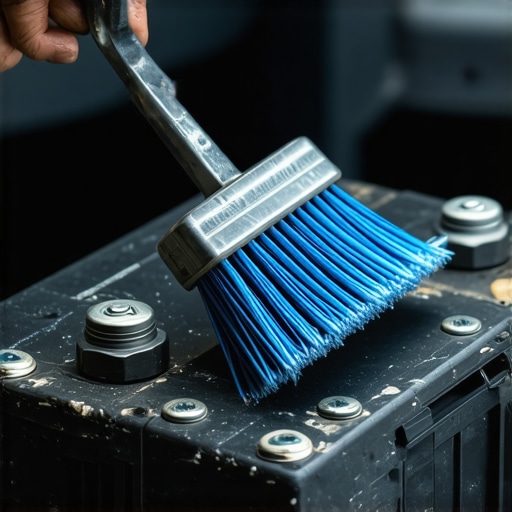
I was standing in my driveway last February, breath visible in the frozen air, frantically turning the ignition key. Click. Click. Click. My heart sank. I had just paid rent, and the last thing I needed was a $200 bill for a new battery or a tow truck to the shop. I felt like a total amateur. When I finally popped the hood, expecting the worst, I didn’t see a dead battery. Instead, I saw a mountain of blue-green crust blooming off the terminals like some kind of toxic sea anemone. It was embarrassing, honestly. That crust was the only thing standing between me and a running engine, but I didn’t know it yet. Today, I want to show you that those sluggish starts aren’t always a death sentence for your wallet. We are going to walk through the process of clearing that gunk away so your starter gets the juice it actually needs.
Stop the Click and Save Your Cold Mornings
Years ago, I made the classic rookie mistake: I actually went out and bought a brand new battery without even looking at the terminals. I just assumed that after three years, it was toast. The shop took my money, swapped the unit, and I felt great—until the “new” battery started struggling just three months later. Why? Because the cable connectors were still filthy, and I was basically trying to push electricity through a wall of salt. It’s one of those troubleshooting common auto repair issues moments that haunts my pride to this day.
Learning why your car battery terminal keeps getting corroded is the first step to stopping the cycle. Corrosive buildup creates resistance. High resistance means your alternator can’t recharge the battery efficiently while you drive, and your starter can’t pull enough amperage to turn the engine over when it’s cold. According to data from AAA, battery-related issues are one of the top reasons for roadside assistance calls, and a shocking number of these are due to poor connections rather than a truly dead cell. Have you ever been stranded by a battery that looked like it was growing mold? Let me know in the comments, because I know I can’t be the only one who has stared at a engine bay in total confusion.
Is a little bit of crust really that big of a deal?
You might look at a dusty terminal and think it’s just cosmetic, but that’s a dangerous game to play with your car’s electronics. Even a thin layer of oxidation can mimic the symptoms of a failing alternator. Before you start panicking about expensive repairs, you should try the simple way to test battery strength at home. Most of the time, a ten-minute cleaning session provides the secret to a quicker engine start in winter without costing you a dime. It’s about more than just starting, though; clean connections protect your sensitive onboard computers from voltage spikes and dips that can cause ghost errors on your dashboard. Let’s get into the gear you need to fix this properly.
Grab Your Tools and Secure the Area
Before you dive in, you need a few basics: a small wrench (usually 10mm), a wire brush, and a simple mixture of baking soda and water. It sounds like a middle-school science project, but it’s the most effective way to neutralize the acid. While you are under the hood, it is a great time to check other items on your car service checklist. Think of the battery as the heart of your car; if the arteries (the cables) are clogged with corrosion, the rest of the system won’t get the pulse it needs to function.
Pull the Black Cable First to Stay Safe
Safety isn’t just a buzzword here; it is about not welding your wedding ring to the car frame. I learned this the hard way during a hurried tune up. I went for the positive terminal first, and my wrench bumped the metal radiator support. The resulting blue spark was bright enough to leave spots in my eyes for ten minutes. Always loosen the negative (black) terminal first. This breaks the ground circuit, so if your tool touches the car’s body while you are working on the positive side later, nothing happens. It is a simple habit that saves you from expensive electrical damage.
Scouring Away the Blue-Green Gunk
Once the cables are off, pour your baking soda solution directly onto the terminals. It will fizz and bubble like a tiny volcano—this is the neutralizing action in real-time. Use your wire brush to scrub the metal until it shines. If you are wondering how to tell if a battery is just discharged or truly dead, looking for a clean connection is the first step. If the metal is pitted or the cable itself is fraying, you might need a replacement, but usually, a good scrub restores the flow. You want to see bright, shiny lead on both the post and the inside of the connector. 
Seal the Deal to Prevent Future Growth
The real secret to expert tune-up strategies isn’t just fixing what’s broken; it is preventing the next failure. After everything is dry and reconnected (positive first this time!), smear a bit of petroleum jelly or dedicated terminal grease over the metal. This creates an airtight seal that prevents the sulfuric acid vapors from reacting with the air and metal again. This is a crucial part of knowing the secret to a quicker engine start in winter. If your car still feels sluggish after a thorough cleaning, it might be time to look deeper into how regular tune-ups improve fuel efficiency and safety. Sometimes the corrosion isn’t just on the surface; it can creep up inside the plastic insulation of the cables, causing high resistance that you can’t see with a quick glance.Let’s dig deeper because once you’ve scrubbed those terminals, you’ve only scratched the surface of professional-grade maintenance. Most DIYers fall into the trap of thinking car repair is just about swapping old parts for new ones. In reality, the ‘ghost’ in the machine is often a simple connection issue that a new part won’t fix. For example, everyone tells you that if your car doesn’t start, the battery is dead. But I’ve seen countless drivers spend hundreds on a fresh cell only to be stranded again a week later. They fell for the ‘New Part Myth.’ The real culprit? A corroded ground strap buried deep on the engine block where you can’t easily see it. Have you ever fallen into this trap of replacing a part that wasn’t actually broken? Let me know in the comments.
End the Cycle of Part-Swapping Guesswork
The ‘Oops’ factor in modern vehicles is that we trust our dashboard lights too much. We see a battery icon and we run to the store. However, auto repair trends to watch in 2025 suggest that electrical systems are becoming so sensitive that a tiny voltage drop—often less than half a volt—can disable fuel injection or timing modules entirely. It isn’t just about the battery; it’s about the entire circuit loop. This is similar to how people react to brake noise. Most assume a squeak means the pads are gone, but as I’ve noted in brake service myths: what you need to know before your next stop, it could just be unlubricated caliper pins causing resonance. If you don’t look for the nuance, you’re just guessing with your wallet.
Can your car’s computer actually outsmart a standard battery tester?
The short answer is yes. Most of those handheld testers you find at big-box retailers measure cold cranking amps (CCA) by using a quick burst of resistance, but they don’t always account for chemical degradation inside the plates. According to the National Institute for Automotive Service Excellence (ASE), a battery can pass a static voltage test and still fail under the sudden load of a high-torque starter motor. This is why how professional diagnostics found my ghost electrical leak is such a vital read—it explains that voltage is only half the story. You need to verify that the amperage can actually reach its destination without being choked off by high internal resistance.
Look Beyond the Terminals to the Engine Block
If you’ve cleaned your terminals and the car still hesitates, it’s time for the ‘advanced’ move: checking the ground-to-chassis connection. This is the heavy cable that connects your battery to the frame or engine block. Over time, road salt and engine heat can corrode the point where that cable bolts to the metal. I once saw a friend’s truck refuse to start even with a jump; the ground strap was hanging by a thread near the transmission bellhousing. You can have the cleanest battery terminals in the world, but if that frame bolt is rusty, the circuit is dead. It’s a foundational part of the ultimate car service guide that many DIYers skip because it requires crawling under the chassis. 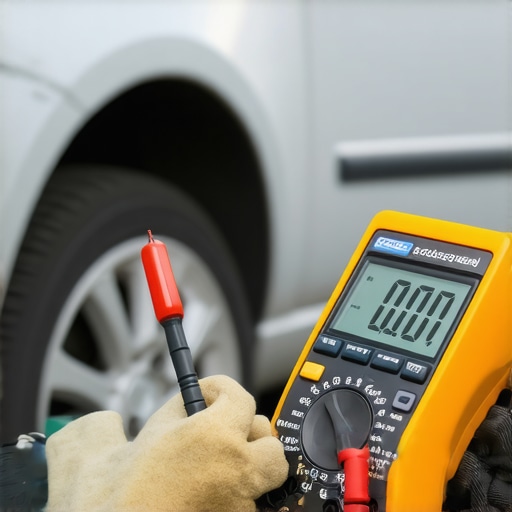
This same logic applies to your entire car service checklist—always verify the circuit before you condemn the expensive component. For instance, why you should never wait for your oil light to come on is a perfect example of how a simple sensor or connection can mimic a catastrophic failure. Before you let a shop talk you into a major overhaul, use troubleshooting common auto repair issues before visiting the shop to rule out these simple, ‘expert-level’ nuances first. You’ll save thousands over the life of your vehicle and finally fix the root cause instead of just masking the symptoms.I didn’t stop at the wire brush, and you shouldn’t either. If you want to move from driveway tinkerer to home pro, you need to upgrade both your chemistry and your tech. While the baking soda trick is great for an emergency, I’ve transitioned to using dedicated aerosol battery cleaners that include a built-in acid indicator. These sprays turn bright pink the moment they touch even a microscopic trace of acid. It takes the guesswork out of the job; if it stays yellow, the area is neutralized. This is a level of precision you just don’t get with a box of Arm & Hammer, and it is a core part of any modern car service checklist.
Skip the Kitchen Pantry and Get a Dedicated Acid Neutralizer
I personally use a spray-on terminal protector instead of petroleum jelly now. While the jelly works, it tends to turn into a sticky magnet for road dust and grime over a hot summer. A dedicated protector spray dries to a waxy, high-visibility film that stays put through high-pressure car washes and salted winter roads. This simple shift in materials is how you maximize your cars lifespan with expert tune-up strategies. It isn’t just about cleaning; it is about creating a barrier that lasts 12 months, not 12 days.
OBDII Scanners Help You See Through the Dashboards Lies
If you really want to stay ahead of the curve, you need a Bluetooth OBDII scanner. I keep mine in the glovebox at all times. These tools allow you to see real-time voltage data on your phone while the engine is actually cranking. According to the Battery Council International (BCI) technical manuals, a battery can show 12.6 volts while sitting idle but can drop below 9 volts the second the starter engages—a phenomenon known as ‘surface charge’ masking. A scanner catches this instantly. As we look at auto repair trends to watch in 2025, we are seeing more cars incorporate predictive AI that will tell you exactly how many ‘starts’ your battery has left based on internal resistance. Until that becomes standard, these cheap handheld scanners are your best defense against a surprise tow bill. 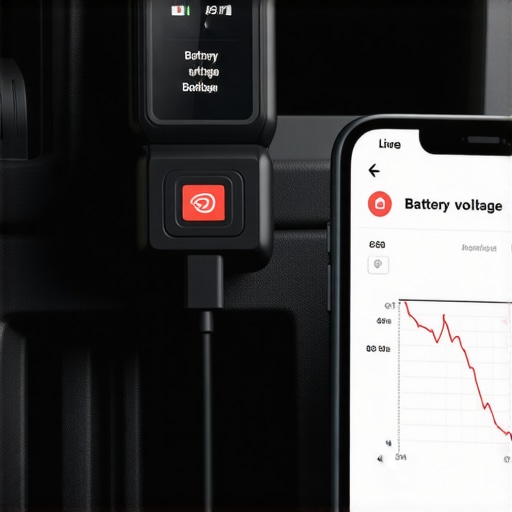
How can I maintain my electrical system over the long term?
The most important thing you can do once a year is to perform a ‘voltage drop test’ on your main ground cables. This sounds technical, but it’s just using a multimeter to see if power is getting ‘lost’ on its way through the car’s frame. This is why how professional diagnostics found my ghost electrical leak became one of my most-read stories—people realize that the battery is usually the victim, not the criminal. By keeping the grounds clean, you take the strain off the alternator and the starter motor, ensuring the entire system scales with the age of the vehicle rather than degrading.
Clean the Ground Point to Kill Ghost Electrical Issues
I once spent three weekends chasing a rough idle only to realize the engine-to-chassis ground strap had a tiny bit of salt crust on the mounting bolt. A quick hit with the wire brush and some fresh grease solved a problem that three different ‘new’ sensors couldn’t touch. This is a fundamental lesson in the ultimate car service guide: always check the path of least resistance first. My advanced tip for you today? Go find where your negative battery cable bolts to the car frame. Remove that bolt, sand the metal underneath until it’s silver, and put it back together. You’ll be amazed at how much faster your windows roll up and how much brighter your dash lights become. It’s the easiest way to test battery strength at home by observing how the car reacts to a perfect ground.
The One Mistake That Still Makes Me Cringe
After years of working under hoods, I’ve realized that the ‘dead battery’ diagnosis is often just laziness in disguise. I once spent a whole Saturday tearing apart a starter motor because I didn’t want to believe a tiny layer of white powder could stop a 4,000-pound truck. It could. Here are the hard-won truths: First, never trust a visual inspection alone; lead can look clean but still be oxidized. Second, heat is just as bad as cold; summer corrosion is what actually kills your battery for the winter. Finally, a how a simple tune-up fixed my mystery hesitation moment often starts right here at the battery posts. Don’t let a ten-cent problem lead to a thousand-dollar repair bill.
The Gear That Lives in My Trunk
To do this right, you need more than just a kitchen sponge. I swear by these three things: A dedicated terminal brush with both internal and external bristles—it’s the only way to get that ‘factory shine.’ A basic digital multimeter is your best friend for the simple way to test battery strength at home. Lastly, I always keep a packet of chemically treated felt washers to place under the connectors; they absorb acid fumes before they can reach the metal. These small additions are part of any smart car service checklist. #IMAGE_PLACEHOLDER_E#
Take Control of Your Commute
You don’t need to be a master mechanic to keep your car reliable. By taking twenty minutes twice a year to inspect and clean your connections, you are doing more for your vehicle than most people do in a decade. It’s about building a relationship with your machine so that troubleshooting common auto repair issues before visiting the shop becomes second nature. Clean your car battery terminal today and feel the difference the next time you turn that key. Have you ever been surprised by how much better your car ran after a simple cleaning? Let me know in the comments below!