
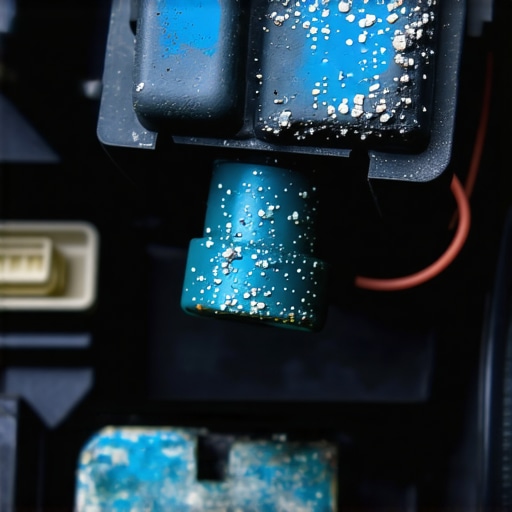
It was 6:45 AM on a Tuesday, and I was already behind schedule for a meeting that could have changed my career. I twisted the key in my old sedan, expecting the usual purr, but I got a click and then total silence. When I popped the hood, I saw it: a massive, fuzzy clump of blue-white ‘cotton candy’ swallowing my positive battery terminal. I’d scraped it off just a month prior, but here it was again, like a stubborn weed in my garden. I felt like a total amateur. I thought I knew how to keep my vehicle in top shape, but this recurring crust was mocking me. If you’ve ever found yourself frantically scrubbing battery posts with a discarded toothbrush and baking soda in a gas station parking lot, you know exactly the frustration I’m talking about. Today, I’m going to help you break that cycle and explain why that gunk keeps coming back no matter how many times you clean it. We are going to move past the temporary fixes and get to the root of the problem.
Stop Blaming Your Old Battery and Look Closer
Dealing with corrosion isn’t just about the mess; it’s about the invisible damage it’s doing to your electrical system. Many people assume they just need a new battery, but that’s not always the case. Before you go out and buy a replacement, it’s worth checking if your battery is still healthy. I made the mistake of replacing a perfectly good battery once, only to realize the real culprit was a tiny hairline crack around the terminal post. This crack allowed sulfuric acid vapors to escape and react with the metal. According to experts at Battery Council International, even a microscopic leak of hydrogen gas can cause significant terminal corrosion over time. Have you ever noticed that the corrosion seems to prefer one side over the other? That’s usually a big clue. Whether it’s an alternator overcharging the system or just simple age, we need to figure out if it’s actually dead or just crying for help.
Is this crusty buildup actually dangerous for my car?
You might think it’s just an eyesore, but that crust acts like a wall between your battery and the rest of your car. It increases resistance, which makes your starter motor work harder and can even lead to ghost electrical issues that are a nightmare to track down. I’ve seen perfectly good cars refuse to start simply because the connection was ‘suffocating’ under a layer of sulfate. Tell me, have you been dealing with this recurring mess every few months, or is this your first time seeing the ‘blue fuzz’ under your hood?
Scrub Away the Acid Plaque Once and For All
To get a clean slate, you need to treat battery corrosion like dental plaque—it requires more than a quick rinse. First, disconnect the negative terminal (the one with the minus sign) before the positive one. I learned this the hard way back in my college years when my wrench touched the car frame while I was working on the positive side; the resulting spark was bright enough to see through closed eyelids and nearly welded my tool to the chassis. Once the cables are safely off, mix a tablespoon of baking soda into a cup of lukewarm water. This isn’t just a DIY hack; it’s a chemical necessity. The alkaline baking soda neutralizes the acidic corrosion on contact. Dip an old toothbrush or a dedicated wire terminal brush into the mix and scrub until the bubbling stops. If you skip this, the acid remains active, and your ‘clean’ terminals will be fuzzy again by next month. After scrubbing, rinse with a little plain water and dry everything thoroughly with a lint-free rag. 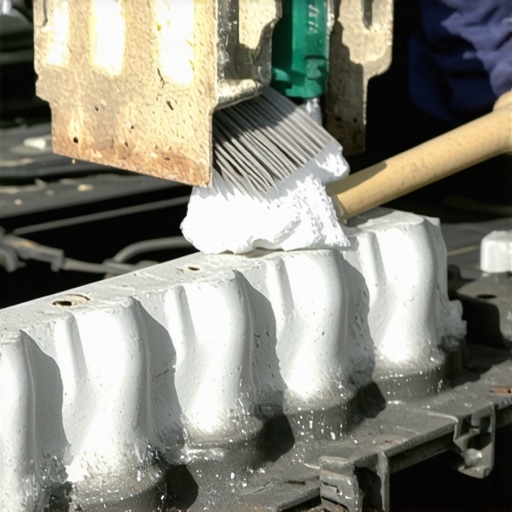
Protect the Connection for the Long Haul
Cleaning is only half the battle. If you don’t seal that connection, oxygen and moisture will team up with those battery vapors to start the process all over again. I started using anti-corrosion felt washers—the red and green ones—and a thin layer of dielectric grease or specialized terminal protector spray. Think of it like putting a clear coat on a fresh paint job. This barrier prevents the gas from reacting with the lead or copper terminals. While you are under there, it is the perfect time for troubleshooting common auto repair issues before they leave you stranded. Check the cables for fraying or stiffness. A cable that feels crunchy when you bend it is corroded inside the insulation, which is a prime suspect when you’re trying to how to spot a bad ground wire causing electrical issues. If the cable itself is compromised, no amount of terminal cleaning will restore your car’s ‘zip.’
Why This Simple Fix Is Your Best Performance Hack
You might wonder why a bit of blue fuzz matters if the car eventually starts. Every millivolt lost to resistance at the battery is a millivolt your fuel injectors and ignition coils aren’t getting. I’ve seen cases where how a simple tune-up fixed my mystery hesitation simply because the owner finally addressed a weak electrical connection. A clean battery is the foundation of any effort to tune up your car for peak performance. It’s like trying to run a marathon while breathing through a straw; your engine can’t perform if the electrical ‘lungs’ are clogged. By spending twenty minutes on this maintenance today, you’re not just preventing a no-start condition; you’re ensuring your car’s computer gets a steady, clean signal, which improves everything from shift points to idle quality.Most drivers walk into a shop and ask for a ‘tune-up’ as if they are ordering a specific burger from a menu. But here is the truth that most mechanics won’t tell you: in the age of computerized engines, the traditional tune-up is practically dead. Everyone says you just need new spark plugs and a filter to improve fuel efficiency and safety, but in my experience, focusing solely on parts is a rookie mistake. Modern performance is dictated by sensor accuracy and software adaptations. If your technician isn’t looking at fuel trims or oxygen sensor response times, they aren’t actually tuning anything; they are just ‘parts swapping’ and hoping for the best. To truly maximize your car’s lifespan, you have to look past the physical components and into the data.
Why Your New Brake Pads Might Fail Within Months
I’ve seen it a hundred times: a DIYer or a budget shop throws a brand-new set of pads on a car, only for the owner to return eight weeks later complaining of a squeak or a pull. The ‘oops’ factor here is usually the slide pins. People focus so much on the friction material that they forget the mechanical hardware that allows the caliper to move. If those pins are even slightly seized or lubricated with the wrong grease, your brand-new pads will wear unevenly or overheat. This is often the real reason your car pulls under heavy braking even after a service. According to a report by the Car Care Council, nearly 80% of vehicles on the road fail at least one component of a basic inspection, and it’s usually because the ‘hidden’ moving parts were ignored during a previous repair.
Why do my rear brakes wear out before the fronts?
This is the ultimate advanced reader question because it defies the old-school logic that the front brakes do 80% of the work. On many modern vehicles, electronic brake force distribution (EBD) intentionally applies the rear brakes first to prevent the ‘nose-dive’ feeling and keep the car level. If you aren’t aware of this, you might suspect a mechanical failure when you see the real reason your rear brakes wear faster than fronts is actually just by design. Ignoring this nuance leads to people putting cheap pads on the back, thinking they are less important, which actually compromises the entire stability of the vehicle during a panic stop. 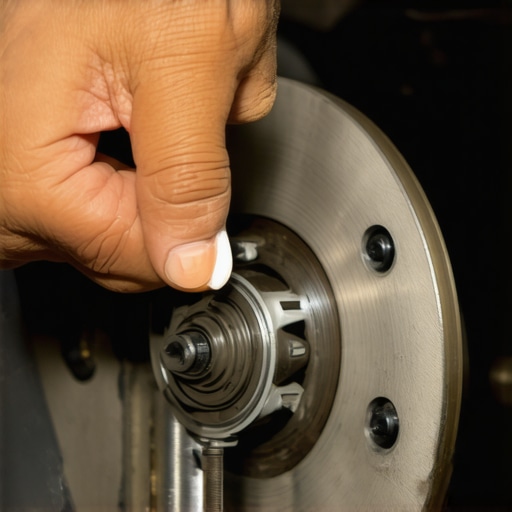
Avoid the Trap of Solving Symptoms Instead of Causes
The biggest mistake I see is ‘throwing parts at a code.’ If your check engine light is on, don’t just replace the sensor the code mentions. For example, a lean condition code often leads people to buy an expensive mass airflow sensor, when the actual culprit is a fifty-cent cracked vacuum hose. Before you spend a dime, spend time troubleshooting common auto repair issues with a critical eye. This analytical approach is what separates a backyard tinkerer from a pro. Whether you are trying to tune up your car for peak performance or just trying to get through the work week, remember that every system is interconnected. Have you ever fallen into the trap of replacing a part only to find the problem was something much smaller? Let me know in the comments!
The Tools That Turned Me From a Guesser Into a Pro
To stop chasing ghosts, you need better eyes than just a pair of squinting sockets. I spent years guessing at noises and vibrations until I finally invested in a bidirectional scan tool. Unlike the free code readers you find at the local auto parts shop, a professional-grade unit allows you to perform ‘active tests’—basically commanding the vehicle’s computer to turn on a fan, pulse an injector, or move a window motor. I recall a stubborn EVAP leak that had me stumped for a week; I used my scanner to force the vent solenoid closed while I checked for pressure drops and found the source in minutes. This level of technical insight is crucial for how to tell if your computer is giving you a false error code before you waste hundreds of dollars on sensors you don’t actually need. If you want the truth about why my car finally hit 200000 miles, it is because I prioritized diagnostic accuracy over the ‘parts cannon’ approach.
Precision Torque Beats a Heavy Hand Every Time
Some people think it is overkill to use a torque wrench for spark plugs or brake caliper bolts, but modern aluminum engine heads and suspension components have zero tolerance for being ‘snugged up’ by feel alone. Over-tightening or uneven tightening is one of the most common reasons why your brake rotors keep warping every few months. When your wheel lugs are torqued unevenly, it creates microscopic distortions in the hub that translate into a pulsating pedal. According to the Bosch Automotive Handbook (10th Edition), even slight deviations in fastening torque can compromise the integrity of gaskets and the thermal expansion properties of modern alloys. I personally use a digital torque adapter for everything from understanding brake system repairs to simple oil changes, ensuring every fastener is exactly where the factory engineers intended. 
How can I stay on top of maintenance without getting overwhelmed?
The secret to long-term success is a rolling audit rather than a weekend marathon. I don’t wait for a major holiday to do ‘everything.’ Instead, I follow a car service checklist that breaks tasks into 15-minute bite-sized inspections. One weekend I might just check my tire pressures and fluid clarity; the next, I am inspecting the suspension bushings and CV boots. This keeps the work manageable and allows you to catch things like a leaking shock before it ruins your tires. Looking ahead at auto repair trends to watch in 2025, it is clear that predictive maintenance is the next frontier. We are moving toward an era where your vehicle’s onboard AI will notify your phone the moment a specific sensor starts to drift out of its ideal voltage range.
Taking Control of Your Vehicle’s Future
To truly maximize your car’s lifespan, you have to treat it as a series of interconnected systems that require data-driven care. I highly recommend starting a digital auto log to track every repair, the specific brand of parts used, and the dates of service. This habit helps you identify if a certain brand of brake pad isn’t living up to its promise on your specific car. My challenge to you: Grab a digital multimeter this weekend and check your battery’s resting voltage after the car has been sitting for at least four hours. It is the easiest way to start thinking like a professional technician and protecting your investment. If you ever feel like a project is becoming too complex, don’t hesitate to contact us for guidance on navigating more technical repairs.
Lessons My Empty Wallet Taught Me About Car Maintenance
I used to think ‘preventative’ was just a fancy word shops used to upcharge customers. After a decade under the hood, I’ve realized that maintenance isn’t a chore; it’s a negotiation with physics. If you don’t pay a little for the ultimate car service guide now, you will pay a lot for a tow truck later. Secondly, your car talks to you long before it breaks. That slight shimmy in the pedal or the faint smell of ozone is a warning. Most people wait for the ‘catastrophe’ instead of listening to the ‘whisper.’ Learning the brake service myths early on saved me from a $1,200 caliper replacement just last year. Finally, precision is everything. Guesstimating a bolt’s tightness is a recipe for a recurring vibration that will haunt your daily commute.
My Go-To Gear for Stopping the Guesswork
To move from a ‘parts swapper’ to a true troubleshooter, you need tools that provide data, not just leverage. First, a high-quality digital multimeter is non-negotiable; it’s the only way to verify if your alternator is actually charging or if you have a parasitic drain. Second, I always keep a dedicated service manual for my specific VIN—YouTube is great for a visual overview, but factory torque specs are the law. Lastly, I never start a job without a pair of comfortable safety glasses. Battery acid and pressurized brake fluid are unforgiving, and your safety is the most important part of any repair.
Take the Wheel of Your Car’s Health
Owning a car that lasts 200,000 miles isn’t about luck; it’s about a consistent car service routine. You now have the knowledge to move past the ‘blue fuzz’ on your battery and into the world of precision diagnostics. You’re not just a driver anymore; you’re the lead technician of your own driveway. Don’t let the complexity of modern systems intimidate you. By avoiding bad habits, like leaving your car idling for too long, and sticking to your data-driven checklist, you ensure your vehicle stays reliable for years to come. Have you ever successfully diagnosed a ‘ghost’ electrical issue on your own? Let me know in the comments below!