
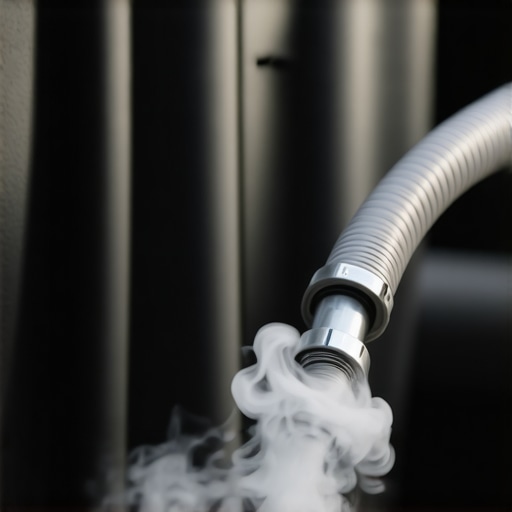
It was a Tuesday morning, raining, and I had exactly 48 hours to pass my state inspection. That orange glowing ‘Check Engine’ light was staring at me like a debt collector. I did what most folks do—I tightened the gas cap. Then I replaced it. Then I cleared the code. Six miles later? Ding. It was back. I felt like I was chasing a ghost, and honestly, I was ready to drive the thing into a lake. It reminded me of the unexpected reason my car failed the inspection last year. I wasted a weekend throwing parts at a problem I couldn’t even see. I spent eighty bucks on a new charcoal canister that I didn’t even need. Don’t be like me. Finding an EVAP leak doesn’t have to be a game of ‘Replace the Most Expensive Sensor First.’ Today, we’re going to pin it down with a simple smoke machine so you can get back to a clear dashboard and a passed inspection.
Is a Budget Smoke Machine Actually Worth the Hype?
You might be thinking, ‘Do I really need another tool taking up shelf space?’ or ‘Aren’t those professional units over a thousand bucks?’ I used to think the same thing. I tried the old ‘spray carb cleaner on the hoses’ trick, which is about as effective as trying to find a needle in a haystack with a blindfold on. According to the Environmental Protection Agency (EPA), evaporative emissions can account for a significant portion of a vehicle’s total hydrocarbon output, meaning that tiny leak isn’t just annoying—it’s actively wasting your fuel and hurting the environment. A basic DIY smoke tester provides the visual proof you need to stop the guesswork. It is much more effective than how I used to detect a small vacuum leak using a simple cigar, which mostly just left me smelling like a stale lounge.
Stop Chasing Ghosts and Start Seeing the Smoke
When you’re troubleshooting common auto repair issues before visiting the shop, the EVAP system is often the most frustrating because it’s so incredibly sensitive. A leak as small as 0.020 inches—smaller than a pinhead—can trigger that light. I’ve seen folks do a full simple tune up hoping it would clear the code, only to be disappointed. Using a dedicated machine is just cleaner and more reliable than any other method. Have you ever spent more than fifty dollars on a part that didn’t actually fix your check engine light? If so, you’re the reason I’m writing this. We’re going to walk through the setup, the hookup, and the ‘Aha!’ moment when that little wisp of white smoke points right at the culprit. Using the simple way to check for vacuum leaks with smoke is the only way to be 100% sure before you reach for your wallet.Connect the smoke machine’s power leads directly to your vehicle’s 12V battery to get started. Red goes to positive and black to ground. If you are already troubleshooting common auto repair issues before visiting the shop, make sure your battery is healthy; a low-voltage source can lead to inconsistent smoke production and a headache you do not need. Once you have power, you need an entry point. Most cars from the last two decades have a dedicated EVAP service port marked with a green cap. If yours does not, you can disconnect a vacuum line near the intake or purge valve and inject the smoke there. Learning these entry points is a core part of how regular tune-ups improve fuel efficiency and safety by ensuring every seal remains airtight.
Don’t Forget to Seal the Vent Solenoid
This is the step where most DIYers get frustrated. The EVAP system is designed to be open to the atmosphere through a vent solenoid during certain cycles. If you start pumping smoke and it immediately billows out from the rear of the car near the gas tank, you probably haven’t found a leak—you have found an open vent. I once spent three hours chasing what I thought was a massive failure on an old SUV, only to realize I hadn’t commanded the vent solenoid closed. It was a humbling moment that reminded me why a proper car service checklist always includes verifying component states. You can use a scan tool to close the vent or simply use a pair of hose-pincher pliers to clamp the vent line shut for the duration of the test.
Light Up the System and Follow the Trail
After you flip the switch on the machine, give it about sixty seconds to saturate the lines. This is when you grab your brightest LED flashlight. Smoke can be incredibly elusive in a well-lit garage; you need to create contrast by backlighting the components. Move the light slowly along the fuel lines, the charcoal canister, and the filler neck. Think of the EVAP system like a balloon that is not supposed to stretch. If you use a machine with a flow meter, watch the little ball. If it stays floating, you still have air escaping. It acts like a heart rate monitor for your fuel system; as long as that ball is in the air, the ‘patient’ has a hole somewhere.
Small Leaks Hide in Plain Sight
If your dashboard is showing a P0442 code for a small leak, the wisp of smoke might be as thin as a spiderweb. These are the hardest to find because they often hide on top of the fuel tank or behind plastic shields. I once found a leak in a hairline crack on a plastic fitting that only appeared after five minutes of pressure. As you maximize your car’s lifespan with expert tune-up strategies, you will realize that plastic and rubber become brittle with heat and age. If you see smoke escaping from a rubber connector, check the surrounding hoses too. If one is dry-rotted, the rest are likely right behind it. Before you assume it is a sensor, check how to tell if your computer is giving you a false error code to ensure you are not chasing a ghost in the software.  Just like that invisible EVAP leak, brake systems and engine tune-ups are often misunderstood by even seasoned DIYers. We are taught that a vibrating steering wheel means warped rotors, but that is one of the most expensive myths in the automotive world. In my experience, ninety percent of the time, the rotor isn’t actually bent. Instead, you’re dealing with uneven pad deposits. When you get your brakes too hot and then sit at a stoplight with your foot clamped down, you’re essentially ‘printing’ brake pad material onto the rotor. This creates high spots that feel like a warp. Before you buy new parts, learn the simple way to bed in new brake pads to keep that surface smooth and consistent.
Stop Replacing Rotors Every Time You Feel a Shudder
Most people assume that ‘warping’ is a physical deformation of the metal, but high-quality cast iron rotors rarely warp under street use. According to technical bulletins from Brembo, ‘warped’ rotors are usually a result of Cementite formation—extremely hard spots caused by excessive heat. If you don’t address your braking habits, you will find yourself asking why your brake rotors keep warping every few months despite buying the ‘premium’ option. This is the hidden nuance of understanding brake system repairs; it is often about the chemistry of the friction material, not just the mechanical thickness of the steel. 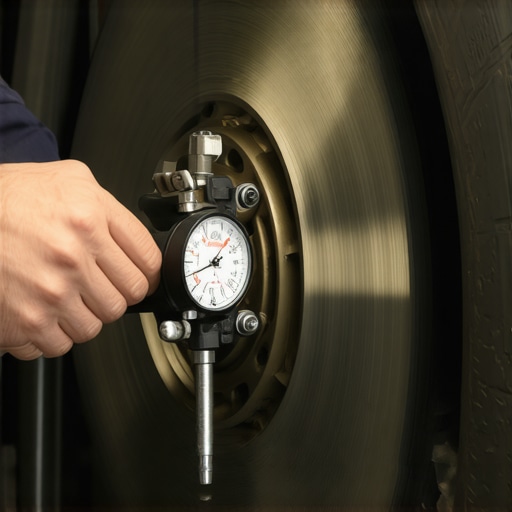
Why Does My Brake Pedal Feel Spongy After a Simple Flush?
This is a classic ‘oops’ factor for the advanced enthusiast. You did everything right—flushed the fluid, used a vacuum bleeder—and yet the pedal is soft. Many modern cars require the ABS pump to be cycled via a scan tool during the bleeding process to purge air trapped in the internal valves. If you skip this, you’re only bleeding half the system. This is a crucial part of a car service checklist that many ignore. Beyond the pedal feel, keep an eye on your wear patterns. Surprisingly, on many newer vehicles, the real reason your rear brakes wear faster than fronts is due to electronic brake force distribution (EBD) and active cruise control systems that use the rear calipers to stabilize the car.
The Trap of the 100,000-Mile Spark Plug
Another nuance that gets people is the ‘long-life’ tune-up. Manufacturers claim spark plugs can last 100,000 miles, and while they might still fire, the gap has likely grown significantly. This forces the ignition coil to work harder, eventually leading to a premature coil failure. If you want to maximize your car’s lifespan with expert tune-up strategies, you should be checking those gaps every 50,000 miles. Don’t wait for a misfire code to tell you there is a problem. While you are at it, ensure you are troubleshooting common auto repair issues before visiting the shop so you can tell the mechanic exactly when the symptoms occur. Have you ever fallen into this trap of replacing rotors or sensors only to have the problem return? Let me know in the comments below.If the answer is a resounding ‘yes,’ then it’s time to upgrade your strategy from a parts-cannon approach to precision data. I used to be the guy who replaced every oxygen sensor the moment a code popped up, but now I won’t turn a wrench until I have seen the live data stream. This shift in mindset is what separates a weekend tinkerer from someone who can actually maximize your car’s lifespan with expert tune-up strategies. My ‘secret weapon’ isn’t a bigger hammer—it’s a bidirectional scan tool. Unlike those cheap readers that just give you a code, a bidirectional tool lets you command the vehicle. You can tell the AC clutch to engage, the fuel pump to prime, or the individual brake valves to open. When you are understanding brake system repairs in a modern vehicle, being able to talk back to the car’s computer is no longer optional; it is a requirement. 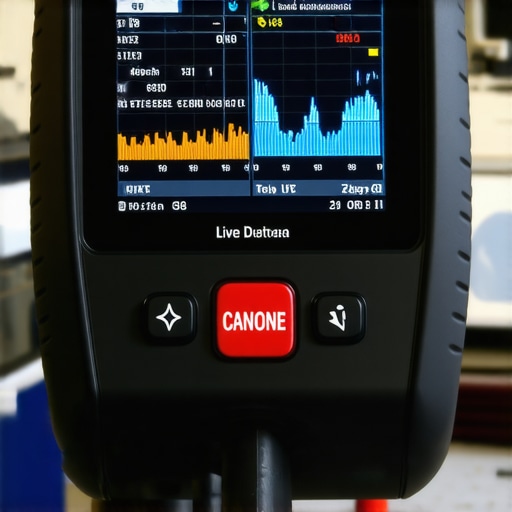
The One Tool That Finally Stopped My Guessing Game
I specifically recommend the Autel or Launch mid-tier tablets because they provide the same functional tests used by dealerships. A technical study by SAE International (Standard J1979) notes that as emissions standards tighten, the precision required for EVAP and fuel trim monitoring will exceed what basic handheld scanners can provide. If you are serious about troubleshooting common auto repair issues before visiting the shop, you need to see what the computer sees in real-time. I recently used mine to diagnose a faulty fuel pump that was only failing at high speeds; I could see the fuel pressure drop on a graph while driving, which saved me from replacing the spark plugs and coils for no reason.
How do I keep my car running like new for 200,000 miles?
Consistency is the boring but necessary answer. You have to move beyond the mindset of ‘if it isn’t broken, don’t fix it.’ I keep a digital log of every fluid swap and inspection. Using a car service checklist helps me spot trends, like a slowly declining battery voltage or a cooling system that is taking slightly longer to reach operating temperature. These are the early warning signs of a failure. I also perform a ‘stress test’ once a quarter—checking for play in the suspension and looking for early signs of seepage in the CV boots. It is the only way to ensure the ultimate car service guide actually works for your specific driving habits.
AI is Coming for Your Toolbox
Looking forward, I predict that DIY repair is about to go through a massive digital revolution. We are already seeing auto repair trends to watch in 2025 that include AI-integrated diagnostics. Imagine pointing your phone camera at your engine while it’s running, and an app uses sound frequency analysis to tell you exactly which pulley is squeaking. This technology is already in development for industrial applications and will be in our garages soon. Try this today: Plug in your scanner and look at your Long Term Fuel Trim (LTFT). If it’s more than 10% in either direction, you have a hidden vacuum leak or fuel delivery issue waiting to leave you stranded. Catching it now is the difference between a five-minute fix and a five-hundred-dollar tow bill.
What Years of Grease Under My Fingernails Taught Me
I’ve spent more hours than I’d like to admit staring at the underbelly of a car, and if there is one thing I have learned, it is that your eyes can lie but the data rarely does. First, never assume a code is a death sentence for a sensor; always learn how to tell if your computer is giving you a false error code before you buy parts. Second, the ‘cheapest’ fix is often the one that takes the most time to diagnose properly. I used to think I was saving money by skipping the diagnostic fee, but I was actually paying for it in wasted weekends. Finally, remember that brake service myths what you need to know before your next stop often lead people to replace rotors that just needed a good ‘bed-in’ session. It is about working smarter, not harder.
The Gear That Actually Earned Its Spot in My Toolbox
If you are serious about DIY, you need a few things that go beyond a standard socket set. I swear by my bidirectional scan tool because it turns a guessing game into a conversation with the vehicle. I also highly recommend a high-quality smoke machine—it paid for itself the very first time it found a pinhole leak in a plastic line I never would have seen. For keeping everything organized, I rely on the ultimate car service guide when and why to schedule maintenance to ensure I am not just fixing things that break, but preventing the breakages altogether. These tools give you the confidence to tackle understanding brake system repairs and complex EVAP issues without the ‘repair anxiety’ we all used to feel.
Stop Fearing the Check Engine Light and Take Control
There is a unique kind of satisfaction that comes from seeing that orange light vanish because you found the problem. You don’t need to be a master technician to maximize your cars lifespan with expert tune up strategies; you just need patience and the right approach. Your car is a complex machine, but it’s not a mystery. By using the right tools and trusting the process, you can save thousands of dollars and gain a level of self-reliance that most drivers will never know. It’s time to get out there, hook up that smoke machine, and clear your dashboard for good. Have you ever replaced a part only to find out it wasn’t the problem at all? Tell me your ‘parts cannon’ horror story in the comments below!