

It was a humid Tuesday morning, and I was already running late for a meeting. I turned the key, and instead of the usual smooth idle, my engine stumbled like it had just woken up from a three-day bender. Then came that unmistakable smell—sickly sweet, like burnt maple syrup. I popped the hood, looked at the plastic overflow tank, and my heart absolutely sank. It wasn’t just low; the liquid inside looked like a frothy chocolate milkshake. I’d spent years priding myself on following the ultimate car service guide, but I’d completely ignored the subtle warning signs of a failing head gasket. Today, I want to save you from that same gut-punch feeling. We are going to dive into how your coolant reservoir acts as a window into your engine’s soul, helping you catch a disaster before it leaves you stranded. Have you ever noticed a strange residue in your tank and just hoped it would go away?
What That Chocolate Milkshake in Your Tank is Telling You
I’ll be honest: early in my DIY days, I made a massive mistake. I saw a bit of white, creamy gunk under my oil cap and figured it was just condensation from short trips. I kept driving, troubleshooting common auto repair issues in my head but ignoring the most obvious one. By the time I realized the oil and coolant were mixing, the damage was done. The reservoir is your first line of defense. When a head gasket fails, the seal between the engine block and the cylinder head breaks. This allows combustion gases, oil, and coolant to swap places. If you see bubbles dancing in the reservoir while the engine is running, or if your engine temperature spikes only when idling, you aren’t just looking at a minor leak. You’re looking at a pressurized system that’s being invaded by exhaust.
Is a head gasket repair really the end of your car?
It’s the question that keeps every car owner up at night. The word “blown head gasket” sounds like a death sentence for your wallet. However, catching it early through the reservoir can be the difference between a top-end rebuild and needing a whole new engine. According to data from AAA, cooling system failures are among the most common reasons for engine-related breakdowns, yet many of these issues start with symptoms you can see without a single tool. If you’ve been skipping a scheduled coolant flush, the acidity in old antifreeze can actually eat away at that gasket over time. It’s a slow-motion car crash that you have the power to stop. Before you panic, let’s look at the specific visual cues that tell the real story of what’s happening inside those cylinders.
Spot the Signs Before Your Engine Melts
To catch a failure early, you need to treat your car like a patient in a clinic. Start with the “tailpipe test.” If your car is blowing thick, billowing white smoke that smells like a candy shop, that is coolant hitting your combustion chamber. It is a classic symptom often missed by those just focused on car service basics. Next, wait for the engine to cool and pull the oil dipstick. If it looks like a frothy latte instead of clear amber oil, you have got a major breach. I remember helping a buddy with his old truck; we thought it just needed to tune-up your car for peak performance because it was idling rough. But one look at the dipstick told us his oil pan was a swimming pool for antifreeze.
Watch for Pressure Problems in the Reservoir
Think of your cooling system as a closed loop. When the head gasket fails, it is like a hole in a submarine—pressure from the cylinders pushes exhaust gases into the coolant. With the engine cold, remove the reservoir cap and start the car. If you see a constant stream of bubbles, your engine is literally “burping” its own exhaust. This pressure is also why your engine temperature spikes only when idling. To confirm, carefully feel the upper radiator hose. If it is rock-hard and feels like it is about to pop, there is too much internal pressure. While you are under the hood, it is also a good time to how to check transmission fluid levels without a dipstick if your car is an automatic, just to ensure no other fluids are mingling where they should not.
Verify the Damage with a Block Test Kit
If the visual cues are subtle, go for the chemical “smoking gun.” You can buy a combustion leak tester—a plastic device that sits on your radiator or reservoir. You fill it with a blue chemical liquid and use a bulb to draw air from the cooling system through it. If the blue liquid turns yellow or green, it has detected CO2. It is foolproof. 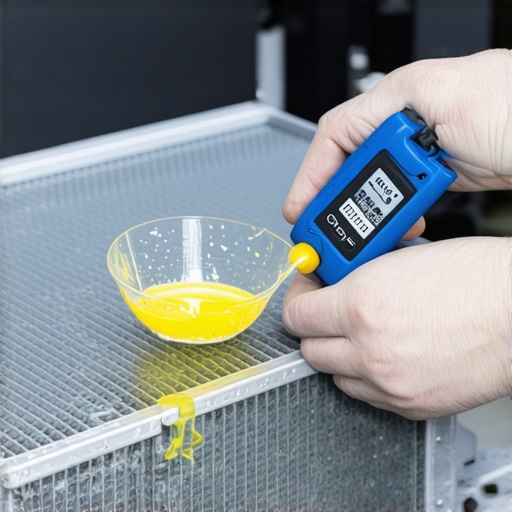 This test once saved me from buying a “bargain” SUV that looked great but had a cracked head. The seller swore it was just a simple troubleshooting common auto repair issues matter, but the blue-to-yellow chemical change does not lie.
Why You Cannot Trust the Temperature Gauge Alone
A lot of drivers think they are safe as long as the needle is in the middle. However, air pockets caused by a head gasket leak can settle around the temperature sensor, giving you a false reading. You might think you are just testing the best way to test an engine thermostat at home, but you could actually be melting your aluminum heads. Always cross-reference the gauge with what you see in the tank. If you have been diligent about maintenance, you know that keeping the system clean is vital. The hidden cost of skipping a scheduled coolant flush is not just a dirty radiator; it is the acidic breakdown of the gasket itself. Also, why you should never mix different colors of antifreeze becomes clear here—mixing types can create a sludge that mimics head gasket failure symptoms, confusing your diagnosis and potentially clogging your heater core.But here is where it gets really weird, and most mechanics won’t even tell you this because it sounds like science fiction. While everyone tells you to watch the temperature gauge like a hawk, the real pro move is watching your voltage. I want to talk about the ‘ghost in the machine’—the hidden nuance of electrolysis. In my years under the hood, I’ve realized that the common wisdom is slightly flawed. Everyone says head gaskets fail because of heat, but in many cases, heat is just the final blow. The real culprit is often a breakdown in the cooling system’s chemistry or the car’s electrical grounding.
Why Your New Gasket Might Fail Within a Month
The most expensive mistake you can make is replacing a head gasket without checking for stray current. According to research published by SAE International, electrical current can actually travel through your coolant if your engine has a poor ground connection. This process literally eats the metal from the inside out, turning your coolant into a corrosive acid. I’ve seen people spend thousands on a rebuild only to have it fail again because they didn’t how to spot a bad ground wire causing electrical issues. If you want to maximize your cars lifespan with expert tune-up strategies, you have to treat the cooling system as an electrochemical environment, not just a bunch of water tubes. #IMAGE_PLACE_HOLDER_C#
Is Your Battery Actually Eating Your Engine?
It sounds crazy, but a battery with a weak ground can turn your radiator into a sacrificial anode. This leads to the ‘oops’ factor many DIYers hit: they flush the system but ignore the acidity levels. If you have been skipping a scheduled coolant flush, you are leaving old, depleted additives in the block that can no longer neutralize this electrical charge. Another massive trap is the ‘Universal’ coolant myth. I have seen countless owners pour ‘all-makes-all-models’ fluid into a specialized European or Asian system, only to have the chemicals react and form a thick gel. This is exactly why you should never mix different colors of antifreeze; it’s not about the dye, it’s about the silicate and organic acid technology (OAT) fighting for dominance and clogging your passages.
The Myth of the ‘Simple’ Brake Job
This level of nuance extends to your wheels too. Most drivers think a brake service is just about swapping out thin pads for thick ones. However, brake service myths often ignore the fluid’s hygroscopic nature—its ability to absorb water from the air. If your pedal feels soft, the hidden culprit behind a spongy brake pedal is usually water contamination that has lowered the fluid’s boiling point, not the pads themselves. Furthermore, the real reason your rear brakes wear faster than fronts on modern cars is often the electronic stability control applying subtle pressure to keep the car level—a detail often missed during a basic ‘tune-up.’ Have you ever fallen into this trap of fixing the symptom instead of the cause? Let me know in the comments.To really get ahead of these ‘ghost’ issues, I stopped relying on cheap $10 multimeters and invested in a high-impedance digital unit. If you are serious about wanting to maximize your cars lifespan with expert tune-up strategies, you need to be able to measure voltage drops across your engine blocks accurately. I personally use this to check for electrolysis by sticking one probe in the coolant and the other on the battery ground; anything over 0.3 volts means your coolant is essentially becoming a slow-motion acid bath for your gaskets. This is the kind of advanced troubleshooting common auto repair issues that separates the driveway hobbyist from the seasoned pro.
Stop Chasing Shadows with Proper Diagnostics
I once spent three days chasing a rough idle before I realized my fuel trims were compensating for a tiny vacuum leak I could not hear. Since then, I don’t turn a wrench without my OBD2 scanner plugged in to watch live data. If you have been wondering how a simple tune-up fixed my mystery hesitation, it was not magic—it was seeing the O2 sensor data lagging in real-time. 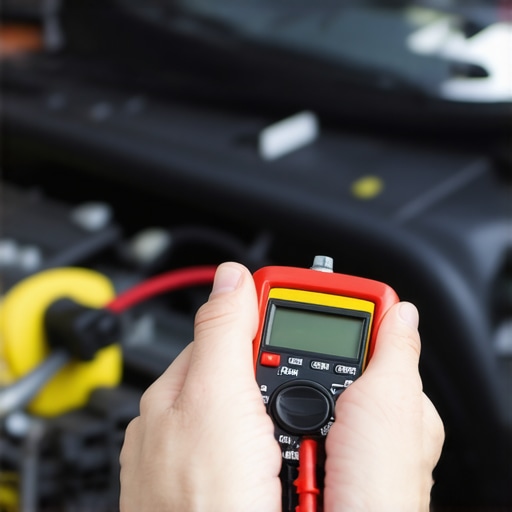 These tools are your eyes and ears in a world where mechanical parts are increasingly controlled by silicon chips.
How can I keep my engine healthy for the next decade?
Long-term results do not come from one expensive repair; they come from the small, repetitive tasks found in a solid car service checklist. I am a firm believer in the ‘look-and-listen’ method every time I change the oil. The Snap-on Technical Service Bulletins (TSB) archive notes that nearly 15% of misdiagnosed cooling issues in late-model vehicles are actually caused by failing sensor grounds rather than actual mechanical leaks. This is why I always check my wire looms for friction wear whenever I am under the hood.
The Future of Home Auto Repair
Looking ahead, I predict we are moving toward a ‘predictive maintenance’ era where your car’s internal computer will alert your phone to a chemical imbalance in your coolant before a gasket even thinks about failing. For now, though, we have to stay manual and vigilant. If you really want to how regular tune-ups improve fuel efficiency and safety, don’t just wait for a dashboard light. My best advice for you this week: grab a multimeter and perform a voltage drop test from your battery’s negative terminal to the engine block. It takes five minutes and could literally save your engine’s life.
Lessons Learned from a Blown Head Gasket and a Late Night Tow
After years of wrenching, I’ve realized that a head gasket failure is rarely a surprise; it’s a slow conversation your car is trying to have with you. My first big ‘lightbulb moment’ was discovering that the ultimate car service guide isn’t just a list of dates, but a philosophy of observation. I learned that ignoring a tiny pressure spike is like ignoring a small crack in a dam. Most importantly, I realized that auto repair trends to watch in 2025 are moving toward electrical integrity as much as mechanical seals. If your ground wires are corroded, your coolant chemistry changes, making even a new gasket vulnerable.
The Diagnostics Gear I Never Leave Home Without
For anyone wanting to maximize your cars lifespan with expert tune-up strategies, you need a few core items in your garage. First, a reliable OBD2 scanner—it turns your smartphone into a real-time health monitor that can spot sensor lag before it triggers a light. Second, a chemical combustion leak tester; it is the only way to be 100% sure about exhaust gases entering your coolant without a teardown. Lastly, I always keep a digital version of my car service checklist to ensure I haven’t missed the small stuff like brake fluid condition. If you are noticing stopping issues alongside engine heat, understanding brake system repairs should be your next priority.
#IMAGE_PLACEHOLDER_TOOLS#
Take Control of Your Car’s Future Today
You don’t need to be a master mechanic to save your engine from a catastrophic failure. You just need to be curious. By checking your reservoir and testing your coolant’s voltage, you’re doing more for your vehicle than 90% of drivers on the road. Consistent car service is about being proactive rather than reactive. Don’t let a small leak turn into a scrap heap; stay vigilant and listen to what your reservoir is telling you. Have you ever found a ‘chocolate milkshake’ in your radiator, or did you catch the leak before it got that far? Tell me your story in the comments below.