
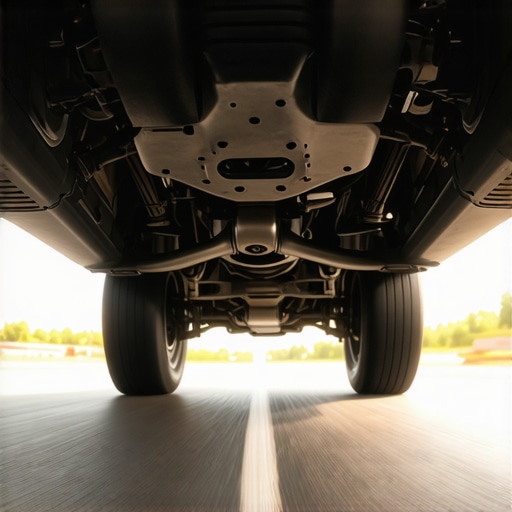
I’ll never forget the afternoon I nearly ended up in a drainage ditch. I was merging onto the highway, gave my old crossover some juice, and felt a violent tug to the right. My first thought? “Great, the alignment shop I went to last week ripped me off.” I was convinced they’d just taken my money and parked my car in the back for an hour without touching a wrench. It’s a terrifying feeling when your vehicle decides to ignore your steering input precisely when you need power. But after spending a weekend covered in grease and frustration, I realized I was looking at the wrong culprit entirely. Today, I’m going to save you the headache and the wasted money I spent chasing the wrong fix.
Stop Blaming Your Alignment for Everything
I used to think every steering issue began and ended with a trip to the alignment rack. It’s a common trap. We assume that if the car isn’t going straight, the wheels must be pointed the wrong way. However, why your car pulls hard to the right after new tires often has more to do with torque than geometry. When you accelerate, your car is under load, and that load exposes weaknesses in your suspension and drivetrain that don’t show up when you’re just cruising. I once spent $120 on an alignment I didn’t need because I didn’t understand “torque steer” or how a worn CV axle can mimic a steering pull. Before you book another appointment, you should try troubleshooting common auto repair issues at home. It might be as simple as uneven tire pressure or as complex as a failing rack and pinion.
Is this just a clever way for shops to overcharge me?
It’s a fair question to be skeptical. Why would a mechanic tell you it’s a $600 axle when you came in for a $99 alignment? But here’s the reality: physics doesn’t lie. According to the Car Care Council, steering and suspension components are the most frequently overlooked safety items on modern vehicles. If one side of your drivetrain is delivering power more efficiently than the other, that car is going to pull, regardless of how straight your wheels are. Have you ever felt that annoying yank in the steering wheel while trying to pass someone? Drop a comment below and tell me if it happened suddenly or grew over time—I’m curious if you’re seeing the same red flags I did. If you’re feeling adventurous, you can even check your tie rod ends with minimal tools to see if there’s any play in the system before you let a pro take over. Understanding why your car wanders across the lane at high speeds starts with looking past the tires and into the moving parts that actually drive the car forward.
Find the Pull Without a Computer
Before you crawl under the chassis, check the air. I once chased a pull for three days only to find my front right tire was 8 PSI lower than the left. It is a classic rookie mistake, but it happens to the best of us when we are stressed. Beyond simple pressure, look at the tread for uneven wear. Learning how to tell if your wheel alignment is ruining your gas mileage often reveals “feathering” or “cupping” that tells a story of worn parts rather than just bad angles.
Look for Clues in the Rubber
If you see the inside edge of your tire wearing faster than the outside, your suspension is likely sagging under load. 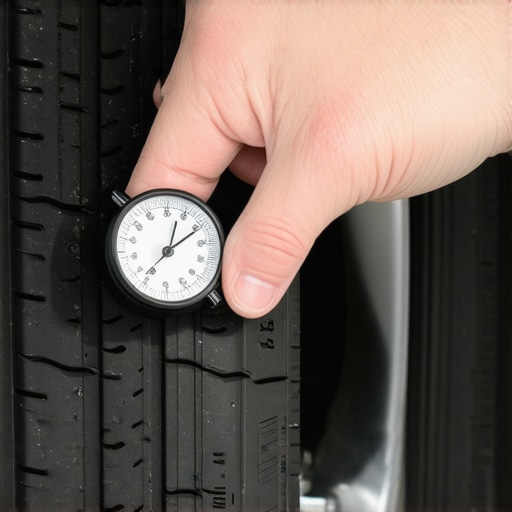 This is not just a cosmetic issue; it changes the physics of how your car handles acceleration. When I was first starting out, I ignored a slightly balding inner edge on my sedan, and within a month, the car was practically jumping toward the shoulder every time I hit the gas.
Check the CV Axles for Grease and Play
Think of your CV axles like the legs of a sprinter; if one is cramping, you are not going to run straight. I remember a particularly nasty job on an old hatchback where the pull only happened when I floored it to merge. I finally got it on stands and found a torn rubber boot. You can inspect your own cv boots for small cracks by turning the wheel all the way to one side and looking for thick, black grease spray. If that grease escapes, the joint loses lubrication, creates friction, and pulls the car toward the “heavy” side under load.
Is Your Brake Caliper Working Against You?
Sometimes the pull is not about power—it is about resistance. A sticking brake caliper is like trying to run while someone is tugging on your shirt. On that same crossover I mentioned earlier, the pull got worse after a long highway stint. I used a cheap infrared thermometer to check the rotor temperatures. The right side was 150 degrees hotter than the left—a dead giveaway that the brake was not fully releasing. If you are noticing a spongy brake pedal or suspect a hydraulic issue, you need to spot a leaking brake caliper before it fails completely and leaves you without stopping power.
Don’t Confuse Engine Misfires with Steering Issues
It sounds crazy, but a stumbling engine can feel like a steering pull. If your car is not just pulling but also vibrating, the “tug” might actually be a hesitation from a misfire. I have seen cases where a simple tune-up fixed my mystery hesitation that I originally thought was a mechanical steering bind. If you find your car hesitates during high speed merging, it might be an engine-load issue that only happens when the drivetrain is stressed, mimicking the feeling of the car wanting to veer off-course.This illusion of a steering problem when it’s actually a drivetrain or braking load is where most DIYers—and even some pros—lose their way. We’re taught from day one that the front of the car is the “boss” of every movement, but that’s an outdated perspective.
Stop assuming your front brakes do all the heavy lifting
Everyone tells you that your front brakes do 70% of the work. While that’s true during an emergency stop, modern Electronic Brake-force Distribution (EBD) has flipped the script for daily driving. In my experience, many modern SUVs and sedans eat through rear pads in half the time people expect. Why? Because your car’s computer uses the rear brakes to prevent “nose-dive” and to stabilize the chassis during light slowing. If you only focus on the front, you’re missing the real reason your rear brakes wear faster than fronts. I’ve seen enthusiasts spend hundreds on high-performance front rotors while their rear calipers were seizing up, causing a subtle pull that felt exactly like a bad alignment. Before you buy parts, check out these brake service myths to ensure you aren’t chasing ghosts.
The hidden trap of the impact wrench
One of the biggest mistakes I ever made was trusting an air-powered impact wrench for everything. It’s fast, sure, but it’s a rotor’s worst enemy. If your mechanic (or you) just hammers the lug nuts on without a torque wrench, you are creating “clamping force” variations. This uneven pressure causes the rotor to warp as it heats up. Industry data from the Car Care Council highlights that over-torquing lug nuts is a leading cause of lateral runout, which manifests as that annoying pedal pulse. Learning the correct way to torque lug nuts is the difference between a smooth ride and why your brake rotors keep warping every few months despite being brand new. 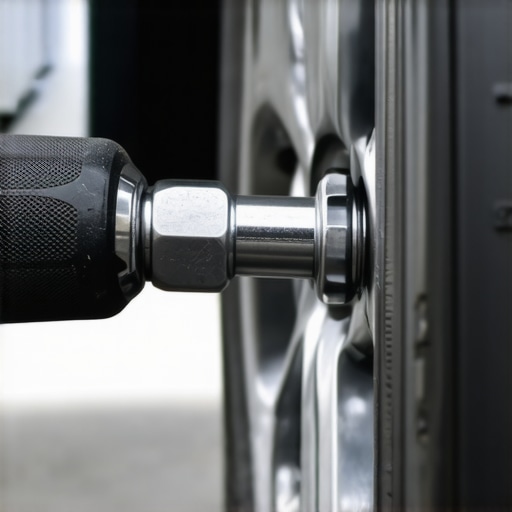
Why does my pedal still feel soft after a full bleed?
This is the “final boss” of brake problems. You’ve bled the lines three times, yet the pedal still sinks. Advanced systems often have air trapped inside the ABS modulator valve body, which no amount of traditional pumping will fix. You often need a bidirectional scan tool to cycle those valves. If that’s not it, you might need to learn how to tell if your brake booster is losing pressure or if the master cylinder internal seals have bypassed. Have you ever fallen into this trap of replacing parts only to have the same soft pedal? Let me know in the comments.
Look beyond the spark plugs for a real tune-up
A “tune-up” in 2025 isn’t just about plugs and wires. It’s about sensor health and fuel trim. I once spent weeks trying to fix a rough idle on a truck, only to find a “lazy” O2 sensor that hadn’t triggered a code yet. Using how professional diagnostics found my ghost electrical leak as a template, I realized the computer was compensating for a problem that didn’t technically exist. To truly maximize your car’s lifespan, you have to look at the data, not just the hardware. Follow a solid car service checklist that includes cleaning the throttle body and checking for vacuum leaks, which are far more common than actual mechanical failure. It’s these hidden nuances that separate a parts-changer from a real technician.If you’re going to get serious about your own maintenance, you have to stop guessing. For years, I used a $20 code reader and thought I was a genius. But as cars evolved, those basic tools became about as useful as a screen door on a submarine. If you want to maximize your car’s lifespan, you need tools that actually talk back to the car’s modules. I’m talking about a bidirectional scan tool. This isn’t just for clearing check engine lights; it’s for testing individual components like fuel pumps or cooling fans without tearing the car apart. The experts at Mitchell 1 ProDemand emphasize that powertrain codes are often just the tip of the iceberg; the real diagnostic gold lies in monitoring ‘live data PIDs’ to see exactly what a sensor is reporting in real-time. 
How do I stay ahead of mechanical failures year after year?
Maintenance isn’t a one-and-done event; it’s a rhythm. I’ve found that how regular tune-ups improve fuel efficiency and safety is mostly down to catching the ‘little things’ before they snowball. My personal routine follows a strict car service checklist that I perform every six months, regardless of mileage. This includes things most people ignore, like cleaning battery terminals or checking the age of the brake fluid. You can even perform the simple way to test battery strength at home with a basic multimeter to ensure you aren’t stranded on the first cold morning of winter. By the time you reach 150,000 miles, these small habits are the only thing separating your daily driver from a permanent spot in the junkyard.
The Shifting Landscape of Auto Care
Looking at auto repair trends to watch in 2025, it’s clear that telematics and remote diagnostics are taking over. Your car is becoming a rolling server, and being able to interpret that data is the new version of turning a wrench. In the next few years, I predict we’ll see DIY tools that can predict a component failure weeks before it happens based on historical voltage drops. It sounds like science fiction, but the technology is already in high-end luxury fleets. For now, focus on the basics you can control today. I challenge you to go out and perform the 5-minute check to prevent transmission failure this afternoon. It’s a tiny time investment that could save you thousands in the long run.
Lessons from a Decade Under the Hood
Looking back at my years of bloody knuckles and greasy forehead smudges, I’ve realized that the most expensive repairs usually start as the smallest whispers. First, never assume a pull is just a simple alignment fix; often, it is the way the car delivers power or resists movement that tells the real story. Second, your vehicle’s computer is your best friend, not an enemy to be feared—learning to read the data before you pick up a wrench will save you thousands in diagnostic fees. Third, I discovered that the truth about why my car finally hit 200,000 miles wasn’t luck; it was about obsessively checking the ignored systems like brake fluid and CV boots before they failed completely.
The Gear That Saved My Sanity
If you are moving from a casual tinkerer to a confident DIYer, there are a few resources I swear by. I personally trust a high-quality torque wrench more than my own strength to prevent why your brake rotors keep warping every few months. I also recommend picking up an infrared thermometer—it is the fastest way to find a sticking caliper without taking the wheel off. For deep dives, I still rely on the ultimate car service guide to ensure I am not missing seasonal fluid swaps. Finally, a bidirectional scan tool is no longer optional; it is the only way to talk to modern ABS and fuel systems effectively without guessing which part to throw at the problem.
Take Back Control of Your Garage
Auto repair can feel like a mountain, but you do not have to climb it in a single day. Every time you open the hood, you are learning a language that most people have forgotten. Whether you are mastering understanding brake system repairs or simply trying to tune up your car for peak performance, the goal is the same: confidence on the road. Don’t be afraid of the grease; be afraid of the complacency that leads to a breakdown at the worst possible moment. Have you ever spent money on an alignment only to find out it was a completely different part causing the pull? Let me know in the comments below!