
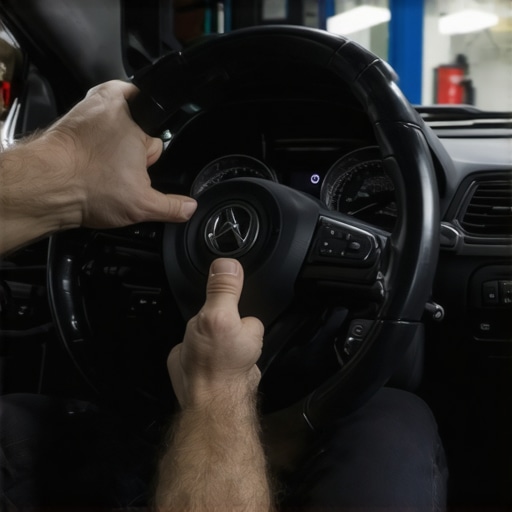
I remember pulling out of the local shop last spring, feeling $120 lighter and expecting my old truck to handle like it was on rails. Instead, as I merged onto the highway, the steering felt less like a precision instrument and more like I was trying to guide a pontoon boat through a swamp. It was maddening. You pay for a professional service, you check off your car service checklist, and yet the car feels worse than when you dropped it off. That ‘dead zone’ in the center of the wheel where nothing happens? It’s not just in your head, and it’s certainly not what you paid for. If you have ever felt that ‘boaty’ sensation right after leaving a mechanic, you are not alone—but have you ever actually gone back and challenged them on it?
That Sinking Feeling When Your Steering Goes Soft
We need to talk about why this happens because, honestly, most people just assume they need to ‘break in’ the new alignment. Spoiler alert: that is not a thing. When I was younger and a lot less experienced, I made the mistake of ignoring a loose wheel on my first sedan, thinking the technician knew better than my own hands on the grip. I ended up wearing through a brand-new set of tires in three months. The truth is, the reason your steering wheel feels loose after an alignment usually boils down to the technician adjusting the toe angles without checking the underlying health of your steering rack or tie rods. It is like putting a fresh coat of paint on a crumbling wall. You can get the numbers to look green on the computer screen while the actual mechanical parts are still wobbling in their sockets. It’s vital to engage in troubleshooting common auto repair issues before visiting the shop so you can point out the specific clunks or gaps you’re feeling. According to the Car Care Council, nearly 25% of vehicles on the road have neglected maintenance issues that directly impact safety, and steering play is high on that list. If your rack and pinion is worn out, no amount of laser-guided adjustment will make that steering feel tight again.
Is a little play in the wheel actually worth worrying about?
Some folks will tell you that a little ‘slack’ is normal for older cars. I’m here to tell you that’s a dangerous myth. If you know how to tell if your alignment is off by looking at your steering wheel, you know that a centered, firm response is the baseline for safety. When your wheel is loose, your reaction time in an emergency is compromised. You turn, the car waits, and then it darts. That delay can be the difference between avoiding a pothole and bent rims. We are going to dive into the nuts and bolts of what actually happened during your service and how you can demand a real fix without spending another dime. Stay with me, because we’re about to look under the hood at the components your mechanic might have ‘accidentally’ overlooked.
I once spent three hours chasing a ‘loose’ feeling on an old SUV I bought for weekend camping. The alignment was technically ‘within spec’ according to the printout, but it felt like I was driving through a bucket of mashed potatoes. I finally realized that the shop had ignored the basics. I had a buddy sit in the driver’s seat and wiggle the wheel back and forth—the ‘Dry Park Test’—while I lay on the ground looking at the steering linkage. Every time he turned the wheel, the intermediate shaft would rotate, but the tires didn’t budge for a full half-inch. That is not an alignment issue; that is pure mechanical play.
The Dry Park Test Finds What the Laser Misses
Alignment machines are great for setting angles, but they do not always put a load on the system to see what is actually wobbly. To do this yourself, keep the engine off. Have someone move the steering wheel rapidly back and forth between the 11 and 1 o’clock positions. If you hear a ‘clunk-clunk’ or see the steering shaft turning without the wheels moving, you have found your ghost. This is a crucial part of troubleshooting common auto repair issues before visiting the shop. If the technician did not catch this, they likely just ‘toed’ it in and called it a day without checking the health of the joints.
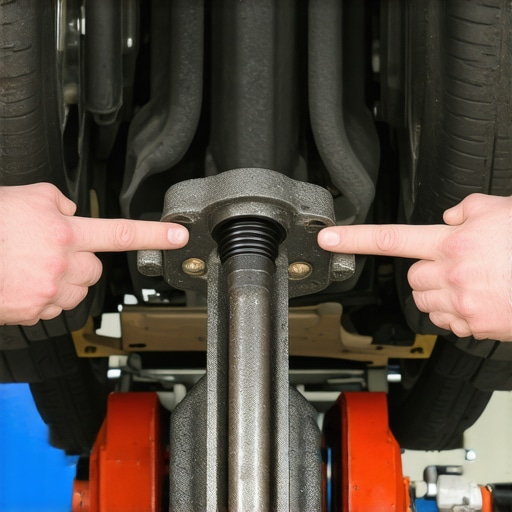
Look for the Steering Column’s Hidden Weak Link
One of the most overlooked components is the universal joint on the intermediate steering column. Much like learning how to spot a failing u-joint before your driveshaft drops, a steering u-joint can develop tiny gaps that translate into massive ‘dead zones’ at the steering wheel. If you see movement at the top of the shaft but none at the bottom where it enters the rack, that is your culprit. No amount of expert tune-up strategies or computerized laser adjustments will fix a physical gap in a metal joint that has reached its limit.
How to Confront the Shop Without Sounding Like a Jerk
When you take the car back, do not just say ‘it feels loose.’ That is too subjective for a busy mechanic and they will likely brush you off with a line about ‘tire break-in.’ Instead, tell them exactly where you suspect the slack is. Point to the tie-rod ends or the rack mounting bushings. If your power steering fluid is foaming, it might even indicate air in the system or a failing pump that is providing inconsistent pressure, making the wheel feel light and disconnected one second and heavy the next.
Insist on a Loaded Rack Inspection
Demand that the technician performs a ‘loaded’ inspection on the rack and pinion. Sometimes, the rubber bushings that hold the steering rack to the frame wear out and soften. When you turn the wheel, the entire rack housing slides left and right before it actually pushes the wheels. It is like trying to push a heavy box across a floor while wearing socks—you slide before the box does. This is often the real fix for a soft feel that mechanics keep missing because it only shows up under the weight of the car. You want them to check the ‘inner’ tie rods specifically, which are hidden behind rubber boots. If those internal sockets are shot, your steering will never feel tight, regardless of how perfect the alignment printout looks.
Most shops will hand you a printout with green bars and tell you you’re good to go, but here is a truth that many technicians won’t admit: the computer only sees where the wheels are pointing while the car is stationary on a level rack. I’ve seen dozens of cases where a car was ‘perfectly’ aligned according to the machine, yet it handled like a shopping cart with a bad wheel. This happens because factory specifications are actually a range, not a single point. If a lazy tech gets your car to the very edge of that range, it’s technically ‘in the green,’ but it will still pull or feel erratic on the road. You should never settle for just ‘within spec’ when you really want ‘dead center.’
The Dangerous Myth of the All-Green Printout
Everyone says that if the report is green, the job is done. In my experience, relying solely on the software is the fastest way to miss a failing component. The National Institute for Automotive Service Excellence (ASE) warns that electronic alignment systems cannot detect the internal ‘softness’ of a rubber bushing that has oil-soaked and degraded over time. When the car is sitting still, the bushing holds the wheel in place. The moment you hit 60 mph, the wind resistance and road force push that wheel out of alignment. If you are noticing strange handling, it might be time to look into brake service myths or suspension nuances that the computer simply can’t weigh. It’s also why I always suggest that tune-up your car for peak performance should involve a physical pry-bar test on every joint, not just a laser scan.
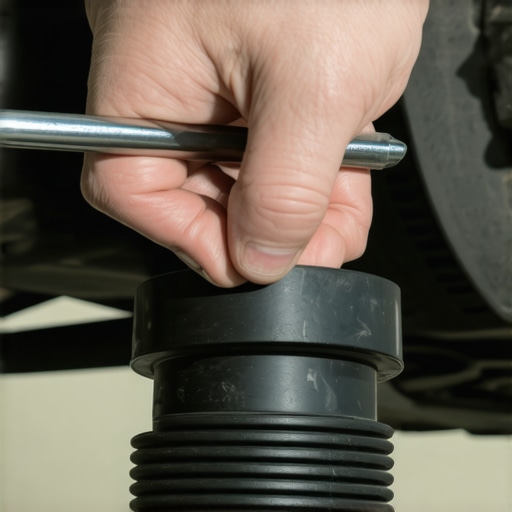
Can worn bushings hide behind a perfect computer reading?
Absolutely. This is the ‘oops’ factor that costs drivers thousands in premature tire wear. A common trap is the ‘toe-and-go’ service, where the shop only adjusts the easiest angle (toe) and ignores camber or caster because they are harder to reach. If your caster is off, the car won’t want to return to center after a turn, making the steering feel ‘lazy.’ This is a sophisticated issue that goes beyond a standard car service checklist. You need a technician who understands how how regular tune-ups improve fuel efficiency and safety by reducing the rolling resistance caused by these micro-misalignments.
The Wheel Bolt Trap That Ruins Rotors
Another nuance people get wrong is how their wheels are put back on after a service. Most shops use an air-powered impact wrench to zip the nuts back on as fast as possible. This is a massive mistake. Over-torquing wheel bolts can actually warp your brake rotors and hubs, creating a vibration that feels like a bad alignment. You should always insist on the proper way to torque wheel bolts without a manual by using a calibrated torque wrench. Even the the proper way to break in new brake pads and rotors won’t save you if the hub itself was distorted by an over-eager technician with a power tool. Have you ever fallen into this trap where the shop says everything is ‘perfect’ but the car still drives like a mess? Let me know in the comments. Before you book your next appointment, check out the ultimate car service guide to ensure you’re asking the right questions.
If you are ready to stop being at the mercy of a shop’s ‘good enough’ standard, you have to start thinking like a specialist. I do not just trust my eyes or the mechanic’s word anymore; I trust my toolbox. For years, I struggled with mystery vibrations and steering slack until I invested in two specific items that changed my DIY game. First is the split-beam torque wrench. Unlike the old micrometer styles that you have to crank back down to zero every time, the split-beam stays calibrated and gives a loud, satisfying ‘click’ that ensures your wheel bolts aren’t warping your hubs. If you are already learning how to test your alternator with a simple multimeter at home, you know that having the right data beats guessing every single time.
The Two Tools That Saved My Sanity and My Wallet
The second tool in my arsenal is a high-end OBDII diagnostic tablet. I am talking about something that can look at live data streams for steering angle sensors and wheel speed. Most people think a check engine light is the only reason to scan a car, but modern understanding brake system repairs often requires looking at the ABS module’s brain. If your car feels ‘loose’ but the alignment is green, I often find that the steering angle sensor has not been recalibrated. This is a massive part of auto repair trends to watch in 2025: the shift from mechanical fixes to software calibrations. We are entering an era where your car’s computer has just as much say in how the steering feels as the actual metal tie rods do.
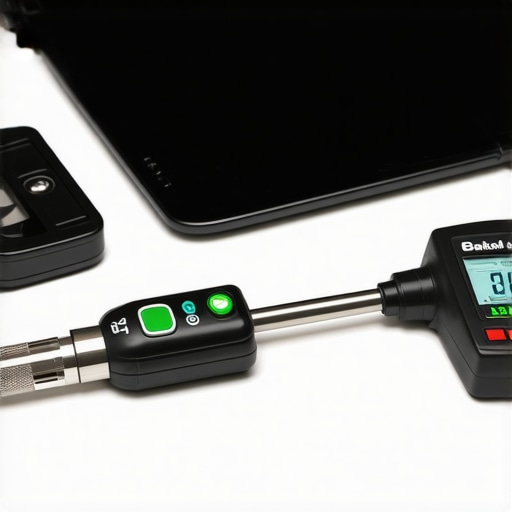
Stop Guessing When Your Brake Fluid Is Shot
I also stopped following the ‘looks clear’ rule for brake fluid. According to the Society of Automotive Engineers (SAE) J1703 standard, DOT 3 brake fluid should have a dry boiling point of at least 401°F, but even a 3% moisture content can drop that to dangerous levels that cause vapor lock. I bought a digital tester that measures the exact percentage of water in the reservoir. If it is over 3%, it is out. Period. Maintaining these fluids is how you maximize your car’s lifespan with expert tune-up strategies. You cannot just wait for the pedal to get mushy before you act. By the time you feel it, the internal corrosion in your calipers has already started. This proactive approach is the difference between a car that lasts 100k miles and one that hits the 300k club with pride.
How do I maintain my car’s precision over the long haul?
The secret is consistency and a very specific car service checklist that includes a ‘shake test’ every six months. I get the car up on jack stands and physically try to wiggle the wheels at the 12-and-6 and 9-and-3 positions. Any movement at all means a part is failing. Looking forward, I predict we will soon see ‘digital twins’ for consumer cars—apps that simulate wear and tear based on your specific driving habits and local weather, warning you of a failing ball joint before it even starts to clunk. For now, my best advice is to take control of the data. My challenge to you: Go grab a digital brake fluid tester this week. It is a tiny investment that will tell you more about your car’s safety than a ten-minute visual inspection ever could.
The One Question I Always Ask Before Handing Over My Keys
Over the years, I have learned that the most important part of any car service isn’t the fancy laser machine; it is the technician’s willingness to look beyond the computer screen. I always ask, ‘Did you check for play in the inner tie rods while the suspension was loaded?’ If they look at me like I am speaking Greek, I know I might need to find a more specialized shop. This level of troubleshooting common auto repair issues before visiting the shop has saved me thousands in unnecessary re-alignments. I have also realized that my hands on the wheel at 70 mph are far more accurate than a static sensor—if it feels wrong, it is wrong. Never let a service advisor convince you that a floating sensation is normal for your vehicle’s age. I’ve found that true precision comes from a technician who understands how regular tune-ups improve fuel efficiency and safety by reducing rolling resistance.
My Personal Toolkit for a Dead-Center Steering Feel
If you want to move beyond the basic car service checklist, you need a few specialized items in your garage. I personally swear by my Split-Beam Torque Wrench. Unlike the cheaper click-types, this tool keeps its accuracy over years of abuse, ensuring you follow the proper way to torque wheel bolts without a manual to prevent warped rotors. I also rely on a Digital Brake Fluid Tester because I’ve seen too many clean-looking reservoirs fail a moisture test, which is often the real fix for a soft brake pedal that mechanics keep missing. Lastly, a mid-range OBDII Diagnostic Tablet is essential for modern steering angle calibrations—a crucial part of auto repair trends to watch in 2025 as vehicles become increasingly software-dependent.
Stop Settling for Vague Steering Responses
Your car should be an extension of your intent, not a puzzle you have to solve every time you change lanes on the highway. By applying these maximize your car’s lifespan with expert tune-up strategies, you are doing more than just maintaining a machine; you are ensuring your own safety and the longevity of your investment. Don’t be afraid to demand excellence from your mechanic or to walk away if they refuse to do a loaded inspection. When you understand the mechanical reality of why the reason your steering wheel feels loose after an alignment occurs, you hold the power in that relationship. It is time to get back on the road with the confidence that your car will go exactly where you point it. Have you ever had to return to a shop multiple times just to get your steering wheel straight? Let me know your horror stories in the comments below!